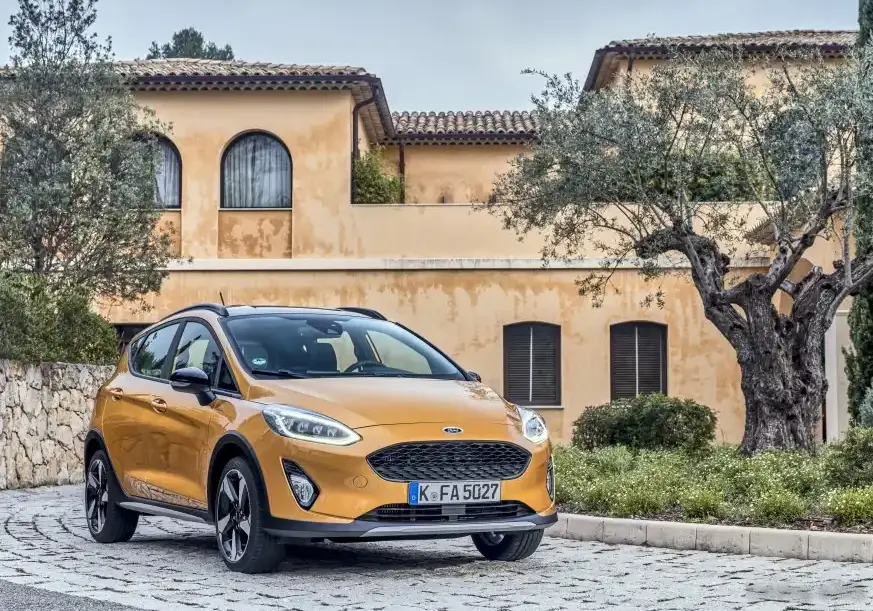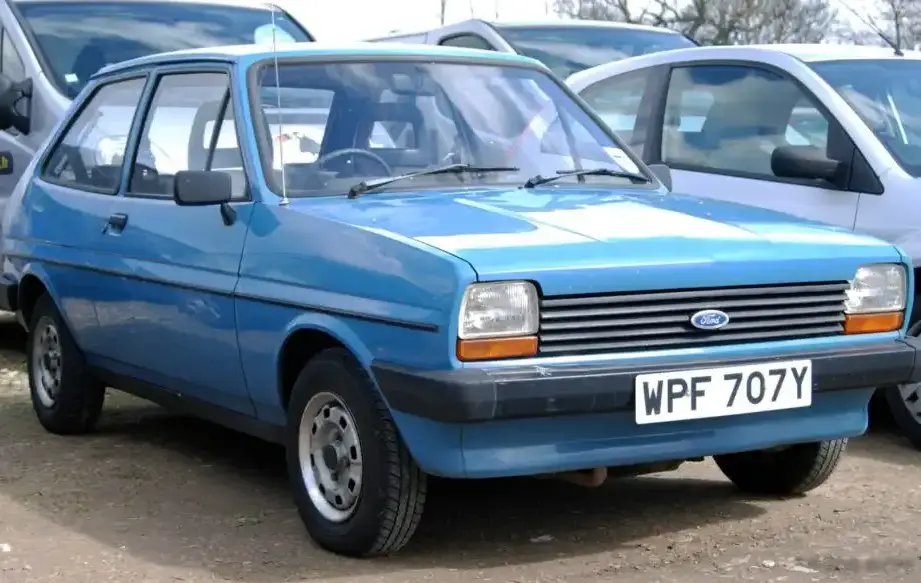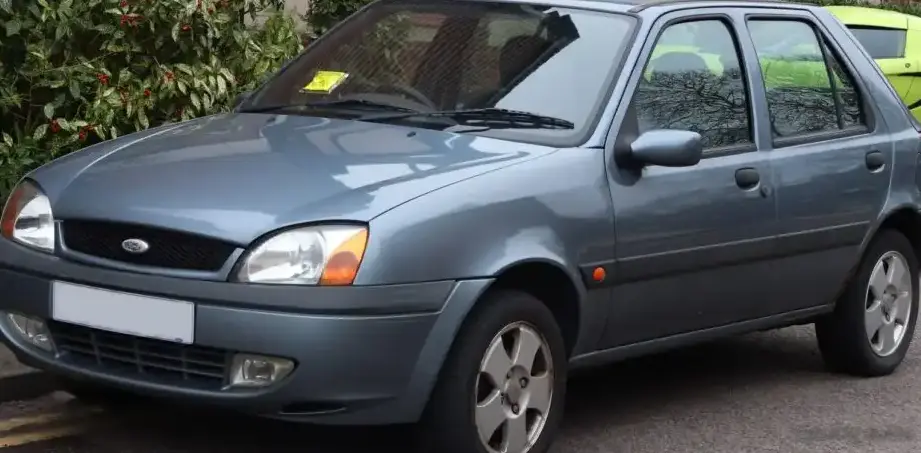
The Ford Fiesta Mk5, produced from September 1999 to November 2001, marked a significant evolution for Ford’s supermini, emphasizing improved refinement and practicality. Within the Mk5 range, the 1.3i variant, delivering 60 horsepower, served as the entry point to the Fiesta lineup, particularly in the widely favored five-door body style. This model was specifically designed to offer affordable and economical transportation, appealing to first-time car buyers, urban commuters, and those prioritizing low running costs. It occupied the base trim level, positioned below the more potent 1.4 and 1.6-liter options, and considerably below performance-focused models like the Zetec S. The Mk5 Fiesta was built on the 1HX0/A3 platform, sharing components with other Ford models of the era.
Technical Specifications
| Brand | Ford |
| Model | Fiesta |
| Generation | Fiesta V (Mk5) 5 door |
| Type (Engine) | 1.3 i (60 Hp) |
| Start of production | September, 1999 |
| End of production | November, 2001 |
| Powertrain Architecture | Internal Combustion engine |
| Body type | Hatchback |
| Seats | 5 |
| Doors | 5 |
| Fuel consumption (urban) | 9.2 l/100 km (25.6 US mpg, 30.7 UK mpg, 10.9 km/l) |
| Fuel consumption (combined) | 7.3 l/100 km (32.2 US mpg, 38.7 UK mpg, 13.7 km/l) |
| Fuel Type | Petrol (Gasoline) |
| Acceleration 0 – 100 km/h | 15.9 sec |
| Acceleration 0 – 62 mph | 15.9 sec |
| Acceleration 0 – 60 mph | 15.1 sec |
| Maximum speed | 155 km/h (96.31 mph) |
| Weight-to-power ratio | 17.2 kg/Hp, 58.1 Hp/tonne |
| Weight-to-torque ratio | 10 kg/Nm, 99.7 Nm/tonne |
| Power | 60 Hp @ 5000 rpm |
| Power per litre | 46.2 Hp/l |
| Torque | 103 Nm @ 2500 rpm (75.97 lb.-ft. @ 2500 rpm) |
| Engine layout | Front, Transverse |
| Engine Model/Code | J4C, J4J, J4L, J4Q, J4R, J4T, JBC |
| Engine displacement | 1299 cm3 (79.27 cu. in.) |
| Number of cylinders | 4 |
| Engine configuration | Inline |
| Cylinder Bore | 74 mm (2.91 in.) |
| Piston Stroke | 75.5 mm (2.97 in.) |
| Compression ratio | 9.5:1 |
| Number of valves per cylinder | 2 |
| Fuel injection system | Multi-port manifold injection |
| Engine aspiration | Naturally aspirated engine |
| Valvetrain | OHC |
| Engine oil capacity | 3.25 l (3.43 US qt | 2.86 UK qt) |
| Coolant | 7.1 l (7.5 US qt | 6.25 UK qt) |
| Kerb Weight | 1033 kg (2277.38 lbs.) |
| Max. weight | 1465 kg (3229.77 lbs.) |
| Max load | 432 kg (952.4 lbs.) |
| Trunk (boot) space – minimum | 250 l (8.83 cu. ft.) |
| Trunk (boot) space – maximum | 930 l (32.84 cu. ft.) |
| Fuel tank capacity | 40 l (10.57 US gal | 8.8 UK gal) |
| Length | 3833 mm (150.91 in.) |
| Width | 1634 mm (64.33 in.) |
| Height | 1334 mm (52.52 in.) |
| Wheelbase | 2446 mm (96.3 in.) |
| Front track | 1429 mm (56.26 in.) |
| Rear (Back) track | 1384 mm (54.49 in.) |
| Minimum turning circle | 9.9 m (32.48 ft.) |
| Drivetrain Architecture | The Internal combustion engine (ICE) drives the front wheels of the vehicle. |
| Drive wheel | Front wheel drive |
| Number of gears and type of gearbox | 5 gears, manual transmission |
| Front suspension | Coil spring |
| Rear suspension | Coil spring |
| Front brakes | Disc |
| Rear brakes | Drum |
| Assisting systems | ABS (Anti-lock braking system) |
| Steering type | Steering rack and pinion |
| Power steering | Hydraulic Steering |
| Tires size | 185/55 R14 |
Powertrain & Engine Architecture
The Fiesta 1.3i was powered by the Ford J4C engine family, a 1.3-liter inline-four cylinder petrol engine. This engine, also identified by codes J4J, J4L, J4Q, J4R, J4T, and JBC depending on the specific market and minor revisions, featured a single overhead camshaft (SOHC) valvetrain with two valves per cylinder. Fuel delivery was managed by a multi-port fuel injection system, a standard configuration for engines of this period. The engine generated 60 horsepower at 5000 rpm and 76 lb-ft of torque at 2500 rpm. The engine’s relatively uncomplicated design prioritized dependability and fuel economy over outright performance. A five-speed manual transmission was the standard offering, providing suitable gear spacing for everyday driving. The transmission was noted for its light shift action, though it lacked a particularly sporty feel.
Driving Characteristics
The Fiesta 1.3i, with its 60 horsepower output, wasn’t engineered for rapid acceleration. Acceleration from 0 to 60 mph required approximately 15.1 seconds, and the top speed was limited to around 96 mph. In typical driving scenarios, the engine proved adequate for city commuting and shorter journeys, but it showed strain when fully loaded or attempting to overtake on highways. The gear ratios were optimized for fuel efficiency, often resulting in the engine feeling overworked at higher speeds. Compared to the 1.4 and 1.6-liter versions, the 1.3i lacked the power needed for more enthusiastic driving. However, the lighter engine weight contributed to nimble handling, making it enjoyable to drive on winding roads. The steering was light and precise, offering good feedback to the driver.
Equipment & Trim Levels
The 1.3i Fiesta generally came equipped with a basic set of features. Standard inclusions were power steering, central locking, and an adjustable steering column. Interior upholstery was typically cloth, and the dashboard featured a simple, functional layout. Optional extras included air conditioning, electric front windows, and a radio/cassette player. The trim level was considered the base model, emphasizing affordability and practicality. It lacked the sporty styling elements and upgraded interior appointments found in higher-specification models like the Zetec.
Chassis & Braking
The Fiesta Mk5 employed a MacPherson strut front suspension and a twist-beam rear suspension. This configuration delivered a comfortable ride quality, although it wasn’t particularly advanced. The front brakes were disc brakes, while the rear brakes were drum brakes – a cost-saving measure common in entry-level models. Anti-lock Braking System (ABS) was available as an option, enhancing safety. The chassis was relatively lightweight, contributing to the car’s agile handling. Stabilizer bars were fitted to both the front and rear axles, helping to minimize body roll during cornering.
Market Reception & Comparison
The Fiesta 1.3i was generally well-received as an affordable and fuel-efficient city car. Reviewers praised its fuel economy and nimble handling, but noted its limited power output. Compared to other superminis of the time, such as the Volkswagen Polo and the Renault Clio, the Fiesta 1.3i offered a competitive price point. However, it lacked the refinement and performance of some of its competitors. The 1.4 and 1.6-liter Fiesta models provided significantly more power and were favored by drivers who prioritized performance. The 1.8 diesel offered superior fuel economy, but at the expense of refinement.
Legacy
The Ford Fiesta Mk5 1.3i continues to be a popular choice in the used car market, particularly for those seeking a low-cost and reliable vehicle. The J4C engine is known for its durability, and routine maintenance is relatively uncomplicated. While not a performance-oriented car, the 1.3i Fiesta provides a practical and economical solution for everyday transportation. Parts availability is generally good, and the car’s simple design makes it relatively easy to repair. However, prospective buyers should be aware of potential issues such as corrosion and wear on suspension components. Overall, the Fiesta 1.3i represents a dependable and solid option for budget-conscious buyers.