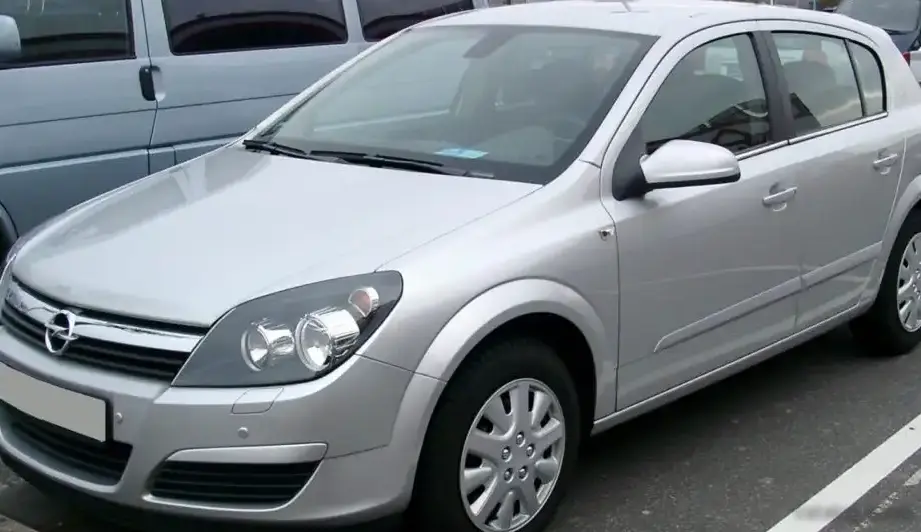
The Opel Astra H 1.8i 16V Automatic, produced between 2004 and 2006, represented a mid-range offering within the broader Astra H (2004-2009) generation. Positioned as a comfortable and practical choice, this variant aimed to provide a balance between performance and fuel efficiency for everyday driving. The Astra H, built on the GM Delta platform, was a significant model for Opel, representing a step forward in design, safety, and technology compared to its predecessor. This particular 1.8L engine and automatic transmission combination was targeted towards buyers prioritizing ease of use over outright sporty handling, and was a popular choice in European markets.
Technical Specifications
| Brand | Opel |
| Model | Astra |
| Generation | Astra H |
| Type (Engine) | 1.8i 16V (125 Hp) Automatic |
| Start of production | 2004 |
| End of production | 2006 |
| Powertrain Architecture | Internal Combustion engine |
| Body type | Hatchback |
| Seats | 5 |
| Doors | 5 |
| Fuel consumption (urban) | 11.6 l/100 km (20.3 US mpg) |
| Fuel consumption (extra urban) | 6.5 l/100 km (36.2 US mpg) |
| Fuel consumption (combined) | 8.4 l/100 km (28 US mpg) |
| Fuel Type | Petrol (Gasoline) |
| Acceleration 0 – 100 km/h | 11.9 sec |
| Acceleration 0 – 62 mph | 11.9 sec |
| Acceleration 0 – 60 mph | 11.3 sec |
| Maximum speed | 188 km/h (116.82 mph) |
| Weight-to-power ratio | 10.2 kg/Hp |
| Weight-to-torque ratio | 7.5 kg/Nm |
| Power | 125 Hp @ 5600 rpm |
| Torque | 170 Nm @ 3800 rpm (125.39 lb.-ft. @ 3800 rpm) |
| Engine layout | Front, Transverse |
| Engine Model/Code | Z18XE |
| Engine displacement | 1796 cm3 (109.6 cu. in.) |
| Number of cylinders | 4 |
| Engine configuration | Inline |
| Cylinder Bore | 80.5 mm (3.17 in.) |
| Piston Stroke | 88.2 mm (3.47 in.) |
| Compression ratio | 10.5:1 |
| Number of valves per cylinder | 4 |
| Fuel injection system | Multi-port manifold injection |
| Engine aspiration | Naturally aspirated engine |
| Valvetrain | DOHC |
| Engine oil capacity | 4.25 l (4.49 US qt | 3.74 UK qt) |
| Coolant capacity | 6.5 l (6.87 US qt | 5.72 UK qt) |
| Kerb Weight | 1278 kg (2817.51 lbs.) |
| Max. weight | 1760 kg (3880.14 lbs.) |
| Max load | 482 kg (1062.63 lbs.) |
| Trunk (boot) space – minimum | 380 l (13.42 cu. ft.) |
| Trunk (boot) space – maximum | 1330 l (46.97 cu. ft.) |
| Fuel tank capacity | 52 l (13.74 US gal | 11.44 UK gal) |
| Length | 4249 mm (167.28 in.) |
| Width | 1753 mm (69.02 in.) |
| Width including mirrors | 2033 mm (80.04 in.) |
| Height | 1467 mm (57.76 in.) |
| Wheelbase | 2614 mm (102.91 in.) |
| Front track | 1488 mm (58.58 in.) |
| Rear track | 1488 mm (58.58 in.) |
| Front overhang | 871 mm (34.29 in.) |
| Rear overhang | 764 mm (30.08 in.) |
| Ride height (ground clearance) | 160 mm (6.3 in.) |
| Drag coefficient (Cd) | 0.32 |
| Drivetrain Architecture | Front wheel drive |
| Number of gears and type of gearbox | 4 gears, automatic transmission |
| Front suspension | Spring Strut |
| Rear suspension | Spring Strut |
| Front brakes | Ventilated discs |
| Rear brakes | Disc |
| Assisting systems | ABS (Anti-lock braking system) |
| Steering type | Steering rack and pinion |
| Tires size | 195/65 R15 |
| Wheel rims size | 6.5J x 15 |
Powertrain & Engine Architecture
The heart of the Astra H 1.8i Automatic is the Z18XE engine, a 1.8-liter (1796 cc) inline-four cylinder gasoline engine. This engine belongs to Opel’s ‘Ecotec’ family, known for its focus on efficiency and refinement. The Z18XE features a dual overhead camshaft (DOHC) valvetrain with four valves per cylinder, contributing to its relatively good breathing characteristics for its displacement. Fuel delivery is managed by a multi-port fuel injection system, providing precise fuel metering for optimal combustion. The engine produces 125 horsepower at 5600 rpm and 170 Nm (125 lb-ft) of torque at 3800 rpm. Paired with this engine was a four-speed automatic transmission, offering smooth, if not particularly sporty, gear changes. This transmission was chosen for its ease of use and comfort, appealing to a broader demographic than the available five-speed manual.
Driving Characteristics
The 1.8i Automatic Astra H offered a comfortable and predictable driving experience. Acceleration from 0-60 mph took around 11.3 seconds, and top speed was approximately 116.82 mph. While not a performance-oriented variant, the engine provided adequate power for everyday driving situations, including highway cruising and city commuting. The four-speed automatic transmission, while smooth, lacked the responsiveness of a manual gearbox or a more modern automatic with additional gears. Gear ratios were tuned for fuel economy and comfort rather than outright acceleration. Compared to the more powerful 1.9 CDTi diesel or the sportier 2.0 Turbo models, the 1.8i Automatic felt noticeably less energetic, but it offered a quieter and more refined driving experience.
Equipment & Trim Levels
The 1.8i Automatic trim typically included standard features such as air conditioning, power windows, power door locks, and an integrated audio system. Safety features included ABS brakes, front airbags, and seatbelt pretensioners. Higher trim levels, such as the ‘Enjoy’ or ‘Cosmo’ packages, added features like alloy wheels, upgraded upholstery, a multi-function steering wheel, and optional extras like a sunroof or parking sensors. Interior upholstery was typically cloth, with a functional and durable design. The dashboard layout was straightforward and user-friendly, prioritizing ease of operation.
Chassis & Braking
The Astra H 1.8i Automatic utilized a MacPherson strut suspension setup at the front and a torsion beam suspension at the rear. This configuration provided a good balance between ride comfort and handling. Braking duties were handled by ventilated discs at the front and solid discs at the rear, providing adequate stopping power for the vehicle’s weight and performance. ABS (Anti-lock Braking System) was standard, enhancing safety during emergency braking situations. The steering system employed a rack and pinion setup, offering precise and responsive steering feel.
Market Reception & Comparison
The Astra H 1.8i Automatic was generally well-received by automotive critics as a practical and comfortable family car. However, it wasn’t considered a standout performer in its class. Fuel economy was respectable, averaging around 28 US mpg in combined driving, but the diesel variants offered significantly better fuel efficiency. Compared to the manual transmission version of the 1.8i, the automatic suffered a slight performance penalty. Reliability was generally good, although some owners reported minor issues with the automatic transmission over time. The Astra H faced competition from rivals such as the Ford Focus, Volkswagen Golf, and Renault Megane.
Legacy
The Opel Astra H 1.8i Automatic remains a relatively common sight on used car markets today. The Z18XE engine is known for its durability and relatively low maintenance costs, making it a popular choice for budget-conscious buyers. While not a particularly exciting car to drive, it offers a comfortable and reliable transportation option. The four-speed automatic transmission, while dated by modern standards, has proven to be reasonably durable with proper maintenance. The Astra H, in general, helped solidify Opel’s position as a major player in the European compact car segment, and the 1.8i Automatic variant provided a valuable option for buyers seeking a comfortable and practical family vehicle.