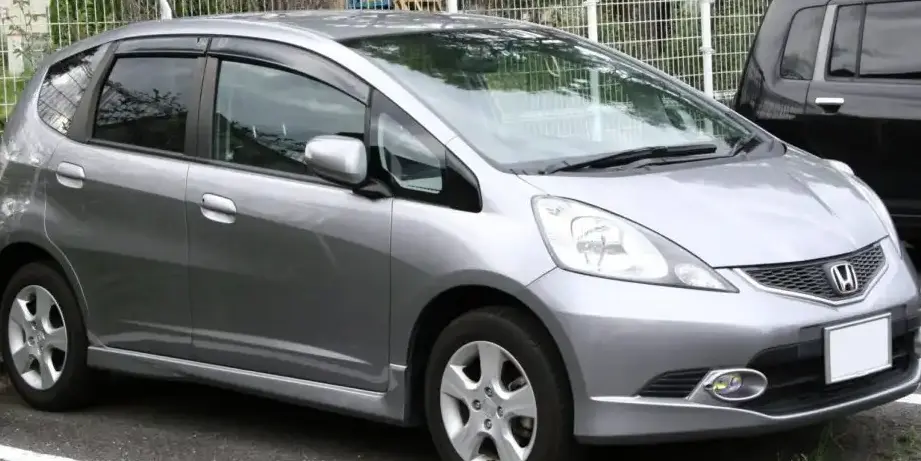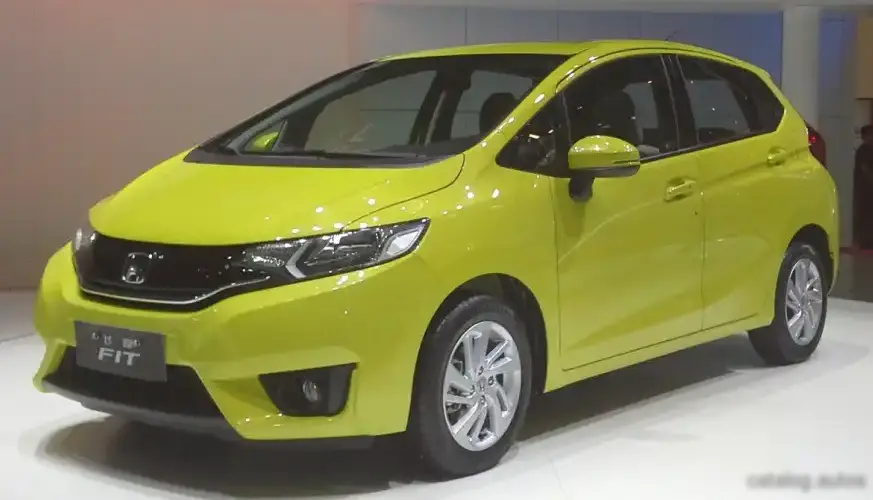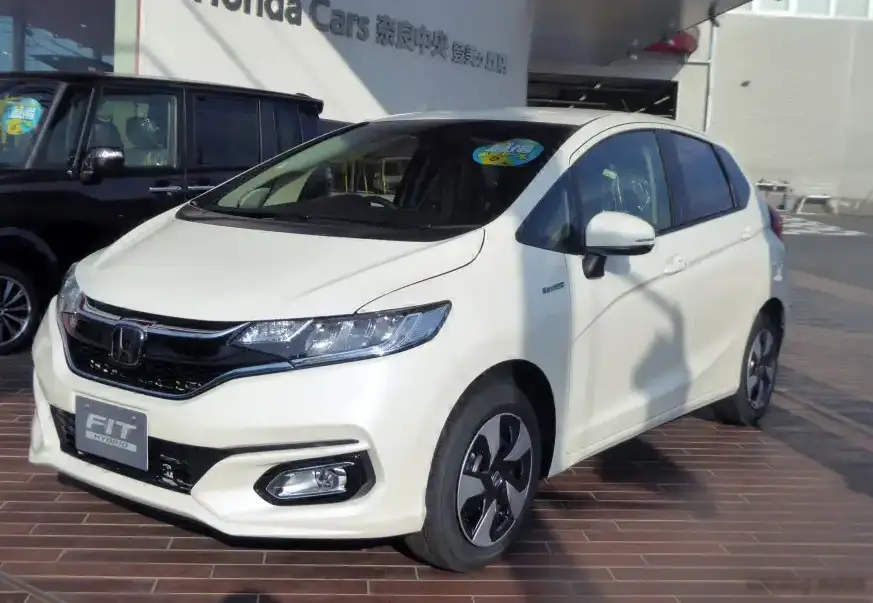
The Honda Fit III (facelift, 2017) 1.5 Hybrid 4WD DCT represents a significant evolution of Honda’s subcompact hatchback, offering a compelling blend of fuel efficiency, practicality, and available all-wheel drive. Produced from 2017 to 2020, this variant was primarily aimed at the Japanese domestic market (JDM) and European consumers, where demand for fuel-efficient, versatile vehicles is high. It falls within the third generation of the Fit (known as the Jazz in some markets), specifically the updated model introduced in 2017, which featured styling revisions and enhanced technology. This particular configuration – the 1.5-liter hybrid with a dual-clutch transmission (DCT) and all-wheel drive – occupied a mid-to-upper position within the Fit III lineup, offering a premium experience compared to the base models.
Technical Specifications
| Brand | Honda |
| Model | FIT |
| Generation | Fit III (facelift 2017) |
| Type (Engine) | 1.5 (137 Hp) Hybrid 4WD DCT |
| Start of production | 2017 |
| End of production | 2020 |
| Powertrain Architecture | FHEV (Full Hybrid Electric Vehicle) |
| Body type | Hatchback |
| Seats | 5 |
| Doors | 5 |
| Fuel Type | Petrol (Gasoline) |
| Weight-to-power ratio | 8.6 kg/Hp, 116.1 Hp/tonne |
| Weight-to-torque ratio | 6.9 kg/Nm, 144.1 Nm/tonne |
| Battery technology | Lithium-ion (Li-Ion) |
| Electric motor power | 30 Hp @ 1313-2000 rpm |
| Electric motor Torque | 160 Nm @ 0-1313 rpm (118.01 lb.-ft. @ 0-1313 rpm) |
| System power | 137 Hp @ 6000 rpm |
| System torque | 170 Nm @ 1000-4600 rpm (125.39 lb.-ft. @ 1000-4600 rpm) |
| Internal combustion engine power | 110 Hp @ 6000 rpm |
| Power per litre | 73.5 Hp/l |
| Internal combustion engine torque | 134 Nm @ 5000 rpm (98.83 lb.-ft. @ 5000 rpm) |
| Engine layout | Front, Transverse |
| Engine Model/Code | LEB-H1 |
| Engine displacement | 1497 cm3 (91.35 cu. in.) |
| Number of cylinders | 4 |
| Engine configuration | Inline |
| Cylinder Bore | 73 mm (2.87 in.) |
| Piston Stroke | 89.4 mm (3.52 in.) |
| Compression ratio | 13.5:1 |
| Number of valves per cylinder | 4 |
| Fuel injection system | Multi-port manifold injection |
| Engine aspiration | Naturally aspirated engine |
| Valvetrain | DOHC, i-VTEC |
| Engine oil capacity | 3.3 l (3.49 US qt | 2.9 UK qt) |
| Coolant capacity | 3.8 l (4.02 US qt | 3.34 UK qt) |
| Kerb Weight | 1180 kg (2601.45 lbs.) |
| Fuel tank capacity | 32 l (8.45 US gal | 7.04 UK gal) |
| Length | 3990 mm (157.09 in.) |
| Width | 1695 mm (66.73 in.) |
| Height | 1550 mm (61.02 in.) |
| Wheelbase | 2530 mm (99.61 in.) |
| Front track | 1480 mm (58.27 in.) |
| Rear track | 1470 mm (57.87 in.) |
| Ride height (ground clearance) | 150 mm (5.91 in.) |
| Drag coefficient (Cd) | 0.30 |
| Minimum turning circle | 10.4 m (34.12 ft.) |
| Drivetrain Architecture | The Internal combustion engine (ICE) and the electric motor permanently drive the front wheels of the vehicle, capable of running in full electric or mixed mode, and if necessary through the electrically or mechanically controlled clutch, the rear wheels are driven. |
| Drive wheel | All wheel drive (4×4) |
| Number of gears | 7 |
| Gearbox type | automatic transmission DCT |
| Front brakes | Ventilated discs |
| Rear brakes | Drum |
| Assisting systems | ABS (Anti-lock braking system) |
| Steering type | Cone worm with recirculation balls |
| Power steering | Electric Steering |
| Tires size | 185/60 R15 |
| Wheel rims size | 15 |
Powertrain & Engine Architecture
At the heart of the 2017-2020 Honda Fit III Hybrid 4WD DCT lies Honda’s Intelligent Multi-Ratio Drive (i-MMD) system. This is a full hybrid (FHEV) powertrain, meaning it can operate on electric power alone, gasoline power alone, or a combination of both. The 1.5-liter LEB-H1 inline-four engine produces 110 horsepower and 98.83 lb-ft of torque. This engine operates on the Atkinson cycle, which prioritizes fuel efficiency over outright power. The engine is paired with a 30 horsepower, 118 lb-ft electric motor. The combined system output is 137 horsepower and 125.39 lb-ft of torque. The i-MMD system utilizes a sophisticated power split device, effectively an e-CVT, to seamlessly blend the power from the engine and electric motor. The DCT (Dual Clutch Transmission) provides quick and smooth gear changes, enhancing the driving experience. Multi-point fuel injection and a DOHC i-VTEC valvetrain contribute to the engine’s efficiency and responsiveness.
Driving Characteristics
The 1.5 Hybrid 4WD DCT Fit offers a surprisingly refined driving experience. While not a performance-oriented vehicle, the combined output of the engine and electric motor provides adequate acceleration for everyday driving. The DCT transmission delivers crisp shifts, and the all-wheel-drive system enhances traction, particularly in inclement weather. Compared to the standard 1.5-liter non-hybrid Fit, the hybrid model offers smoother acceleration from a standstill due to the electric motor’s instant torque. The hybrid system’s regenerative braking also contributes to a unique driving feel. The 7-speed DCT is tuned for efficiency, meaning gear changes occur at lower RPMs, prioritizing fuel economy over aggressive acceleration. Compared to manual transmission versions, the DCT offers convenience and ease of use, but some drivers may prefer the more direct engagement of a manual gearbox.
Equipment & Trim Levels
The 1.5 Hybrid 4WD DCT trim typically included a generous array of standard features. These often included automatic climate control, a touchscreen infotainment system with smartphone integration (Apple CarPlay and Android Auto), Honda Sensing suite of safety features (including adaptive cruise control, lane departure warning, and collision mitigation braking system), and power windows and locks. Interior upholstery was typically a combination of fabric and synthetic leather. Optional extras could include a premium audio system, navigation system, and upgraded interior trim.
Chassis & Braking
The Fit III utilizes a front MacPherson strut suspension and a rear torsion beam suspension. The 4WD system adds a rear differential and driveshaft to distribute power to the rear wheels when needed. The front brakes are ventilated discs, providing good stopping power, while the rear brakes are drums, a cost-saving measure common in this class of vehicle. The electric power steering provides light and precise steering feel. Stabilizer bars are fitted to both the front and rear axles to reduce body roll during cornering.
Market Reception & Comparison
The Honda Fit III Hybrid 4WD DCT was generally well-received by automotive critics. It was praised for its fuel efficiency, spacious interior, and versatile cargo area. The all-wheel-drive system was a significant selling point in regions with harsh winters or challenging road conditions. Compared to other trims in the Fit lineup, the hybrid model offered superior fuel economy and a more refined driving experience, but at a higher price point. Competitors included the Toyota Yaris Hybrid and other subcompact hatchbacks offering hybrid or all-wheel-drive options.
Legacy
The Honda Fit III Hybrid 4WD DCT has proven to be a reliable and durable vehicle. The hybrid powertrain, while complex, has demonstrated good long-term reliability. The i-MMD system is known for its smooth operation and fuel efficiency. On the used car market, these models hold their value relatively well due to their fuel efficiency, practicality, and the added benefit of all-wheel drive. Regular maintenance, including oil changes and hybrid system checks, is crucial to ensure the longevity of the powertrain. The Fit III continues to be a popular choice for buyers seeking a fuel-efficient, versatile, and reliable subcompact hatchback.