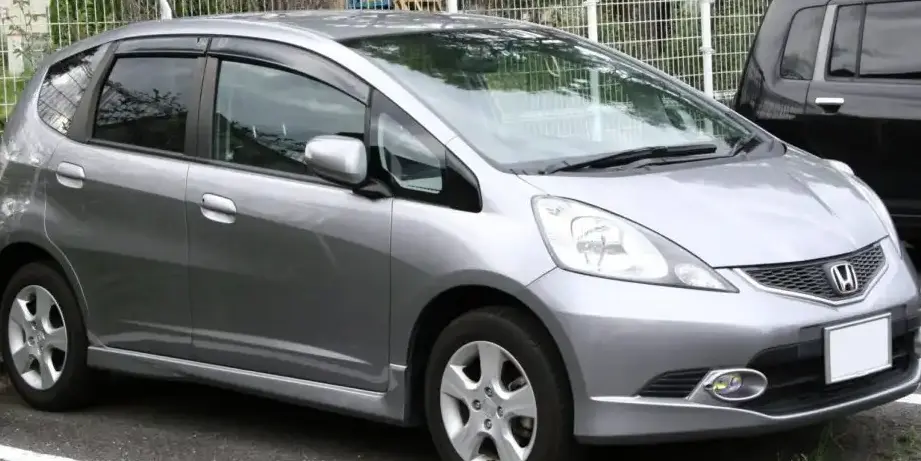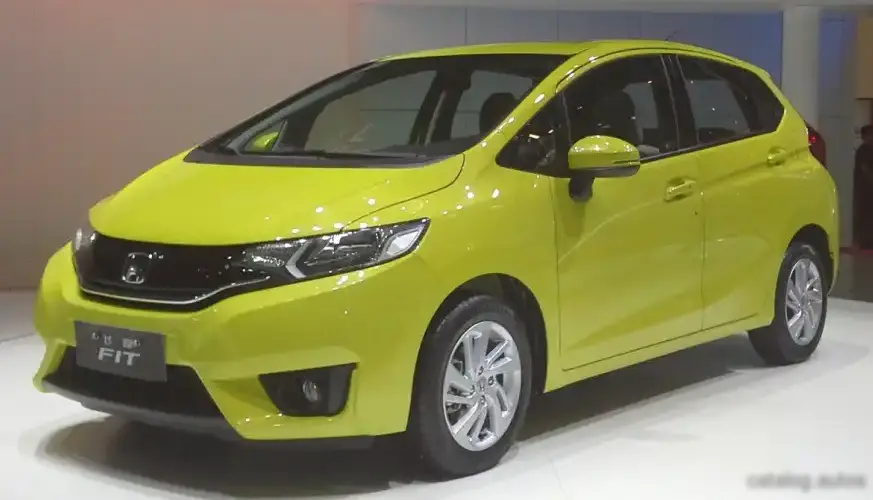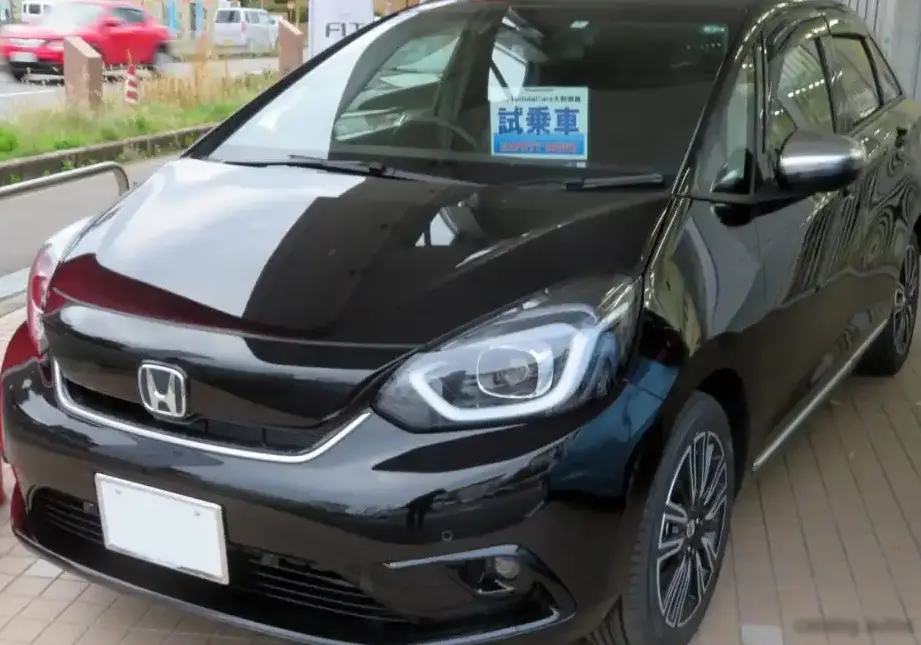
The Honda Fit IV (GR1) 1.3, producing 98 horsepower, with a Continuously Variable Transmission (CVT) and all-wheel drive (4WD), represents a key variant within the fourth generation of Honda’s globally popular subcompact hatchback. Introduced in February 2020, this model primarily targeted markets where all-weather capability and fuel efficiency were highly valued, particularly in Japan and other regions with similar driving conditions. Positioned as a mid-range offering within the GR1 lineup, it bridged the gap between the more basic front-wheel-drive models and the higher-specification trims. The Fit IV, built on the Honda Global Small Platform, aimed to maximize interior space and versatility within a compact footprint.
Technical Specifications
| Brand | Honda |
| Model | FIT |
| Generation | Fit IV (GR1) |
| Type (Engine) | 1.3 (98 Hp) 4WD CVT |
| Start of production | February, 2020 |
| Powertrain Architecture | Internal Combustion engine |
| Body type | Hatchback |
| Seats | 5 |
| Doors | 5 |
| Fuel consumption at Low speed (WLTP) | 6.6-7 l/100 km (35.6 – 33.6 US mpg, 42.8 – 40.4 UK mpg, 15.2 – 14.3 km/l) |
| Fuel consumption at Medium speed (WLTP) | 5.2-5.6 l/100 km (45.2 – 42 US mpg, 54.3 – 50.4 UK mpg, 19.2 – 17.9 km/l) |
| Fuel consumption at high speed (WLTP) | 5.1-5.6 l/100 km (46.1 – 42 US mpg, 55.4 – 50.4 UK mpg, 19.6 – 17.9 km/l) |
| Combined fuel consumption (WLTP) | 5.5-5.8 l/100 km (42.8 – 40.6 US mpg, 51.4 – 48.7 UK mpg, 18.2 – 17.2 km/l) |
| Fuel consumption (economy) – combined | 4.8-5 l/100 km (49 – 47 US mpg, 58.9 – 56.5 UK mpg, 20.8 – 20 km/l) |
| Fuel Type | Petrol (Gasoline) |
| Weight-to-power ratio | 11.8 kg/Hp, 84.5 Hp/tonne |
| Weight-to-torque ratio | 9.8 kg/Nm, 101.7 Nm/tonne |
| Power | 98 Hp @ 6000 rpm |
| Power per litre | 74.4 Hp/l |
| Torque | 118 Nm @ 5000 rpm (87.03 lb.-ft. @ 5000 rpm) |
| Engine layout | Front, Transverse |
| Engine Model/Code | L13B |
| Engine displacement | 1317 cm3 (80.37 cu. in.) |
| Number of cylinders | 4 |
| Engine configuration | Inline |
| Cylinder Bore | 73 mm (2.87 in.) |
| Piston Stroke | 78.7 mm (3.1 in.) |
| Compression ratio | 13.5:1 |
| Number of valves per cylinder | 4 |
| Fuel injection system | Direct injection |
| Engine aspiration | Naturally aspirated engine |
| Valvetrain | DOHC, VVT |
| Engine oil capacity | 3.3 l (3.49 US qt | 2.9 UK qt) |
| Kerb Weight | 1160-1180 kg (2557.36 – 2601.45 lbs.) |
| Fuel tank capacity | 40 l (10.57 US gal | 8.8 UK gal) |
| Length | 3995 mm (157.28 in.) |
| Width | 1695 mm (66.73 in.) |
| Height | 1540-1565 mm (60.63 – 61.61 in.) |
| Wheelbase | 2530 mm (99.61 in.) |
| Front track | 1485 mm (58.46 in.) |
| Rear (Back) track | 1475 mm (58.07 in.) |
| Ride height (ground clearance) | 150 mm (5.91 in.) |
| Minimum turning circle (turning diameter) | 9.8-10.4 m (32.15 – 34.12 ft.) |
| Drivetrain Architecture | The Internal combustion engine (ICE) drives the front wheels permanently, and the rear wheels are driven through an electrically or mechanically operated clutch if necessary. |
| Drive wheel | All wheel drive (4×4) |
| Number of gears and type of gearbox | automatic transmission CVT |
| Front suspension | Independent type McPherson |
| Rear suspension | Suspension De-Dion |
| Front brakes | Ventilated discs |
| Rear brakes | Disc |
| Assisting systems | ABS (Anti-lock braking system) |
| Steering type | Steering rack and pinion |
| Power steering | Electric Steering |
| Tires size | 185/60 R15; 185/55 R16 |
| Wheel rims size | 15; 16 |
Powertrain & Engine Architecture
The heart of this Fit variant is the L13B 1.3-liter inline-four cylinder engine. This engine utilizes direct injection technology, contributing to improved fuel efficiency and a more responsive throttle feel. The L13B features a double overhead camshaft (DOHC) valvetrain with Variable Valve Timing (VVT) on both intake and exhaust valves, optimizing performance across the engine’s operating range. The engine produces 98 horsepower at 6000 rpm and 118 Nm (87 lb-ft) of torque at 5000 rpm. Paired with this engine is a Continuously Variable Transmission (CVT). Unlike traditional automatic transmissions with fixed gear ratios, the CVT provides a seamless and theoretically infinite number of gear ratios, optimizing engine speed for either fuel economy or acceleration. The 4WD system employs a rear axle disconnect mechanism, engaging the rear wheels only when traction is needed, further enhancing fuel efficiency.
Driving Characteristics
The 1.3L 98hp engine with CVT and 4WD delivers a comfortable and economical driving experience, but it’s not designed for spirited performance. Acceleration is adequate for everyday driving situations, but passing maneuvers require planning. The CVT effectively keeps the engine in its optimal power band, providing smooth and linear acceleration. Compared to the manual transmission versions of the Fit, the CVT sacrifices some responsiveness for improved fuel economy and ease of use. The 4WD system provides enhanced grip in slippery conditions, making it a suitable choice for drivers in regions with inclement weather. The CVT’s programming prioritizes fuel efficiency, resulting in a slightly “rubber band” feel during hard acceleration, where engine RPMs rise quickly without a corresponding increase in speed. The overall driving experience is geared towards practicality and efficiency rather than outright performance.
Equipment & Trim Levels
The 1.3L 4WD CVT Fit typically included standard features such as air conditioning, power windows and locks, a basic audio system with Bluetooth connectivity, and Honda’s suite of safety features including ABS, Vehicle Stability Assist (VSA), and multiple airbags. Interior upholstery was typically cloth, with a functional and durable design. Optional extras included a touchscreen infotainment system with Apple CarPlay and Android Auto integration, a rearview camera, and alloy wheels. Higher trim levels offered features like automatic climate control, heated front seats, and advanced driver-assistance systems. The specific trim level and available options varied depending on the market.
Chassis & Braking
The Fit IV utilizes a McPherson strut front suspension and a De-Dion rear suspension. This combination provides a good balance of ride comfort and handling. The De-Dion rear suspension, while relatively simple, helps to minimize body roll and improve stability. Braking duties are handled by ventilated discs at the front and solid discs at the rear. ABS (Anti-lock Braking System) is standard, providing enhanced braking performance in emergency situations. The chassis is lightweight, contributing to the car’s overall fuel efficiency and agility. Stabilizer bars are present on both the front and rear axles, further reducing body roll during cornering.
Market Reception & Comparison
The Honda Fit IV 1.3L 4WD CVT was generally well-received by automotive critics for its practicality, fuel efficiency, and spacious interior. However, some reviewers noted the engine’s lack of outright power, particularly when compared to larger-displacement engines offered in other subcompact cars. Compared to other Fit variants, such as the 1.5L models, the 1.3L offered lower running costs but less performance. The 4WD system added a premium to the price but provided a significant advantage in terms of all-weather capability. Fuel economy figures consistently ranked among the best in its class, making it an attractive option for budget-conscious buyers.
Legacy
The L13B engine, while not known for being a powerhouse, has proven to be a reliable and durable unit. The CVT transmission, when properly maintained, is also generally reliable. Common maintenance items include regular oil changes, CVT fluid changes, and spark plug replacements. On the used car market, the Fit IV 1.3L 4WD CVT holds its value reasonably well, particularly in regions where all-wheel drive is desirable. Its reputation for reliability, combined with its fuel efficiency and practicality, makes it a popular choice among used car buyers seeking a dependable and economical subcompact hatchback.