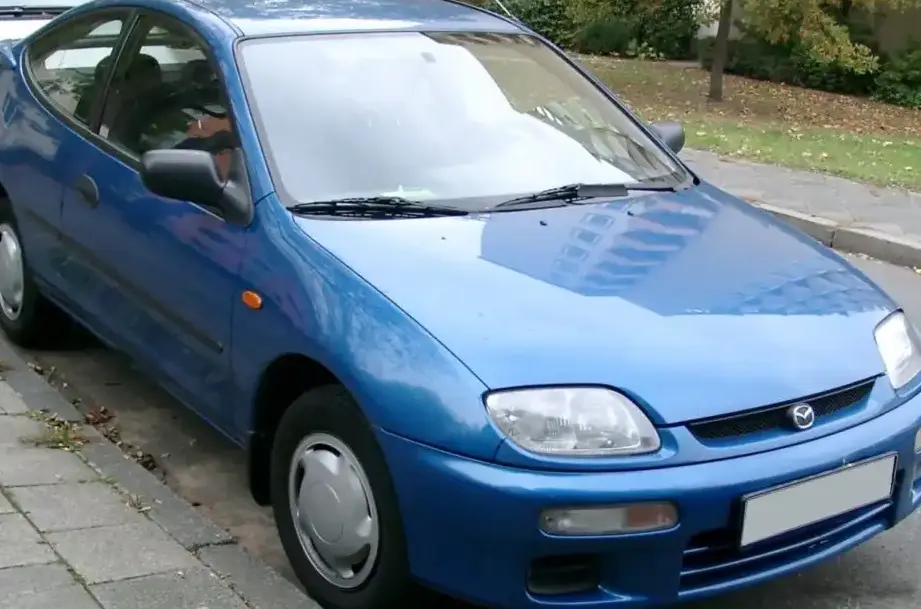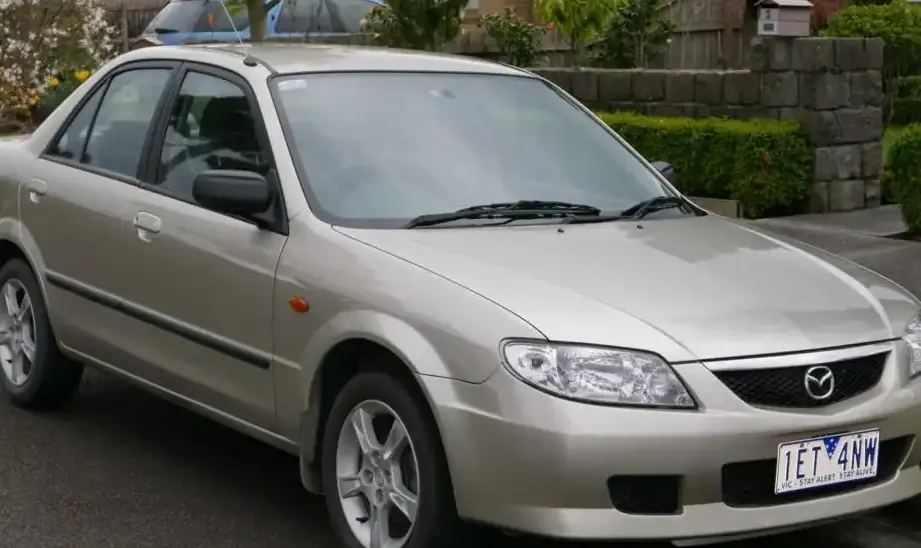
The Mazda 323 S VI (BJ) 1.6 i 16V, produced between 2000 and 2003, represented a key iteration of Mazda’s compact offering in the European and Asian markets. Positioned as a mainstream, affordable option within the BJ series, this variant aimed to balance fuel efficiency with adequate performance for daily commuting and family use. It was part of the sixth generation of the 323, known internally as the BJ platform, which saw Mazda refine its compact car formula with a focus on improved build quality and a more modern aesthetic. This specific 1.6-liter, 98 horsepower configuration was typically an entry-level to mid-range trim, offering a more economical alternative to the higher-performance options available in the lineup.
Technical Specifications
| Brand | Mazda |
| Model | 323 |
| Generation | 323 S VI (BJ) |
| Type (Engine) | 1.6 i 16V (98 Hp) |
| Start of production | 2000 year |
| End of production | 2003 year |
| Powertrain Architecture | Internal Combustion engine |
| Body type | Sedan |
| Seats | 5 |
| Doors | 4 |
| Fuel consumption (urban) | 9.6 l/100 km (24.5 US mpg) |
| Fuel consumption (extra urban) | 6.3 l/100 km (37.3 US mpg) |
| Fuel consumption (combined) | 7.5 l/100 km (31.4 US mpg) |
| Fuel Type | Petrol (Gasoline) |
| Acceleration 0 – 100 km/h | 11.6 sec |
| Acceleration 0 – 62 mph | 11.6 sec |
| Acceleration 0 – 60 mph | 11 sec |
| Maximum speed | 182 km/h (113.09 mph) |
| Weight-to-power ratio | 11.2 kg/Hp |
| Weight-to-torque ratio | 7.6 kg/Nm |
| Power | 98 Hp @ 5500 rpm |
| Torque | 145 Nm @ 3700 rpm (106.95 lb.-ft. @ 3700 rpm) |
| Engine layout | Front, Transverse |
| Engine Model/Code | ZM |
| Engine displacement | 1598 cm3 (97.52 cu. in.) |
| Number of cylinders | 4 |
| Engine configuration | Inline |
| Cylinder Bore | 78 mm (3.07 in.) |
| Piston Stroke | 83.6 mm (3.29 in.) |
| Compression ratio | 9.7:1 |
| Number of valves per cylinder | 4 |
| Fuel injection system | Multi-port manifold injection |
| Engine aspiration | Naturally aspirated engine |
| Valvetrain | DOHC |
| Engine oil capacity | 2.9 l (3.06 US qt | 2.55 UK qt) |
| Coolant capacity | 6 l (6.34 US qt | 5.28 UK qt) |
| Kerb Weight | 1095 kg (2414.06 lbs.) |
| Max. weight | 1610 kg (3549.44 lbs.) |
| Max load | 515 kg (1135.38 lbs.) |
| Trunk (boot) space – minimum | 415 l (14.66 cu. ft.) |
| Fuel tank capacity | 55 l (14.53 US gal | 12.1 UK gal) |
| Length | 4390 mm (172.83 in.) |
| Width | 1705 mm (67.13 in.) |
| Height | 1410 mm (55.51 in.) |
| Wheelbase | 2610 mm (102.76 in.) |
| Front track | 1470 mm (57.87 in.) |
| Rear (Back) track | 1470 mm (57.87 in.) |
| Drivetrain Architecture | Front wheel drive |
| Number of gears and type of gearbox | 5 gears, manual transmission |
| Front suspension | Coil spring |
| Rear suspension | Coil spring |
| Front brakes | Ventilated discs |
| Rear brakes | Disc |
| Assisting systems | ABS (Anti-lock braking system) |
| Steering type | Steering rack and pinion |
| Power steering | Hydraulic Steering |
| Tires size | 185/65 R14 |
| Wheel rims size | 14 |
Powertrain & Engine Architecture
The heart of the 323 S VI 1.6 i 16V was the ZM engine, a 1.6-liter inline-four cylinder gasoline engine. This engine utilized a multi-port fuel injection system, delivering fuel directly into the intake ports, optimizing combustion efficiency. The engine featured a double overhead camshaft (DOHC) valvetrain, operating 16 valves (four per cylinder) to enhance volumetric efficiency and improve power output across the rev range. The 98 horsepower peak was achieved at 5500 rpm, while the 145 Nm (106.95 lb-ft) of torque was available at 3700 rpm. The engine’s 9.7:1 compression ratio was a typical value for naturally aspirated engines of this era, balancing performance and fuel economy. The engine was transversely mounted in the front of the vehicle, driving the front wheels. The five-speed manual transmission was the standard offering, providing a reasonable balance between acceleration and fuel efficiency.
Driving Characteristics
The 1.6-liter engine, paired with the five-speed manual transmission, provided adequate, though not exhilarating, performance. Acceleration from 0 to 100 km/h (0-62 mph) took approximately 11.6 seconds, and the top speed was around 182 km/h (113 mph). Compared to the more powerful 1.8-liter or V6 variants, the 1.6 i 16V felt noticeably less responsive, particularly during overtaking maneuvers. However, the engine was relatively smooth and refined for its class, and the manual transmission offered precise shifts. The gear ratios were tuned for fuel economy, meaning the engine needed to be revved to extract maximum performance. The relatively light weight of the vehicle (1095 kg / 2414 lbs) helped to mitigate the lower power output, making it feel reasonably nimble in city driving.
Equipment & Trim Levels
The 323 S VI 1.6 i 16V typically came equipped with a standard set of features aimed at providing comfort and convenience. These included power steering, central locking, electric front windows, and an AM/FM radio. Interior upholstery was typically cloth, with a relatively simple dashboard layout. Optional extras included air conditioning, alloy wheels, and a CD player. The trim level often dictated the availability of these options, with higher trims offering more standard features. Safety features were relatively basic for the time, consisting primarily of ABS (Anti-lock Braking System) and seatbelts.
Chassis & Braking
The 323 S VI utilized a relatively conventional chassis design, featuring coil springs and a stabilizer bar on both the front and rear suspension. The front suspension employed MacPherson struts, while the rear utilized a torsion beam setup. The braking system consisted of ventilated discs on the front wheels and solid discs on the rear. The hydraulic power steering provided light and responsive steering feel. The 185/65 R14 tires offered a good balance between comfort and grip.
Market Reception & Comparison
The Mazda 323 S VI 1.6 i 16V was generally well-received as a practical and affordable compact car. Critics praised its fuel efficiency and comfortable ride, but noted its lack of outright performance compared to some of its rivals. Compared to the higher-output 1.8-liter and V6 models within the 323 range, the 1.6 i 16V offered significantly better fuel economy but at the expense of acceleration and overall driving excitement. Its main competitors included the Ford Focus, Volkswagen Golf, and Opel/Vauxhall Astra, all of which offered similar levels of practicality and affordability.
Legacy
The ZM engine, while not known for being particularly groundbreaking, proved to be a relatively reliable and durable unit. With proper maintenance, these engines can often reach high mileage without major issues. In the used car market today, the 323 S VI 1.6 i 16V represents an affordable and practical option for those seeking a reliable and economical compact car. Parts availability is generally good, and maintenance costs are relatively low. While it may not offer the performance or features of more modern vehicles, it remains a capable and dependable choice for everyday transportation.