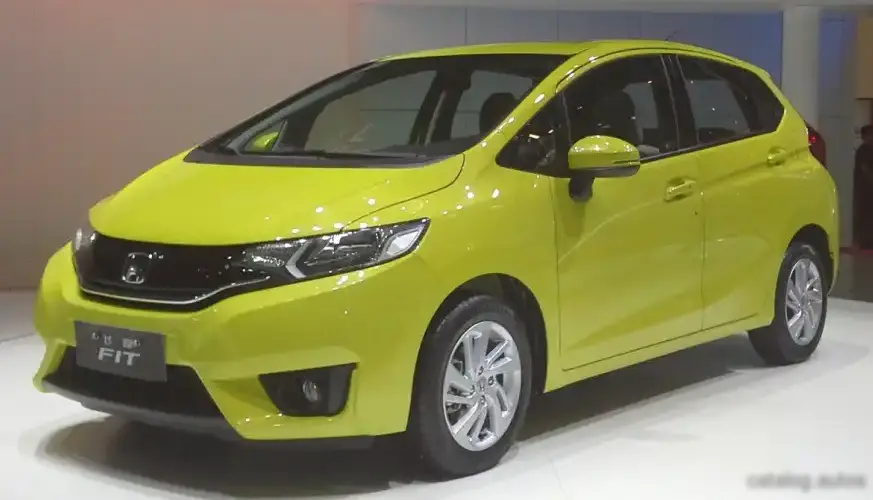
The Honda Fit Crosstar 1.3, introduced in February 2020 as part of the fourth-generation (GR1) Fit lineup, represents a unique offering within Honda’s subcompact hatchback range. Positioned as a more rugged and adventurous variant, the Crosstar distinguishes itself through increased ride height, distinctive styling cues, and standard all-wheel drive. This particular configuration, powered by the 1.3-liter L13B engine producing 98 horsepower and paired with a continuously variable transmission (CVT), was primarily marketed in Europe and Japan, offering a fuel-efficient and practical option for urban and light off-road driving. It filled the niche between the base Fit models and potentially more performance-oriented trims, appealing to buyers seeking a blend of practicality, efficiency, and a touch of outdoor capability.
Technical Specifications
| Brand | Honda |
| Model | FIT |
| Generation | Fit IV (GR1) |
| Type | Crosstar 1.3 (98 Hp) 4WD CVT |
| Start of production | February, 2020 |
| Powertrain Architecture | Internal Combustion engine |
| Body type | Hatchback |
| Seats | 5 |
| Doors | 5 |
| Fuel consumption at Low speed (WLTP) | 7.1 l/100 km (33.1 US mpg) |
| Fuel consumption at Medium speed (WLTP) | 5.4 l/100 km (43.6 US mpg) |
| Fuel consumption at high speed (WLTP) | 5.3 l/100 km (44.4 US mpg) |
| Combined fuel consumption (WLTP) | 5.7 l/100 km (41.3 US mpg) |
| Fuel consumption (economy) – combined | 5 l/100 km (47 US mpg) |
| Fuel Type | Petrol (Gasoline) |
| Weight-to-power ratio | 12 kg/Hp |
| Weight-to-torque ratio | 10 kg/Nm |
| Power | 98 Hp @ 6000 rpm |
| Power per litre | 74.4 Hp/l |
| Torque | 118 Nm @ 5000 rpm (87.03 lb.-ft. @ 5000 rpm) |
| Engine layout | Front, Transverse |
| Engine Model/Code | L13B |
| Engine displacement | 1317 cm3 (80.37 cu. in.) |
| Number of cylinders | 4 |
| Engine configuration | Inline |
| Cylinder Bore | 73 mm (2.87 in.) |
| Piston Stroke | 78.7 mm (3.1 in.) |
| Compression ratio | 13.5:1 |
| Number of valves per cylinder | 4 |
| Fuel injection system | Direct injection |
| Engine aspiration | Naturally aspirated engine |
| Valvetrain | DOHC |
| Engine oil capacity | 3.3 l (3.49 US qt | 2.9 UK qt) |
| Kerb Weight | 1180 kg (2601.45 lbs.) |
| Fuel tank capacity | 40 l (10.57 US gal | 8.8 UK gal) |
| Length | 4090 mm (161.02 in.) |
| Width | 1725 mm (67.91 in.) |
| Height | 1545 mm (60.83 in.) |
| Wheelbase | 2530 mm (99.61 in.) |
| Front track | 1495 mm (58.86 in.) |
| Rear track | 1485 mm (58.46 in.) |
| Ride height (ground clearance) | 155 mm (6.1 in.) |
| Minimum turning circle | 10 m (32.81 ft.) |
| Drivetrain Architecture | All wheel drive (4×4). ICE drives front wheels, rear wheels engaged via clutch. |
| Number of gears and type of gearbox | automatic transmission CVT |
| Front suspension | Independent type McPherson |
| Rear suspension | Suspension De-Dion |
| Front brakes | Ventilated discs |
| Rear brakes | Disc |
| Assisting systems | ABS (Anti-lock braking system) |
| Steering type | Steering rack and pinion |
| Power steering | Electric Steering |
| Tires size | 185/60 R16 86H |
| Wheel rims size | 16 |
Powertrain & Engine Architecture
At the heart of the Crosstar 1.3 lies Honda’s L13B 1.3-liter inline-four cylinder engine. This engine utilizes direct injection technology, contributing to improved fuel efficiency and responsiveness. The L13B is a naturally aspirated engine, meaning it doesn’t employ turbocharging or supercharging. It features a double overhead camshaft (DOHC) valvetrain with four valves per cylinder, optimizing airflow for enhanced performance. The engine produces 98 horsepower at 6000 rpm and 118 Nm (87 lb-ft) of torque at 5000 rpm. This power is then channeled through a continuously variable transmission (CVT) to all four wheels. The CVT is designed to provide smooth, seamless acceleration and maximize fuel economy by keeping the engine operating within its most efficient range. The all-wheel-drive system is primarily front-wheel drive, engaging the rear wheels as needed via an electronically controlled clutch, enhancing traction in slippery conditions.
Driving Characteristics
The 98-horsepower output and CVT pairing in the Crosstar 1.3 results in a driving experience focused on efficiency and ease of use rather than outright performance. Acceleration is adequate for city driving and highway merging, but it won’t provide the briskness of higher-powered Fit variants. The CVT, while smooth, can sometimes feel less engaging than a traditional automatic transmission, with the engine tending to hold at a constant rpm during acceleration. The all-wheel-drive system provides added stability and confidence in inclement weather, but it doesn’t transform the Crosstar into a serious off-roader. Compared to manual transmission versions of the 1.3L engine, the CVT sacrifices some responsiveness for improved fuel economy. The Crosstar’s slightly increased weight due to the AWD system and added body cladding further impacts performance compared to the standard Fit.
Equipment & Trim Levels
The Crosstar trim level generally included a higher level of standard equipment compared to the base Fit models. Features typically included alloy wheels, roof rails, unique exterior styling elements (such as black plastic cladding), and a more robust interior trim. Inside, the Crosstar often featured upgraded seat upholstery and a more comprehensive infotainment system with touchscreen display, Apple CarPlay, and Android Auto compatibility. Optional extras could include features like automatic climate control, parking sensors, and advanced safety systems such as lane departure warning and adaptive cruise control. The interior design prioritized practicality and space utilization, characteristic of the Fit lineup.
Chassis & Braking
The Crosstar 1.3 utilizes a McPherson strut suspension setup at the front, providing a comfortable and controlled ride. The rear suspension employs a De-Dion axle, a relatively uncommon design in this class, which contributes to a stable and predictable handling experience. The braking system consists of ventilated discs at the front and solid discs at the rear. Anti-lock braking system (ABS) is standard, enhancing safety during emergency braking situations. The Crosstar’s increased ride height, compared to the standard Fit, provides slightly improved ground clearance for navigating rougher terrain. The steering is electrically assisted, offering light and precise control.
Market Reception & Comparison
The Honda Fit Crosstar 1.3 was generally well-received by automotive critics for its practicality, fuel efficiency, and unique styling. Reviewers praised the spacious interior, versatile cargo area, and the added confidence provided by the all-wheel-drive system. However, some critics noted the engine’s modest power output and the CVT’s sometimes uninspiring driving experience. Compared to other trims in the Fit lineup, the Crosstar appealed to a different demographic – those seeking a more rugged and adventurous aesthetic and the added security of all-wheel drive. Fuel economy figures were competitive within the subcompact hatchback segment, and the Crosstar generally demonstrated good reliability.
Legacy
The Honda Fit Crosstar 1.3, while not a high-performance variant, has established a reputation for reliability and practicality. The L13B engine, when properly maintained, is known for its longevity. On the used car market, these models hold their value reasonably well, particularly those in good condition with low mileage. The combination of fuel efficiency, all-wheel drive, and a spacious interior continues to make the Crosstar a desirable option for buyers seeking a versatile and economical subcompact hatchback. The Crosstar’s success paved the way for future crossover-inspired variants of the Fit, demonstrating Honda’s ability to cater to evolving consumer preferences.