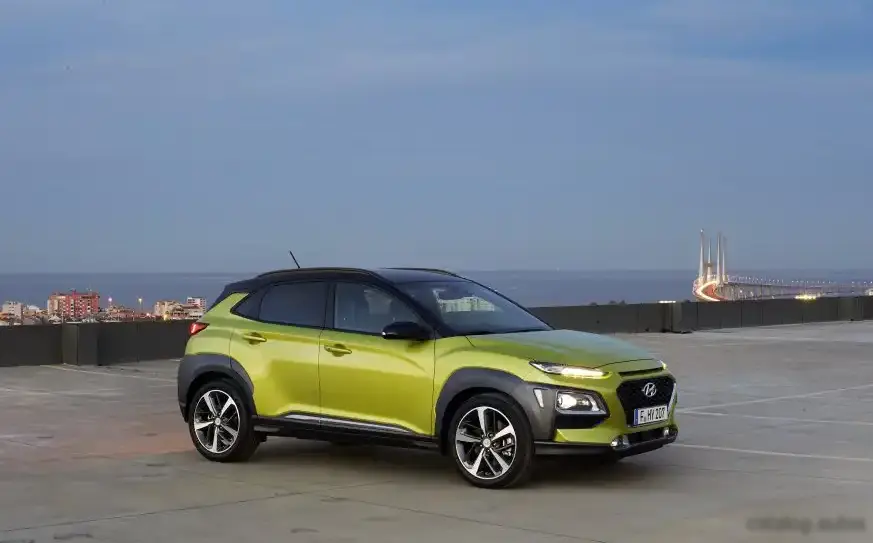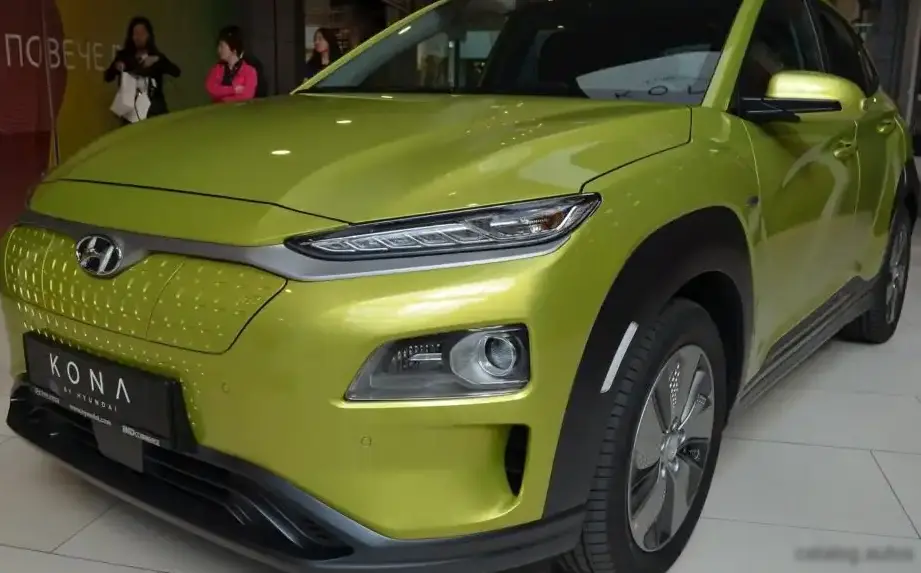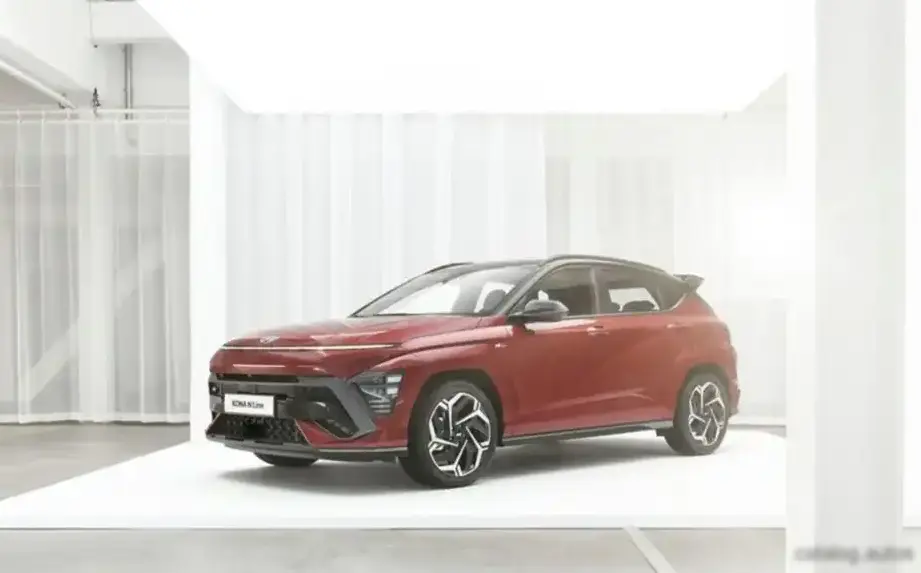
The Hyundai Kona II 1.6 GDI (129 Hp) Full Hybrid DCT represents a key variant within the second generation of Hyundai’s popular subcompact SUV, launched in August 2024. Positioned as a fuel-efficient and technologically advanced option, this model aimed to broaden the Kona’s appeal to buyers seeking a practical and economical vehicle with hybrid capabilities. Production continued through August 2025, making it a relatively short-lived but significant offering in the Kona II lineup. It builds upon the foundation of the PF3 platform, shared with other Hyundai and Kia models, and represents a step forward in Hyundai’s commitment to electrified powertrains.
Technical Specifications
| Brand | Hyundai |
| Model | Kona |
| Generation | Kona II |
| Type (Engine) | 1.6 GDI (129 Hp) Full Hybrid DCT |
| Start of production | August, 2024 |
| End of production | August, 2025 |
| Powertrain Architecture | FHEV (Full Hybrid Electric Vehicle) |
| Body type | SUV |
| Seats | 5 |
| Doors | 5 |
| Combined fuel consumption (WLTP) | 4.5-4.7 l/100 km (52.3 – 50 US mpg, 62.8 – 60.1 UK mpg, 22.2 – 21.3 km/l) |
| CO2 emissions (WLTP) | 103-107 g/km |
| Fuel Type | Petrol (Gasoline) |
| Acceleration 0 – 100 km/h | 12 sec |
| Acceleration 0 – 62 mph | 12 sec |
| Acceleration 0 – 60 mph | 11.4 sec |
| Maximum speed | 165 km/h (102.53 mph) |
| Emission standard | Euro 6e |
| Weight-to-power ratio | 10.9 kg/Hp, 91.5 Hp/tonne |
| Weight-to-torque ratio | 5.3 kg/Nm, 187.9 Nm/tonne |
| Gross battery capacity | 1.32 kWh |
| Battery technology | Lithium-polymer (LiPo) |
| Electric motor power | 44 Hp |
| Electric motor Torque | 170 Nm (125.39 lb.-ft.) |
| Electric motor location | Between the combustion engine and the transmission |
| Electric motor type | Synchronous |
| System power | 129 Hp |
| System torque | 265 Nm (195.45 lb.-ft.) |
| Power | 93 Hp @ 5700 rpm |
| Torque | 134 Nm @ 4000 rpm (98.83 lb.-ft. @ 4000 rpm) |
| Engine layout | Front, Transverse |
| Engine Model/Code | G4LL |
| Engine displacement | 1580 cm3 (96.42 cu. in.) |
| Number of cylinders | 4 |
| Engine configuration | Inline |
| Cylinder Bore | 72 mm (2.83 in.) |
| Piston Stroke | 97 mm (3.82 in.) |
| Number of valves per cylinder | 4 |
| Fuel injection system | Direct injection |
| Engine aspiration | Naturally aspirated engine |
| Engine oil capacity | 3.8 l (4.02 US qt | 3.34 UK qt) |
| Coolant | 6.7 l (7.08 US qt | 5.9 UK qt) |
| Kerb Weight | 1410-1525 kg (3108.52 – 3362.05 lbs.) |
| Max. weight | 1950 kg (4299.01 lbs.) |
| Max load | 425-540 kg (936.96 – 1190.5 lbs.) |
| Trunk (boot) space – minimum | 466 l (16.46 cu. ft.) |
| Trunk (boot) space – maximum | 1300 l (45.91 cu. ft.) |
| Fuel tank capacity | 38 l (10.04 US gal | 8.36 UK gal) |
| Max. roof load | 100 kg (220.46 lbs.) |
| Permitted trailer load with brakes (12%) | 1010 kg (2226.67 lbs.) |
| Permitted trailer load without brakes | 600 kg (1322.77 lbs.) |
| Permitted towbar download | 80 kg (176.37 lbs.) |
| Length | 4350 mm (171.26 in.) |
| Width | 1825 mm (71.85 in.) |
| Height | 1585 mm (62.4 in.) |
| Wheelbase | 2660 mm (104.72 in.) |
| Front track | 1591-1602 mm (62.64 – 63.07 in.) |
| Rear (Back) track | 1600-1611 mm (62.99 – 63.43 in.) |
| Ride height (ground clearance) | 160-170 mm (6.3 – 6.69 in.) |
| Drivetrain Architecture | The Internal combustion engine (ICE) and electric motor drive the front wheels of the car with the ability to work in full electric or mixed mode. |
| Drive wheel | Front wheel drive |
| Number of gears and type of gearbox | 6 gears, automatic transmission DCT |
| Front suspension | Independent type McPherson |
| Rear suspension | Independent multi-link suspension |
| Front brakes | Ventilated discs |
| Rear brakes | Disc |
| Assisting systems | ABS (Anti-lock braking system) |
| Steering type | Steering rack and pinion |
| Power steering | Electric Steering |
| Tires size | 205/65 R16; 215/55 R18 |
| Wheel rims size | 6.5J x 16; 7.0J x 18 |
Powertrain & Engine Architecture
At the heart of the Kona II 1.6 GDI Hybrid is Hyundai’s G4LL 1.6-liter inline-four cylinder gasoline engine. This engine produces 93 horsepower at 5700 rpm and 134 Nm (98.83 lb-ft) of torque at 4000 rpm. It utilizes direct fuel injection for improved efficiency and power delivery. The engine is paired with a 44 horsepower electric motor, powered by a 1.32 kWh lithium-polymer battery pack. The combined system output is 129 horsepower and 265 Nm (195.45 lb-ft) of torque. The powertrain employs a dual-clutch transmission (DCT) with six forward gears, optimized for smooth transitions between electric and gasoline power. The electric motor is positioned between the engine and the transmission, allowing for seamless integration and power delivery. The G4LL engine features a naturally aspirated design, foregoing turbocharging in favor of simplicity and reliability.
Driving Characteristics
The 1.6 GDI Hybrid DCT offers a comfortable and efficient driving experience. Acceleration from 0 to 60 mph takes approximately 11.4 seconds, and 0-100 km/h in 12 seconds, making it adequate for everyday driving but not particularly sporty. The DCT provides quick and precise gear changes, contributing to a responsive feel. The hybrid system allows for short periods of all-electric driving, particularly at lower speeds, enhancing fuel economy in urban environments. Compared to higher-output Kona variants, such as those with the 1.6L Turbo GDI engine, this version prioritizes fuel efficiency over outright performance. The gear ratios are tuned for maximizing fuel economy, which can result in the engine occasionally feeling strained during aggressive acceleration or when climbing hills.
Equipment & Trim Levels
The Kona II 1.6 GDI Hybrid DCT typically came equipped with a respectable array of standard features. These included automatic climate control, a touchscreen infotainment system with Apple CarPlay and Android Auto compatibility, and a suite of safety features such as lane keeping assist, forward collision avoidance assist, and automatic emergency braking. Interior upholstery was generally cloth, with options for leather upgrades on higher trim levels. Available optional extras included a sunroof, premium audio system, and heated/ventilated front seats. The specific trim level (e.g., SE, SEL, Limited) determined the extent of standard equipment and available options.
Chassis & Braking
The Kona II utilizes a front-wheel-drive layout. The front suspension consists of an independent McPherson strut setup, while the rear features an independent multi-link suspension. This configuration provides a good balance of ride comfort and handling. Braking duties are handled by ventilated discs at the front and solid discs at the rear. The inclusion of ABS (Anti-lock Braking System) is standard, enhancing safety during emergency braking situations. Stabilizer bars are fitted to both the front and rear axles to reduce body roll during cornering.
Market Reception & Comparison
The Kona II 1.6 GDI Hybrid DCT was generally well-received by critics for its fuel efficiency and comfortable ride. Its combined fuel consumption of 4.5-4.7 l/100 km (52.3 – 50 US mpg) made it a competitive option in the subcompact SUV segment. Compared to the non-hybrid Kona variants, the hybrid model offered significantly improved fuel economy, albeit at a slightly higher purchase price. Reliability reports have been generally positive, with few major issues reported with the powertrain. However, some owners have noted the relatively modest performance compared to other Kona trims.
Legacy
The Hyundai Kona II 1.6 GDI Hybrid DCT represents a significant step in Hyundai’s push towards electrification. While not the most powerful or sporty version of the Kona, its fuel efficiency and practicality have made it a popular choice in the used car market. The powertrain has proven to be relatively reliable, and the hybrid system continues to offer a compelling combination of fuel economy and convenience. As the automotive industry continues to shift towards electric and hybrid vehicles, the Kona II 1.6 GDI Hybrid DCT serves as a testament to Hyundai’s commitment to innovation and sustainability.