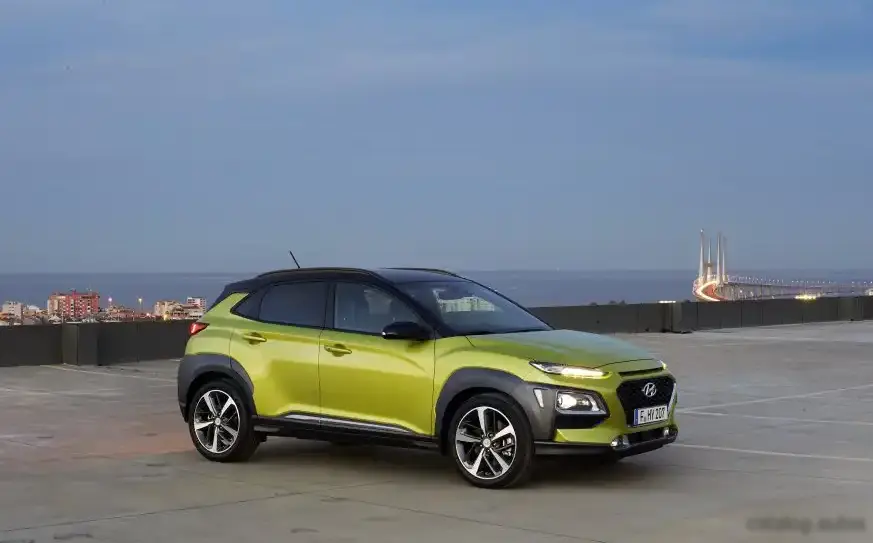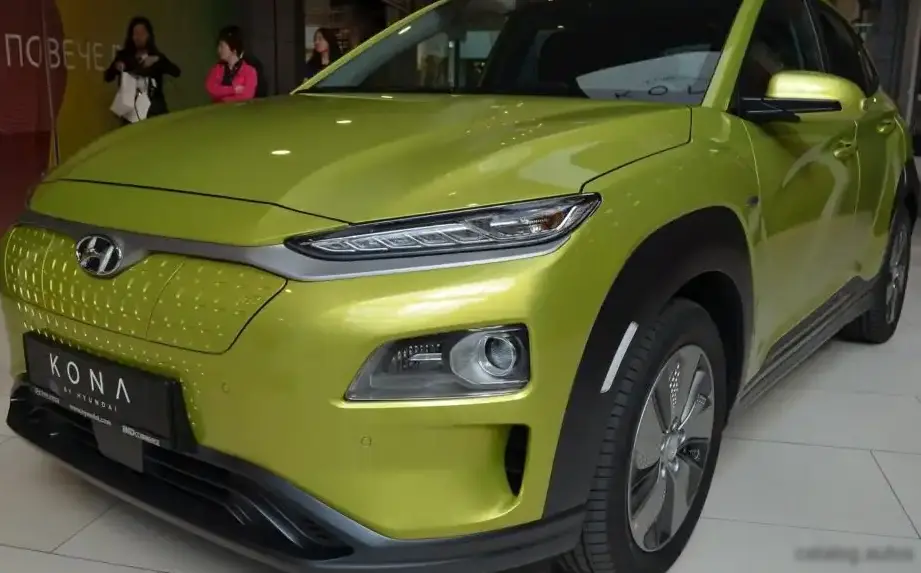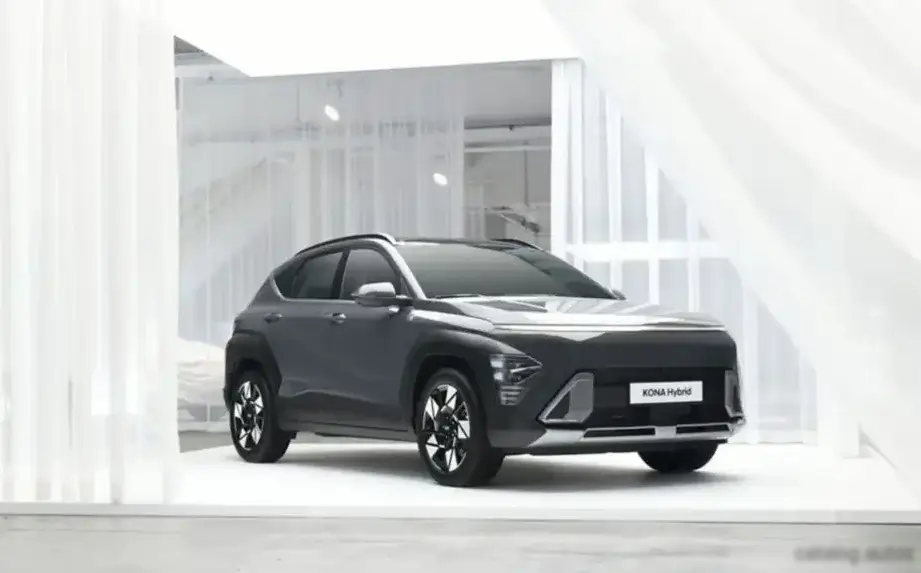
The Hyundai Kona II 1.6 GDI (141 Hp) Full Hybrid DCT represents a significant entry point into the second generation of Hyundai’s popular subcompact SUV, launched in April 2023 and continuing through August 2024. Positioned as a fuel-efficient and technologically advanced option, this variant utilizes a full hybrid powertrain paired with a dual-clutch transmission (DCT). It’s designed to appeal to buyers seeking a practical, modern vehicle with reduced emissions and improved fuel economy, particularly within the European market where it saw significant sales. This model is built on the PF3 platform, shared with other Hyundai and Kia models, and represents a step forward in Hyundai’s commitment to electrified vehicles.
Technical Specifications
| Brand | Hyundai |
| Model | Kona |
| Generation | Kona II |
| Type (Engine) | 1.6 GDI (141 Hp) Full Hybrid DCT |
| Start of production | April, 2023 |
| End of production | August, 2024 |
| Powertrain Architecture | FHEV (Full Hybrid Electric Vehicle) |
| Body type | SUV |
| Seats | 5 |
| Doors | 5 |
| CO2 emissions (WLTP) | 101-117 g/km |
| Fuel Type | Petrol (Gasoline) |
| Acceleration 0 – 100 km/h | 11.2 sec |
| Acceleration 0 – 62 mph | 11.2 sec |
| Acceleration 0 – 60 mph | 10.6 sec |
| Maximum speed | 166 km/h (103.15 mph) |
| Emission standard | Euro 6d |
| Weight-to-power ratio | 10 kg/Hp, 100 Hp/tonne |
| Weight-to-torque ratio | 5.3 kg/Nm, 187.9 Nm/tonne |
| Gross battery capacity | 1.32 kWh |
| Battery technology | Lithium-polymer (LiPo) |
| Electric motor power | 44 Hp |
| Electric motor Torque | 170 Nm (125.39 lb.-ft.) |
| Electric motor location | Between the combustion engine and the transmission |
| Electric motor type | Synchronous |
| System power | 141 Hp @ 5700 rpm |
| System torque | 265 Nm @ 4000 rpm (195.45 lb.-ft. @ 4000 rpm) |
| Power | 105 Hp @ 5700 rpm |
| Torque | 144 Nm @ 4000 rpm (106.21 lb.-ft. @ 4000 rpm) |
| Engine layout | Front, Transverse |
| Engine Model/Code | Smartstream |
| Engine displacement | 1580 cm3 (96.42 cu. in.) |
| Number of cylinders | 4 |
| Engine configuration | Inline |
| Cylinder Bore | 72 mm (2.83 in.) |
| Piston Stroke | 97 mm (3.82 in.) |
| Compression ratio | 13:1 |
| Number of valves per cylinder | 4 |
| Fuel injection system | Direct injection |
| Engine aspiration | Naturally aspirated engine |
| Valvetrain | DOHC |
| Engine systems | Start & Stop System, Particulate filter |
| Kerb Weight | 1410-1525 kg (3108.52 – 3362.05 lbs.) |
| Max. weight | 1950 kg (4299.01 lbs.) |
| Max load | 425-540 kg (936.96 – 1190.5 lbs.) |
| Trunk (boot) space – minimum | 466 l (16.46 cu. ft.) |
| Trunk (boot) space – maximum | 1300 l (45.91 cu. ft.) |
| Fuel tank capacity | 38 l (10.04 US gal | 8.36 UK gal) |
| Max. roof load | 100 kg (220.46 lbs.) |
| Permitted trailer load with brakes (12%) | 1300 kg (2866.01 lbs.) |
| Permitted towbar download | 80 kg (176.37 lbs.) |
| Length | 4350 mm (171.26 in.) |
| Width | 1825 mm (71.85 in.) |
| Height | 1585 mm (62.4 in.) |
| Wheelbase | 2660 mm (104.72 in.) |
| Front track | 1591 mm (62.64 in.) |
| Rear (Back) track | 1600 mm (62.99 in.) |
| Minimum turning circle | 10.6 m (34.78 ft.) |
| Number of gears and type of gearbox | 6 gears, automatic transmission DCT |
| Front suspension | Independent type McPherson |
| Rear suspension | Independent multi-link suspension |
| Front brakes | Ventilated discs |
| Rear brakes | Disc |
| Assisting systems | ABS (Anti-lock braking system) |
| Steering type | Steering rack and pinion |
| Power steering | Electric Steering |
| Tires size | 215/55 R18 |
| Wheel rims size | 7J x 18 |
Powertrain & Engine Architecture
The Kona II 1.6 GDI Full Hybrid utilizes Hyundai’s Smartstream engine family. The 1.6-liter inline-four cylinder engine (code designation likely G4FD) produces 105 horsepower and 144 Nm of torque. This engine employs direct fuel injection and a double overhead camshaft (DOHC) valvetrain for improved efficiency and responsiveness. The hybrid system adds a 44 horsepower electric motor, powered by a 1.32 kWh lithium-polymer battery pack. The combined system output is 141 horsepower and 265 Nm of torque. A key component is the DCT (Dual Clutch Transmission) which offers quicker and smoother gear changes compared to a traditional automatic transmission, contributing to both fuel efficiency and a more engaging driving experience. The electric motor is integrated between the engine and the transmission, allowing for electric-only driving at lower speeds and assisting the gasoline engine during acceleration.
Driving Characteristics
The 1.6 GDI Hybrid DCT delivers a comfortable and efficient driving experience. Acceleration from 0-60 mph takes approximately 10.6 seconds, which is adequate for everyday driving but not particularly sporty. The DCT provides smooth gear transitions, and the hybrid system seamlessly blends power from the engine and electric motor. In city driving, the vehicle can operate in electric-only mode for short distances, reducing emissions and fuel consumption. Compared to higher-output Kona variants (like the 1.6 T-GDI with 198 hp), this version prioritizes fuel economy over outright performance. The gear ratios are tuned for efficiency, meaning the engine may rev higher during acceleration compared to a performance-oriented trim. The overall feel is one of refinement and ease of use, making it well-suited for urban commutes and longer journeys.
Equipment & Trim Levels
The Kona II 1.6 GDI Hybrid DCT typically comes standard with a generous array of features. These include a touchscreen infotainment system with Apple CarPlay and Android Auto compatibility, a rearview camera, lane keeping assist, forward collision avoidance assist, and automatic emergency braking. Interior upholstery is typically cloth, with options for leather upgrades on higher trim levels. Dashboard configuration is modern and driver-focused, with a digital instrument cluster available on some trims. Optional extras often include a sunroof, heated and ventilated seats, a premium sound system, and advanced driver-assistance systems like adaptive cruise control and blind-spot monitoring. Trim levels varied by market, but generally followed a progression from base models with fewer features to more luxurious trims with added comfort and convenience items.
Chassis & Braking
The Kona II utilizes a front-wheel-drive layout. The front suspension employs an independent McPherson strut design, while the rear features an independent multi-link suspension. This setup provides a good balance of ride comfort and handling. Braking duties are handled by ventilated discs at the front and solid discs at the rear. ABS (Anti-lock Braking System) is standard. The chassis is designed to be lightweight to maximize fuel efficiency, but also provides a solid and stable platform. Stabilizer bars are fitted to both the front and rear axles to reduce body roll during cornering.
Market Reception & Comparison
The Hyundai Kona II 1.6 GDI Hybrid DCT was generally well-received by critics for its fuel efficiency, comfortable ride, and modern features. It offered a compelling alternative to other subcompact SUVs in the hybrid segment. Compared to the non-hybrid Kona variants, the hybrid model delivered significantly better fuel economy, although at a slightly higher purchase price. Against competitors like the Toyota C-HR Hybrid and Nissan Juke Hybrid, the Kona offered a competitive combination of price, features, and warranty coverage. Some reviewers noted that the acceleration wasn’t particularly brisk, but it was sufficient for most driving situations. Reliability reports have been generally positive, with the hybrid system proving to be durable and dependable.
Legacy
The Hyundai Kona II 1.6 GDI Full Hybrid DCT represents a key step in Hyundai’s transition towards electrification. The powertrain, while not the most powerful in the Kona lineup, has proven to be reliable and fuel-efficient. On the used car market, these models are becoming increasingly popular due to their low running costs and modern features. The Smartstream engine and DCT transmission have demonstrated good long-term durability, and the hybrid system is backed by Hyundai’s comprehensive warranty. As demand for fuel-efficient vehicles continues to grow, the Kona II 1.6 GDI Hybrid DCT is likely to remain a desirable and practical choice for buyers seeking a subcompact SUV.