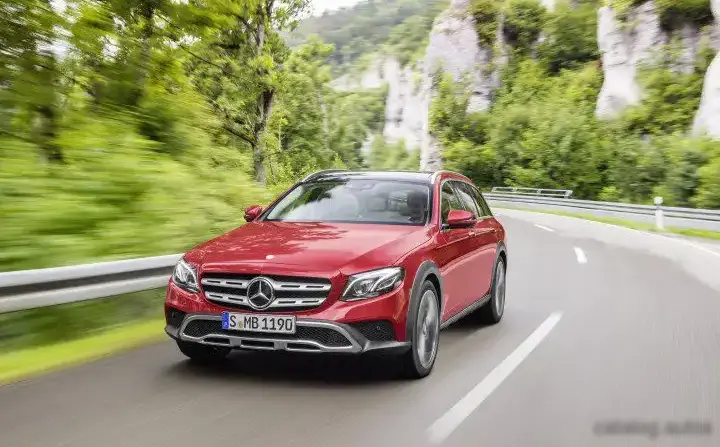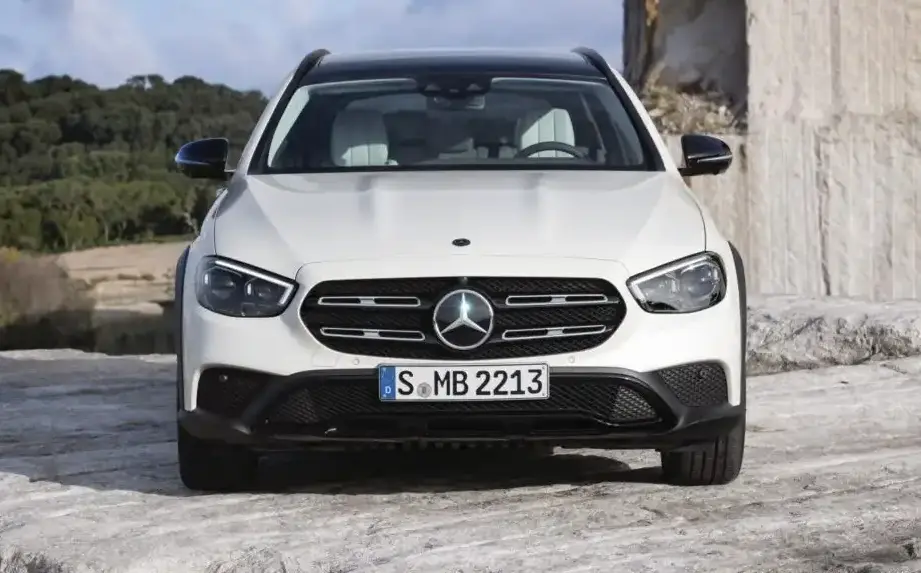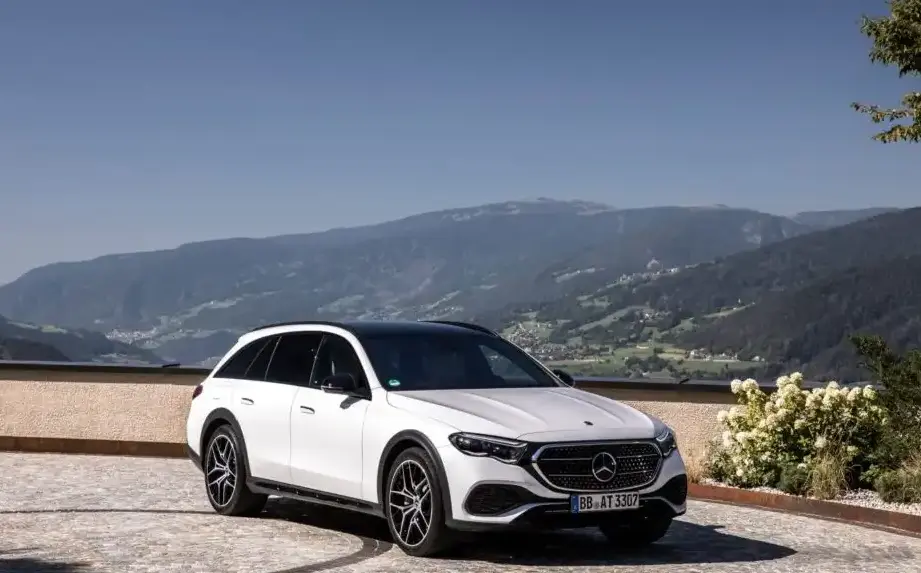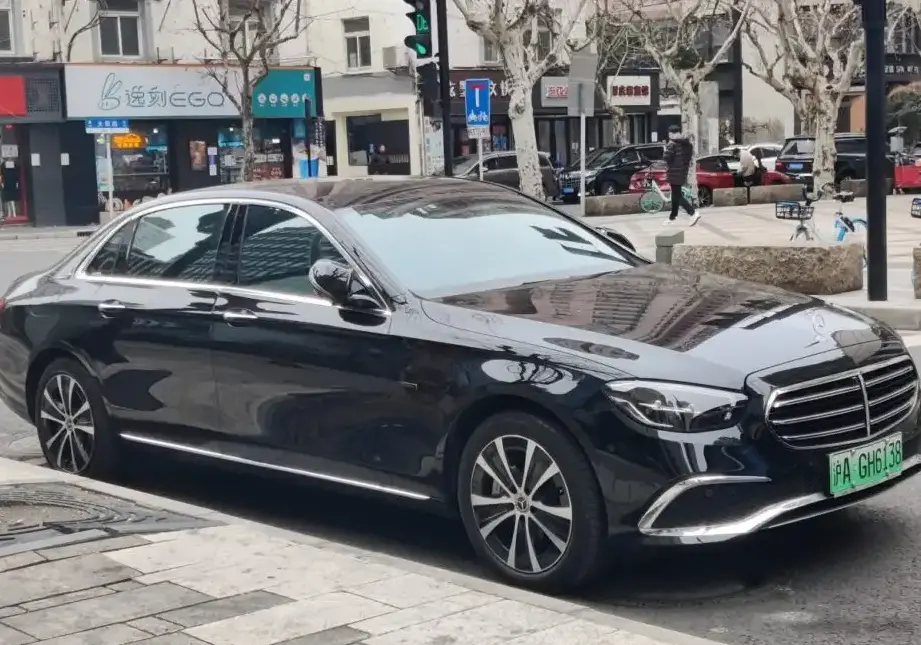
The Mercedes-Benz E-Class Long (V213, facelift 2020) E 260 EQ Boost represents a significant iteration within the globally successful E-Class range. Introduced in 2020 and continuing through 2023, this variant was primarily aimed at the Chinese market, where longer-wheelbase sedans are highly favored. It combines a 2.0-liter turbocharged inline-four engine with a 48-volt mild hybrid system (EQ Boost), paired with a 9G-TRONIC nine-speed automatic transmission. This configuration positioned the E 260 as a compelling blend of performance, efficiency, and luxury within the E-Class lineup, offering a step up from base models while remaining more accessible than the higher-performance AMG variants or six-cylinder options.
Technical Specifications
| Brand | Mercedes-Benz |
| Model | E-Class |
| Generation | E-Class Long (V213, facelift 2020) |
| Type (Engine) | E 260 (197 Hp) EQ Boost 9G-TRONIC |
| Start of production | 2020 |
| End of production | 2023 |
| Powertrain Architecture | MHEV (Mild Hybrid Electric Vehicle) |
| Body type | Sedan |
| Seats | 5 |
| Doors | 4 |
| Fuel consumption (combined) | 7.45 l/100 km (31.6 US mpg, 37.9 UK mpg, 13.4 km/l) |
| Fuel Type | Petrol (Gasoline) |
| Acceleration 0 – 100 km/h | 7.7 sec |
| Acceleration 0 – 62 mph | 7.7 sec |
| Acceleration 0 – 60 mph | 7.3 sec |
| Maximum speed | 227 km/h (141.05 mph) |
| Emission standard | China 6 |
| Electric motor power | 14 Hp |
| Electric motor location | Front, Longitudinal |
| Power | 197 Hp @ 6100 rpm |
| Torque | 320 Nm @ 1650-4000 rpm (236.02 lb.-ft. @ 1650-4000 rpm) |
| Engine layout | Front, Longitudinal |
| Engine Model/Code | M 264.920 |
| Engine displacement | 1991 cm3 (121.5 cu. in.) |
| Number of cylinders | 4 |
| Engine configuration | Inline |
| Cylinder Bore | 83 mm (3.27 in.) |
| Piston Stroke | 92 mm (3.62 in.) |
| Number of valves per cylinder | 4 |
| Fuel injection system | Direct injection |
| Engine aspiration | Twin-scroll turbo, Intercooler |
| Valvetrain | DOHC |
| Engine oil capacity | 6.6 l (6.97 US qt | 5.81 UK qt) |
| Fuel tank capacity | 66 l (17.44 US gal | 14.52 UK gal) |
| Length | 5078 mm (199.92 in.) |
| Width | 1860 mm (73.23 in.) |
| Width including mirrors | 2065 mm (81.3 in.) |
| Height | 1480 mm (58.27 in.) |
| Wheelbase | 3079 mm (121.22 in.) |
| Drivetrain Architecture | RWD, MHEV |
| Drive wheel | Rear wheel drive |
| Number of gears and type of gearbox | 9 gears, automatic transmission G-TRONIC |
| Front suspension | Double wishbone, Transverse stabilizer |
| Rear suspension | Independent multi-link suspension, Transverse stabilizer |
| Front brakes | Ventilated discs |
| Rear brakes | Ventilated discs |
| Tires size | 245/45 R18 |
| Wheel rims size | 8J x 18 |
Powertrain & Engine Architecture
The heart of the E 260 EQ Boost is the M 264.920 2.0-liter inline-four engine. This engine is a member of Mercedes-Benz’s modular engine family, known for its efficiency and advanced technology. It features direct fuel injection, a twin-scroll turbocharger, and an intercooler to maximize power output and minimize turbo lag. The engine produces 197 horsepower at 6,100 rpm and 320 Nm (236 lb-ft) of torque between 1,650 and 4,000 rpm. The “EQ Boost” component is a 48-volt mild hybrid system. This system incorporates a belt-driven starter-generator (BSG) that adds up to 14 horsepower and 160 Nm (118 lb-ft) of torque temporarily, assisting the engine during acceleration and allowing for smoother start/stop operation. The 9G-TRONIC nine-speed automatic transmission is a key element, offering smooth and efficient gear changes. It’s designed to work seamlessly with the engine and mild hybrid system, optimizing fuel economy and performance.
Driving Characteristics
The E 260 EQ Boost delivers a refined and comfortable driving experience. The mild hybrid system provides a noticeable boost during initial acceleration, filling in gaps in the torque curve and making the car feel more responsive. While not a sports car, the E 260 offers adequate performance for everyday driving and highway cruising. The 0-60 mph time of around 7.3 seconds is respectable. Compared to the E 300, which typically features a more powerful engine without the EQ Boost, the E 260 prioritizes fuel efficiency and smoothness over outright speed. The 9G-TRONIC transmission contributes to this, providing well-spaced gear ratios that keep the engine in its optimal power band. The long wheelbase of the E-Class contributes to a comfortable ride, absorbing bumps and imperfections in the road effectively.
Equipment & Trim Levels
The E 260 EQ Boost in the Chinese market typically came well-equipped as standard. Features included leather upholstery, automatic climate control, a large infotainment screen with Mercedes-Benz’s MBUX system, and a suite of driver-assistance technologies such as lane keeping assist, adaptive cruise control, and automatic emergency braking. Optional extras included a panoramic sunroof, premium sound system, and various interior trim upgrades. The long wheelbase provided significantly more rear legroom compared to the standard E-Class, making it particularly appealing to passengers.
Chassis & Braking
The E 260 EQ Boost utilizes a double wishbone front suspension and an independent multi-link rear suspension, both incorporating transverse stabilizers. This setup provides a good balance between comfort and handling. Ventilated disc brakes are used on all four wheels, providing ample stopping power. The car is equipped with ABS (Anti-lock Braking System) and electronic stability control. The steering is electric power-assisted, offering a precise and responsive feel.
Market Reception & Comparison
The E 260 EQ Boost was well-received in the Chinese market, where its combination of luxury, technology, and fuel efficiency resonated with buyers. Critics praised the smooth powertrain, comfortable ride, and spacious interior. Compared to other E-Class variants, the E 260 offered a more affordable entry point into the range while still providing a premium experience. The fuel economy of 7.45 l/100 km (31.6 US mpg) was competitive within its segment. Compared to the E 300, the E 260 offered a slightly lower price point but with a modest reduction in performance.
Legacy
The Mercedes-Benz E 260 EQ Boost (V213) represents an important step in the brand’s electrification strategy. The integration of the 48-volt mild hybrid system demonstrated Mercedes-Benz’s commitment to improving fuel efficiency and reducing emissions. On the used car market, these models are generally considered reliable, with the M 264 engine proving to be durable. The long-wheelbase configuration continues to be popular in markets where rear passenger comfort is a priority, and the E 260 EQ Boost remains a desirable option for buyers seeking a luxurious and efficient sedan.