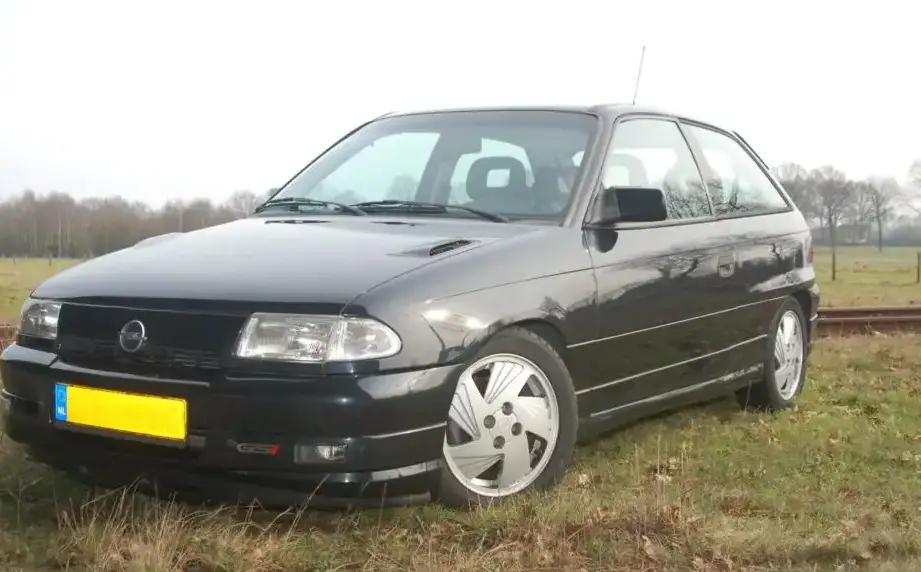
The Opel Astra H Caravan 2.0i 16V Turbo, produced from 2004 to 2006, represented a performance-oriented variant within the second generation (H) Astra range. Positioned as a premium offering within the Caravan (estate) body style, it aimed to provide a blend of practicality and spirited driving. This model was primarily marketed in Europe, leveraging Opel’s established presence in that region. It was built on the GM Delta platform, shared with other vehicles like the Chevrolet Cobalt and Saturn Ion, though with significant European tuning and refinement. The 2.0i 16V Turbo was a key part of the Astra H’s appeal, offering a substantial power upgrade over the base engine options.
Technical Specifications
| Brand | Opel |
| Model | Astra |
| Generation | Astra H Caravan |
| Type (Engine) | 2.0i 16V Turbo (200 Hp) |
| Start of production | October, 2004 |
| End of production | 2006 |
| Powertrain Architecture | Internal Combustion engine |
| Body type | Station wagon (estate) |
| Seats | 5 |
| Doors | 5 |
| Fuel consumption (economy) – urban | 13.2 l/100 km (17.8 US mpg, 21.4 UK mpg, 7.6 km/l) |
| Fuel consumption (economy) – extra urban | 7.2 l/100 km (32.7 US mpg, 39.2 UK mpg, 13.9 km/l) |
| Fuel consumption (economy) – combined | 9.4 l/100 km (25 US mpg, 30.1 UK mpg, 10.6 km/l) |
| CO2 emissions | 233 g/km |
| Fuel Type | Petrol (Gasoline) |
| Acceleration 0 – 100 km/h | 8.4 sec |
| Acceleration 0 – 62 mph | 8.4 sec |
| Acceleration 0 – 60 mph | 8 sec (Calculated) |
| Maximum speed | 230 km/h (142.92 mph) |
| Weight-to-power ratio | 7.1 kg/Hp, 140.4 Hp/tonne |
| Weight-to-torque ratio | 5.4 kg/Nm, 183.9 Nm/tonne |
| Power | 200 Hp @ 5400 rpm |
| Power per litre | 100.1 Hp/l |
| Torque | 262 Nm @ 4200 rpm (193.24 lb.-ft. @ 4200 rpm) |
| Engine layout | Front, Transverse |
| Engine Model/Code | Z20LER |
| Engine displacement | 1998 cm3 (121.93 cu. in.) |
| Number of cylinders | 4 |
| Engine configuration | Inline |
| Cylinder Bore | 86 mm (3.39 in.) |
| Piston Stroke | 86 mm (3.39 in.) |
| Compression ratio | 8.8:1 |
| Number of valves per cylinder | 4 |
| Fuel injection system | Multi-port manifold injection |
| Engine aspiration | Turbocharger, Intercooler |
| Valvetrain | DOHC |
| Engine oil capacity | 4.3 l (4.54 US qt, 3.78 UK qt) |
| Coolant | 7.7 l (8.14 US qt, 6.78 UK qt) |
| Kerb Weight | 1425 kg (3141.59 lbs.) |
| Max. weight | 1950 kg (4299.01 lbs.) |
| Max load | 525 kg (1157.43 lbs.) |
| Trunk (boot) space – minimum | 540 l (19.07 cu. ft.) |
| Trunk (boot) space – maximum | 1590 l (56.15 cu. ft.) |
| Fuel tank capacity | 52 l (13.74 US gal, 11.44 UK gal) |
| Length | 4515 mm (177.76 in.) |
| Width | 1794 mm (70.63 in.) |
| Height | 1500 mm (59.06 in.) |
| Wheelbase | 2703 mm (106.42 in.) |
| Front track | 1488 mm (58.58 in.) |
| Rear (Back) track | 1488 mm (58.58 in.) |
| Front overhang | 871 mm (34.29 in.) |
| Rear overhang | 941 mm (37.05 in.) |
| Ride height (ground clearance) | 160 mm (6.3 in.) |
| Drag coefficient (Cd) | 0.31 |
| Drivetrain Architecture | ICE, Front wheel drive |
| Drive wheel | Front wheel drive |
| Number of gears and type of gearbox | 6 gears, manual transmission |
| Front suspension | Spring Strut |
| Rear suspension | Spring Strut |
| Front brakes | Ventilated discs |
| Rear brakes | Disc |
| Assisting systems | ABS (Anti-lock braking system) |
| Steering type | Steering rack and pinion |
| Tires size | 225/45 R17 |
| Wheel rims size | 7J x 17 |
INTRODUCTION
The Opel Astra H Caravan 2.0i 16V Turbo, launched in 2004, was a significant upgrade within the Astra H range. The Caravan body style, popular in Europe for its practicality, received a performance boost with this engine option. The Astra H, built from 2004-2009, represented a substantial leap forward for Opel in terms of design, build quality, and technology. This particular variant, with its 200 horsepower turbocharged engine, aimed to appeal to drivers seeking a more engaging experience without sacrificing the space and versatility of a station wagon. It sat near the top of the Astra H Caravan lineup, below only the more specialized OPC (Opel Performance Center) models.
Powertrain & Engine Architecture
At the heart of the Astra H Caravan 2.0i 16V Turbo lies the Z20LER engine, a 1998cc inline-four cylinder powerplant. This engine is a member of Opel’s ‘Family 1’ engine family, known for its robust construction and tuning potential. The Z20LER utilizes a cast iron block and an aluminum cylinder head, featuring a double overhead camshaft (DOHC) valvetrain with four valves per cylinder. Fuel delivery is managed by a multi-port fuel injection system, ensuring precise fuel atomization. Crucially, the engine is equipped with a Garrett GT22 turbocharger and an intercooler, boosting power output significantly. The turbocharger provides increased air intake, allowing for a higher compression ratio and more efficient combustion. The engine was paired with a Getrag M32 six-speed manual transmission, known for its durability and precise shift feel. While an automatic transmission was available on other Astra H models, the 2.0i Turbo was almost exclusively offered with the manual gearbox to maximize performance and driver engagement.
Driving Characteristics
The 200 horsepower and 262 Nm (193 lb-ft) of torque delivered by the Z20LER engine transformed the driving experience of the Astra H Caravan. Acceleration from 0-100 km/h (0-62 mph) took approximately 8.4 seconds, a respectable figure for a family estate car of that era. The turbocharger provides a noticeable surge of power in the mid-range, making overtaking maneuvers effortless. The six-speed manual transmission allows drivers to keep the engine within its optimal power band, maximizing performance. Compared to the naturally aspirated 1.6L and 1.8L engines available in the Astra H range, the 2.0i Turbo offered a significantly more responsive and engaging driving experience. While not as raw or focused as the Astra OPC, it provided a compelling balance between performance and everyday usability. The suspension, tuned for comfort and stability, handled the increased power reasonably well, though body roll was noticeable during aggressive cornering.
Equipment & Trim Levels
The Astra H Caravan 2.0i 16V Turbo typically came with a generous level of standard equipment. This included air conditioning, power windows, central locking, and an integrated stereo system. Higher trim levels added features such as alloy wheels (typically 17-inch), fog lights, a leather-wrapped steering wheel, and upgraded interior upholstery. Optional extras included a sunroof, parking sensors, and a more advanced audio system. The interior design was functional and modern for its time, with a focus on ergonomics and ease of use. The Caravan’s spacious interior and large cargo area (540-1590 liters) remained key selling points, even with the performance-oriented engine.
Chassis & Braking
The Astra H Caravan featured a MacPherson strut front suspension and a multi-link rear suspension, providing a comfortable ride and decent handling characteristics. The 2.0i Turbo variant typically received slightly stiffer springs and dampers compared to lower-powered models to manage the increased power and weight. Braking duties were handled by ventilated disc brakes at the front and solid disc brakes at the rear. Anti-lock Braking System (ABS) was standard, enhancing safety and control during emergency braking situations. The steering system utilized a rack and pinion setup, providing precise and responsive steering feel.
Market Reception & Comparison
The Astra H Caravan 2.0i 16V Turbo was generally well-received by automotive critics. It was praised for its strong performance, spacious interior, and comfortable ride. However, some reviewers noted that the fuel economy was relatively high compared to the lower-powered engine options. Compared to rivals like the Ford Focus Estate and Volkswagen Passat Variant, the Astra H Caravan offered a compelling combination of value, performance, and practicality. The 2.0i Turbo variant positioned itself as a more engaging alternative to the diesel-powered models, appealing to drivers who prioritized driving enjoyment over outright fuel efficiency.
Legacy
The Z20LER engine, while not without its quirks, proved to be a relatively reliable powerplant when properly maintained. Common issues included occasional turbocharger failures and oil leaks. However, with regular servicing and preventative maintenance, these engines can provide many years of reliable service. Today, the Astra H Caravan 2.0i 16V Turbo is becoming increasingly sought after by enthusiasts and collectors. Its combination of performance, practicality, and relative rarity makes it a desirable classic car. The used car market values these models higher than their lower-powered counterparts, reflecting their appeal to drivers seeking a more engaging and rewarding driving experience.