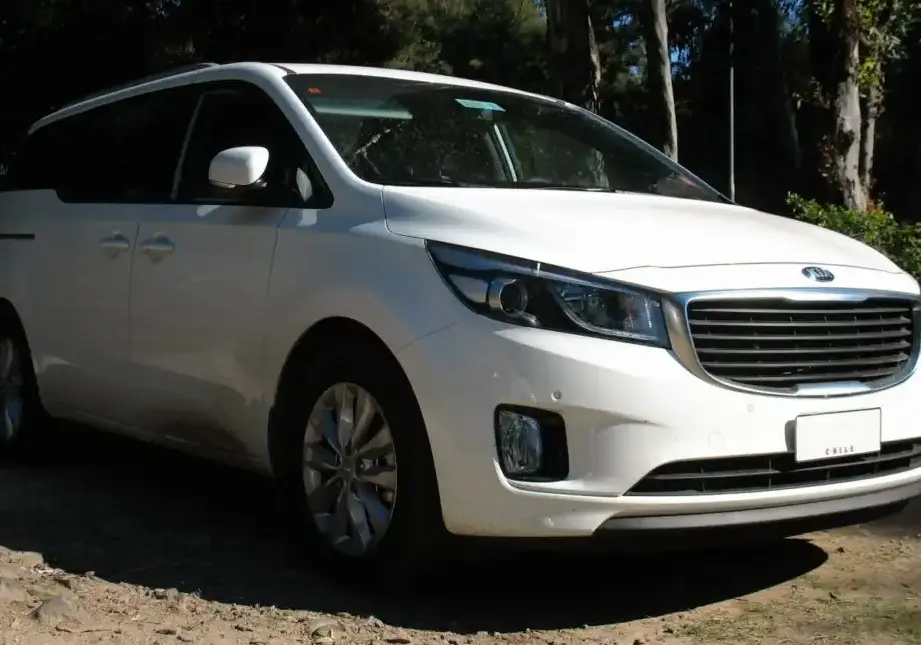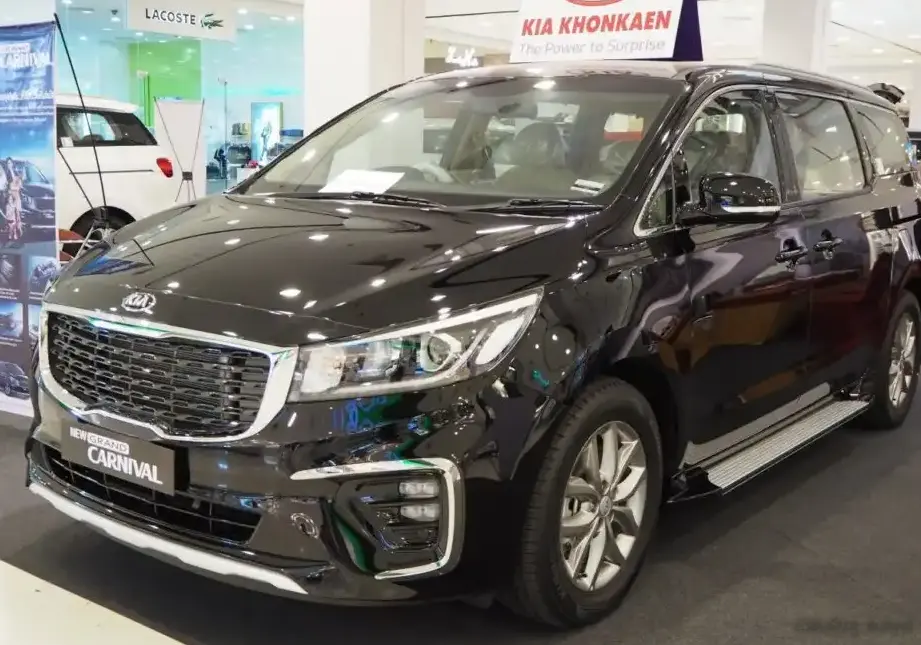
The Kia Grand Carnival II, specifically the facelifted version introduced in 2010, represented a significant step forward for Kia in the highly competitive minivan segment. This iteration, produced through 2014, aimed to provide a compelling alternative to established players like the Honda Odyssey and Toyota Sienna, particularly in markets outside of North America where larger MPVs remained popular. The 3.5-liter V6 engine paired with a six-speed automatic transmission was a top-tier offering within the Grand Carnival lineup, positioned as the premium choice for buyers prioritizing power and a more refined driving experience. This variant was particularly popular in regions like Asia, the Middle East, and parts of Europe, where the Grand Carnival found a strong niche as a spacious and well-equipped family vehicle.
Technical Specifications
| Brand | Kia |
| Model | Carnival |
| Generation | Grand Carnival II (facelift 2010) |
| Type (Engine) | 3.5 V6 (275 Hp) Automatic |
| Start of production | 2010 |
| End of production | 2014 |
| Powertrain Architecture | Internal Combustion engine |
| Body type | Minivan |
| Seats | 7 |
| Doors | 5 |
| Fuel Type | Petrol (Gasoline) |
| Weight-to-power ratio | 7.6 kg/Hp, 131 Hp/tonne |
| Weight-to-torque ratio | 6.3 kg/Nm, 160 Nm/tonne |
| Power | 275 Hp @ 6300 rpm |
| Power per litre | 79.3 Hp/l |
| Torque | 336 Nm @ 4500 rpm, 247.82 lb.-ft. @ 4500 rpm |
| Engine layout | Front, Transverse |
| Engine Model/Code | G6DC |
| Engine displacement | 3470 cm3, 211.75 cu. in. |
| Number of cylinders | 6 |
| Engine configuration | V-engine |
| Cylinder Bore | 92 mm, 3.62 in. |
| Piston Stroke | 87 mm, 3.43 in. |
| Number of valves per cylinder | 4 |
| Fuel injection system | Multi-port manifold injection |
| Engine aspiration | Naturally aspirated engine |
| Engine oil capacity | 5.7 l, 6.02 US qt | 5.02 UK qt |
| Coolant | 8.6 l, 9.09 US qt | 7.57 UK qt |
| Kerb Weight | 2100 kg, 4629.71 lbs |
| Trunk (boot) space – minimum | 912 l, 32.21 cu. ft |
| Trunk (boot) space – maximum | 4007 l, 141.51 cu. ft |
| Fuel tank capacity | 80 l, 21.13 US gal | 17.6 UK gal |
| Length | 5130 mm, 201.97 in |
| Width | 1985 mm, 78.15 in |
| Height | 1760 mm, 69.29 in |
| Wheelbase | 3020 mm, 118.9 in |
| Front track | 1685 mm, 66.34 in |
| Rear (Back) track | 1685 mm, 66.34 in |
| Drag coefficient (Cd) | 0.34 |
| Minimum turning circle (turning diameter) | 12.1 m, 39.7 ft |
| Drivetrain Architecture | The Internal combustion engine (ICE) drives the front wheels of the vehicle. |
| Drive wheel | Front wheel drive |
| Number of gears and type of gearbox | 6 gears, automatic transmission |
| Front suspension | Independent type McPherson |
| Rear suspension | Dependent spring suspension with transverse stabilizer |
| Front brakes | Ventilated discs |
| Rear brakes | Drum |
| Assisting systems | ABS (Anti-lock braking system) |
| Steering type | Steering rack and pinion |
| Tires size | 225/70 R16 |
| Wheel rims size | 16 |
Powertrain & Engine Architecture
The heart of this Grand Carnival variant is the Kia-developed 3.5-liter G6DC V6 engine. This engine utilizes a naturally aspirated configuration with a 60-degree V-angle, contributing to a relatively smooth and balanced operation. It features a dual overhead camshaft (DOHC) design with four valves per cylinder, enhancing volumetric efficiency. Fuel delivery is managed by a multi-point fuel injection system, providing precise fuel metering for optimal combustion. The engine’s 275 horsepower output at 6,300 rpm and 247.82 lb-ft of torque at 4,500 rpm provided ample power for a vehicle of this size. The engine is transversely mounted in the front of the vehicle, driving the front wheels. Paired with the engine is a six-speed automatic transmission, offering smooth and responsive gear changes. This transmission was chosen for its balance of efficiency and drivability, providing a comfortable experience for both city and highway driving.
Driving Characteristics
The 3.5L V6 automatic Grand Carnival offered a noticeable step up in performance compared to the lower-trim models equipped with smaller engines. Acceleration was brisk, allowing for confident merging and overtaking maneuvers. While not a sports-oriented vehicle, the V6 provided sufficient power to handle a fully loaded cabin and cargo without feeling strained. The six-speed automatic transmission contributed to a relatively refined driving experience, with well-spaced gear ratios that kept the engine operating within its optimal power band. Compared to manual transmission versions (available in some markets), the automatic offered greater convenience, particularly in urban environments. However, it did result in a slight reduction in fuel economy. The suspension, tuned for comfort, absorbed bumps and irregularities in the road effectively, providing a smooth ride for passengers.
Equipment & Trim Levels
The 3.5 V6 automatic trim typically represented the highest level of equipment available on the Grand Carnival. Standard features often included automatic climate control, power windows and locks, a premium audio system, and alloy wheels. Higher-end trims could also include leather upholstery, a sunroof, and advanced safety features like parking sensors and a rearview camera. Interior appointments were generally well-executed, with a focus on practicality and durability. The spacious cabin offered comfortable seating for up to seven passengers, with ample legroom and headroom in all three rows. Optional extras often included a navigation system and upgraded entertainment options for rear-seat passengers.
Chassis & Braking
The Grand Carnival II utilized a front-wheel-drive layout with an independent McPherson strut suspension in the front and a dependent spring suspension with a transverse stabilizer in the rear. This configuration provided a good balance of ride comfort and handling stability. The front brakes were ventilated discs, offering strong stopping power, while the rear brakes were drums. This combination was considered adequate for the vehicle’s weight and intended use. Anti-lock Braking System (ABS) was standard, enhancing safety during emergency braking situations. The steering system employed a rack and pinion setup, providing precise and responsive steering feel.
Market Reception & Comparison
The 3.5 V6 Grand Carnival was generally well-received by automotive critics, who praised its spacious interior, comfortable ride, and strong engine performance. It was often seen as a value-for-money alternative to more expensive minivans from Japanese and American manufacturers. Fuel economy, however, was a common criticism, as the V6 engine consumed more fuel than the smaller engine options. Reliability was generally good, although some owners reported minor issues with the automatic transmission over the long term. Compared to the 2.7-liter four-cylinder models, the V6 offered a significant performance advantage, but at a higher price point and with increased running costs.
Legacy
The Kia Grand Carnival II (2010-2014) 3.5 V6 automatic has established itself as a reliable and practical family vehicle in the used car market. While not known for exceptional performance or cutting-edge technology, it offers a compelling combination of space, comfort, and affordability. The G6DC V6 engine, when properly maintained, has proven to be a durable and long-lasting powertrain. Today, these Grand Carnivals can be found with relatively high mileage, still providing dependable transportation for families. Parts availability is generally good, and maintenance costs are reasonable, making it a viable option for budget-conscious buyers seeking a spacious and versatile minivan.