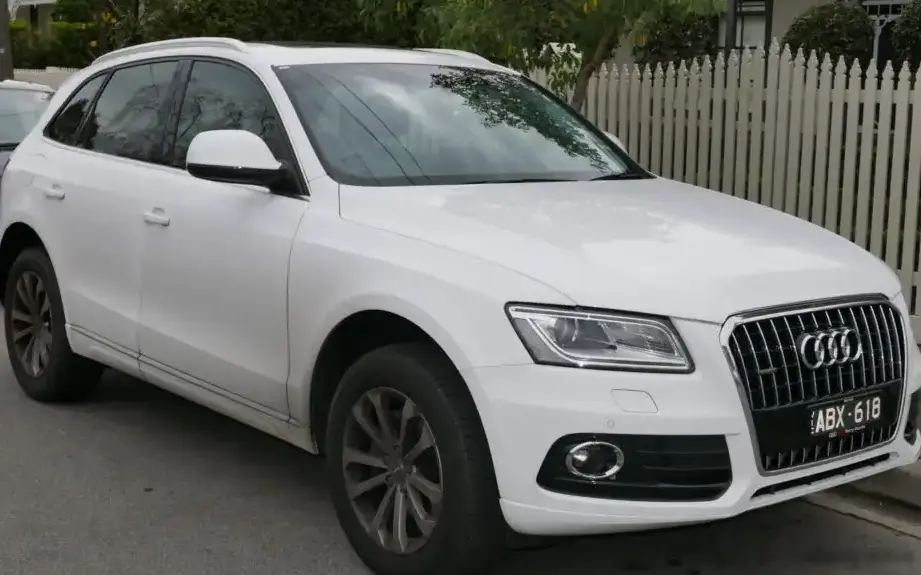
The Audi Q5 3.2 FSI quattro, produced from May 2008 to September 2012, represents the high-performance end of the first-generation (8R) Q5 lineup. Positioned as a premium compact SUV, it aimed to deliver a blend of luxury, practicality, and engaging driving dynamics. This variant utilized Audi’s naturally aspirated 3.2-liter V6 engine paired with a seven-speed S tronic dual-clutch automatic transmission and the renowned quattro all-wheel-drive system. It served as a step up from the 2.0 TFSI models, offering significantly more power and a more refined driving experience, while remaining more accessible than the later SQ5 performance model.
Technical Specifications
| Brand | Audi |
| Model | Q5 |
| Generation | Q5 I (8R) |
| Type (Engine) | 3.2 FSI V6 (270 Hp) quattro |
| Start of production | May, 2008 |
| End of production | September, 2012 |
| Powertrain Architecture | Internal Combustion engine |
| Body type | SUV |
| Seats | 5 |
| Doors | 5 |
| Fuel consumption (urban) | 12.3 l/100 km (19.1 US mpg, 23 UK mpg, 8.1 km/l) |
| Fuel consumption (extra urban) | 7.6 l/100 km (30.9 US mpg, 37.2 UK mpg, 13.2 km/l) |
| Fuel consumption (combined) | 9.3 l/100 km (25.3 US mpg, 30.4 UK mpg, 10.8 km/l) |
| Fuel Type | Petrol (Gasoline) |
| Acceleration 0 – 100 km/h | 6.9 sec |
| Acceleration 0 – 62 mph | 6.9 sec |
| Acceleration 0 – 60 mph | 6.6 sec |
| Maximum speed | 234 km/h (145.4 mph) |
| Emission standard | Euro 4 |
| Weight-to-power ratio | 6.7 kg/Hp, 149.6 Hp/tonne |
| Weight-to-torque ratio | 5.5 kg/Nm, 182.8 Nm/tonne |
| Power | 270 Hp @ 6500 rpm |
| Power per litre | 84.5 Hp/l |
| Torque | 330 Nm @ 3000 rpm (243.4 lb.-ft. @ 3000 rpm) |
| Engine layout | Front, Longitudinal |
| Engine Model/Code | CALB |
| Engine displacement | 3197 cm3 (195.09 cu. in.) |
| Number of cylinders | 6 |
| Engine configuration | V-engine |
| Cylinder Bore | 85.5 mm (3.37 in.) |
| Piston Stroke | 92.8 mm (3.65 in.) |
| Compression ratio | 12.5:1 |
| Number of valves per cylinder | 4 |
| Fuel injection system | Direct injection |
| Engine aspiration | Naturally aspirated engine |
| Valvetrain | DOHC |
| Engine oil capacity | 6.2 l (6.55 US qt | 5.46 UK qt) |
| Kerb Weight | 1805 kg (3979.34 lbs.) |
| Max. weight | 2415 kg (5324.16 lbs.) |
| Max load | 610 kg (1344.82 lbs.) |
| Trunk (boot) space – minimum | 540 l (19.07 cu. ft.) |
| Trunk (boot) space – maximum | 1560 l (55.09 cu. ft.) |
| Fuel tank capacity | 75 l (19.81 US gal | 16.5 UK gal) |
| Permitted trailer load with brakes (8%) | 2400 kg (5291.09 lbs.) |
| Permitted trailer load without brakes | 750 kg (1653.47 lbs.) |
| Length | 4629 mm (182.24 in.) |
| Width | 1880 mm (74.02 in.) |
| Width including mirrors | 2088 mm (82.2 in.) |
| Height | 1653 mm (65.08 in.) |
| Wheelbase | 2807 mm (110.51 in.) |
| Front track | 1617 mm (63.66 in.) |
| Rear (Back) track | 1613 mm (63.5 in.) |
| Front overhang | 895 mm (35.24 in.) |
| Rear overhang | 927 mm (36.5 in.) |
| Ride height (ground clearance) | 200 mm (7.87 in.) |
| Drag coefficient (Cd) | 0.33 |
| Minimum turning circle (turning diameter) | 11.6 m (38.06 ft.) |
| Drive wheel | All wheel drive (4×4) |
| Number of gears and type of gearbox | 7 gears, automatic transmission S tronic |
| Front suspension | Independent multi-link suspension |
| Rear suspension | Independent on trapezoidal lever |
| Front brakes | Ventilated discs |
| Rear brakes | Disc |
| Assisting systems | ABS (Anti-lock braking system) |
| Steering type | Steering rack and pinion |
| Tires size | 235/60 R18 |
| Wheel rims size | 18 |
INTRODUCTION
The Audi Q5 3.2 FSI quattro debuted in 2008 as part of the first generation (8R) Q5 series. Built on the Audi-developed 1HX0/A3 platform (shared with the Volkswagen Tiguan), the Q5 aimed to provide a more premium and engaging alternative to traditional compact SUVs. The 3.2 FSI quattro variant occupied the upper echelon of the Q5 range at the time, offering a significant performance boost over the base 2.0 TFSI models. It was designed to appeal to buyers seeking a luxurious and capable SUV with strong acceleration and all-weather capability.
Powertrain & Engine Architecture
At the heart of the Q5 3.2 FSI quattro lies the CALB engine code, a 3.2-liter naturally aspirated V6 engine. This engine features direct fuel injection (FSI – Fuel Stratified Injection), a double overhead camshaft (DOHC) valvetrain, and four valves per cylinder. The direct injection system allows for precise fuel delivery, enhancing both power and efficiency. The engine produces 270 horsepower at 6500 rpm and 330 Nm (243.4 lb.-ft.) of torque at 3000 rpm. The engine’s longitudinal mounting and the S tronic seven-speed dual-clutch transmission contribute to its responsive character. The S tronic transmission offers quick and smooth gear changes, enhancing both acceleration and fuel economy. Unlike traditional torque converter automatics, the S tronic utilizes two clutches, pre-selecting the next gear for near-instantaneous shifts.
Driving Characteristics
The Q5 3.2 FSI quattro delivers a noticeably more spirited driving experience compared to the 2.0 TFSI variants. The V6 engine provides ample power for confident acceleration in various driving situations, achieving 0-60 mph in approximately 6.6 seconds. The S tronic transmission complements the engine well, providing quick and seamless gear changes. The quattro all-wheel-drive system ensures excellent traction and stability, particularly in adverse weather conditions. While not overtly sporty, the Q5 3.2 offers a refined and engaging driving experience, with precise steering and a comfortable ride. The gear ratios are tuned for a balance between performance and fuel efficiency, with taller gears for highway cruising and shorter gears for quicker acceleration.
Equipment & Trim Levels
The Q5 3.2 FSI quattro typically came well-equipped as standard. Features included leather upholstery, tri-zone automatic climate control, a premium audio system, and parking sensors. Optional extras included a panoramic sunroof, navigation system, adaptive cruise control, and upgraded interior trim packages. The interior design emphasized luxury and functionality, with high-quality materials and a user-friendly layout. Trim levels varied slightly depending on the market, but generally offered a range of customization options to suit individual preferences.
Chassis & Braking
The Q5 3.2 FSI quattro features an independent multi-link suspension at the front and an independent trapezoidal lever suspension at the rear, providing a comfortable and controlled ride. The suspension is tuned to balance handling and comfort, offering a good compromise for everyday driving. Braking duties are handled by ventilated discs at the front and solid discs at the rear, providing ample stopping power. The anti-lock braking system (ABS) and electronic stability control (ESC) enhance safety and stability. The Q5 3.2 typically featured larger brake rotors and calipers compared to the base models, further improving braking performance.
Market Reception & Comparison
The Audi Q5 3.2 FSI quattro was generally well-received by automotive critics. It was praised for its powerful engine, refined driving dynamics, and luxurious interior. However, some critics noted that the fuel economy was relatively low compared to the 2.0 TFSI models. Compared to the 2.0 TFSI, the 3.2 offered a significant performance advantage, but at a higher price point and with increased running costs. The 3.2 FSI also provided a more refined and quieter driving experience than the later 3.0 TDI diesel variants, appealing to buyers who preferred a gasoline engine.
Legacy
The Audi Q5 3.2 FSI quattro remains a desirable used car today, particularly for those seeking a well-equipped and capable SUV with a strong V6 engine. While the engine is known to be generally reliable, regular maintenance is crucial to prevent issues such as carbon buildup on the intake valves (a common issue with direct injection engines). The S tronic transmission requires regular fluid changes to ensure smooth operation. Overall, the Q5 3.2 FSI quattro represents a well-engineered and refined SUV that continues to offer a compelling blend of luxury, performance, and practicality.