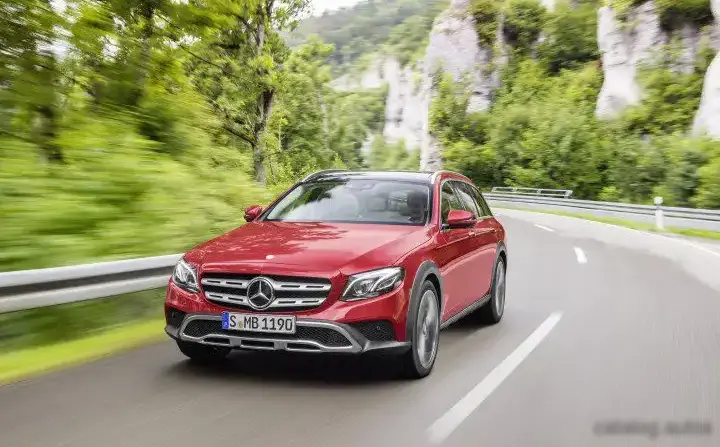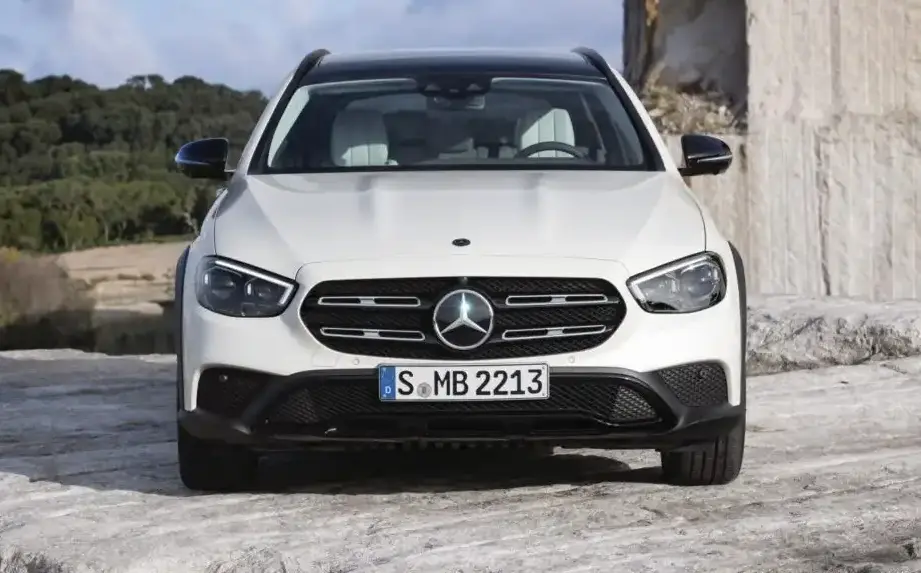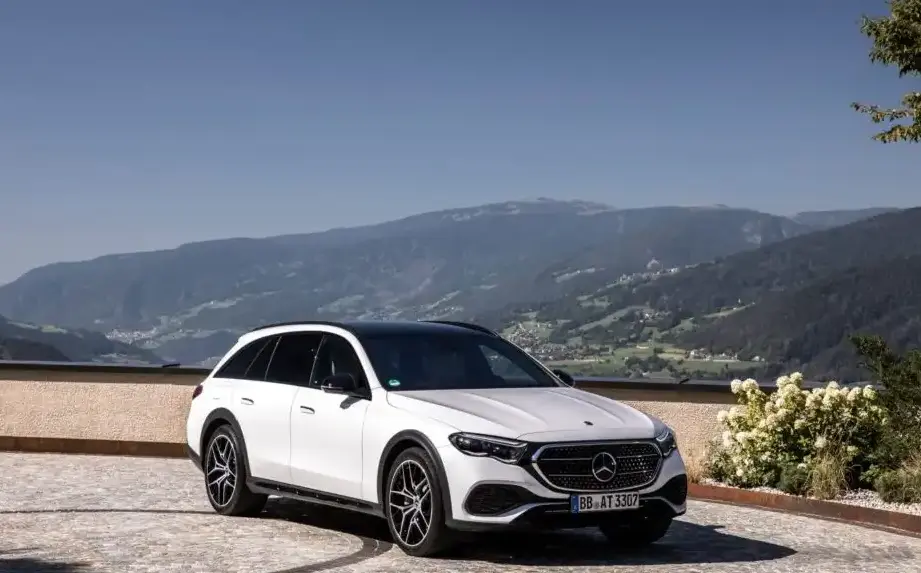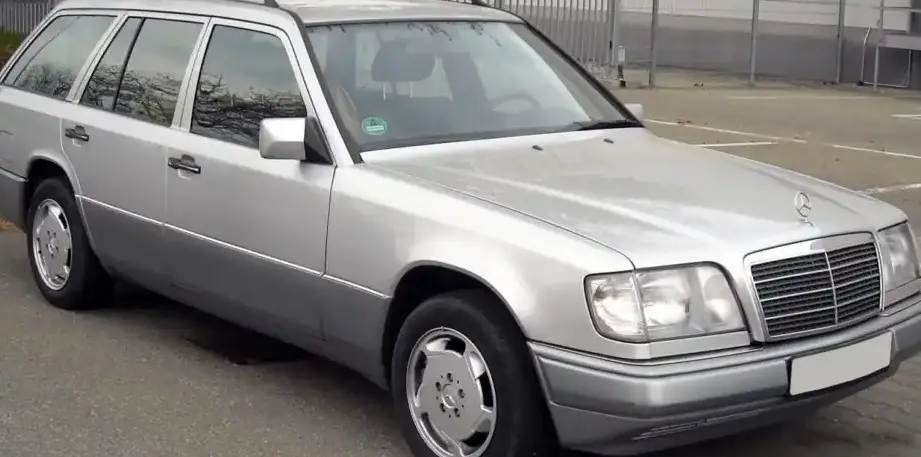
The Mercedes-Benz E 220 T, part of the S124 series T-Modell (estate) range, was produced from July 1993 to February 1996. Positioned as a mid-range offering within the broader E-Class lineup, it provided a practical and refined option for buyers seeking a spacious and comfortable wagon. The S124 generation, renowned for its robust build quality and engineering, represented a significant evolution of the earlier W123 series, incorporating enhanced safety features and a more modern design. The E 220 T specifically aimed to balance performance with fuel efficiency, appealing to families and individuals needing a versatile vehicle for both daily commuting and longer journeys.
Technical Specifications
| Brand | Mercedes-Benz |
| Model | E-class |
| Generation | E-class T-modell (S124) |
| Type (Engine) | E 220 T (150 Hp) |
| Start of production | July, 1993 |
| End of production | February, 1996 |
| Powertrain Architecture | Internal Combustion engine |
| Body type | Station wagon (estate) |
| Seats | 5 |
| Doors | 5 |
| Fuel consumption (urban) | 12.2 l/100 km (19.3 US mpg, 23.2 UK mpg, 8.2 km/l) |
| Fuel consumption (extra urban) | 7.3 l/100 km (32.2 US mpg, 38.7 UK mpg, 13.7 km/l) |
| Fuel consumption (combined) | 9.6 l/100 km (24.5 US mpg, 29.4 UK mpg, 10.4 km/l) |
| Fuel Type | Petrol (Gasoline) |
| Acceleration 0 – 100 km/h | 11.1 sec |
| Acceleration 0 – 62 mph | 11.1 sec |
| Acceleration 0 – 60 mph | 10.5 sec |
| Maximum speed | 198 km/h (123.03 mph) |
| Weight-to-power ratio | 9.9 kg/Hp, 101.4 Hp/tonne |
| Weight-to-torque ratio | 7 kg/Nm, 141.9 Nm/tonne |
| Power | 150 Hp @ 5500 rpm |
| Power per litre | 68.2 Hp/l |
| Torque | 210 Nm @ 4000 rpm (154.89 lb.-ft. @ 4000 rpm) |
| Engine layout | Front, Longitudinal |
| Engine Model/Code | M 111 E 22 / 111.960 |
| Engine displacement | 2199 cm3 (134.19 cu. in.) |
| Number of cylinders | 4 |
| Engine configuration | Inline |
| Cylinder Bore | 89.9 mm (3.54 in.) |
| Piston Stroke | 86.6 mm (3.41 in.) |
| Compression ratio | 10:1 |
| Number of valves per cylinder | 4 |
| Fuel injection system | Multi-port manifold injection |
| Engine aspiration | Naturally aspirated engine |
| Valvetrain | DOHC |
| Engine oil capacity | 5.5 l (5.81 US qt | 4.84 UK qt) |
| Coolant | 8.5 l (8.98 US qt | 7.48 UK qt) |
| Kerb Weight | 1480 kg (3262.84 lbs.) |
| Max. weight | 2150 kg (4739.94 lbs.) |
| Max load | 670 kg (1477.1 lbs.) |
| Trunk (boot) space – minimum | 530 l (18.72 cu. ft.) |
| Trunk (boot) space – maximum | 885 l (31.25 cu. ft.) |
| Fuel tank capacity | 72 l (19.02 US gal | 15.84 UK gal) |
| Length | 4765 mm (187.6 in.) |
| Width | 1740 mm (68.5 in.) |
| Height | 1490 mm (58.66 in.) |
| Wheelbase | 2800 mm (110.24 in.) |
| Front track | 1497 mm (58.94 in.) |
| Rear (Back) track | 1488 mm (58.58 in.) |
| Drivetrain Architecture | The Internal combustion engine (ICE) drives the rear wheels of the vehicle. |
| Drive wheel | Rear wheel drive |
| Number of gears and type of gearbox | 5 gears, manual transmission |
| Front suspension | Wishbone |
| Rear suspension | Independent multi-link suspension |
| Front brakes | Ventilated discs |
| Rear brakes | Disc |
| Assisting systems | ABS (Anti-lock braking system) |
| Steering type | Cone worm with recirculation balls |
| Power steering | Hydraulic Steering |
| Tires size | Front wheel tires: 195/65 R15Rear wheel tires: 195/65 R15 |
| Wheel rims size | Front wheel rims: 6.5J x 15Rear wheel rims: 6.5J x 15 |
Powertrain & Engine Architecture
The E 220 T was powered by the M111 E 22 engine, a 2.2-liter inline-four cylinder gasoline engine. This engine, part of Mercedes-Benz’s M111 family, was known for its durability and relatively smooth operation. It featured multi-port fuel injection and a double overhead camshaft (DOHC) valvetrain, contributing to its respectable power output of 150 horsepower at 5500 rpm and 210 Nm (155 lb-ft) of torque at 4000 rpm. The engine’s design prioritized refinement and longevity over outright performance. The five-speed manual transmission was standard, providing drivers with a degree of control over the engine’s power delivery. The engine was mounted longitudinally in the front of the vehicle, driving the rear wheels.
Driving Characteristics
The E 220 T with the manual transmission offered a balanced driving experience. Acceleration from 0 to 60 mph took approximately 10.5 seconds, and it had a top speed of around 123 mph. While not a sports car, the E 220 T provided sufficient power for comfortable highway cruising and overtaking. The manual gearbox allowed for precise gear selection, and the engine’s torque curve provided adequate pulling power in most situations. Compared to the more powerful E 320 models, the E 220 T felt less urgent in its acceleration, but it offered better fuel economy. The rear-wheel drive configuration provided a traditional driving feel, with predictable handling characteristics.
Equipment & Trim Levels
The E 220 T typically came equipped with a respectable level of standard features, including power windows, central locking, and an anti-lock braking system (ABS). Interior upholstery was typically cloth, although leather was available as an option. The dashboard layout was functional and ergonomically designed, with clear instrumentation. Optional extras included a sunroof, automatic climate control, and upgraded audio systems. The T-Modell designation meant a spacious cargo area, making it ideal for families or those needing to transport large items. The trim level was generally considered mid-range, offering a good balance of features and affordability.
Chassis & Braking
The S124 chassis featured an independent suspension system, with wishbones at the front and a multi-link setup at the rear. This provided a comfortable ride and good handling characteristics. The E 220 T was equipped with ventilated disc brakes at the front and solid disc brakes at the rear, providing adequate stopping power. The hydraulic power steering system offered a good balance of assistance and feedback. The car’s weight distribution contributed to its stable handling, and the ABS system enhanced braking performance in slippery conditions.
Market Reception & Comparison
The E 220 T was generally well-received by automotive critics as a practical and well-built estate car. It was praised for its comfortable ride, spacious interior, and robust engineering. However, some critics noted that its performance was not as exciting as some of its competitors. Compared to other E-Class variants, such as the E 320, the E 220 T offered a more affordable entry point into the range, but with a trade-off in terms of performance. Fuel economy was a strong point, making it an attractive option for those seeking a practical and efficient vehicle.
Legacy
The M111 engine, found in the E 220 T, is known for its reliability and longevity. Many examples are still on the road today, testament to the quality of Mercedes-Benz engineering. While maintenance costs can be higher than for some other brands, the E 220 T remains a popular choice among enthusiasts and collectors. The S124 series, as a whole, is highly regarded for its build quality and timeless design. In the used car market, the E 220 T represents a good value proposition for those seeking a classic Mercedes-Benz estate car.