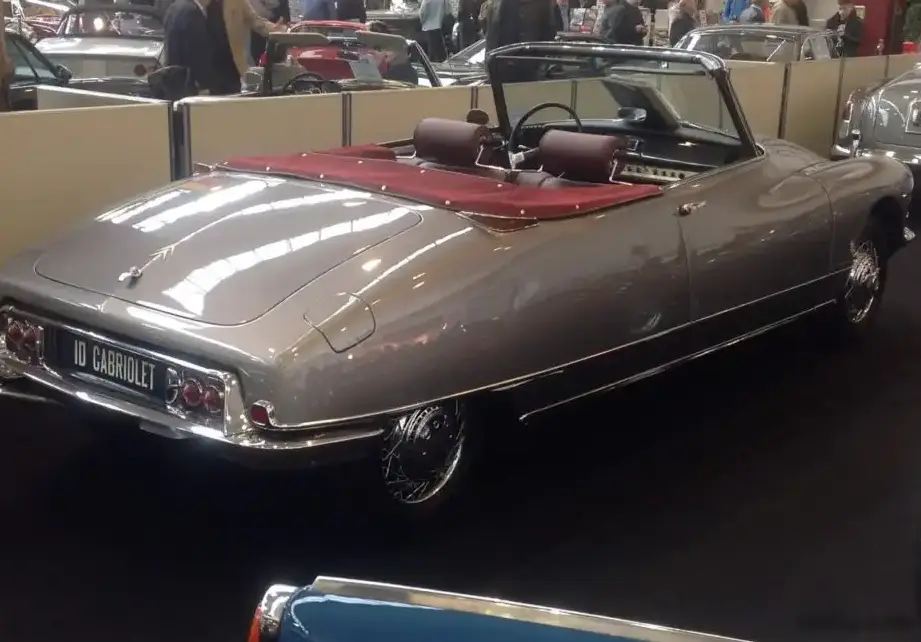
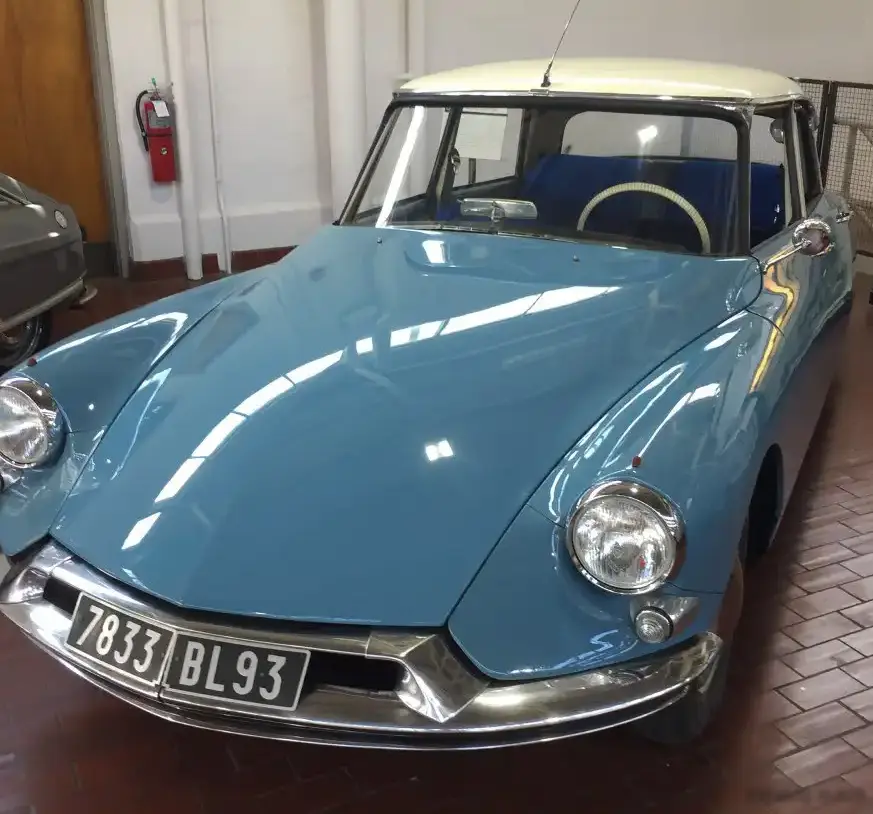
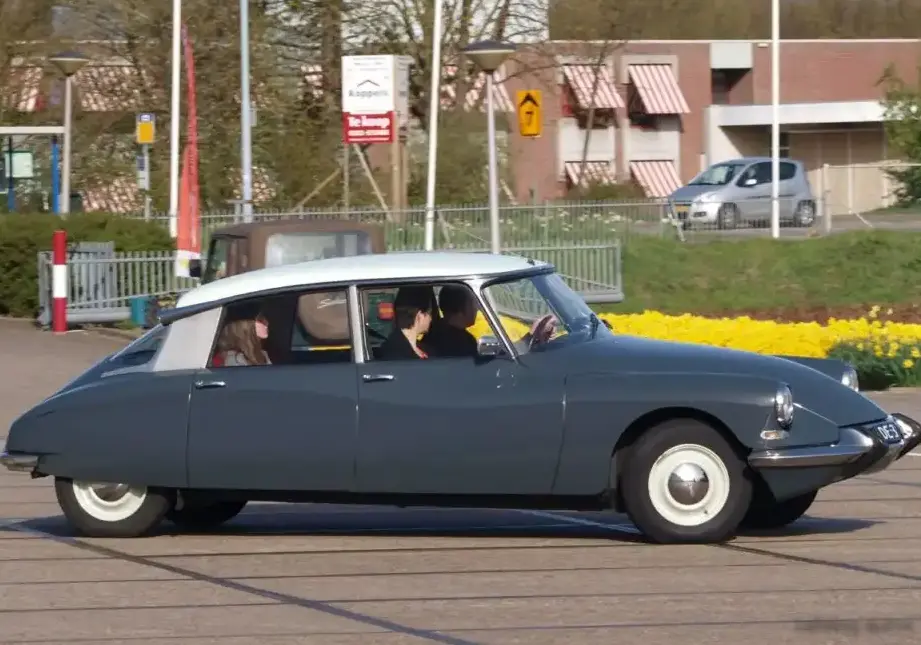
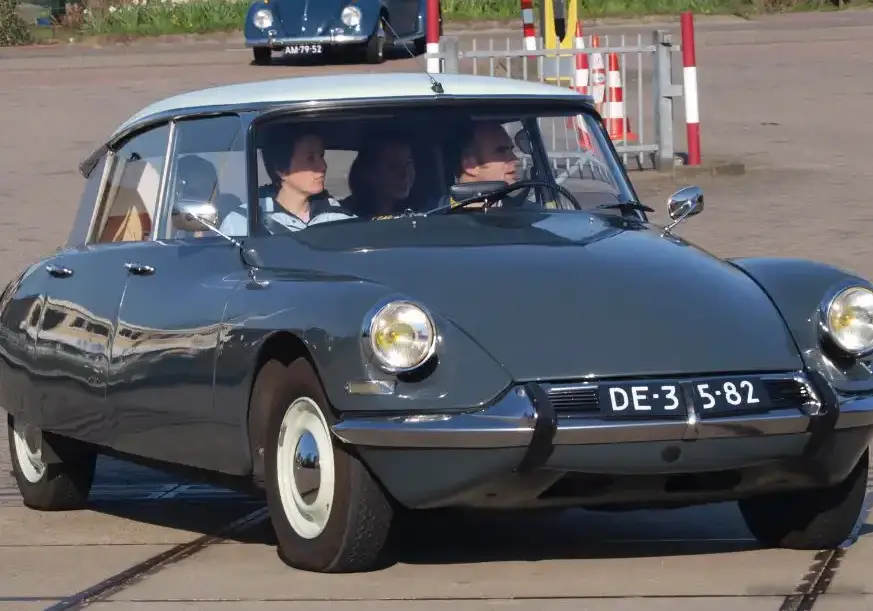
The Citroën ID I Break 19 F, produced between 1959 and 1962, represents a significant iteration within the broader Citroën ID series. This variant, characterized by its 1.9-liter engine producing 66 horsepower, occupied a crucial position in Citroën’s lineup as a practical and spacious family vehicle. The ID I Break, a station wagon (estate) body style, was part of the larger ID family, which aimed to provide comfortable and technologically advanced transportation to the French public and beyond. It was built on the foundation of Citroën’s innovative engineering principles, particularly its emphasis on hydropneumatic suspension, though the ID I Break initially featured a more conventional suspension setup. The “Break” designation signified Citroën’s estate car models, offering increased cargo capacity and versatility.
Technical Specifications
| Brand | Citroen |
| Model | ID |
| Generation | ID I Break |
| Type (Engine) | 19 F (66 Hp) |
| Start of production | 1959 year |
| End of production | 1962 year |
| Powertrain Architecture | Internal Combustion engine |
| Body type | Station wagon (estate) |
| Seats | 7 |
| Doors | 5 |
| Fuel Type | Petrol (Gasoline) |
| Weight-to-power ratio | 20 kg/Hp, 50 Hp/tonne |
| Power | 66 Hp @ 4500 rpm |
| Power per litre | 34.5 Hp/l |
| Engine displacement | 1911 cm3 |
| Engine displacement (cu. in.) | 116.62 cu. in. |
| Number of cylinders | 4 |
| Cylinder Bore | 78 mm |
| Cylinder Bore (in.) | 3.07 in. |
| Piston Stroke | 100 mm |
| Piston Stroke (in.) | 3.94 in. |
| Engine aspiration | Naturally aspirated engine |
| Engine oil capacity | 4 l |
| Engine oil capacity (US qt) | 4.23 US qt |
| Engine oil capacity (UK qt) | 3.52 UK qt |
| Coolant | 9.5 l |
| Coolant (US qt) | 10.04 US qt |
| Coolant (UK qt) | 8.36 UK qt |
| Kerb Weight | 1320 kg |
| Kerb Weight (lbs) | 2910.1 lbs. |
| Max. weight | 2000 kg |
| Max. weight (lbs) | 4409.25 lbs. |
| Max load | 680 kg |
| Max load (lbs) | 1499.14 lbs. |
| Fuel tank capacity | 65 l |
| Fuel tank capacity (US gal) | 17.17 US gal |
| Fuel tank capacity (UK gal) | 14.3 UK gal |
| Length | 4975 mm |
| Length (in.) | 195.87 in. |
| Width | 1790 mm |
| Width (in.) | 70.47 in. |
| Height | 1530 mm |
| Height (in.) | 60.24 in. |
| Wheelbase | 3125 mm |
| Wheelbase (in.) | 123.03 in. |
| Front track | 1500 mm |
| Front track (in.) | 59.06 in. |
| Rear (Back) track | 1300 mm |
| Rear (Back) track (in.) | 51.18 in. |
| Rear overhang | 885 mm |
| Rear overhang (in.) | 34.84 in. |
| Minimum turning circle (turning diameter) | 11.05 m |
| Minimum turning circle (turning diameter) (ft) | 36.25 ft. |
| Drivetrain Architecture | The Internal combustion engine (ICE) drives the front wheels of the vehicle. |
| Drive wheel | Front wheel drive |
| Number of gears and type of gearbox | 4 gears, manual transmission |
Powertrain & Engine Architecture
The Citroën ID I Break 19 F was powered by a 1.9-liter (1911 cc) inline-four cylinder engine. This engine, designated as the 19 F, produced 66 horsepower at 4500 rpm. It featured a naturally aspirated configuration, relying on atmospheric pressure for air intake. The engine utilized a conventional overhead valve (OHV) valvetrain and a single carburetor for fuel delivery. While not particularly powerful by modern standards, the engine was known for its reliability and relatively smooth operation. The 19 F engine was a development of earlier Citroën engines, incorporating improvements in materials and manufacturing processes. The engine was mated to a four-speed manual transmission, delivering power to the front wheels. This front-wheel-drive configuration was a hallmark of Citroën vehicles during this era, contributing to improved traction and handling, especially in adverse weather conditions.
Driving Characteristics
The driving experience in the ID I Break 19 F was characterized by comfort and practicality rather than outright performance. With 66 horsepower propelling a vehicle weighing approximately 1320 kg (2910 lbs), acceleration was modest. The four-speed manual transmission required deliberate shifting to maintain momentum, particularly when fully loaded. The gear ratios were optimized for fuel efficiency and relaxed cruising, rather than spirited driving. Compared to potential higher-output versions within the ID range (which were not commonly offered in the Break body style), the 19 F felt noticeably less responsive. However, the front-wheel-drive layout provided good stability and predictable handling. The suspension, while not hydropneumatic like later Citroëns, offered a reasonably comfortable ride, absorbing bumps and imperfections in the road surface effectively.
Equipment & Trim Levels
The ID I Break 19 F was positioned as a mid-range offering within the Citroën lineup. Standard equipment included comfortable seating for seven passengers, a spacious cargo area accessible through a large rear tailgate, and basic instrumentation. Interior upholstery typically consisted of durable cloth materials. The dashboard featured a simple and functional layout, with essential gauges and controls. Optional extras included a radio, heater, and upgraded interior trim. The ID I Break was designed to be a practical and affordable family vehicle, and as such, it did not offer the luxurious appointments found in higher-end Citroën models. The focus was on providing a reliable and versatile vehicle for everyday use.
Chassis & Braking
The ID I Break 19 F utilized a conventional chassis design with a separate body-on-frame construction. The suspension system consisted of independent front suspension with coil springs and a live axle rear suspension with leaf springs. Braking was accomplished via drum brakes on all four wheels. Steering was provided by a worm and sector mechanism. While the braking system was adequate for the vehicle’s weight and performance, it lacked the sophistication of more modern braking technologies. The chassis and suspension were designed to prioritize ride comfort and stability, rather than sporty handling. The relatively simple construction contributed to the vehicle’s durability and ease of maintenance.
Market Reception & Comparison
The Citroën ID I Break 19 F was generally well-received in the European market as a practical and spacious family vehicle. Critics praised its comfortable ride, generous interior space, and reliable engine. However, some reviewers noted its modest performance and relatively basic equipment levels. Compared to other station wagons of the era, the ID I Break offered a unique combination of French styling, innovative engineering (even without full hydropneumatic suspension), and affordability. Its fuel economy was considered reasonable for its time, and its maintenance costs were relatively low. The 19 F engine proved to be a durable and dependable powerplant, contributing to the vehicle’s overall reliability.
Legacy
The Citroën ID I Break 19 F represents a significant chapter in Citroën’s history, showcasing the company’s commitment to innovative design and practical engineering. While not as iconic as some of Citroën’s more groundbreaking models, the ID I Break played an important role in providing comfortable and affordable transportation to families across Europe. Today, the ID I Break 19 F is a sought-after classic car, appreciated by collectors and enthusiasts for its unique styling, spacious interior, and reliable mechanicals. The 19 F engine, while not a high-performance unit, is known for its durability and relative simplicity, making it a relatively easy engine to maintain and repair. Surviving examples are often well-maintained and represent a tangible link to a bygone era of automotive design.