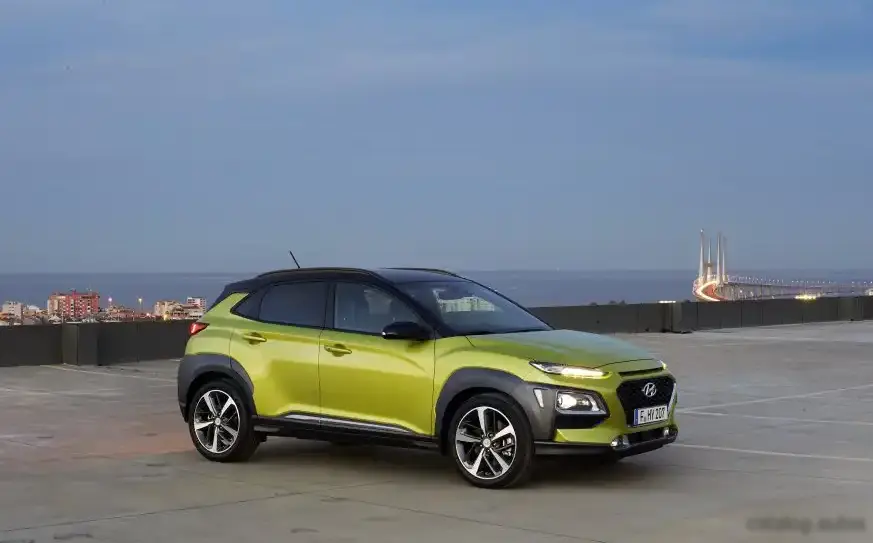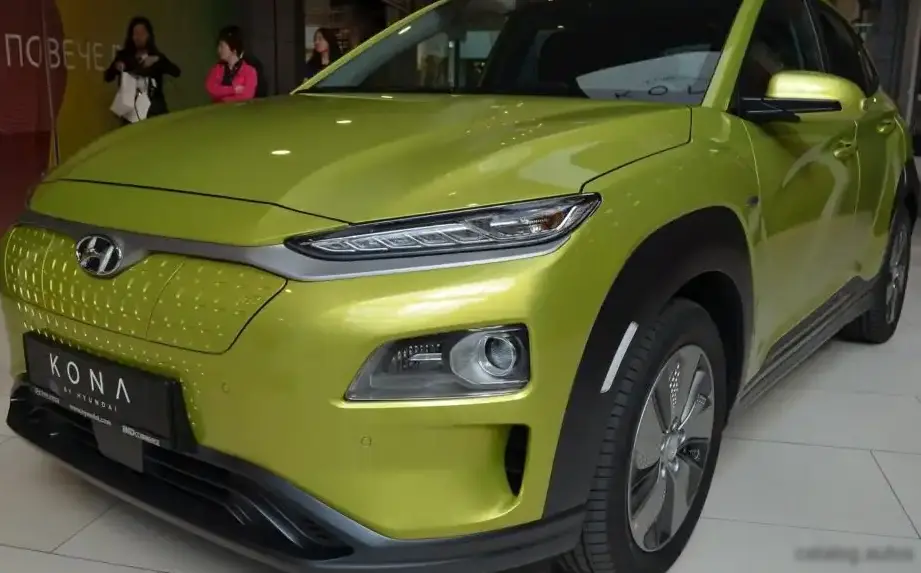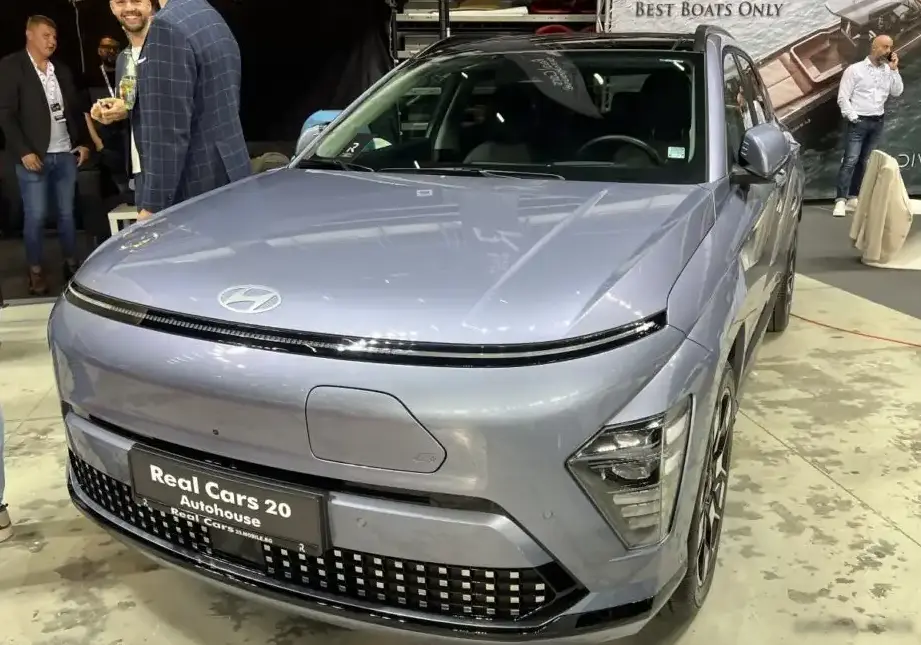
The Hyundai Kona II 65 kWh Electric, launched in May 2025, represents the second generation of Hyundai’s popular subcompact SUV. This all-electric variant, producing 204 horsepower, is a key component of Hyundai’s expanding EV lineup, designed to appeal to consumers seeking a practical and efficient urban vehicle. Positioned as a mid-range offering within the Kona II family, it slots between the base standard range model and potential future high-performance variants. The Kona II is built on an updated platform, offering increased space and advanced technology compared to its predecessor, and is primarily targeted at the European and North American markets.
Technical Specifications
| Brand | Hyundai |
| Model | Kona |
| Generation | Kona II |
| Type (Engine) | 65 kWh (204 Hp) Electric |
| Start of production | May, 2025 |
| Powertrain Architecture | BEV (Electric Vehicle) |
| Body type | SUV |
| Seats | 5 |
| Doors | 5 |
| Fuel Type | Electricity |
| Acceleration 0 – 100 km/h | 8.1 sec |
| Acceleration 0 – 62 mph | 8.1 sec |
| Acceleration 0 – 60 mph | 7.7 sec |
| Maximum speed | 172 km/h (106.88 mph) |
| Weight-to-power ratio | 8.3 kg/Hp, 120.1 Hp/tonne |
| Weight-to-torque ratio | 6.7 kg/Nm, 150.2 Nm/tonne |
| Gross battery capacity | 65 kWh |
| Battery technology | Lithium-ion (Li-Ion) |
| Battery location | Below the floor |
| All-electric range (WLTP) | 451-510 km (280.24 – 316.9 mi) |
| Average Energy consumption (WLTP) | 14.7-16.5 kWh/100 km (23.66 – 26.55 kWh/100 mi) |
| MPGe | 142 – 127 |
| km/kWh | 6.8 – 6.1 |
| mi/kWh | 4.2 – 3.8 |
| Electric motor power | 204 Hp |
| Electric motor Torque | 255 Nm (188.08 lb.-ft.) |
| Electric motor location | Front axle, Transverse |
| Electric motor type | Synchronous |
| System power | 204 Hp |
| System torque | 255 Nm (188.08 lb.-ft.) |
| Kerb Weight | 1698-1795 kg (3743.45 – 3957.3 lbs.) |
| Max. weight | 2220 kg (4894.26 lbs.) |
| Max load | 425-522 kg (936.96 – 1150.81 lbs.) |
| Trunk (boot) space – minimum | 466 l (16.46 cu. ft.) |
| Trunk (boot) space – maximum | 1300 l (45.91 cu. ft.) |
| Max. roof load | 100 kg (220.46 lbs.) |
| Permitted trailer load with brakes (12%) | 750 kg (1653.47 lbs.) |
| Permitted trailer load without brakes | 300 kg (661.39 lbs.) |
| Permitted towbar download | 100 kg (220.46 lbs.) |
| Length | 4355 mm (171.46 in.) |
| Width | 1825 mm (71.85 in.) |
| Height | 1580 mm (62.2 in.) |
| Wheelbase | 2660 mm (104.72 in.) |
| Front track | 1589-1591 mm (62.56 – 62.64 in.) |
| Rear (Back) track | 1598-1600 mm (62.91 – 62.99 in.) |
| Ride height (ground clearance) | 151 mm (5.94 in.) |
| Drivetrain Architecture | One electric motor drives the front wheels. |
| Drive wheel | Front wheel drive |
| Number of gears and type of gearbox | 1 gears, automatic transmission |
| Front suspension | Independent type McPherson |
| Rear suspension | Independent multi-link suspension |
| Front brakes | Ventilated discs |
| Rear brakes | Disc |
| Assisting systems | ABS (Anti-lock braking system) |
| Steering type | Steering rack and pinion |
| Power steering | Electric Steering |
| Tires size | 215/60 R17; 235/45 R19 |
| Wheel rims size | 7.0J x 17; 7.5J x 19 |
Powertrain & Engine Architecture
The Kona II 65 kWh Electric utilizes a permanent magnet synchronous motor (PMSM) driving the front wheels. This motor delivers 204 horsepower and 255 Nm (188.08 lb.-ft.) of torque. The powertrain is built around a 65 kWh lithium-ion battery pack located under the vehicle floor, contributing to a low center of gravity and improved handling. The battery pack employs advanced thermal management to optimize performance and longevity. The single-speed automatic transmission is a direct-drive system, typical of electric vehicles, providing seamless acceleration. The vehicle supports fast charging capabilities, allowing for a significant range boost with a relatively short charging time when connected to a DC fast charger.
Driving Characteristics
The 65 kWh Electric Kona II offers brisk acceleration, achieving 0-60 mph in approximately 7.7 seconds. The instant torque delivery characteristic of electric motors provides responsive performance in urban driving conditions. While not as dynamically focused as some performance-oriented EVs, the Kona II provides a comfortable and composed ride. The single-speed transmission simplifies the driving experience, and the regenerative braking system allows for one-pedal driving in certain situations, enhancing efficiency. Compared to a potential future high-performance variant, this model prioritizes efficiency and everyday usability over outright speed.
Equipment & Trim Levels
The Kona II 65 kWh Electric typically comes standard with features such as a digital instrument cluster, a touchscreen infotainment system with Apple CarPlay and Android Auto compatibility, and a suite of advanced driver-assistance systems (ADAS) including lane-keeping assist, forward collision avoidance, and adaptive cruise control. Interior upholstery is typically cloth or available as an upgrade to synthetic leather. Higher trim levels may include features like a premium sound system, heated and ventilated front seats, and a panoramic sunroof. Exterior options include various wheel designs and paint colors.
Chassis & Braking
The Kona II utilizes an independent McPherson strut suspension in the front and an independent multi-link suspension in the rear, providing a balance of ride comfort and handling precision. Ventilated disc brakes are used on the front wheels, while solid discs are employed at the rear. The electric power steering system offers light and precise steering feel. The vehicle’s relatively low weight, thanks to the battery pack’s placement, contributes to its agile handling characteristics.
Market Reception & Comparison
The Hyundai Kona II 65 kWh Electric has been generally well-received by automotive critics, praised for its competitive range, spacious interior, and comprehensive feature set. Compared to other EVs in its class, such as the Nissan Leaf or the Chevrolet Bolt EUV, the Kona II offers a more modern design and a more refined driving experience. Its energy consumption of 14.7-16.5 kWh/100 km is competitive within the segment. Reliability data is still emerging, but Hyundai has a generally positive reputation for build quality and dependability.
Legacy
The Hyundai Kona II 65 kWh Electric represents a significant step forward in Hyundai’s electric vehicle strategy. Its combination of practicality, efficiency, and technology positions it as a compelling option in the growing EV market. The longevity of the battery pack and the durability of the electric motor will be key factors in determining its long-term reliability. As the EV market matures, the Kona II is expected to remain a popular choice for consumers seeking an affordable and well-rounded electric SUV.