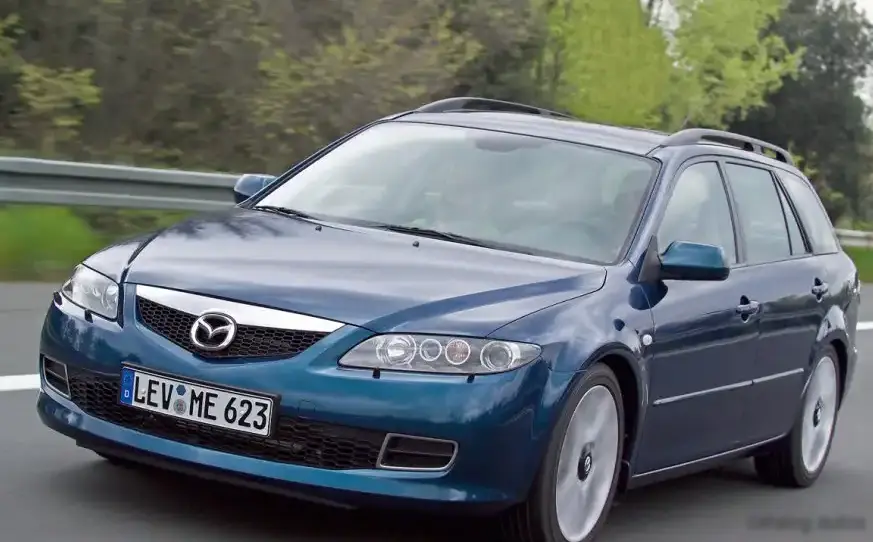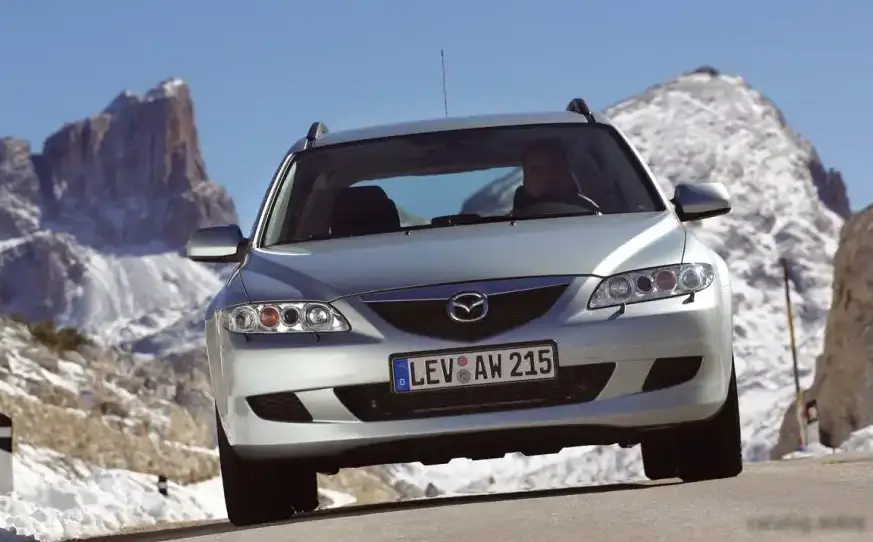
The Mazda 6 first generation Combi (Typ GG/GY/GG1) 2.3-liter variant, produced from 2002 to 2005, represented a significant step forward for Mazda in the mid-size wagon segment. Positioned as a more performance-oriented option within the first-generation 6 lineup, it offered a blend of practicality, sporty handling, and a relatively powerful engine for its class. This model, built on the GG/GY platform, aimed to appeal to buyers seeking a versatile vehicle that didn’t compromise on driving enjoyment. It was sold primarily in the European market, where the station wagon body style remained highly popular, and to a lesser extent in other regions.
Technical Specifications
| Brand | Mazda |
| Model | 6 |
| Generation | 6 I Combi (Typ GG/GY/GG1) |
| Type (Engine) | 2.3 (166 Hp) |
| Start of production | 2002 |
| End of production | 2005 |
| Powertrain Architecture | Internal Combustion engine |
| Body type | Station wagon (estate) |
| Seats | 5 |
| Doors | 5 |
| Fuel consumption (urban) | 12.4 l/100 km (19 US mpg, 22.8 UK mpg, 8.1 km/l) |
| Fuel consumption (extra urban) | 7.2 l/100 km (32.7 US mpg, 39.2 UK mpg, 13.9 km/l) |
| Fuel consumption (combined) | 9.1 l/100 km (25.8 US mpg, 31 UK mpg, 11 km/l) |
| CO2 emissions | 218 g/km |
| Fuel Type | Petrol (Gasoline) |
| Acceleration 0 – 100 km/h | 9.2 sec |
| Acceleration 0 – 62 mph | 9.2 sec |
| Acceleration 0 – 60 mph | 8.7 sec |
| Maximum speed | 209 km/h (129.87 mph) |
| Emission standard | Euro 4 |
| Weight-to-power ratio | 8.4 kg/Hp, 119.4 Hp/tonne |
| Weight-to-torque ratio | 6.7 kg/Nm, 148.9 Nm/tonne |
| Power | 166 Hp @ 6500 rpm |
| Power per litre | 73.4 Hp/l |
| Torque | 207 Nm @ 4000 rpm (152.68 lb.-ft. @ 4000 rpm) |
| Engine layout | Front, Transverse |
| Engine Model/Code | L3C1 |
| Engine displacement | 2261 cm3 (137.97 cu. in.) |
| Number of cylinders | 4 |
| Engine configuration | Inline |
| Cylinder Bore | 87.5 mm (3.44 in.) |
| Piston Stroke | 94 mm (3.7 in.) |
| Compression ratio | 10.6:1 |
| Number of valves per cylinder | 4 |
| Fuel injection system | Multi-port manifold injection |
| Engine aspiration | Naturally aspirated engine |
| Valvetrain | DOHC |
| Engine oil capacity | 4.3 l (4.54 US qt | 3.78 UK qt) |
| Coolant | 7.5 l (7.93 US qt | 6.6 UK qt) |
| Kerb Weight | 1390 kg (3064.43 lbs.) |
| Max. weight | 1935 kg (4265.94 lbs.) |
| Max load | 545 kg (1201.52 lbs.) |
| Trunk (boot) space – minimum | 505 l (17.83 cu. ft.) |
| Trunk (boot) space – maximum | 1712 l (60.46 cu. ft.) |
| Fuel tank capacity | 64 l (16.91 US gal | 14.08 UK gal) |
| Permitted trailer load with brakes (12%) | 1700 kg (3747.86 lbs.) |
| Permitted trailer load without brakes | 550 kg (1212.54 lbs.) |
| Length | 4700 mm (185.04 in.) |
| Width | 1780 mm (70.08 in.) |
| Height | 1480 mm (58.27 in.) |
| Wheelbase | 2675 mm (105.31 in.) |
| Front track | 1540 mm (60.63 in.) |
| Rear (Back) track | 1540 mm (60.63 in.) |
| Ride height (ground clearance) | 130 mm (5.12 in.) |
| Drag coefficient (Cd) | 0.32 |
| Minimum turning circle (turning diameter) | 10.8 m (35.43 ft.) |
| Drivetrain Architecture | The Internal combustion engine (ICE) drives the front wheels of the vehicle. |
| Drive wheel | Front wheel drive |
| Number of gears and type of gearbox | 5 gears, manual transmission |
| Front brakes | Ventilated discs |
| Rear brakes | Disc |
| Assisting systems | ABS (Anti-lock braking system) |
| Steering type | Steering rack and pinion |
| Tires size | 215/45 R17 V |
| Wheel rims size | 17 |
Powertrain & Engine Architecture
The heart of this Mazda 6 Combi variant is the L3C1 engine, a 2.3-liter inline-four cylinder gasoline engine. This engine utilizes a naturally aspirated configuration, meaning it doesn’t employ forced induction like a turbocharger or supercharger. It features a double overhead camshaft (DOHC) valvetrain with four valves per cylinder, contributing to its relatively high output for its displacement. Fuel delivery is managed by a multi-port fuel injection system, providing precise fuel metering for optimal combustion. The engine boasts a compression ratio of 10.6:1. The engine was known for its smooth operation and willingness to rev. The transmission paired with this engine was typically a five-speed manual, although a four-speed automatic was also available, impacting performance and fuel economy.
Driving Characteristics
The 2.3-liter engine in the Mazda 6 Combi provided a noticeable step up in performance compared to the lower-displacement engines offered in the range. With 166 horsepower and 207 Nm (152.68 lb-ft) of torque, it offered brisk acceleration, achieving 0-60 mph in around 8.7 seconds. While not a sports car, the 2.3-liter engine provided enough power for confident overtaking and highway cruising. The five-speed manual transmission allowed drivers to fully exploit the engine’s powerband, while the optional automatic, though convenient, resulted in some power loss and a less engaging driving experience. The Combi’s suspension was tuned for a balance between comfort and handling, providing a stable and predictable ride.
Equipment & Trim Levels
The 2.3-liter Mazda 6 Combi typically came with a reasonably well-equipped standard specification. Features included air conditioning, power windows and mirrors, central locking, and an integrated audio system. Higher trim levels added features such as alloy wheels, upgraded upholstery, a sunroof, and climate control. Safety features like ABS were standard. Optional extras included leather seats, a premium audio system, and metallic paint finishes. The interior design was functional and modern for its time, with a focus on ergonomics and ease of use.
Chassis & Braking
The Mazda 6 Combi featured a front-wheel-drive layout with independent suspension at the front (typically MacPherson struts) and a multi-link rear suspension. This setup provided a good balance of ride comfort and handling precision. Braking duties were handled by ventilated disc brakes at the front and solid disc brakes at the rear. ABS (Anti-lock Braking System) was standard, enhancing braking performance and stability, particularly in adverse conditions. The chassis was designed to provide a rigid and stable platform for the wagon body, contributing to its overall handling characteristics.
Market Reception & Comparison
The Mazda 6 Combi 2.3-liter was generally well-received by automotive critics. It was praised for its stylish design, spacious interior, and engaging driving dynamics. The 2.3-liter engine was considered a strong performer, offering a good balance of power and fuel economy. Compared to other wagons in its class, such as the Ford Mondeo Estate or the Volkswagen Passat Variant, the Mazda 6 Combi offered a more sporty driving experience. However, some critics noted that the interior materials weren’t quite as premium as those found in some of its rivals. Fuel economy, while acceptable, wasn’t class-leading.
Legacy
The L3C1 engine, while not without its quirks, proved to be a relatively reliable unit when properly maintained. Common issues included oil leaks and occasional sensor failures. The Mazda 6 Combi 2.3-liter remains a popular choice in the used car market, particularly for buyers seeking a practical and stylish wagon with a bit of extra performance. Its relatively simple mechanical design makes it easier and more affordable to maintain compared to some of the more technologically advanced vehicles of the same era. Today, well-maintained examples are sought after by enthusiasts who appreciate its blend of practicality, driving enjoyment, and classic Mazda styling.