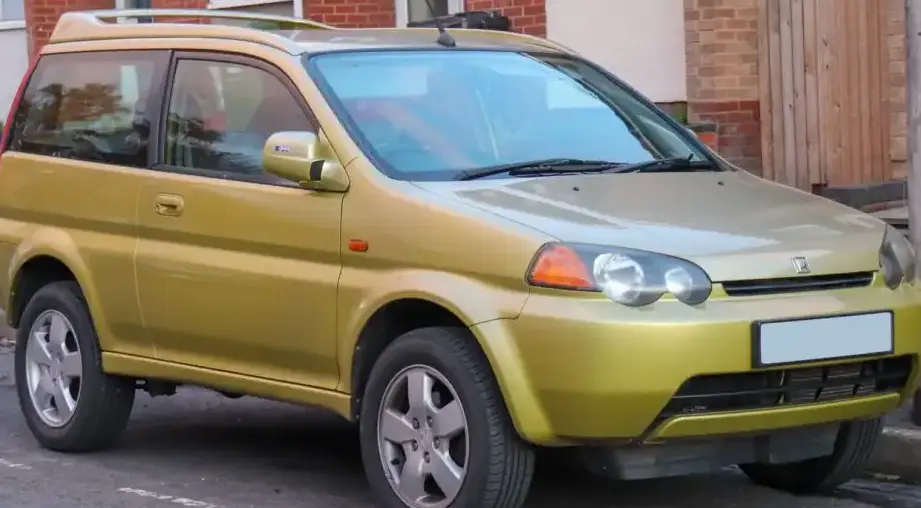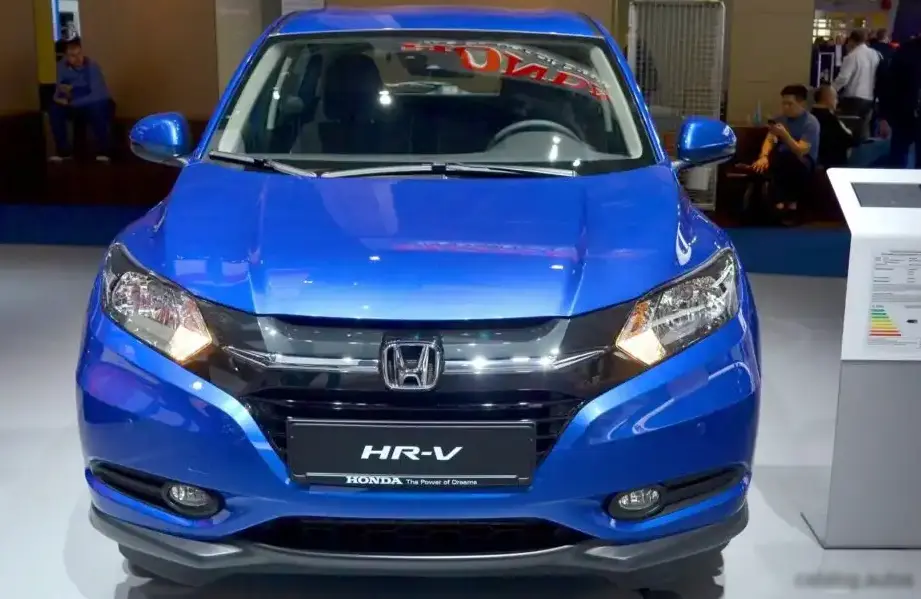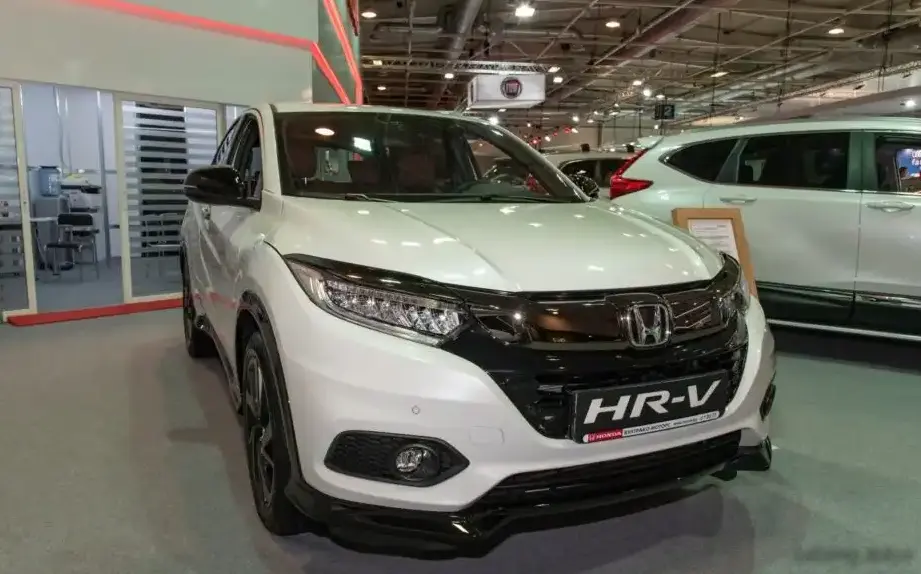
The Honda HR-V II (facelift, 2018) 1.5 i-VTEC, producing 130 horsepower, represents a significant iteration within the second generation of Honda’s popular subcompact crossover SUV. Introduced in 2018 and continuing through 2020, this variant played a crucial role in Honda’s European and Asian markets, offering a balance of fuel efficiency, practicality, and affordability. Positioned as a mid-range offering within the HR-V lineup, it slotted between the base models and the more performance-oriented trims. The facelift brought styling updates and refinements to the already well-received HR-V, enhancing its appeal to a broader customer base. This model is built on the Honda Global Small Platform, shared with other Honda vehicles like the Fit/Jazz.
Technical Specifications
| Brand | Honda |
| Model | HR-V |
| Generation | HR-V II (facelift 2018) |
| Type (Engine) | 1.5 i-VTEC (130 Hp) |
| Start of production | 2018 |
| End of production | 2020 |
| Powertrain Architecture | Internal Combustion engine |
| Body type | SUV, Crossover |
| Seats | 5 |
| Doors | 5 |
| Fuel consumption at Low speed (WLTP) | 8.2-8.4 l/100 km (28.7 – 28 US mpg, 34.4 – 33.6 UK mpg, 12.2 – 11.9 km/l) |
| Fuel consumption at Medium speed (WLTP) | 6.2-6.4 l/100 km (37.9 – 36.8 US mpg, 45.6 – 44.1 UK mpg, 16.1 – 15.6 km/l) |
| Fuel consumption at high speed (WLTP) | 5.7-5.9 l/100 km (41.3 – 39.9 US mpg, 49.6 – 47.9 UK mpg, 17.5 – 16.9 km/l) |
| Fuel consumption at very high speed (WLTP) | 7-7.1 l/100 km (33.6 – 33.1 US mpg, 40.4 – 39.8 UK mpg, 14.3 – 14.1 km/l) |
| Combined fuel consumption (WLTP) | 6.6-6.8 l/100 km (35.6 – 34.6 US mpg, 42.8 – 41.5 UK mpg, 15.2 – 14.7 km/l) |
| CO2 emissions (WLTP) | 130-132 g/km |
| Fuel consumption (economy) – urban | 5.8 l/100 km (40.6 US mpg, 48.7 UK mpg, 17.2 km/l) |
| Fuel consumption (economy) – extra urban | 4.1 l/100 km (57.4 US mpg, 68.9 UK mpg, 24.4 km/l) |
| Fuel consumption (economy) – combined | 4.7 l/100 km (50 US mpg, 60.1 UK mpg, 21.3 km/l) |
| CO2 emissions | 130 g/km |
| Fuel Type | Petrol (Gasoline) |
| Acceleration 0 – 100 km/h | 10.2 sec |
| Acceleration 0 – 62 mph | 10.2 sec |
| Acceleration 0 – 60 mph | 9.7 sec |
| Maximum speed | 192 km/h (119.3 mph) |
| Emission standard | Euro 6 d-TEMP |
| Weight-to-power ratio | 9.5 kg/Hp, 104.8 Hp/tonne |
| Weight-to-torque ratio | 8 kg/Nm, 124.9 Nm/tonne |
| Power | 130 Hp @ 6600 rpm |
| Power per litre | 86.8 Hp/l |
| Torque | 155 Nm @ 4600 rpm (114.32 lb.-ft. @ 4600 rpm) |
| Engine layout | Front, Transverse |
| Engine Model/Code | L15B4 |
| Engine displacement | 1498 cm3 (91.41 cu. in.) |
| Number of cylinders | 4 |
| Engine configuration | Inline |
| Cylinder Bore | 73 mm (2.87 in.) |
| Piston Stroke | 89.5 mm (3.52 in.) |
| Compression ratio | 11.5:1 |
| Number of valves per cylinder | 4 |
| Fuel injection system | Direct injection |
| Engine aspiration | Naturally aspirated engine |
| Valvetrain | DOHC |
| Engine oil capacity | 3.6 l (3.8 US qt | 3.17 UK qt) |
| Coolant | 3.42 l (3.61 US qt | 3.01 UK qt) |
| Kerb Weight | 1241-1317 kg (2735.94 – 2903.49 lbs.) |
| Max. weight | 1790 kg (3946.27 lbs.) |
| Max load | 473-549 kg (1042.79 – 1210.34 lbs.) |
| Trunk (boot) space – minimum | 431 l (15.22 cu. ft.) |
| Trunk (boot) space – maximum | 1473 l (52.02 cu. ft.) |
| Fuel tank capacity | 50 l (13.21 US gal | 11 UK gal) |
| Max. roof load | 75 kg (165.35 lbs.) |
| Permitted trailer load with brakes (12%) | 1000 kg (2204.62 lbs.) |
| Permitted trailer load without brakes | 700 kg (1543.24 lbs.) |
| Permitted towbar download | 70 kg (154.32 lbs.) |
| Length | 4334 mm (170.63 in.) |
| Width | 1772 mm (69.76 in.) |
| Width including mirrors | 2019 mm (79.49 in.) |
| Height | 1605 mm (63.19 in.) |
| Wheelbase | 2610 mm (102.76 in.) |
| Front track | 1535 mm (60.43 in.) |
| Rear (Back) track | 1540 mm (60.63 in.) |
| Ride height (ground clearance) | 185 mm (7.28 in.) |
| Minimum turning circle (turning diameter) | 11.4 m (37.4 ft.) |
| Drivetrain Architecture | The Internal combustion engine (ICE) drives the front wheels of the vehicle. |
| Drive wheel | Front wheel drive |
| Number of gears and type of gearbox | 6 gears, manual transmission |
| Front suspension | Independent type McPherson |
| Rear suspension | Semi-independent, coil spring |
| Front brakes | Ventilated discs |
| Rear brakes | Disc |
| Assisting systems | ABS (Anti-lock braking system) |
| Steering type | Steering rack and pinion |
| Tires size | 215/60 R16 |
| Wheel rims size | 7J x 16 |
Powertrain & Engine Architecture
The heart of this HR-V variant is the L15B4 1.5-liter inline-four cylinder engine. This engine is part of Honda’s Earth Dreams Technology series, focusing on efficiency and reduced emissions. It utilizes direct injection, a key feature for optimizing fuel combustion and power output. The engine employs a double overhead camshaft (DOHC) valvetrain with four valves per cylinder, contributing to its responsive nature. The engine produces 130 horsepower at 6600 rpm and 155 Nm (114.32 lb-ft) of torque at 4600 rpm. The engine is transversely mounted, driving the front wheels. The 6-speed manual transmission was standard, offering precise gear changes and a more engaging driving experience. The engine’s relatively high compression ratio of 11.5:1 further aids in maximizing efficiency.
Driving Characteristics
The 1.5 i-VTEC with the 6-speed manual transmission delivers a balanced driving experience. While not overtly sporty, it provides adequate acceleration for everyday driving situations. The 0-60 mph time of around 9.7 seconds is respectable for a subcompact crossover. The engine feels most responsive in the mid-range, making it suitable for highway cruising and overtaking maneuvers. The manual gearbox allows for greater control over the engine’s power band, and the gear ratios are well-spaced for both fuel efficiency and performance. Compared to higher-output versions of the HR-V, this variant prioritizes fuel economy over outright speed. The lighter weight compared to AWD models also contributes to a slightly more nimble feel.
Equipment & Trim Levels
The 1.5 i-VTEC typically came equipped with a solid set of standard features. These included air conditioning, power windows and locks, a basic audio system with Bluetooth connectivity, and Honda’s suite of safety features, including ABS, stability control, and multiple airbags. Interior upholstery was typically cloth, with a functional and durable design. Optional extras included a touchscreen infotainment system with Apple CarPlay and Android Auto, a rearview camera, and alloy wheels. Higher trim levels added features like automatic climate control, a sunroof, and upgraded audio systems.
Chassis & Braking
The HR-V II utilizes an independent McPherson strut suspension in the front, providing a comfortable ride and predictable handling. The rear suspension is a semi-independent torsion beam setup, which is a cost-effective solution that still offers reasonable ride quality. The braking system consists of ventilated discs on the front wheels and solid discs on the rear. ABS (Anti-lock Braking System) is standard, enhancing safety during emergency braking situations. The steering is a rack and pinion system, providing precise and responsive steering feel.
Market Reception & Comparison
The Honda HR-V II (facelift 2018) 1.5 i-VTEC was generally well-received by automotive critics. It was praised for its spacious interior, fuel efficiency, and practicality. However, some reviewers noted that the engine could feel underpowered when fully loaded or driving uphill. Compared to other trims in the HR-V lineup, this variant offered the best fuel economy and a more affordable price point. It was a popular choice for buyers seeking a reliable and economical subcompact crossover.
Legacy
The L15B4 engine has proven to be a reliable and durable powerplant. With proper maintenance, it can provide many years of trouble-free service. The HR-V II, in general, has maintained a good reputation for reliability in the used car market. The 1.5 i-VTEC variant remains a popular choice for buyers looking for an affordable and fuel-efficient crossover. Its simplicity and relatively low maintenance costs make it an attractive option for those seeking a practical and dependable vehicle.