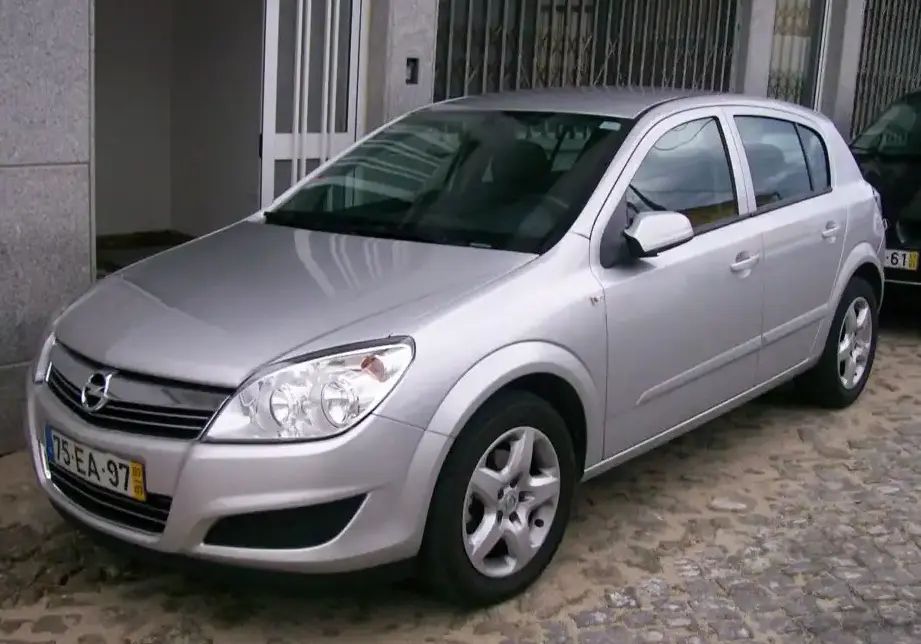
The Opel Astra H (facelift, produced 2007-2009) 1.9 CDTI ECOTEC variant, generating 100 horsepower, represented a significant offering in the European compact car market. Positioned as a fuel-efficient and practical option, it slotted into the Astra H range between the lower-powered 1.3 CDTI and the more performance-oriented 1.9 CDTI 150 hp models. This version aimed to balance affordability with reasonable performance and economy, appealing to drivers prioritizing everyday usability over outright speed. It was a key part of Opel’s strategy to offer a diverse range of powertrains within the popular Astra H platform (based on the GM Delta platform), catering to a broad spectrum of customer needs.
Technical Specifications
| Brand | Opel |
| Model | Astra |
| Generation | Astra H (facelift 2007) |
| Type (Engine) | 1.9 CDTI ECOTEC (100 Hp) |
| Start of production | 2007 |
| End of production | 2009 |
| Powertrain Architecture | Internal Combustion engine |
| Body type | Hatchback |
| Seats | 5 |
| Doors | 5 |
| Fuel consumption (urban) | 7.4 l/100 km (31.8 US mpg) |
| Fuel consumption (extra urban) | 4.9 l/100 km (48 US mpg) |
| Fuel consumption (combined) | 5.8 l/100 km (40.6 US mpg) |
| CO2 emissions | 157 g/km |
| Fuel Type | Diesel |
| Acceleration 0 – 100 km/h | 12.3 sec |
| Acceleration 0 – 62 mph | 12.3 sec |
| Acceleration 0 – 60 mph | 11.7 sec |
| Maximum speed | 180 km/h (111.85 mph) |
| Emission standard | Euro 4 |
| Weight-to-power ratio | 13.2 kg/Hp |
| Weight-to-torque ratio | 5.1 kg/Nm |
| Power | 100 Hp @ 3500 rpm |
| Torque | 260 Nm @ 1750-2500 rpm (191.77 lb.-ft.) |
| Engine layout | Front, Transverse |
| Engine Model/Code | Z19DTL |
| Engine displacement | 1910 cm3 (116.56 cu. in.) |
| Number of cylinders | 4 |
| Engine configuration | Inline |
| Cylinder Bore | 82 mm (3.23 in.) |
| Piston Stroke | 90.4 mm (3.56 in.) |
| Compression ratio | 18:1 |
| Number of valves per cylinder | 2 |
| Fuel injection system | Diesel Commonrail |
| Engine aspiration | Turbocharger, Intercooler |
| Valvetrain | SOHC |
| Engine oil capacity | 4.3 l (4.54 US qt | 3.78 UK qt) |
| Coolant capacity | 7 l (7.4 US qt | 6.16 UK qt) |
| Kerb Weight | 1320 kg (2910.1 lbs.) |
| Max. weight | 1870 kg (4122.64 lbs.) |
| Max load | 550 kg (1212.54 lbs.) |
| Trunk (boot) space – minimum | 380 l (13.42 cu. ft.) |
| Trunk (boot) space – maximum | 1295 l (45.73 cu. ft.) |
| Fuel tank capacity | 52 l (13.74 US gal | 11.44 UK gal) |
| Max. roof load | 75 kg (165.35 lbs.) |
| Permitted trailer load (braked) | 1400 kg (3086.47 lbs.) |
| Permitted trailer load (unbraked) | 650 kg (1433 lbs.) |
| Length | 4249 mm (167.28 in.) |
| Width | 1753 mm (69.02 in.) |
| Width with mirrors folded | 1804 mm (71.02 in.) |
| Width including mirrors | 2033 mm (80.04 in.) |
| Height | 1460 mm (57.48 in.) |
| Wheelbase | 2614 mm (102.91 in.) |
| Front track | 1488 mm (58.58 in.) |
| Rear track | 1488 mm (58.58 in.) |
| Front overhang | 871 mm (34.29 in.) |
| Rear overhang | 764 mm (30.08 in.) |
| Minimum turning circle | 11.2 m (36.75 ft.) |
| Drivetrain | Front wheel drive |
| Number of gears | 6 |
| Gearbox type | Manual transmission |
| Front suspension | Independent, McPherson with coil spring and anti-roll bar |
| Rear suspension | Torsion |
| Front brakes | Ventilated discs |
| Rear brakes | Disc |
| Assisting systems | ABS (Anti-lock braking system) |
| Steering type | Steering rack and pinion |
| Power steering | Electric |
| Tires size | 195/65 R15; 205/55 R16; 225/45 R17; 225/40 R18 |
| Wheel rims size | 6.5J x 15; 6.5J x 16; 7J x 17; 7.5J x 18 |
INTRODUCTION
The Opel Astra H facelift, launched in 2007, represented a mid-cycle refresh of the highly successful Astra H generation. This variant, powered by the 1.9 CDTI ECOTEC engine producing 100 horsepower, was a key component of Opel’s strategy to offer a broad range of engine options within the Astra lineup. The facelift brought subtle styling changes, improved interior materials, and refinements to the engine range, including the Z19DTL engine. This particular engine and transmission combination was aimed at buyers seeking a balance between fuel efficiency, reasonable performance, and affordability. It was a popular choice in European markets, particularly for those covering long distances or prioritizing lower running costs.
Powertrain & Engine Architecture
The heart of this Astra variant is the Z19DTL, a 1.9-liter inline-four cylinder diesel engine. This engine is part of Opel/Fiat’s family of common rail direct injection diesel engines. The Z19DTL utilizes a turbocharger with an intercooler to boost power output. The engine employs a Single Overhead Camshaft (SOHC) valvetrain, operating with two valves per cylinder. Fuel is delivered via a common rail direct injection system, allowing for precise fuel metering and optimized combustion. The 100 hp output is achieved at 3500 rpm, while peak torque of 260 Nm (191.77 lb.-ft.) is available between 1750 and 2500 rpm. Typically paired with a six-speed manual transmission, this configuration provided a good balance of fuel economy and drivability. The engine also featured a diesel particulate filter (DPF) to reduce emissions, complying with Euro 4 standards.
Driving Characteristics
The 1.9 CDTI 100 hp Astra H offered a comfortable and practical driving experience. While not particularly sporty, it provided sufficient power for everyday driving situations, including highway cruising and overtaking. The six-speed manual transmission allowed drivers to keep the engine in its optimal torque band, maximizing efficiency and responsiveness. Acceleration from 0-60 mph took around 11.7 seconds, and top speed was limited to 180 km/h (111.85 mph). Compared to the 1.9 CDTI 150 hp version, this variant felt noticeably less powerful, particularly at higher speeds. However, it offered superior fuel economy and a more relaxed driving experience. The gear ratios were tuned for efficiency, with a relatively long final drive contributing to lower fuel consumption.
Equipment & Trim Levels
The 1.9 CDTI 100 hp Astra H was typically offered in mid-range trim levels, such as ‘Enjoy’ or ‘Cosmo’ depending on the market. Standard equipment generally included air conditioning, power windows, central locking, and an audio system with CD player. Higher trim levels added features like alloy wheels, fog lights, cruise control, and a multi-function steering wheel. Interior upholstery was typically cloth, with options for upgraded materials available. Safety features included ABS brakes, front and side airbags, and seatbelt pretensioners. Optional extras could include a sunroof, parking sensors, and a navigation system.
Chassis & Braking
The Astra H utilized a McPherson strut front suspension and a torsion beam rear suspension. This setup provided a good balance of ride comfort and handling. The front suspension featured a coil spring and anti-roll bar to reduce body roll. Braking duties were handled by ventilated discs at the front and solid discs at the rear. ABS (Anti-lock Braking System) was standard, enhancing braking performance and stability. The steering was a rack and pinion system with electric power assistance, providing light and precise steering feel.
Market Reception & Comparison
The 1.9 CDTI 100 hp Astra H was generally well-received by automotive critics as a practical and economical choice. It was praised for its fuel efficiency, comfortable ride, and reasonable performance. However, some reviewers noted that the engine could feel strained when fully loaded or driving uphill. Compared to the 1.3 CDTI, the 1.9 CDTI offered significantly more power and torque, making it a more versatile option. Against the 1.9 CDTI 150 hp, it represented a more affordable alternative, albeit with a noticeable performance deficit. Fuel economy was a key selling point, with combined fuel consumption figures around 5.8 l/100 km (40.6 US mpg).
Legacy
The Z19DTL engine, while generally reliable, is known to require regular maintenance, particularly regarding the DPF and turbocharger. Proper servicing, including regular oil changes and DPF regeneration, is crucial for long-term reliability. Today, used examples of the Astra H 1.9 CDTI 100 hp are readily available and represent a relatively affordable option in the used car market. They continue to appeal to buyers seeking a fuel-efficient and practical compact car. However, potential buyers should be aware of the potential maintenance costs associated with diesel engines, particularly older ones, and ensure a thorough inspection before purchase.