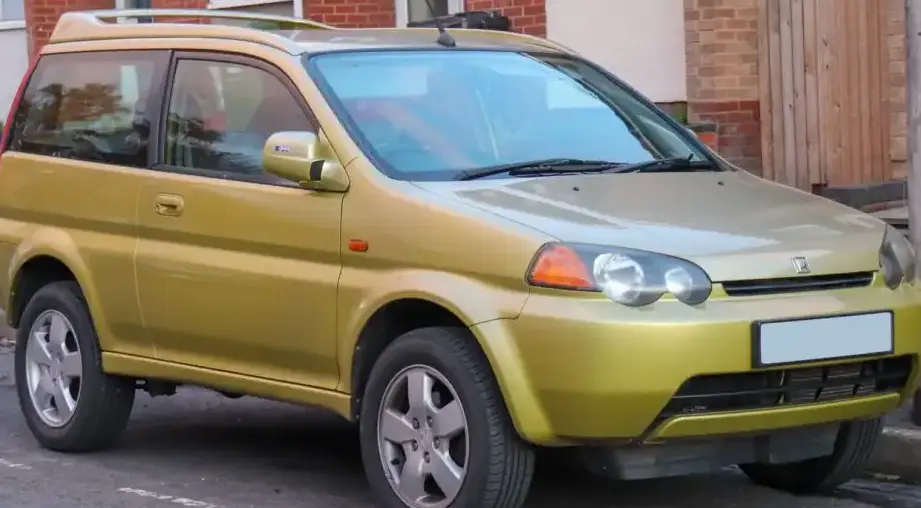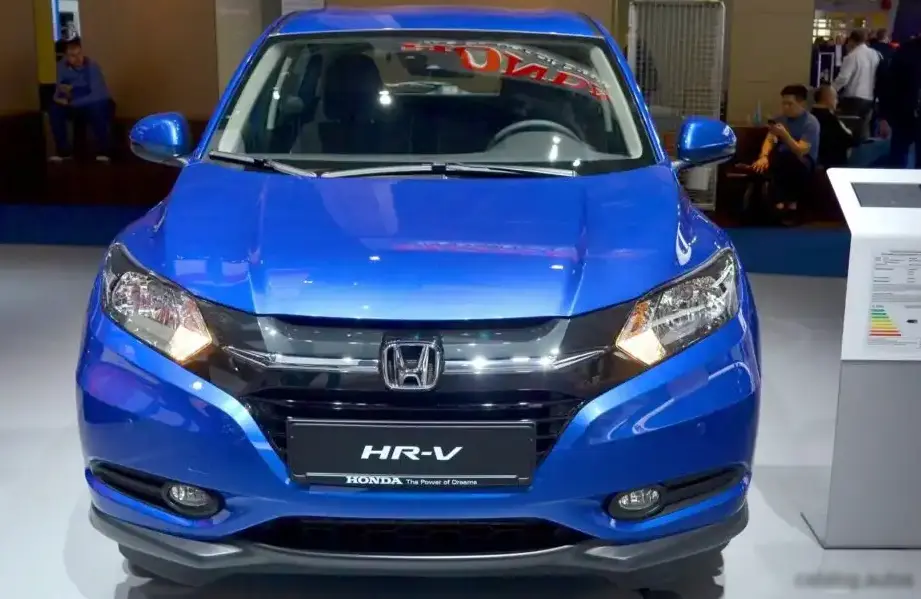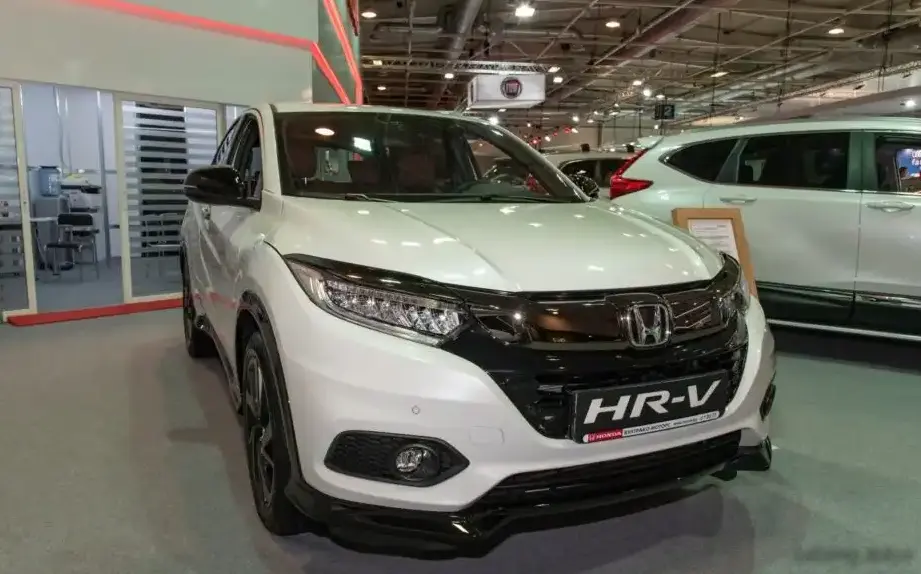
The Honda HR-V II (facelift 2018) 1.5 i-VTEC (130 Hp) CVT represents a significant iteration within the second generation of Honda’s popular subcompact crossover SUV. Introduced in 2018 and continuing through 2020, this variant was positioned as a mainstream offering within the HR-V lineup, balancing fuel efficiency with adequate performance for everyday driving. It builds upon the foundation of the HR-V II, which itself was based on the Honda Global Small Platform, shared with the Honda Fit/Jazz. This facelift brought styling updates and refinements to the existing model, aiming to enhance its appeal in a competitive market segment. The HR-V, in general, was primarily marketed towards younger buyers and small families seeking a versatile and practical vehicle.
Technical Specifications
| Brand | Honda |
| Model | HR-V |
| Generation | HR-V II (facelift 2018) |
| Type (Engine) | 1.5 i-VTEC (130 Hp) CVT |
| Start of production | 2018 |
| End of production | 2020 |
| Powertrain Architecture | Internal Combustion engine |
| Body type | SUV, Crossover |
| Seats | 5 |
| Doors | 5 |
| Fuel consumption at Low speed (WLTP) | 8.7-8.8 l/100 km (27 – 26.7 US mpg, 32.5 – 32.1 UK mpg, 11.5 – 11.4 km/l) |
| Fuel consumption at Medium speed (WLTP) | 6.1-6.3 l/100 km (38.6 – 37.3 US mpg, 46.3 – 44.8 UK mpg, 16.4 – 15.9 km/l) |
| Fuel consumption at high speed (WLTP) | 5.7-5.8 l/100 km (41.3 – 40.6 US mpg, 49.6 – 48.7 UK mpg, 17.5 – 17.2 km/l) |
| Fuel consumption at very high speed (WLTP) | 7.3-7.4 l/100 km (32.2 – 31.8 US mpg, 38.7 – 38.2 UK mpg, 13.7 – 13.5 km/l) |
| Combined fuel consumption (WLTP) | 6.8-6.9 l/100 km (34.6 – 34.1 US mpg, 41.5 – 40.9 UK mpg, 14.7 – 14.5 km/l) |
| CO2 emissions (WLTP) | 122 g/km |
| Fuel consumption (economy) – urban | 5.2 l/100 km (45.2 US mpg, 54.3 UK mpg, 19.2 km/l) |
| Fuel consumption (economy) – extra urban | 3.9 l/100 km (60.3 US mpg, 72.4 UK mpg, 25.6 km/l) |
| Fuel consumption (economy) – combined | 4.1 l/100 km (57.4 US mpg, 68.9 UK mpg, 24.4 km/l) |
| Fuel Type | Petrol (Gasoline) |
| Acceleration 0 – 100 km/h | 10.9 sec |
| Acceleration 0 – 62 mph | 10.9 sec |
| Acceleration 0 – 60 mph | 10.4 sec |
| Maximum speed | 187 km/h (116.2 mph) |
| Emission standard | Euro 6 d-TEMP |
| Weight-to-power ratio | 9.6 kg/Hp, 104.1 Hp/tonne |
| Weight-to-torque ratio | 8.1 kg/Nm, 124.1 Nm/tonne |
| Power | 130 Hp @ 6600 rpm |
| Torque | 155 Nm @ 4600 rpm (114.32 lb.-ft. @ 4600 rpm) |
| Engine layout | Front, Transverse |
| Engine Model/Code | L15B4 |
| Engine displacement | 1498 cm3 (91.41 cu. in.) |
| Number of cylinders | 4 |
| Engine configuration | Inline |
| Cylinder Bore | 73 mm (2.87 in.) |
| Piston Stroke | 89.5 mm (3.52 in.) |
| Compression ratio | 11.5:1 |
| Number of valves per cylinder | 4 |
| Fuel injection system | Direct injection |
| Engine aspiration | Naturally aspirated engine |
| Valvetrain | DOHC |
| Engine oil capacity | 3.6 l (3.8 US qt | 3.17 UK qt) |
| Coolant | 3.56 l (3.76 US qt | 3.13 UK qt) |
| Kerb Weight | 1249-1324 kg (2753.57 – 2918.92 lbs.) |
| Max. weight | 1790 kg (3946.27 lbs.) |
| Max load | 466-541 kg (1027.35 – 1192.7 lbs.) |
| Trunk (boot) space – minimum | 393 l (13.88 cu. ft.) |
| Trunk (boot) space – maximum | 1533 l (54.14 cu. ft.) |
| Fuel tank capacity | 50 l (13.21 US gal | 11 UK gal) |
| Max. roof load | 75 kg (165.35 lbs.) |
| Permitted trailer load with brakes (12%) | 1000 kg (2204.62 lbs.) |
| Permitted trailer load without brakes | 700 kg (1543.24 lbs.) |
| Permitted towbar download | 70 kg (154.32 lbs.) |
| Length | 4334 mm (170.63 in.) |
| Width | 1772 mm (69.76 in.) |
| Width including mirrors | 2019 mm (79.49 in.) |
| Height | 1605 mm (63.19 in.) |
| Wheelbase | 2610 mm (102.76 in.) |
| Front track | 1535 mm (60.43 in.) |
| Rear (Back) track | 1540 mm (60.63 in.) |
| Ride height (ground clearance) | 185 mm (7.28 in.) |
| Minimum turning circle (turning diameter) | 11.4 m (37.4 ft.) |
| Drivetrain Architecture | The Internal combustion engine (ICE) drives the front wheels of the vehicle. |
| Drive wheel | Front wheel drive |
| Number of gears and type of gearbox | automatic transmission CVT |
| Front suspension | Independent type McPherson |
| Rear suspension | Semi-independent, coil spring |
| Front brakes | Ventilated discs |
| Rear brakes | Disc |
| Assisting systems | ABS (Anti-lock braking system) |
| Steering type | Steering rack and pinion |
| Tires size | 215/55 R17 |
| Wheel rims size | 7J x 17 |
INTRODUCTION
The 2018-2020 Honda HR-V 1.5 i-VTEC with a Continuously Variable Transmission (CVT) was a key variant in the HR-V lineup, particularly in markets outside of North America where smaller displacement engines were favored. This model year represented a facelift for the second-generation HR-V (RU series), bringing subtle cosmetic changes and refinements to the interior. The 1.5L engine, designated as the L15B4, was a mainstay of Honda’s engine family, known for its reliability and fuel efficiency. The CVT transmission was chosen to maximize fuel economy and provide smooth, if not particularly sporty, acceleration. This configuration was generally considered a mid-range trim, offering a balance between affordability and features.
Powertrain & Engine Architecture
At the heart of the HR-V 1.5 i-VTEC CVT lies Honda’s L15B4 engine, a 1.5-liter inline-four cylinder gasoline engine. This engine utilizes Honda’s i-VTEC (intelligent Variable Valve Timing and Lift Electronic Control) technology, which optimizes valve timing and lift based on engine speed and load, improving both fuel efficiency and power output. The L15B4 features direct fuel injection, further enhancing combustion efficiency. The engine produces 130 horsepower at 6600 rpm and 155 Nm (114.32 lb-ft) of torque at 4600 rpm. The engine’s architecture is relatively simple, contributing to its reliability. The CVT transmission is a belt-driven system that provides a virtually infinite number of gear ratios, allowing the engine to operate at its most efficient point. While CVTs are known for their smoothness, they often lack the responsiveness of traditional automatic transmissions. This particular CVT was tuned for fuel economy rather than performance.
Driving Characteristics
The HR-V 1.5 i-VTEC CVT delivers adequate performance for urban and highway driving, but it’s not a particularly quick vehicle. Acceleration from 0-60 mph takes around 10.4 seconds, and the 0-100 km/h sprint is completed in 10.9 seconds. The CVT transmission tends to hold the engine at a constant rpm during acceleration, which can create a droning sound that some drivers find unpleasant. Compared to the manual transmission versions of the HR-V, the CVT feels less engaging and offers less control. However, the CVT excels in providing smooth and seamless gear changes, making it ideal for relaxed cruising. The gear ratios are optimized for fuel efficiency, and the HR-V achieves respectable fuel economy figures, ranging from 6.8-6.9 l/100 km combined.
Equipment & Trim Levels
The 1.5 i-VTEC CVT trim typically included standard features such as air conditioning, power windows and locks, a touchscreen infotainment system with Bluetooth connectivity, and a rearview camera. Higher trim levels offered additional features like alloy wheels, a sunroof, automatic climate control, and advanced safety systems such as lane departure warning and collision mitigation braking. Interior upholstery was typically cloth, with optional leather available on higher trims. The dashboard layout was functional and user-friendly, with a focus on practicality. The HR-V’s “Magic Seat” system, which allowed the rear seats to fold flat or flip up to create a tall cargo area, was a standout feature.
Chassis & Braking
The HR-V 1.5 i-VTEC CVT utilizes a front-wheel-drive configuration with an independent McPherson strut suspension in the front and a semi-independent torsion beam suspension in the rear. This suspension setup provides a comfortable ride quality, but it’s not particularly sporty. The front brakes are ventilated discs, while the rear brakes are solid discs. Anti-lock Braking System (ABS) is standard. The steering is a rack and pinion system, providing adequate feedback and precision. The HR-V’s relatively lightweight construction helps to improve handling and fuel efficiency.
Market Reception & Comparison
The HR-V 1.5 i-VTEC CVT was generally well-received by critics, who praised its fuel efficiency, spacious interior, and versatile cargo area. However, some reviewers criticized its lack of power and the droning sound of the CVT transmission. Compared to other trims in the HR-V lineup, the 1.5 i-VTEC CVT offered a good balance between price and features. It was more affordable than the higher-powered variants but still provided a comfortable and practical driving experience. In terms of fuel economy, it was comparable to other subcompact crossovers in its class.
Legacy
The Honda HR-V 1.5 i-VTEC CVT has proven to be a reliable and durable powertrain. The L15B4 engine is known for its longevity, and the CVT transmission, while not without its critics, has generally held up well over time. In the used car market, this variant remains a popular choice for buyers seeking a fuel-efficient and practical subcompact crossover. Its reputation for reliability and affordability makes it a compelling option for those looking for a used vehicle.