Technical Specifications
| Brand | Honda |
| Model | HR-V |
| Generation | HR-V II (facelift 2018) |
| Type (Engine) | 1.8 i-VTEC (141 Hp) CVT |
| Start of production | 2018 |
| End of production | 2022 |
| Powertrain Architecture | Internal Combustion engine |
| Body type | SUV, Crossover |
| Seats | 5 |
| Doors | 5 |
| Fuel consumption (urban) | 8.4 l/100 km (28 US mpg) |
| Fuel consumption (extra urban) | 6.9 l/100 km (34.1 US mpg) |
| Fuel consumption (combined) | 7.8 l/100 km (30.2 US mpg) |
| Fuel Type | Petrol (Gasoline) |
| Weight-to-power ratio | 9.3 kg/Hp |
| Weight-to-torque ratio | 7.7 kg/Nm |
| Power | 141 Hp @ 6500 rpm |
| Power per litre | 78.4 Hp/l |
| Torque | 172 Nm @ 4300 rpm (126.86 lb.-ft. @ 4300 rpm) |
| Maximum engine speed | 6700 rpm |
| Engine layout | Front, Transverse |
| Engine Model/Code | R18Z9 |
| Engine displacement | 1799 cm3 (109.78 cu. in.) |
| Number of cylinders | 4 |
| Engine configuration | Inline |
| Cylinder Bore | 81 mm (3.19 in.) |
| Piston Stroke | 87.3 mm (3.44 in.) |
| Compression ratio | 10.6:1 |
| Number of valves per cylinder | 4 |
| Fuel injection system | Multi-port manifold injection |
| Engine aspiration | Naturally aspirated engine |
| Valvetrain | SOHC i-VTEC |
| Engine oil capacity | 3.7 l (3.91 US qt | 3.26 UK qt) |
| Coolant capacity | 5.25 l (5.55 US qt | 4.62 UK qt) |
| Kerb Weight | 1318 kg (2905.69 lbs.) |
| Trunk (boot) space – minimum | 688 l (24.3 cu. ft.) |
| Trunk (boot) space – maximum | 1665 l (58.8 cu. ft.) |
| Fuel tank capacity | 50 l (13.21 US gal | 11 UK gal) |
| Length | 4328 mm (170.39 in.) |
| Width | 1773 mm (69.8 in.) |
| Height | 1605 mm (63.19 in.) |
| Wheelbase | 2611 mm (102.8 in.) |
| Front track | 1534 mm (60.39 in.) |
| Rear track | 1539 mm (60.59 in.) |
| Ride height (ground clearance) | 185 mm (7.28 in.) |
| Minimum turning circle | 11.3 m (37.07 ft.) |
| Drivetrain | Front wheel drive |
| Gearbox | CVT (Continuously Variable Transmission) |
| Front suspension | Independent, McPherson with coil spring and anti-roll bar |
| Rear suspension | Semi-independent, coil spring |
| Front brakes | Ventilated discs |
| Rear brakes | Disc |
| Tires size | 215/55 R17 94V |
| Wheel rims size | 17″ |
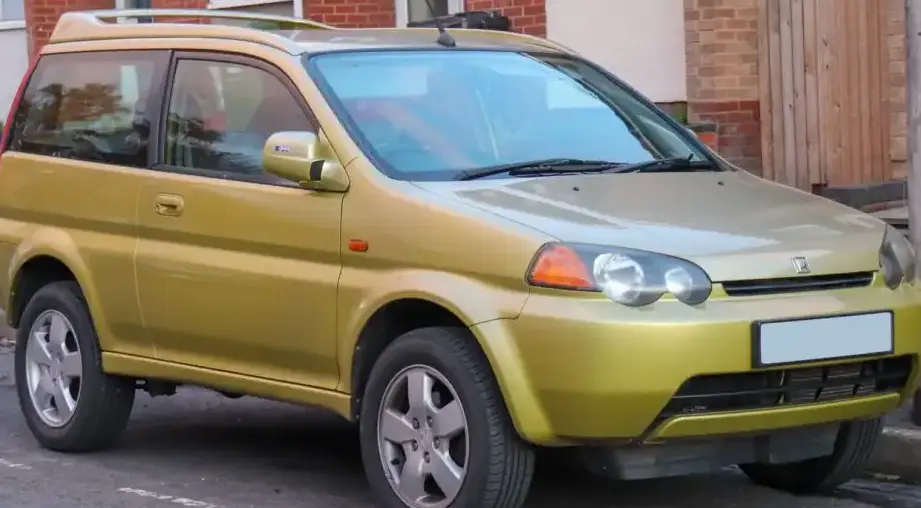
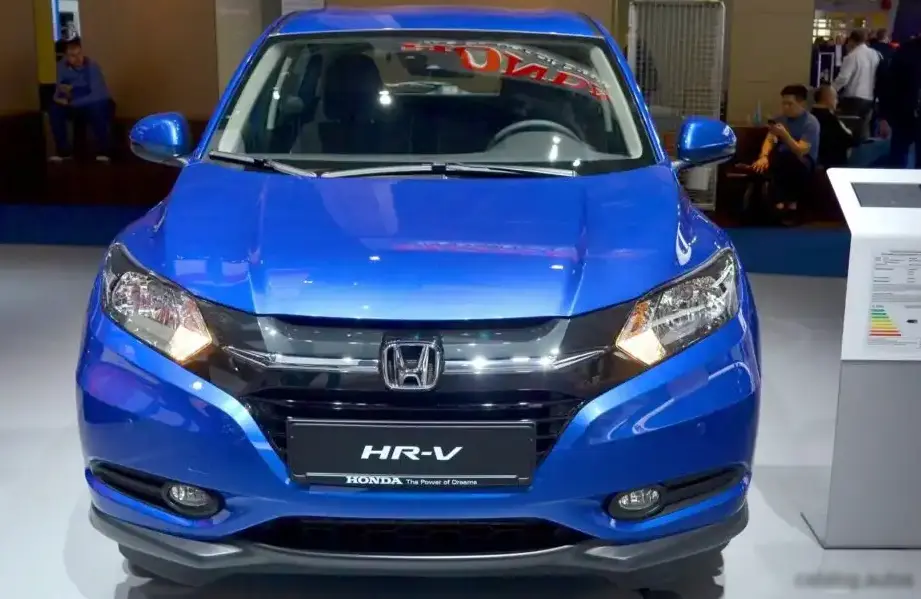
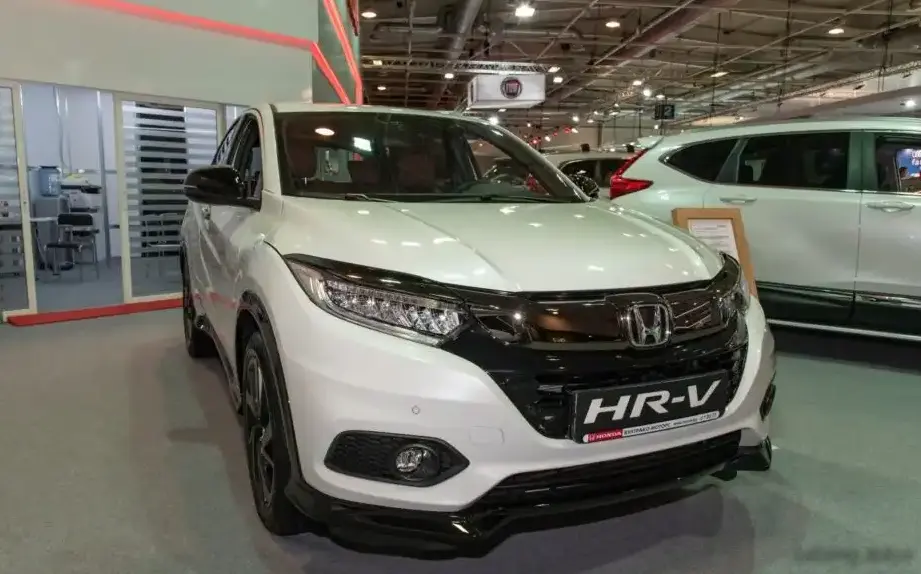
The 2018-2022 Honda HR-V, specifically the 1.8 i-VTEC CVT variant, was a crucial model in Honda’s effort to capture a broader audience in the increasingly popular subcompact crossover SUV segment. Based on the Honda Global Small Platform (internally known as the 1HX0/A3 platform, also used for the Honda Fit/Jazz), the HR-V prioritized interior space and versatility, notably through its innovative “Magic Seat” system. The facelifted model represented a refinement of the second-generation HR-V (introduced in 2015), enhancing its appeal against a growing number of competitors. In the United States, it directly competed with models such as the Mazda CX-3, Toyota C-HR, and Hyundai Kona.
Powertrain & Engine Architecture
The core of this HR-V variant is the R18Z9 1.8-liter inline-four cylinder engine. This engine belongs to Honda’s well-regarded R-series, celebrated for its inherent reliability and fuel efficiency. It employs a single overhead camshaft (SOHC) design, coupled with Honda’s intelligent Variable Valve Timing and Lift Electronic Control (i-VTEC) technology. i-VTEC dynamically adjusts valve timing and lift based on engine speed and load, optimizing both performance and fuel economy. Fuel delivery is managed through a multi-point fuel injection system. The engine generates 141 horsepower at 6500 rpm and 172 Nm (126.86 lb-ft) of torque at 4300 rpm. The engine is mounted transversely, powering the front wheels. The Continuously Variable Transmission (CVT) is a defining feature, designed to deliver smooth, seamless gear changes and maximize fuel efficiency. Unlike conventional automatic transmissions with fixed gear ratios, a CVT utilizes a belt and pulley system to provide a virtually infinite number of gear ratios within its operating range, allowing the engine to consistently operate at its most efficient rpm.
Driving Characteristics
The combination of the 1.8L i-VTEC engine and the CVT in the HR-V provides adequate, though not particularly sporty, performance. Acceleration is smooth and predictable, well-suited for daily commuting and urban driving conditions. The CVT, while prioritizing fuel economy, can sometimes exhibit a characteristic “rubber band” effect, where engine rpm increases noticeably under hard acceleration without a proportional increase in vehicle speed. Compared to the available six-speed manual transmission (offered in some markets), the CVT offers a more refined driving experience but sacrifices some driver engagement. The CVT’s programming is geared towards efficiency, meaning it tends to hold lower gear ratios for longer periods to conserve fuel. The HR-V’s relatively lightweight construction (1318 kg / 2905.69 lbs) helps to offset the engine’s modest power output. The steering is light and responsive, making it easy to maneuver in city traffic.
Equipment & Trim Levels
The standard equipment list for the 1.8 i-VTEC CVT HR-V typically included automatic climate control, a multi-angle rearview camera, Bluetooth connectivity, and a 5-inch infotainment display. Higher trim levels, such as the EX and EX-L, added features like a larger touchscreen display with Apple CarPlay and Android Auto compatibility, heated front seats, a sunroof, and leather upholstery. Base models generally featured cloth upholstery, while higher trims offered leather options. Safety features were comprehensive, including the Honda Sensing suite, which incorporates adaptive cruise control, lane departure warning, and a collision mitigation braking system. Optional extras included upgraded audio systems and various accessory packages tailored to individual preferences.
Chassis & Braking
The HR-V’s chassis features a McPherson strut front suspension and a semi-independent torsion beam rear suspension. This configuration delivers a comfortable ride quality, effectively absorbing bumps and road imperfections. A stabilizer bar is incorporated into the front suspension to minimize body roll during cornering maneuvers. Braking is provided by ventilated discs at the front and solid discs at the rear. An Anti-lock Braking System (ABS) is standard, enhancing braking performance and stability, particularly in emergency situations. The HR-V’s relatively low weight contributes to its respectable braking distances.
Market Reception & Comparison
The 1.8L i-VTEC CVT HR-V received generally positive reviews from automotive critics, who praised its practicality, fuel efficiency, and spacious interior. However, some reviewers pointed out the engine’s lack of substantial power and the CVT’s occasionally uninspiring driving dynamics. Compared to the manual transmission version, the CVT offered improved fuel economy but a less engaging driving experience. When compared to competitors like the Mazda CX-3, the HR-V offered more interior space and a more comfortable ride, while the CX-3 provided a more sporty and dynamic driving experience. Fuel economy consistently averaged around 30 mpg combined, making it a competitive offering in its class. Reliability ratings were consistently strong, aligning with Honda’s established reputation for dependability.
Legacy
The 2018-2022 Honda HR-V 1.8 i-VTEC CVT has proven to be a reliable and durable vehicle in the used car market. The R18Z9 engine is well-known for its longevity, and the CVT transmission, despite some initial concerns, has generally performed reliably with proper maintenance. The HR-V’s spacious interior and versatile “Magic Seat” system continue to appeal to buyers seeking a practical and adaptable crossover. While newer generations of the HR-V have since been introduced, the second-generation model remains a popular and sensible choice for those seeking an affordable and dependable subcompact SUV.