Technical Specifications
| Brand | Audi |
| Model | Q5 |
| Generation | Q5 I (8R, facelift 2012) |
| Type (Engine) | 3.0 TDI V6 (240 Hp) quattro Tiptronic |
| Start of production | 2013 |
| End of production | 2017 |
| Powertrain Architecture | Internal Combustion engine |
| Body type | SUV |
| Seats | 5 |
| Doors | 5 |
| Fuel consumption (economy) – urban (EPA) | 9.8 l/100 km (24 US mpg, 28.8 UK mpg, 10.2 km/l) |
| Fuel consumption (economy) – extra urban (EPA) | 7.6 l/100 km (30.9 US mpg, 37.2 UK mpg, 13.2 km/l) |
| Fuel consumption (economy) – combined (EPA) | 8.7 l/100 km (27 US mpg, 32.5 UK mpg, 11.5 km/l) |
| Fuel Type | Diesel |
| Acceleration 0 – 60 mph | 6.5 sec |
| Maximum speed | 209 km/h (129.87 mph) – Electronically limited |
| Emission standard | ULEV 2 |
| Weight-to-power ratio | 8.5 kg/Hp, 118.2 Hp/tonne |
| Weight-to-torque ratio | 3.5 kg/Nm, 285.7 Nm/tonne |
| Power | 240 Hp @ 3750-4000 rpm |
| Power per litre | 80.9 Hp/l |
| Torque | 580 Nm @ 1750-2250 rpm (427.79 lb.-ft. @ 1750-2250 rpm) |
| Engine layout | Front, Longitudinal |
| Engine Model/Code | CPNB |
| Engine displacement | 2967 cm3 (181.06 cu. in.) |
| Number of cylinders | 6 |
| Engine configuration | V-engine |
| Cylinder Bore | 83 mm (3.27 in.) |
| Piston Stroke | 91.4 mm (3.6 in.) |
| Compression ratio | 16.8:1 |
| Number of valves per cylinder | 4 |
| Fuel injection system | Diesel Commonrail |
| Engine aspiration | Turbocharger, Intercooler |
| Valvetrain | DOHC |
| Engine oil capacity | 6.4 l (6.76 US qt | 5.63 UK qt) |
| Coolant | 12 l (12.68 US qt | 10.56 UK qt) |
| Kerb Weight | 2030 kg (4475.38 lbs.) |
| Trunk (boot) space – minimum | 540 l (19.07 cu. ft.) |
| Trunk (boot) space – maximum | 1560 l (55.09 cu. ft.) |
| Fuel tank capacity | 75 l (19.81 US gal | 16.5 UK gal) |
| AdBlue tank | 23 l (6.08 US gal | 5.06 UK gal) |
| Permitted trailer load with brakes (12%) | 1996 kg (4400.43 lbs.) |
| Length | 4639 mm (182.64 in.) |
| Width | 1898 mm (74.72 in.) |
| Width including mirrors | 2089 mm (82.24 in.) |
| Height | 1655 mm (65.16 in.) |
| Wheelbase | 2807 mm (110.51 in.) |
| Front track | 1617 mm (63.66 in.) |
| Rear (Back) track | 1614 mm (63.54 in.) |
| Ride height (ground clearance) | 200 mm (7.87 in.) |
| Drag coefficient (Cd) | 0.33 |
| Minimum turning circle (turning diameter) | 11.6 m (38.06 ft.) |
| Drivetrain Architecture | The Internal combustion engine (ICE) drives permanently the four wheels of the vehicle. |
| Drive wheel | All wheel drive (4×4) |
| Number of gears and type of gearbox | 8 gears, automatic transmission Tiptronic |
| Front suspension | Coil spring, Independent multi-link suspension, Transverse stabilizer |
| Rear suspension | Independent on trapezoidal lever, Transverse stabilizer, Coil spring |
| Front brakes | Ventilated discs, 345 mm |
| Rear brakes | Ventilated discs, 330 mm |
| Assisting systems | ABS (Anti-lock braking system) |
| Steering type | Steering rack and pinion |
| Power steering | Electric Steering |
| Tires size | 235/55 R19; 255/45 R20 |
| Wheel rims size | 8J x 19; 8.5J x 20 |
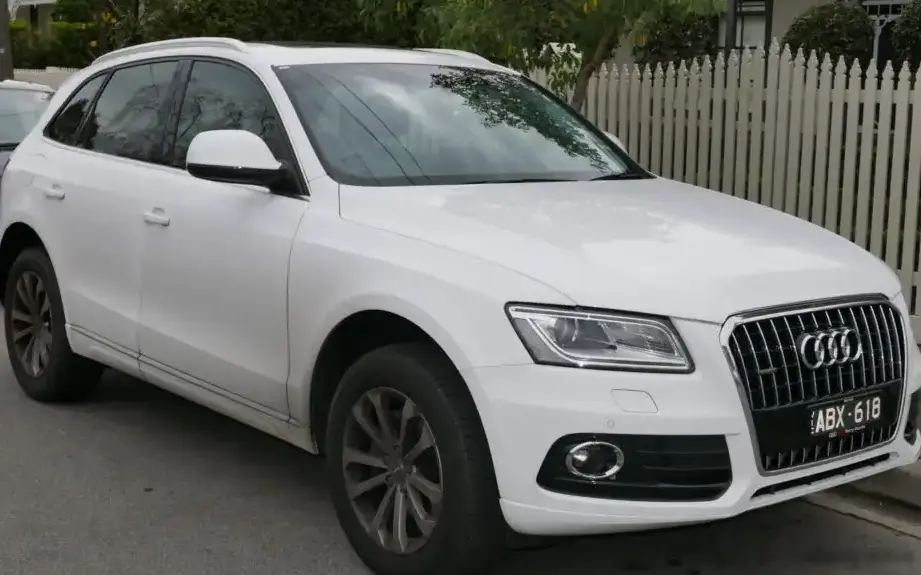
The Audi Q5 I (8R) facelift, launched in 2012 and continuing through 2017, represented a mid-cycle refresh of Audi’s popular compact luxury SUV. The 3.0 TDI V6 quattro Tiptronic variant, powered by the CPNB engine, was a key component of this update. This model offered a compelling combination of performance, fuel efficiency, and all-weather capability, making it a popular choice in European markets where diesel engines were favored. The Q5 aimed to deliver the Audi brand’s signature blend of sophisticated design, high-quality interior materials, and advanced technology in a practical and versatile package. The “Tiptronic” designation refers to the eight-speed automatic transmission with manual shift capability.
Powertrain & Engine Architecture
At the heart of the Q5 3.0 TDI is the CPNB engine, a 2,967 cc V6 diesel engine. This engine utilizes a common rail direct injection system, delivering fuel at extremely high pressure for optimized combustion. The engine features a single turbocharger with an intercooler, boosting power and torque. The valvetrain employs double overhead camshafts (DOHC) with four valves per cylinder. The eight-speed Tiptronic automatic transmission is a torque converter type, known for its smooth shifts and responsiveness. It allows for both fully automatic operation and manual gear selection via steering wheel-mounted paddles or the gear selector. This transmission was specifically chosen for its ability to handle the high torque output of the V6 diesel engine and contribute to improved fuel efficiency.
Driving Characteristics
The 3.0 TDI V6 with the Tiptronic transmission provided a noticeably more spirited driving experience compared to the lower-powered Q5 variants. The 580 Nm (427.79 lb-ft) of torque, available from 1750-2250 rpm, delivered strong acceleration in everyday driving situations and effortless overtaking. While not a sports SUV, the Q5 3.0 TDI could accelerate from 0 to 60 mph in approximately 6.5 seconds. The Tiptronic transmission, while smooth, wasn’t as quick to respond as a dual-clutch transmission, but it offered a comfortable and refined driving experience. The quattro all-wheel-drive system provided excellent traction in all weather conditions, enhancing stability and confidence. The gear ratios were tuned for a balance between performance and fuel economy, with higher gears optimized for cruising on the highway.
Equipment & Trim Levels
The 3.0 TDI V6 quattro Tiptronic typically came well-equipped as a higher-end trim level. Standard features often included leather upholstery, tri-zone automatic climate control, a premium sound system, and Audi’s Multi Media Interface (MMI) infotainment system with a color display screen. Optional extras included navigation, a panoramic sunroof, adaptive cruise control, and advanced driver-assistance systems like blind-spot monitoring and lane-keeping assist. Interior trim options varied, with choices in wood, aluminum, or carbon fiber accents. Exterior styling cues included chrome accents, larger alloy wheels (typically 19 or 20 inches), and LED headlights.
Chassis & Braking
The Q5 3.0 TDI featured a robust chassis designed to handle the increased power and torque. The front suspension utilized a multi-link independent setup with a transverse stabilizer bar, while the rear suspension employed an independent trapezoidal link design, also with a stabilizer bar. This configuration provided a comfortable ride and good handling characteristics. Braking duties were handled by ventilated disc brakes on all four wheels, with larger diameter discs at the front (345mm) compared to the rear (330mm). The Q5 was equipped with ABS (Anti-lock Braking System) and electronic stability control as standard safety features.
Market Reception & Comparison
The Audi Q5 3.0 TDI V6 quattro Tiptronic was generally well-received by automotive critics. It was praised for its refined engine, comfortable ride, and luxurious interior. Compared to the 2.0 TFSI models, the 3.0 TDI offered significantly more power and torque, resulting in a more engaging driving experience. However, it came at a higher price point. Against competitors like the BMW X3 3.0d and Mercedes-Benz GLC 300d, the Q5 3.0 TDI held its own, often being lauded for its interior quality and user-friendly technology. Fuel economy was a strong point, with combined figures around 8.7 l/100 km (27 US mpg), making it a practical choice for long-distance driving.
Legacy
The CPNB engine, while generally reliable, can require maintenance related to the diesel particulate filter (DPF) and the turbocharger, particularly on vehicles with high mileage or those primarily used for short trips. The Tiptronic transmission is also known to be durable, but regular fluid changes are crucial for maintaining its performance. Today, the Q5 3.0 TDI V6 (8R) facelift remains a desirable used car, offering a good balance of luxury, performance, and fuel efficiency. Its quattro all-wheel-drive system and robust build quality make it a practical choice for buyers in regions with challenging weather conditions. The model continues to be appreciated for its refined driving experience and the prestige associated with the Audi brand.