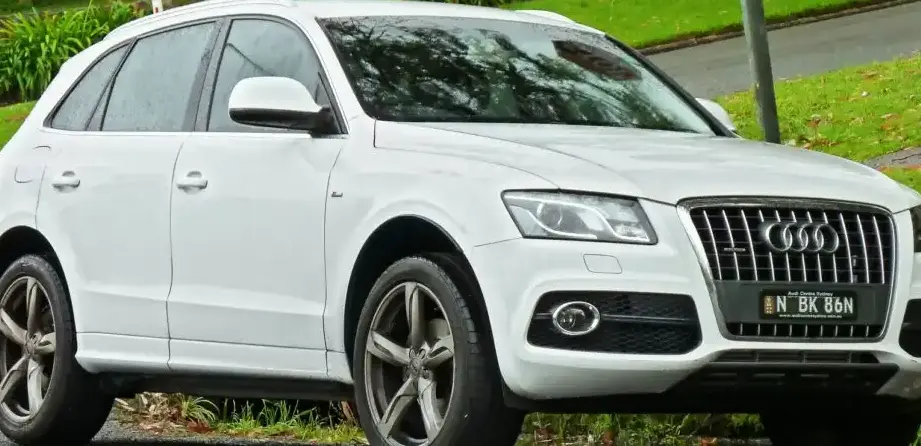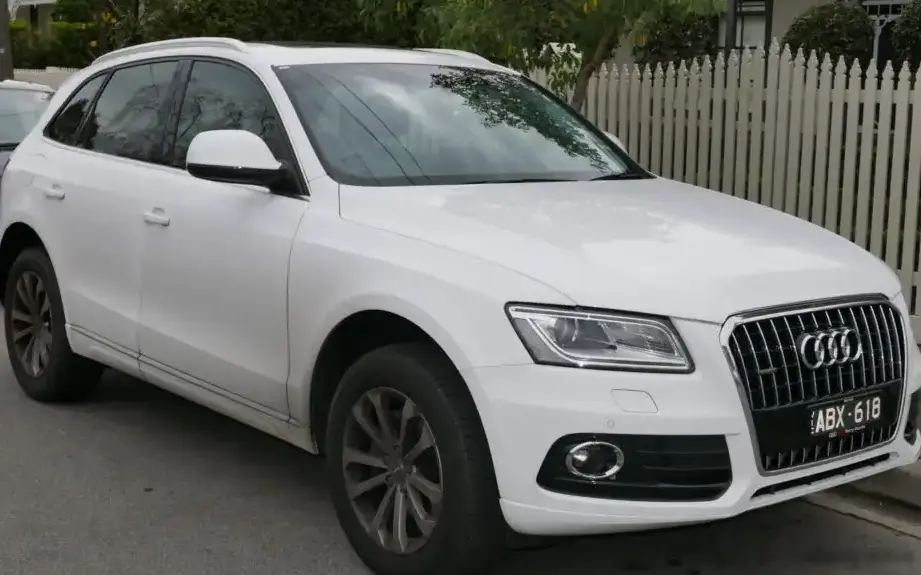
The Audi Q5 3.0 TFSI quattro Tiptronic, produced from June 2012 to 2015, represents a significant iteration of the first-generation (8R) Q5, following the model’s mid-cycle facelift. Positioned as a premium offering within the Q5 range, this variant combined a potent supercharged 3.0-liter V6 engine with Audi’s renowned quattro all-wheel-drive system and an eight-speed Tiptronic automatic transmission. It aimed to deliver a blend of performance, luxury, and all-weather capability, appealing to buyers seeking a more engaging driving experience than the base four-cylinder models while remaining more accessible than the performance-oriented SQ5. This model played a key role in solidifying the Q5’s position as a leading contender in the burgeoning luxury compact SUV segment in North America and Europe.
Technical Specifications
| Brand | Audi |
| Model | Q5 |
| Generation | Q5 I (8R, facelift 2012) |
| Type (Engine) | 3.0 TFSI V6 (272 Hp) quattro Tiptronic |
| Start of production | June, 2012 |
| End of production | 2015 |
| Powertrain Architecture | Internal Combustion engine |
| Body type | SUV |
| Seats | 5 |
| Doors | 5 |
| Fuel consumption (urban) | 11.4 l/100 km (20.6 US mpg, 24.8 UK mpg, 8.8 km/l) |
| Fuel consumption (extra urban) | 6.9 l/100 km (34.1 US mpg, 40.9 UK mpg, 14.5 km/l) |
| Fuel consumption (combined) | 8.5 l/100 km (27.7 US mpg, 33.2 UK mpg, 11.8 km/l) |
| CO2 emissions | 199 g/km |
| Fuel Type | Petrol (Gasoline) |
| Acceleration 0 – 100 km/h | 5.9 sec |
| Acceleration 0 – 62 mph | 5.9 sec |
| Acceleration 0 – 60 mph | 5.6 sec |
| Maximum speed | 234 km/h (145.4 mph) |
| Emission standard | Euro 5 |
| Weight-to-power ratio | 6.8 kg/Hp, 147.8 Hp/tonne |
| Weight-to-torque ratio | 4.6 kg/Nm, 217.4 Nm/tonne |
| Power | 272 Hp @ 4780-6500 rpm |
| Power per litre | 90.8 Hp/l |
| Torque | 400 Nm @ 2150-4780 rpm (295.02 lb.-ft. @ 2150-4780 rpm) |
| Engine layout | Front, Longitudinal |
| Engine Model/Code | CTUC, CTVA |
| Engine displacement | 2995 cm3 (182.77 cu. in.) |
| Number of cylinders | 6 |
| Engine configuration | V-engine |
| Cylinder Bore | 84.5 mm (3.33 in.) |
| Piston Stroke | 89 mm (3.5 in.) |
| Compression ratio | 10.3:1 |
| Number of valves per cylinder | 4 |
| Fuel injection system | Direct injection |
| Engine aspiration | Supercharger, Intercooler |
| Valvetrain | DOHC |
| Engine oil capacity | 6.8 l (7.19 US qt | 5.98 UK qt) |
| Kerb Weight | 1840 kg (4056.51 lbs.) |
| Max. weight | 2450 kg (5401.33 lbs.) |
| Max load | 610 kg (1344.82 lbs.) |
| Trunk (boot) space – minimum | 540 l (19.07 cu. ft.) |
| Trunk (boot) space – maximum | 1560 l (55.09 cu. ft.) |
| Fuel tank capacity | 75 l (19.81 US gal | 16.5 UK gal) |
| Max. roof load | 75 kg (165.35 lbs.) |
| Permitted trailer load with brakes (8%) | 2400 kg (5291.09 lbs.) |
| Permitted trailer load without brakes | 750 kg (1653.47 lbs.) |
| Permitted towbar download | 100 kg (220.46 lbs.) |
| Length | 4629 mm (182.24 in.) |
| Width | 1898 mm (74.72 in.) |
| Width including mirrors | 2089 mm (82.24 in.) |
| Height | 1655 mm (65.16 in.) |
| Wheelbase | 2807 mm (110.51 in.) |
| Front track | 1617 mm (63.66 in.) |
| Rear (Back) track | 1614 mm (63.54 in.) |
| Front overhang | 895 mm (35.24 in.) |
| Rear overhang | 927 mm (36.5 in.) |
| Ride height (ground clearance) | 200 mm (7.87 in.) |
| Drag coefficient (Cd) | 0.33 |
| Minimum turning circle (turning diameter) | 11.6 m (38.06 ft.) |
| Approach angle | 25° |
| Ramp-over (brakeover) angle | 17.6° |
| Climb angle | 31° |
| Wading depth | 500 mm (19.69 in.) |
| Drive wheel | All wheel drive (4×4) |
| Number of gears and type of gearbox | 8 gears, automatic transmission Tiptronic |
| Front suspension | Independent multi-link suspension |
| Rear suspension | Independent on trapezoidal lever |
| Front brakes | Ventilated discs |
| Rear brakes | Ventilated discs |
| Assisting systems | ABS (Anti-lock braking system) |
| Steering type | Steering rack and pinion |
| Power steering | Electric Steering |
| Tires size | 235/60 R18 |
| Wheel rims size | 8J x 18 |
Powertrain & Engine Architecture
At the heart of the Q5 3.0 TFSI lies the 3.0-liter V6 engine, designated as the CTUC or CTVA depending on minor regional variations. This engine is characterized by its supercharger, which provides instant boost and eliminates turbo lag, resulting in a linear power delivery. Direct fuel injection further enhances efficiency and responsiveness. The engine produces 272 horsepower at 4780-6500 rpm and 295 lb-ft of torque between 2150 and 4780 rpm. The eight-speed Tiptronic automatic transmission, a staple of Audi’s premium models, offers smooth and quick shifts. Drivers could also manually select gears via the Tiptronic function or steering wheel-mounted paddles. The quattro all-wheel-drive system utilizes a self-locking center differential, distributing torque between the front and rear axles as needed, providing excellent traction in various conditions.
Driving Characteristics
The Q5 3.0 TFSI offered a noticeably more spirited driving experience compared to the 2.0 TFSI models. The supercharged V6 delivered strong acceleration, with 0-60 mph times consistently around 5.6 seconds. The eight-speed transmission was well-matched to the engine’s powerband, providing ample gearing for both everyday driving and highway passing. While not as overtly sporty as some competitors, the Q5 offered a comfortable and composed ride, with precise steering and predictable handling. The quattro system inspired confidence in inclement weather, providing enhanced stability and control. The Tiptronic transmission, while generally smooth, could occasionally feel hesitant during downshifts.
Equipment & Trim Levels
The Q5 3.0 TFSI typically came well-equipped as standard. Features included leather upholstery, tri-zone automatic climate control, a power liftgate, and Audi’s Multi Media Interface (MMI) infotainment system with a 6.5-inch display screen. Optional extras included navigation, a panoramic sunroof, heated front seats, and a premium sound system. Trim levels varied slightly by market, but generally offered packages that added features like advanced driver-assistance systems and upgraded interior finishes. The Prestige package was the highest trim level, offering the most luxurious appointments and technology.
Chassis & Braking
The Q5’s chassis featured an independent multi-link suspension at all four corners, providing a comfortable ride and good handling characteristics. The suspension was tuned to prioritize comfort over outright sportiness, but still offered a secure and planted feel. Braking duties were handled by ventilated discs on all four wheels, providing ample stopping power. The ABS system, coupled with electronic brake-force distribution and brake assist, ensured safe and controlled braking in various conditions. Stabilizer bars were fitted front and rear to minimize body roll during cornering.
Market Reception & Comparison
The Audi Q5 3.0 TFSI was generally well-received by automotive critics. It was praised for its refined engine, comfortable ride, and luxurious interior. However, some reviewers noted that the infotainment system could be complex to use and that the price was relatively high compared to some competitors. Compared to the 2.0 TFSI Q5, the 3.0 TFSI offered significantly more performance and a more premium driving experience. Against rivals like the BMW X3 3.5i and the Acura RDX, the Q5 3.0 TFSI held its own, offering a compelling combination of luxury, performance, and all-weather capability.
Legacy
The 3.0 TFSI engine, in both CTUC and CTVA forms, has proven to be relatively reliable, although preventative maintenance, particularly regarding the timing chain, is crucial. The eight-speed Tiptronic transmission has also demonstrated good durability. Today, well-maintained examples of the 2012-2015 Q5 3.0 TFSI command reasonable prices in the used car market, appealing to buyers seeking a luxurious and capable compact SUV. The combination of a potent engine, all-wheel drive, and a comfortable interior continues to make this variant a desirable option for those looking for a premium driving experience.