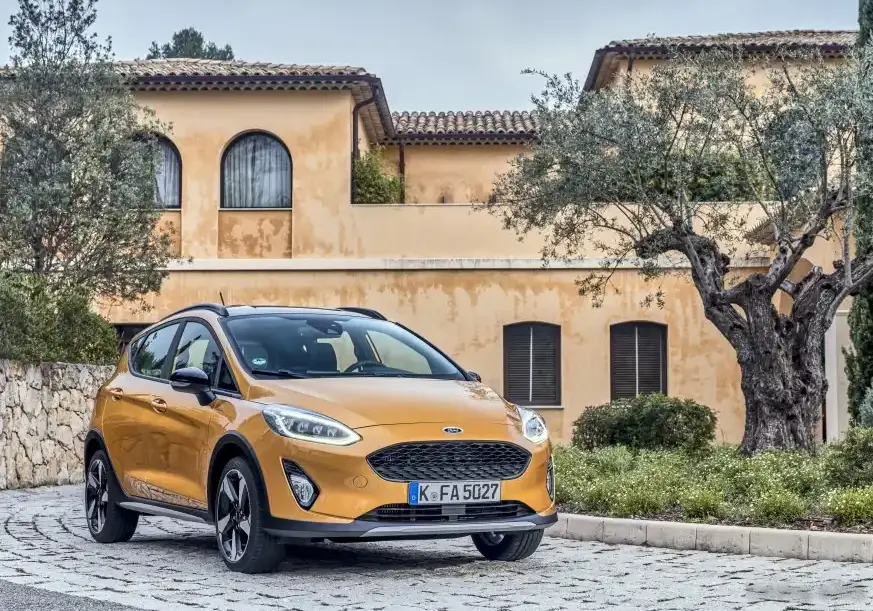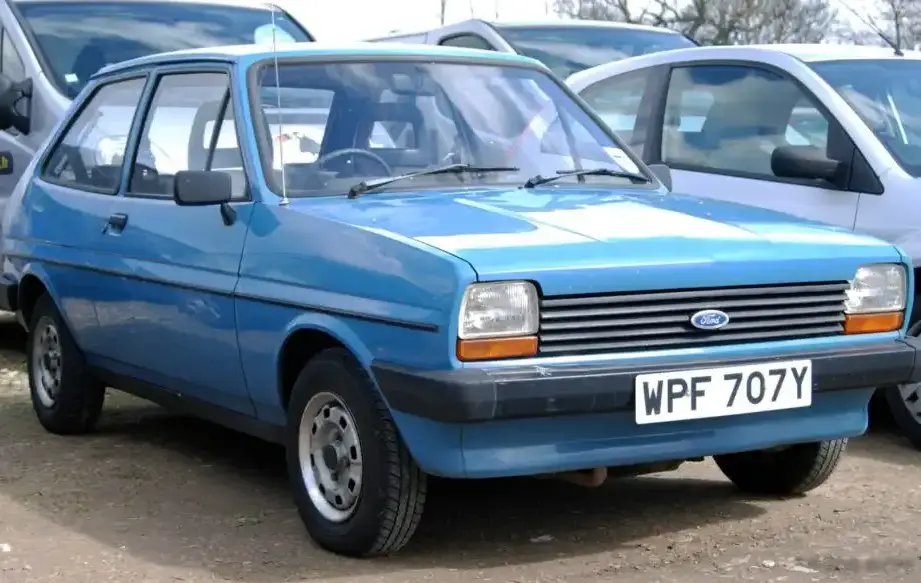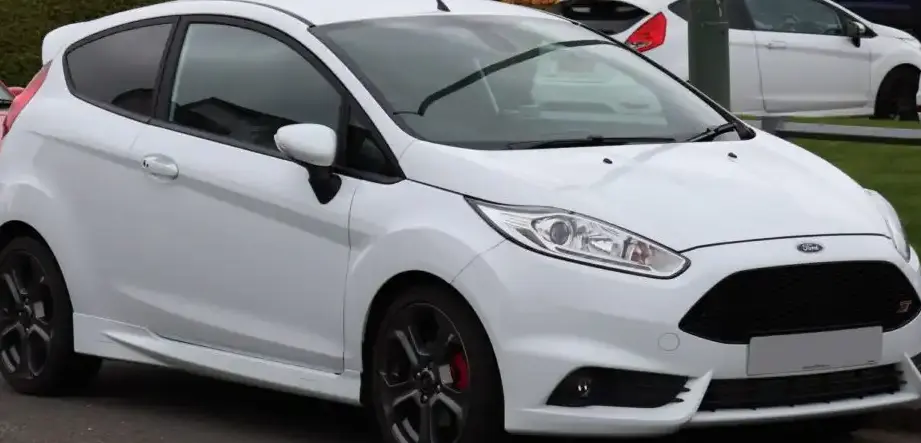
The Ford Fiesta VII, specifically the facelifted model produced from 2013 to 2017, represented a significant evolution of Ford’s popular subcompact hatchback. Among the various engine and trim combinations offered, the three-door 1.0 EcoBoost model producing 125 horsepower gained prominence for its blend of fuel efficiency and surprisingly spirited performance. This variant occupied a mid-range position within the Fiesta VII lineup, appealing to buyers seeking a balance between affordability and modern technology. It was a key offering in the European market, where smaller, fuel-efficient cars are highly valued, and also saw moderate success in other regions.
Technical Specifications
| Brand | Ford |
| Model | Fiesta |
| Generation | Fiesta VII (Mk7, facelift 2013) 3 door |
| Type (Engine) | 1.0 EcoBoost (125 Hp) |
| Start of production | 2013 |
| End of production | 2017 |
| Powertrain Architecture | Internal Combustion engine |
| Body type | Hatchback |
| Seats | 5 |
| Doors | 3 |
| Fuel consumption (urban) | 5.3 l/100 km (44.4 US mpg, 53.3 UK mpg, 18.9 km/l) |
| Fuel consumption (extra urban) | 3.7 l/100 km (63.6 US mpg, 76.3 UK mpg, 27 km/l) |
| Fuel consumption (combined) | 4.3 l/100 km (54.7 US mpg, 65.7 UK mpg, 23.3 km/l) |
| CO2 emissions | 99 g/km |
| Fuel Type | Petrol (Gasoline) |
| Acceleration 0 – 100 km/h | 9.4 sec |
| Acceleration 0 – 62 mph | 9.4 sec |
| Acceleration 0 – 60 mph | 8.9 sec |
| Maximum speed | 196 km/h (121.79 mph) |
| Emission standard | Euro 5 |
| Weight-to-power ratio | 8.1 kg/Hp, 123 Hp/tonne |
| Weight-to-torque ratio | 6 kg/Nm, 167.3 Nm/tonne |
| Power | 125 Hp @ 6000 rpm |
| Power per litre | 125.3 Hp/l |
| Torque | 170 Nm @ 1400-4500 rpm (125.39 lb.-ft. @ 1400-4500 rpm) |
| Engine layout | Front, Transverse |
| Engine Model/Code | M1JE, M1JH |
| Engine displacement | 998 cm3 (60.9 cu. in.) |
| Number of cylinders | 3 |
| Engine configuration | Inline |
| Number of valves per cylinder | 4 |
| Fuel injection system | Direct injection |
| Engine aspiration | Turbocharger, Intercooler |
| Engine oil capacity | 4.1 l (4.33 US qt | 3.61 UK qt) |
| Coolant capacity | 5.8 l (6.13 US qt | 5.1 UK qt) |
| Kerb Weight | 1016 kg (2239.9 lbs.) |
| Max. weight | 1550 kg (3417.17 lbs.) |
| Max load | 534 kg (1177.27 lbs.) |
| Trunk (boot) space – minimum | 281 l (9.92 cu. ft.) |
| Trunk (boot) space – maximum | 965 l (34.08 cu. ft.) |
| Fuel tank capacity | 42 l (11.1 US gal | 9.24 UK gal) |
| Permitted trailer load with brakes (12%) | 900 kg (1984.16 lbs.) |
| Permitted trailer load without brakes | 545 kg (1201.52 lbs.) |
| Length | 3969 mm (156.26 in.) |
| Width | 1722 mm (67.8 in.) |
| Width with mirrors folded | 1787 mm (70.35 in.) |
| Width including mirrors | 1973 mm (77.68 in.) |
| Height | 1495 mm (58.86 in.) |
| Wheelbase | 2489 mm (97.99 in.) |
| Minimum turning circle | 10.2 m (33.46 ft.) |
| Drivetrain Architecture | Front wheel drive |
| Number of gears and type of gearbox | 5 gears, manual transmission |
| Front suspension | Independent, type McPherson with coil spring and anti-roll bar |
| Rear suspension | Coil spring, Torsion |
| Front brakes | Ventilated discs |
| Rear brakes | Drum |
| Assisting systems | ABS (Anti-lock braking system) |
| Steering type | Steering rack and pinion |
| Power steering | Electric Steering |
| Tires size | 195/55 R15 |
| Wheel rims size | 6J x 15 |
INTRODUCTION
The 1.0 EcoBoost 125 hp three-door Fiesta, launched in 2013 as part of the Mk7 facelift, represented Ford’s commitment to downsizing and turbocharging. Built on the global B-platform (1HX0/A3), this variant aimed to deliver a compelling package of fuel economy, affordability, and surprisingly engaging driving dynamics. The three-door configuration specifically targeted a younger demographic or those prioritizing a sportier aesthetic. It slotted into the Fiesta range between the lower-powered 1.0 EcoBoost 100 hp model and the more expensive and performance-oriented ST variant.
Powertrain & Engine Architecture
The heart of this Fiesta is the 1.0-liter EcoBoost engine, specifically the M1JE or M1JH engine code depending on the specific production date and market. This is a three-cylinder, inline gasoline engine featuring direct fuel injection and a single turbocharger with an intercooler. The direct injection system allows for precise fuel delivery, optimizing combustion efficiency and reducing emissions. The engine utilizes a variable valve timing system to enhance performance across the rev range. The 125 hp output is achieved through careful tuning of the turbocharger and engine management system. The engine is paired with a five-speed manual transmission, chosen for its simplicity and efficiency. The transmission’s gear ratios are tuned to maximize fuel economy while still providing adequate acceleration. A Start & Stop system was also included as standard, further contributing to fuel savings in urban driving conditions.
Driving Characteristics
The 1.0 EcoBoost 125 hp Fiesta offers a surprisingly lively driving experience. While not a sports car, the turbocharger provides a noticeable boost in power, particularly in the mid-range. Acceleration from 0-60 mph takes around 8.9 seconds, which is respectable for a car in this class. The five-speed manual transmission is light and precise, making gear changes smooth and engaging. Compared to the 100 hp version, the 125 hp model feels significantly more capable, especially when overtaking or climbing hills. However, it doesn’t possess the outright punch of the Fiesta ST. The relatively low weight of the Fiesta (around 2240 lbs) contributes to its nimble handling. The steering is direct and responsive, providing good feedback to the driver. The suspension is tuned for comfort, but it also provides adequate body control in corners.
Equipment & Trim Levels
The 1.0 EcoBoost 125 hp three-door Fiesta typically came equipped with a reasonable level of standard features. These included air conditioning, power windows, power door locks, a basic audio system with USB connectivity, and ABS brakes. Higher trim levels, such as Titanium, added features like alloy wheels, a more advanced infotainment system with a touchscreen display, automatic headlights, rain-sensing wipers, and cruise control. Interior upholstery was typically cloth, with options for upgraded materials and colors. Optional extras included a panoramic sunroof, parking sensors, and a premium sound system.
Chassis & Braking
The Fiesta VII utilizes a McPherson strut front suspension and a torsion beam rear suspension. This setup provides a good balance between ride comfort and handling. The front brakes are ventilated discs, providing ample stopping power, while the rear brakes are drums. ABS (Anti-lock Braking System) is standard, enhancing safety in emergency braking situations. The steering is a rack and pinion system with electric power assistance, offering precise control and reducing driver effort. The 195/55 R15 tires provide adequate grip in most conditions.
Market Reception & Comparison
The 1.0 EcoBoost 125 hp Fiesta was generally well-received by automotive critics. It was praised for its fuel efficiency, surprisingly strong performance, and engaging driving dynamics. Compared to the 100 hp version, the 125 hp model offered a noticeable improvement in performance without significantly sacrificing fuel economy. It was also considered a more compelling alternative to competitors like the Volkswagen Polo and Opel Corsa. However, some critics noted that the three-cylinder engine could be a bit rough sounding at higher revs. In terms of reliability, the 1.0 EcoBoost engine has proven to be generally reliable, although some owners have reported issues with the timing belt and water pump.
Legacy
The 1.0 EcoBoost engine has become a cornerstone of Ford’s powertrain strategy, and the Fiesta VII 1.0 EcoBoost 125 hp variant played a significant role in establishing its reputation. On the used car market, these Fiestas remain popular due to their affordability, fuel efficiency, and relatively low running costs. The engine’s proven reliability and readily available parts contribute to its continued appeal. While newer Fiesta models offer more advanced technology and features, the Mk7 1.0 EcoBoost 125 hp remains a solid and practical choice for buyers seeking a well-rounded subcompact hatchback.