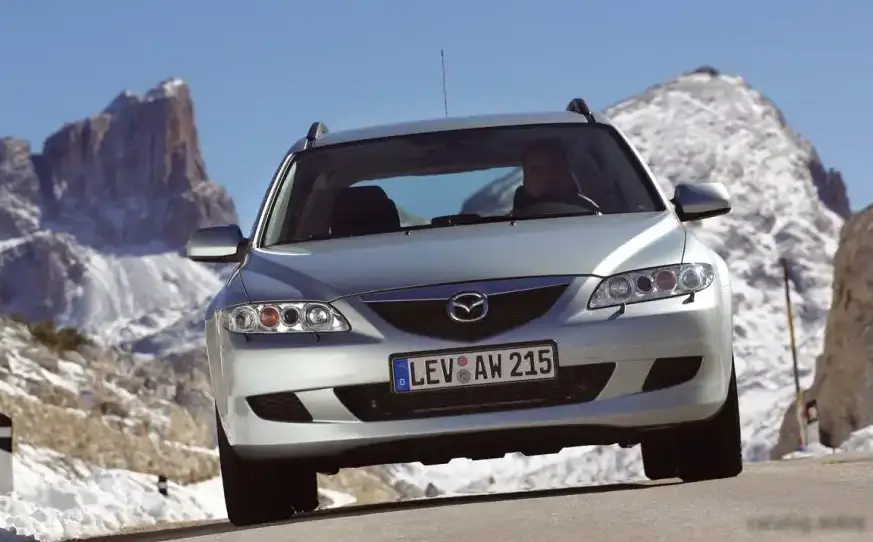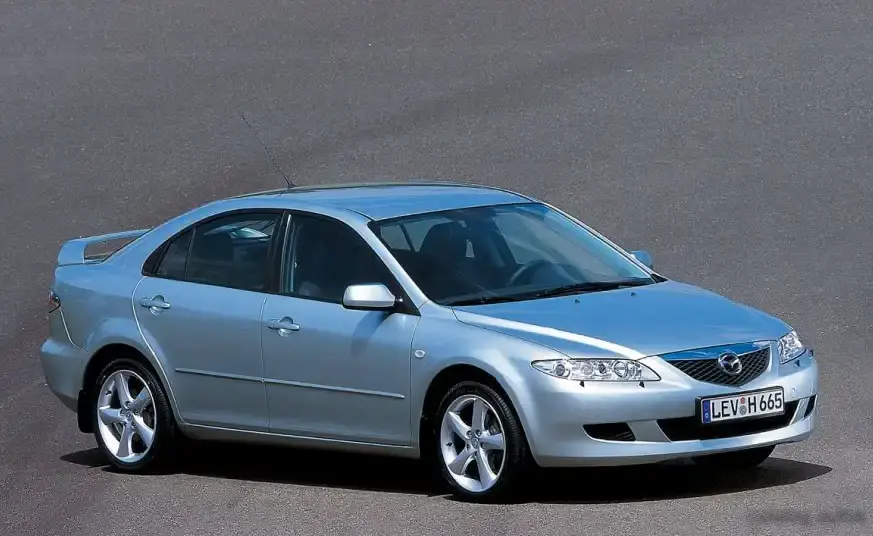
The Mazda 6 first generation (GG/GY/GG1) was produced from 2002 to 2007, representing Mazda’s entry into the mid-size segment, aiming to compete with established rivals like the Honda Accord and Toyota Camry. The hatchback variant, designated GG/GY, offered a more practical and sporty alternative to the sedan. The 2.3-liter engine, producing 166 horsepower, was a key offering within the range, positioned as a step up from the base 2.0-liter engine while remaining more accessible than the flagship V6 models available in some markets. Production of this specific configuration spanned from 2002 to 2005.
Technical Specifications
| Brand | Mazda |
| Model | 6 |
| Generation | 6 I Hatchback (Typ GG/GY/GG1) |
| Type (Engine) | 2.3 (166 Hp) |
| Start of production | 2002 |
| End of production | 2005 |
| Powertrain Architecture | Internal Combustion engine |
| Body type | Hatchback |
| Seats | 5 |
| Doors | 5 |
| Fuel consumption (urban) | 12.4 l/100 km (19 US mpg, 22.8 UK mpg, 8.1 km/l) |
| Fuel consumption (extra urban) | 7.2 l/100 km (32.7 US mpg, 39.2 UK mpg, 13.9 km/l) |
| Fuel consumption (combined) | 9.1 l/100 km (25.8 US mpg, 31 UK mpg, 11 km/l) |
| CO2 emissions | 218 g/km |
| Fuel Type | Petrol (Gasoline) |
| Acceleration 0 – 100 km/h | 9 sec |
| Acceleration 0 – 62 mph | 9 sec |
| Acceleration 0 – 60 mph | 8.6 sec |
| Maximum speed | 211 km/h (131.11 mph) |
| Emission standard | Euro 4 |
| Weight-to-power ratio | 8.2 kg/Hp, 122.5 Hp/tonne |
| Weight-to-torque ratio | 6.5 kg/Nm, 152.8 Nm/tonne |
| Power | 166 Hp @ 6500 rpm |
| Power per litre | 73.4 Hp/l |
| Torque | 207 Nm @ 4000 rpm (152.68 lb.-ft. @ 4000 rpm) |
| Engine layout | Front, Transverse |
| Engine Model/Code | L3C1 |
| Engine displacement | 2261 cm3 (137.97 cu. in.) |
| Number of cylinders | 4 |
| Engine configuration | Inline |
| Cylinder Bore | 87.5 mm (3.44 in.) |
| Piston Stroke | 94 mm (3.7 in.) |
| Compression ratio | 10.6:1 |
| Number of valves per cylinder | 4 |
| Fuel injection system | Multi-port manifold injection |
| Engine aspiration | Naturally aspirated engine |
| Valvetrain | DOHC |
| Engine oil capacity | 4.3 l (4.54 US qt | 3.78 UK qt) |
| Coolant | 7.5 l (7.93 US qt | 6.6 UK qt) |
| Kerb Weight | 1355 kg (2987.26 lbs.) |
| Max. weight | 1890 kg (4166.74 lbs.) |
| Max load | 535 kg (1179.47 lbs.) |
| Trunk (boot) space – minimum | 492 l (17.37 cu. ft.) |
| Fuel tank capacity | 64 l (16.91 US gal | 14.08 UK gal) |
| Permitted trailer load with brakes (12%) | 1700 kg (3747.86 lbs.) |
| Permitted trailer load without brakes | 550 kg (1212.54 lbs.) |
| Length | 4680 mm (184.25 in.) |
| Width | 1780 mm (70.08 in.) |
| Height | 1435 mm (56.5 in.) |
| Wheelbase | 2675 mm (105.31 in.) |
| Front track | 1540 mm (60.63 in.) |
| Rear (Back) track | 1540 mm (60.63 in.) |
| Ride height (ground clearance) | 130 mm (5.12 in.) |
| Drag coefficient (Cd) | 0.31 |
| Minimum turning circle (turning diameter) | 10.8 m (35.43 ft.) |
| Drivetrain Architecture | The Internal combustion engine (ICE) drives the front wheels of the vehicle. |
| Drive wheel | Front wheel drive |
| Number of gears and type of gearbox | 5 gears, manual transmission |
| Front brakes | Ventilated discs |
| Rear brakes | Disc |
| Assisting systems | ABS (Anti-lock braking system) |
| Steering type | Steering rack and pinion |
| Tires size | 215/45 R17 V |
| Wheel rims size | 17 |
Powertrain & Engine Architecture
The heart of this Mazda 6 variant is the L3C1 engine, a 2.3-liter inline-four cylinder gasoline engine. This engine utilizes a cast iron block with an aluminum cylinder head, a common configuration for balancing durability and weight. The engine employs multi-port fuel injection, delivering fuel directly into the intake ports, and a double overhead camshaft (DOHC) valvetrain with four valves per cylinder. This configuration optimizes airflow for improved performance. The compression ratio of 10.6:1 strikes a balance between efficiency and power output. The engine’s 207 Nm (152.68 lb-ft) of torque is delivered at 4000 rpm, providing adequate pulling power for everyday driving. The 5-speed manual transmission was the standard offering, providing drivers with full control over gear selection. The transmission’s gear ratios were tuned for a blend of acceleration and fuel economy.
Driving Characteristics
The 2.3-liter engine in the Mazda 6 hatchback offered a noticeable step up in performance compared to the base 2.0-liter engine. Acceleration from 0-60 mph took approximately 8.6 seconds, making it a reasonably quick vehicle for its time. While not a sports car, the 2.3-liter engine provided sufficient power for confident overtaking and highway cruising. The 5-speed manual transmission allowed for precise gear changes, enhancing the driving experience. Compared to the higher-output V6 models, the 2.3-liter engine prioritized fuel efficiency and affordability. The manual transmission provided a more engaging driving experience than the optional automatic transmission, which could feel somewhat sluggish in comparison.
Equipment & Trim Levels
The 2.3-liter hatchback typically came with a respectable level of standard equipment. This included power windows, power locks, air conditioning, and an AM/FM stereo. Higher trim levels added features such as alloy wheels, a sunroof, and upgraded interior upholstery. Interior materials were generally of good quality for the price point, with a focus on practicality and durability. Optional extras included a premium sound system, leather seats, and a navigation system. The hatchback body style offered increased cargo space compared to the sedan, making it a more versatile option for families and those with active lifestyles.
Chassis & Braking
The Mazda 6 hatchback utilized a MacPherson strut front suspension and a multi-link rear suspension, providing a comfortable and controlled ride. The front brakes were ventilated discs, offering good stopping power, while the rear brakes were solid discs. Anti-lock Braking System (ABS) was standard, enhancing safety. The chassis was designed to provide a balance between handling and ride comfort. The steering was responsive and accurate, contributing to a confident driving experience. The 215/45 R17 tires provided good grip in a variety of conditions.
Market Reception & Comparison
The Mazda 6, including the 2.3-liter hatchback variant, was generally well-received by automotive critics. It was praised for its stylish design, comfortable interior, and engaging driving dynamics. The 2.3-liter engine was considered a good compromise between performance and fuel economy. Compared to rivals like the Honda Accord and Toyota Camry, the Mazda 6 offered a more sporty driving experience. However, some critics noted that the interior materials were not quite as refined as those found in some competitors. Fuel economy was respectable for its class, averaging around 25.8 US mpg in combined driving. Reliability was generally good, although some owners reported minor issues with the fuel injection system.
Legacy
The Mazda 6 first generation established Mazda as a serious contender in the mid-size segment. The 2.3-liter engine proved to be a reliable and durable powerplant, with many examples still on the road today. While not as sought-after as some of the more performance-oriented variants, the 2.3-liter hatchback remains a practical and affordable option for those seeking a well-rounded mid-size car. In the used car market, these models are often appreciated for their relatively low maintenance costs and good fuel economy. The L3C1 engine is known for its longevity when properly maintained, making it a viable choice for budget-conscious buyers.