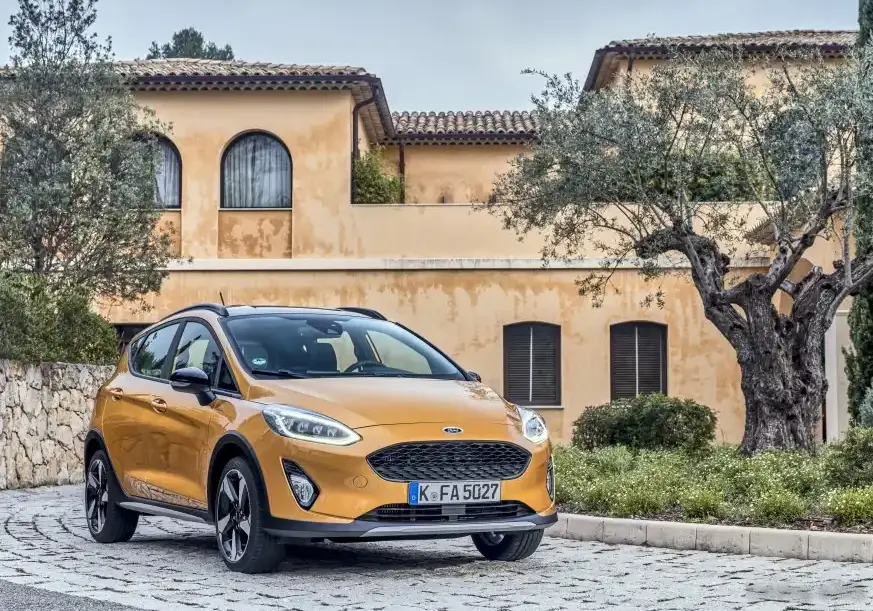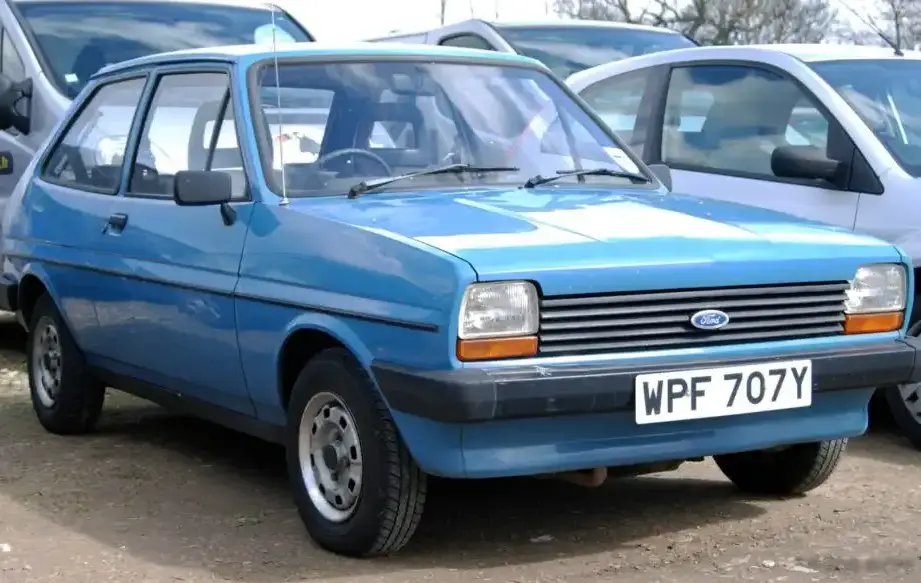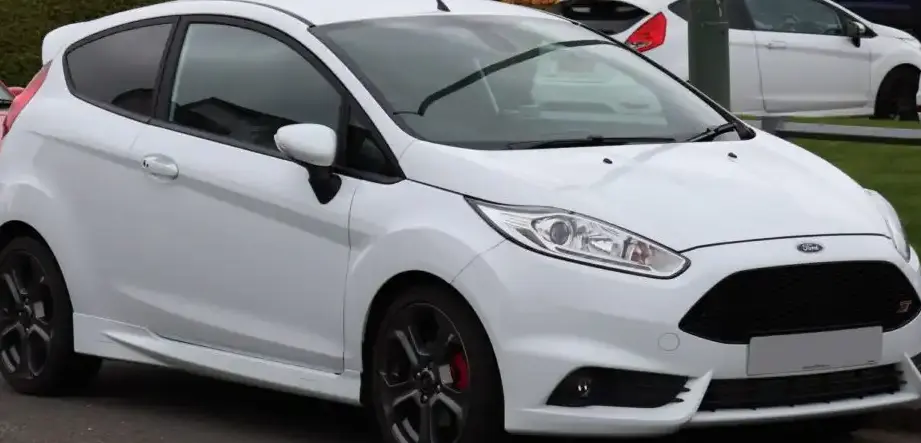
The Ford Fiesta VII, specifically the facelifted model produced from 2013 to 2017, represented a significant evolution of Ford’s popular subcompact hatchback. Within this generation, the three-door 1.25 Duratec variant, producing 82 horsepower, served as an entry point into the Fiesta range, particularly in European and Asian markets. This model aimed to provide affordable and efficient transportation, appealing to first-time buyers and those seeking a nimble city car. It was positioned below the more powerful EcoBoost variants and the diesel options in terms of performance and price.
Technical Specifications
| Brand | Ford |
| Model | Fiesta |
| Generation | Fiesta VII (Mk7, facelift 2013) 3 door |
| Type (Engine) | 1.25 Duratec (82 Hp) |
| Start of production | 2013 |
| End of production | 2017 |
| Powertrain Architecture | Internal Combustion engine |
| Body type | Hatchback |
| Seats | 5 |
| Doors | 3 |
| Fuel consumption (urban) | 6.9 l/100 km (34.1 US mpg, 40.9 UK mpg, 14.5 km/l) |
| Fuel consumption (extra urban) | 4.2 l/100 km (56 US mpg, 67.3 UK mpg, 23.8 km/l) |
| Fuel consumption (combined) | 5.2 l/100 km (45.2 US mpg, 54.3 UK mpg, 19.2 km/l) |
| CO2 emissions | 120 g/km |
| Fuel Type | Petrol (Gasoline) |
| Acceleration 0 – 100 km/h | 13.3 sec |
| Acceleration 0 – 62 mph | 13.3 sec |
| Acceleration 0 – 60 mph | 12.6 sec |
| Maximum speed | 168 km/h (104.39 mph) |
| Emission standard | Euro 5 |
| Weight-to-power ratio | 11.8 kg/Hp, 84.5 Hp/tonne |
| Weight-to-torque ratio | 8.5 kg/Nm, 117.5 Nm/tonne |
| Power | 82 Hp @ 5800 rpm |
| Power per litre | 66 Hp/l |
| Torque | 114 Nm @ 4200 rpm (84.08 lb.-ft. @ 4200 rpm) |
| Engine layout | Front, Transverse |
| Engine Model/Code | SNJB, SNJC, SNJD |
| Engine displacement | 1242 cm3 (75.79 cu. in.) |
| Number of cylinders | 4 |
| Engine configuration | Inline |
| Number of valves per cylinder | 4 |
| Fuel injection system | Multi-port manifold injection |
| Engine aspiration | Naturally aspirated engine |
| Engine oil capacity | 4 l (4.23 US qt | 3.52 UK qt) |
| Coolant capacity | 5.5 l (5.81 US qt | 4.84 UK qt) |
| Kerb Weight | 970 kg (2138.48 lbs.) |
| Max. weight | 1525 kg (3362.05 lbs.) |
| Max load | 555 kg (1223.57 lbs.) |
| Trunk (boot) space – minimum | 281 l (9.92 cu. ft.) |
| Trunk (boot) space – maximum | 965 l (34.08 cu. ft.) |
| Fuel tank capacity | 42 l (11.1 US gal | 9.24 UK gal) |
| Permitted trailer load with brakes (8%) | 900 kg (1984.16 lbs.) |
| Permitted trailer load with brakes (12%) | 600 kg (1322.77 lbs.) |
| Permitted trailer load without brakes | 520 kg (1146.4 lbs.) |
| Length | 3969 mm (156.26 in.) |
| Width | 1722 mm (67.8 in.) |
| Width with mirrors folded | 1787 mm (70.35 in.) |
| Width including mirrors | 1973 mm (77.68 in.) |
| Height | 1495 mm (58.86 in.) |
| Wheelbase | 2489 mm (97.99 in.) |
| Minimum turning circle | 10.2 m (33.46 ft.) |
| Drivetrain Architecture | The Internal combustion engine (ICE) drives the front wheels of the vehicle. |
| Drive wheel | Front wheel drive |
| Number of gears and type of gearbox | 5 gears, manual transmission |
| Front suspension | Independent, type McPherson with coil spring and anti-roll bar |
| Rear suspension | Coil spring, Torsion |
| Front brakes | Ventilated discs |
| Rear brakes | Drum |
| Assisting systems | ABS (Anti-lock braking system) |
| Steering type | Steering rack and pinion |
| Power steering | Electric Steering |
| Tires size | 175/65 R14; 195/55 R15 |
| Wheel rims size | 5.5J x 14; 6J x 15 |
INTRODUCTION
The 1.25 Duratec engine in the three-door Fiesta VII (facelift) was introduced in 2013 as part of the model’s mid-life refresh. This variant was built on the global B-platform (1HX0/A3), shared with other Ford and partner vehicles. It was designed to offer a balance of affordability, fuel efficiency, and practicality, targeting urban commuters and younger drivers. The three-door body style further emphasized a sporty aesthetic, appealing to those prioritizing style over rear passenger space.
Powertrain & Engine Architecture
The heart of this Fiesta variant is the 1.25-liter Duratec engine, specifically the SNJB, SNJC, or SNJD engine codes depending on the specific market and year. This is a naturally aspirated, inline-four cylinder engine utilizing a multi-port fuel injection system. The engine features a single overhead camshaft (SOHC) design with four valves per cylinder. The Duratec engine family was known for its relatively simple design, contributing to its reliability and ease of maintenance. The 82 horsepower output is achieved at 5800 rpm, while peak torque of 114 Nm (84.08 lb-ft) arrives at 4200 rpm. The engine is transversely mounted, driving the front wheels. The standard transmission was a five-speed manual gearbox, optimized for fuel economy rather than outright performance. While an automatic transmission was offered in some markets, it was not commonly paired with this specific engine due to the limited power output.
Driving Characteristics
The 1.25 Duratec-equipped Fiesta offered a predictable, if not exhilarating, driving experience. Acceleration from 0-60 mph took around 12.6 seconds, and top speed was limited to 168 km/h (104.39 mph). The five-speed manual transmission featured relatively long gear ratios, prioritizing fuel efficiency over rapid acceleration. The engine felt somewhat strained when pushed hard, particularly when overtaking or climbing hills. However, around town, the engine proved adequate, offering sufficient power for everyday driving. The Fiesta’s light weight and well-tuned suspension contributed to nimble handling, making it enjoyable to drive on winding roads. Compared to the higher-output EcoBoost variants, this 1.25L model felt significantly less powerful, but it offered a smoother, more linear power delivery.
Equipment & Trim Levels
The 1.25 Duratec Fiesta typically came equipped with a basic level of standard features. These included power steering, ABS brakes, front airbags, and a basic audio system. Interior upholstery was typically cloth, with a functional, if somewhat spartan, dashboard layout. Higher trim levels, such as Style or Zetec, added features like alloy wheels, air conditioning, electric windows, and a more sophisticated audio system. Optional extras included a sunroof, parking sensors, and upgraded interior trim. The three-door configuration often came with sport seats as standard, enhancing the vehicle’s visual appeal.
Chassis & Braking
The Fiesta VII utilized an independent McPherson strut suspension setup at the front, providing good ride comfort and handling. The rear suspension employed a torsion beam setup, which was cost-effective and space-efficient. Braking duties were handled by ventilated discs at the front and drum brakes at the rear. ABS (Anti-lock Braking System) was standard, enhancing safety. The relatively light weight of the 1.25 Duratec variant meant that the braking system was generally adequate for its performance level. Stabilizer bars were fitted to both the front and rear axles to reduce body roll during cornering.
Market Reception & Comparison
The 1.25 Duratec Fiesta received generally positive reviews for its fuel efficiency and affordability. Critics noted its adequate performance for urban driving but criticized its lack of power on the open road. Compared to the more expensive EcoBoost variants, the 1.25L model offered a lower purchase price and better fuel economy, making it an attractive option for budget-conscious buyers. The diesel variants offered superior fuel economy and torque, but at a higher initial cost. The 1.25L engine was considered reliable, but regular maintenance was essential to ensure longevity.
Legacy
The 1.25 Duratec engine, while not known for its performance, proved to be a reliable and durable powerplant. Fiesta VII models equipped with this engine continue to be found on the used car market today, often offering excellent value for money. The engine’s simplicity makes it relatively easy and inexpensive to repair. However, potential buyers should be aware of the engine’s limited power output and ensure that the vehicle has been properly maintained. The Fiesta VII 1.25 Duratec remains a popular choice for those seeking an affordable, economical, and practical city car.