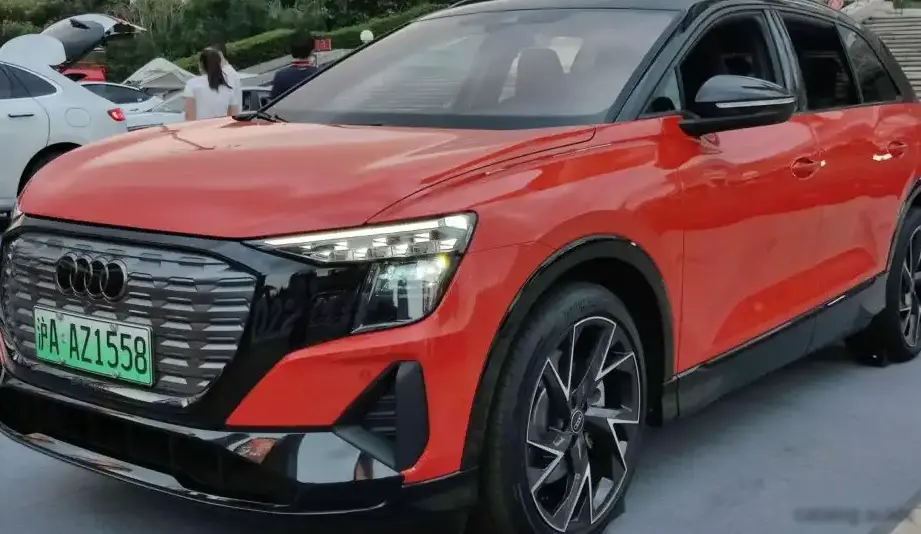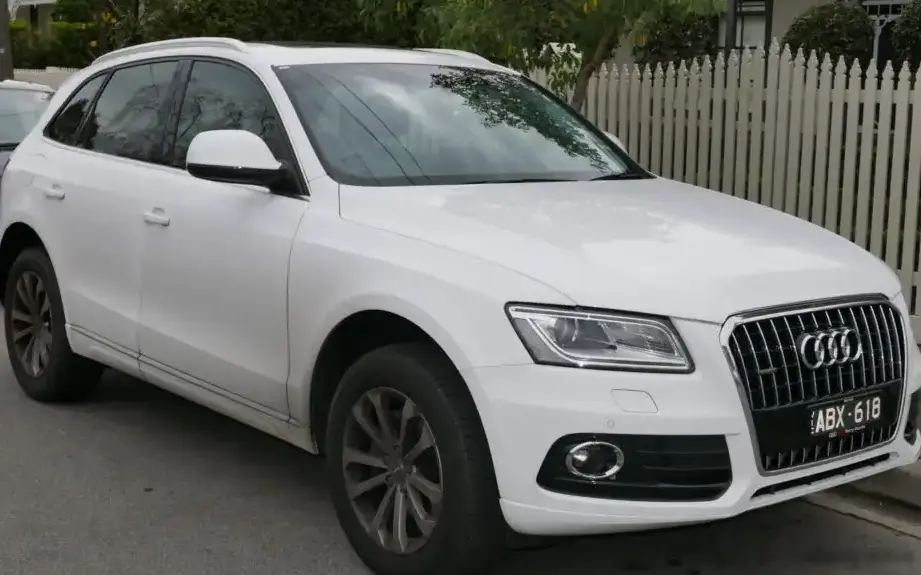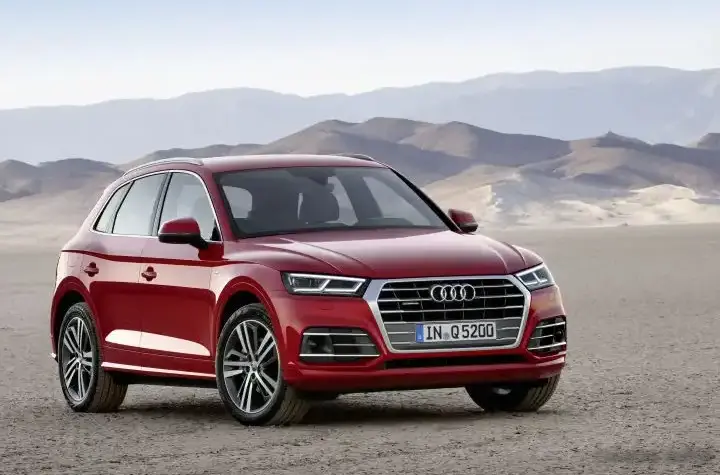
The Audi Q5 II (FY) 50 TFSI e, produced from May 2019 to 2020, represents Audi’s entry into the plug-in hybrid electric vehicle (PHEV) market within the popular Q5 SUV range. Positioned as a premium offering, it combined a 2.0-liter turbocharged four-cylinder gasoline engine with an electric motor, delivering a combined system output of 299 horsepower. This variant was designed to appeal to buyers seeking a balance between performance, efficiency, and reduced emissions, particularly in European markets where PHEVs were gaining traction due to increasingly stringent environmental regulations. The 50 TFSI e utilized Audi’s quattro all-wheel drive system and a seven-speed S tronic dual-clutch transmission, offering a sophisticated driving experience.
Technical Specifications
| Brand | Audi |
| Model | Q5 |
| Generation | Q5 II (FY) |
| Type (Engine) | 50 TFSI e (299 Hp) Plug-in Hybrid quattro S tronic |
| Start of production | May, 2019 |
| End of production | 2020 |
| Powertrain Architecture | PHEV (Plug-in Hybrid Electric Vehicle) |
| Body type | SUV |
| Seats | 5 |
| Doors | 5 |
| Combined fuel consumption (WLTP) | 2.1-2.6 l/100 km (112 – 90.5 US mpg, 134.5 – 108.6 UK mpg, 47.6 – 38.5 km/l) |
| CO2 emissions (WLTP) | 50-59 g/km |
| Fuel consumption (economy) – combined | 2.0-2.4 l/100 km (117.6 – 98 US mpg, 141.2 – 117.7 UK mpg, 50 – 41.7 km/l) |
| CO2 emissions | 46-54 g/km |
| Fuel Type | Petrol / electricity |
| Acceleration 0 – 100 km/h | 6.1 sec |
| Acceleration 0 – 62 mph | 6.1 sec |
| Acceleration 0 – 60 mph | 5.8 sec |
| Maximum speed | 239 km/h (148.51 mph) |
| Emission standard | Euro 6 |
| Weight-to-power ratio | 6.8 kg/Hp, 147.3 Hp/tonne |
| Weight-to-torque ratio | 4.5 kg/Nm, 221.7 Nm/tonne |
| Gross battery capacity | 14.1 kWh |
| Net (usable) battery capacity | 11.3 kWh |
| Battery voltage | 381 V |
| Battery technology | Lithium-ion (Li-Ion) |
| Battery location | Under the trunk |
| Recuperation output | 80 kW |
| All-electric range (WLTP) | 45 km (27.96 mi) |
| Average Energy consumption | 17.8-18.1 kWh/100 km (28.65 – 29.13 kWh/100 mi, 118 – 116 MPGe, 5.6 – 5.5 km/kWh, 3.5 – 3.4 mi/kWh) |
| Max speed (electric) | 135 km/h (83.89 mph) |
| Electric motor power | 143 Hp |
| Electric motor Torque | 350 Nm (258.15 lb.-ft.) |
| Electric motor location | Between the combustion engine and the transmission |
| System power | 299 Hp |
| System torque | 450 Nm (331.9 lb.-ft.) |
| Power | 252 Hp @ 5000-6000 rpm |
| Torque | 370 Nm @ 1600-4500 rpm (272.9 lb.-ft. @ 1600-4500 rpm) |
| Engine layout | Front, Longitudinal |
| Engine Model/Code | DLGA |
| Engine displacement | 1984 cm3 (121.07 cu. in.) |
| Number of cylinders | 4 |
| Engine configuration | Inline |
| Cylinder Bore | 82.5 mm (3.25 in.) |
| Piston Stroke | 92.8 mm (3.65 in.) |
| Compression ratio | 9.6:1 |
| Number of valves per cylinder | 4 |
| Fuel injection system | Direct injection |
| Engine aspiration | Turbocharger, Intercooler |
| Valvetrain | DOHC |
| Engine oil capacity | 5.2 l (5.49 US qt | 4.58 UK qt) |
| Coolant | 18 l (19.02 US qt | 15.84 UK qt) |
| Kerb Weight | 2030 kg (4475.38 lbs.) |
| Max. weight | 2620 kg (5776.11 lbs.) |
| Max load | 590 kg (1300.73 lbs.) |
| Trunk (boot) space – minimum | 465 l (16.42 cu. ft.) |
| Fuel tank capacity | 54 l (14.27 US gal | 11.88 UK gal) |
| Max. roof load | 75 kg (165.35 lbs.) |
| Permitted trailer load with brakes (8%) | 1750 kg (3858.09 lbs.) |
| Permitted trailer load with brakes (12%) | 1750 kg (3858.09 lbs.) |
| Permitted trailer load without brakes | 750 kg (1653.47 lbs.) |
| Permitted towbar download | 100 kg (220.46 lbs.) |
| Length | 4671 mm (183.9 in.) |
| Width | 1893 mm (74.53 in.) |
| Width including mirrors | 2140 mm (84.25 in.) |
| Height | 1661 mm (65.39 in.) |
| Wheelbase | 2819 mm (110.98 in.) |
| Front track | 1616 mm (63.62 in.) |
| Rear (Back) track | 1609 mm (63.35 in.) |
| Drag coefficient (Cd) | 0.31 |
| Minimum turning circle (turning diameter) | 12 m (39.37 ft.) |
| Approach angle | 20.4° |
| Departure angle | 21.1° |
| Drivetrain Architecture | The Internal combustion engine (ICE) and the electric motor permanently drive the front wheels of the vehicle, capable of running in full electric or mixed mode, and if necessary through the electrically or mechanically controlled clutch, the rear wheels are driven. |
| Drive wheel | All wheel drive (4×4) |
| Number of gears and type of gearbox | 7 gears, automatic transmission S tronic |
| Front suspension | Independent multi-link suspension, Transverse stabilizer |
| Rear suspension | Independent multi-link suspension, Transverse stabilizer |
| Front brakes | Ventilated discs |
| Rear brakes | Ventilated discs |
INTRODUCTION
The Audi Q5 II (FY) 50 TFSI e, launched in May 2019 and continuing through 2020, is a plug-in hybrid variant of Audi’s popular Q5 SUV. Built on the MLB Evo platform (1HX0/A3 internally), it aimed to provide a more environmentally conscious option within the Q5 lineup. This model was primarily targeted at the European market, where government incentives and growing environmental awareness were driving demand for PHEVs. The 50 TFSI e offered a compelling combination of all-wheel drive capability, luxurious interior appointments, and the ability to operate in all-electric mode for shorter commutes, making it a versatile choice for urban and long-distance driving.
Powertrain & Engine Architecture
At the heart of the 50 TFSI e lies a 2.0-liter turbocharged four-cylinder gasoline engine, designated as the DLGA engine code. This engine produces 252 horsepower and 272.9 lb.-ft. of torque. It utilizes direct fuel injection and an intercooled turbocharger to maximize efficiency and power output. The engine is paired with a 143 horsepower electric motor integrated between the engine and the seven-speed S tronic dual-clutch transmission. The S tronic transmission provides quick and smooth gear changes, enhancing both performance and fuel economy. The combined system output reaches 299 horsepower and 331.9 lb.-ft. of torque. The 14.1 kWh (11.3 kWh usable) lithium-ion battery pack is located under the trunk floor, providing an all-electric range of up to 45 km (27.96 miles) according to WLTP standards. The battery supports AC charging for convenient home or public charging.
Driving Characteristics
The 50 TFSI e delivers a refined and responsive driving experience. In electric mode, the vehicle operates silently and smoothly, providing instant torque for quick acceleration. When the gasoline engine engages, the transition is seamless, and the combined power output provides brisk acceleration – 0 to 60 mph in approximately 5.8 seconds. The S tronic transmission’s quick shifts contribute to the vehicle’s agility. Compared to the standard Q5 variants with solely gasoline engines, the 50 TFSI e offers a more relaxed driving experience in urban environments due to its electric drive capability. While the added weight of the battery pack slightly impacts handling compared to lighter Q5 models, the quattro all-wheel drive system maintains excellent grip and stability in various driving conditions. The gear ratios are optimized for both electric and hybrid operation, providing efficient power delivery across a wide range of speeds.
Equipment & Trim Levels
The 50 TFSI e typically came well-equipped, reflecting its premium positioning within the Q5 range. Standard features included Audi’s virtual cockpit digital instrument cluster, a touchscreen infotainment system with navigation, leather upholstery, three-zone automatic climate control, and a suite of advanced driver-assistance systems such as adaptive cruise control and lane-keeping assist. Optional extras included a panoramic sunroof, premium sound system, and various cosmetic enhancements. Interior trim levels varied, offering choices in wood, aluminum, or carbon fiber accents. The standard upholstery was typically leather, with options for upgraded leather packages.
Chassis & Braking
The Q5 II (FY) 50 TFSI e utilizes an independent multi-link suspension system at both the front and rear axles, providing a comfortable and controlled ride. Transverse stabilizer bars are fitted to both axles to minimize body roll during cornering. The braking system consists of ventilated discs on all four wheels, providing ample stopping power. ABS (Anti-lock Braking System) and electronic stability control are standard features, enhancing safety and control. The suspension tuning is slightly adjusted to accommodate the added weight of the battery pack, ensuring a balanced and stable ride.
Market Reception & Comparison
The Audi Q5 II 50 TFSI e was generally well-received by automotive critics. It was praised for its refined driving experience, efficient powertrain, and luxurious interior. Compared to the Q5 2.0 TFSI (gasoline only), the 50 TFSI e offered significantly improved fuel economy and reduced emissions, particularly for drivers who frequently commute in urban areas. Compared to the Q5 TDI (diesel), the 50 TFSI e provided a quieter and more refined driving experience, albeit with a slightly higher price tag. The plug-in hybrid powertrain offered a compelling alternative to traditional gasoline or diesel engines, appealing to environmentally conscious buyers.
Legacy
The Audi Q5 II 50 TFSI e represents an important step in Audi’s transition towards electrification. The powertrain, while superseded by newer PHEV technology, has proven to be relatively reliable. Common issues reported by owners include occasional software glitches with the hybrid system and, in some cases, battery degradation over time. On the used car market, the 50 TFSI e remains a desirable option for buyers seeking a premium plug-in hybrid SUV. Its combination of performance, efficiency, and luxury continues to appeal to a wide range of drivers, and its relatively low running costs make it an attractive long-term ownership proposition.