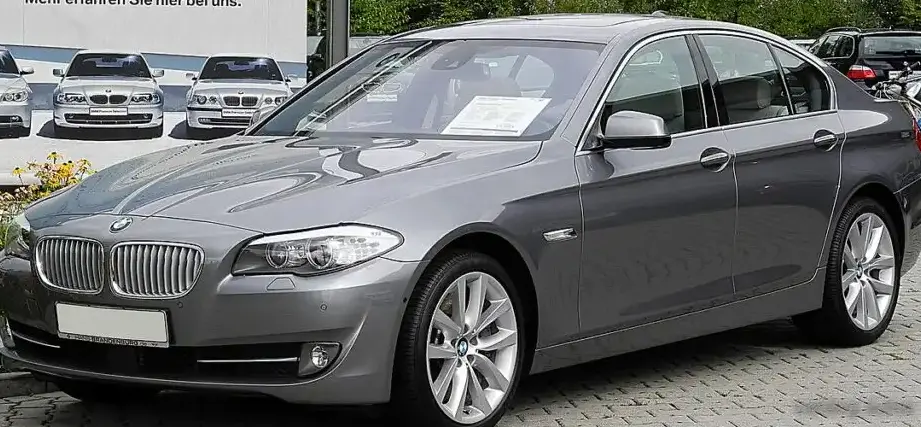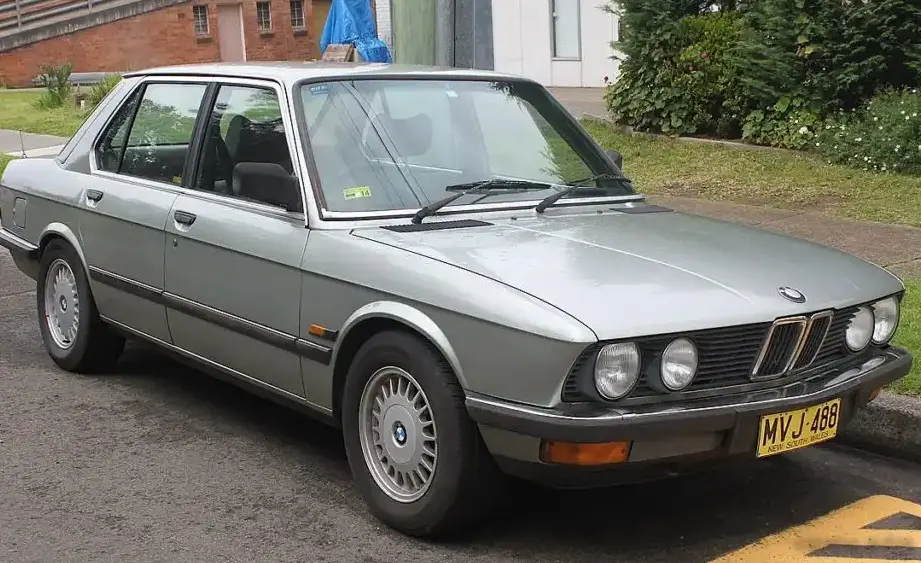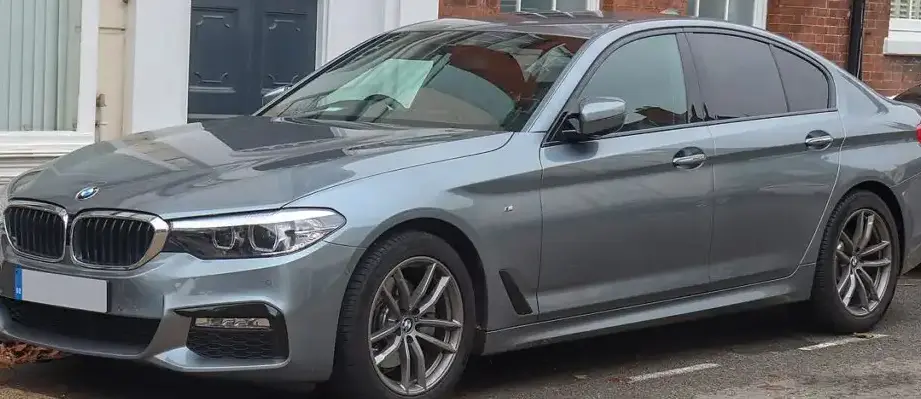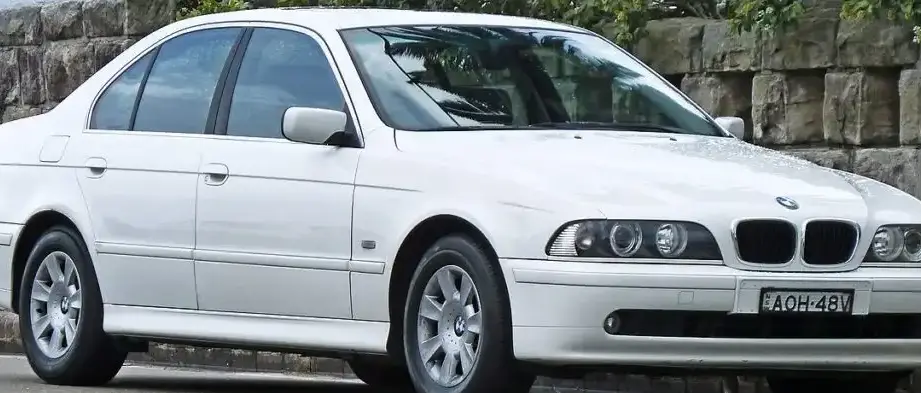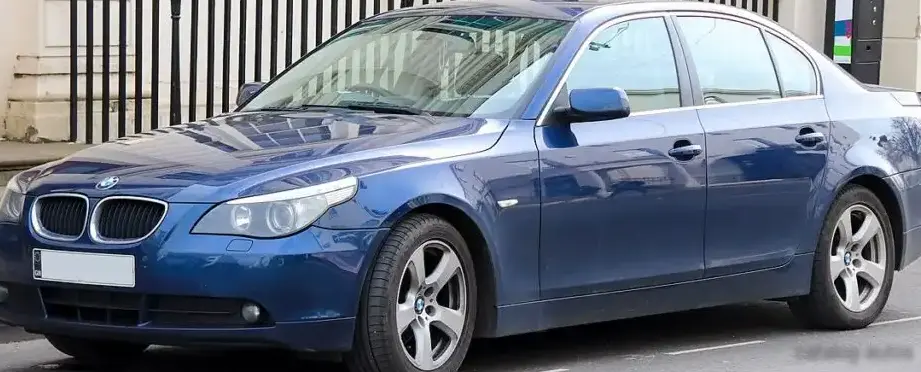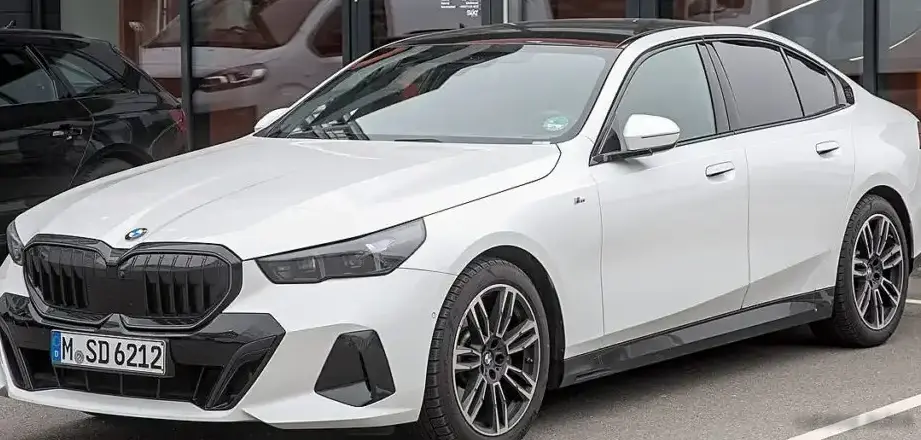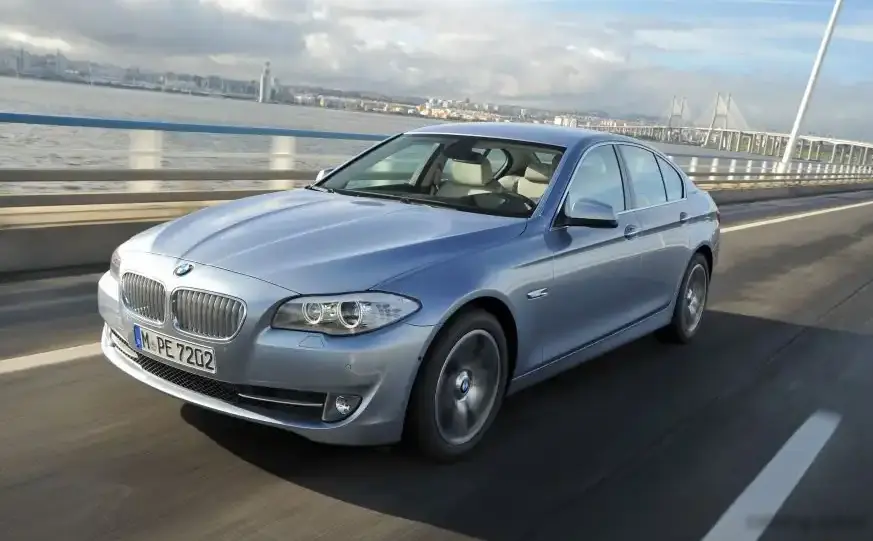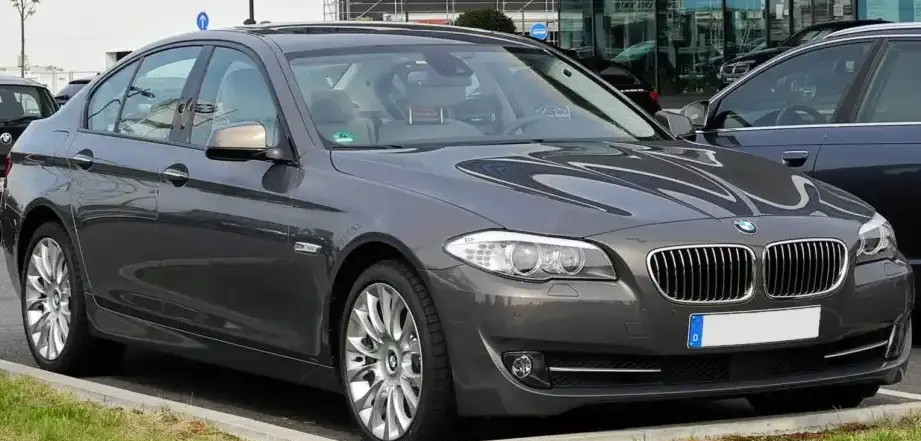
The BMW 5 Series F10 550i, produced from 2010 to 2013, represented the high-performance end of the fourth-generation 5 Series (F10) sedan lineup. Positioned as a luxury performance vehicle, it offered a significant step up in power and refinement compared to the 528i and 535i models. The 550i aimed to compete directly with similarly equipped offerings from Mercedes-Benz and Audi, providing a blend of sporting dynamics and opulent comfort. This variant was exclusively offered with rear-wheel drive, emphasizing its driver-focused character.
Technical Specifications
| Brand | BMW |
| Model | 5 Series |
| Generation | 5 Series Sedan (F10) |
| Type (Engine) | 550i V8 (400 Hp) |
| Start of production | 2010 |
| End of production | 2013 |
| Powertrain Architecture | Internal Combustion engine |
| Body type | Sedan |
| Seats | 5 |
| Doors | 4 |
| Fuel consumption (economy) – urban | 14.4 l/100 km (16.3 US mpg, 19.6 UK mpg, 6.9 km/l) |
| Fuel consumption (economy) – extra urban | 8.9 l/100 km (26.4 US mpg, 31.7 UK mpg, 11.2 km/l) |
| Fuel consumption (economy) – combined | 11.9 l/100 km (19.8 US mpg, 23.7 UK mpg, 8.4 km/l) |
| CO2 emissions | 274 g/km |
| Fuel Type | Petrol (Gasoline) |
| Acceleration 0 – 100 km/h | 5.3 sec |
| Acceleration 0 – 62 mph | 5.3 sec |
| Acceleration 0 – 60 mph | 5 sec |
| Maximum speed | 210 km/h (130.49 mph) – Electronically limited |
| Weight-to-power ratio | 5 kg/Hp, 202 Hp/tonne |
| Weight-to-torque ratio | 3.2 kg/Nm, 308.1 Nm/tonne |
| Power | 400 Hp @ 5500-6400 rpm |
| Power per litre | 91 Hp/l |
| Torque | 610 Nm @ 1750-4500 rpm (449.91 lb.-ft. @ 1750-4500 rpm) |
| Engine layout | Front, Longitudinal |
| Engine Model/Code | N63B44O0 |
| Engine displacement | 4395 cm3 (268.2 cu. in.) |
| Number of cylinders | 8 |
| Engine configuration | V-engine |
| Cylinder Bore | 89 mm (3.5 in.) |
| Piston Stroke | 88.3 mm (3.48 in.) |
| Compression ratio | 10:1 |
| Number of valves per cylinder | 4 |
| Fuel injection system | Direct injection |
| Engine aspiration | 2 x Twin-scroll turbo, Intercooler |
| Valvetrain | Double-VANOS |
| Engine oil capacity | 8.5 l (8.98 US qt | 7.48 UK qt) |
| Coolant | 11.4 l (12.05 US qt | 10.03 UK qt) |
| Kerb Weight | 1980 kg (4365.15 lbs.) |
| Max. weight | 2450 kg (5401.33 lbs.) |
| Max load | 470 kg (1036.17 lbs.) |
| Trunk (boot) space – minimum | 520 l (18.36 cu. ft.) |
| Fuel tank capacity | 70 l (18.49 US gal | 15.4 UK gal) |
| Max. roof load | 100 kg (220.46 lbs.) |
| Length | 4905 mm (193.11 in.) |
| Width | 1860 mm (73.23 in.) |
| Width including mirrors | 2094 mm (82.44 in.) |
| Height | 1464 mm (57.64 in.) |
| Wheelbase | 2968 mm (116.85 in.) |
| Front track | 1600 mm (62.99 in.) |
| Rear (Back) track | 1627 mm (64.06 in.) |
| Front overhang | 836 mm (32.91 in.) |
| Rear overhang | 1100 mm (43.31 in.) |
| Drag coefficient (Cd) | 0.30 |
| Minimum turning circle (turning diameter) | 11.95 m (39.21 ft.) |
| Drivetrain Architecture | The Internal combustion engine (ICE) drives the rear wheels of the vehicle. |
| Drive wheel | Rear wheel drive |
| Number of gears and type of gearbox | 6 gears, manual transmission |
| Front suspension | Coil spring, Double wishbone, Transverse stabilizer |
| Rear suspension | Independent multi-link spring suspension with stabilizer |
| Front brakes | Ventilated discs, 348 mm |
| Rear brakes | Ventilated discs, 345 mm |
| Assisting systems | ABS (Anti-lock braking system) |
| Steering type | Steering rack and pinion |
| Power steering | Electric Steering |
| Tires size | Front wheel tires: 245/45 R18; 245/40 R19Rear wheel tires: 245/45 R18; 245/40 R19; 275/35 R19 |
| Wheel rims size | Front wheel rims: 8J x 18; 8.5J x 19Rear wheel rims: 8J x 18; 8.5J x 19; 9J x 19 |
Powertrain & Engine Architecture
The heart of the 550i is the N63B44O0 4.4-liter twin-turbocharged V8 engine. This engine represented a significant advancement in BMW’s V8 technology, featuring direct fuel injection and a sophisticated valvetrain system known as Double-VANOS. Double-VANOS continuously adjusts the timing of both intake and exhaust valves, optimizing engine performance and efficiency across the rev range. The twin-scroll turbochargers, one for each bank of cylinders, minimized turbo lag and provided a broad, flat torque curve. The engine produced 400 horsepower at 5,500-6,400 rpm and a substantial 610 Nm (449.91 lb-ft) of torque between 1,750 and 4,500 rpm. The engine’s architecture was a 90-degree V8, providing inherent balance and smoothness. The 550i was equipped with a 6-speed manual transmission, offering drivers precise control over the engine’s power.
Driving Characteristics
The 550i delivered a markedly different driving experience compared to the four and six-cylinder variants. The abundance of torque from the V8 engine provided effortless acceleration in virtually any gear. The 0-60 mph sprint was dispatched in around 5 seconds, and the electronically limited top speed of 130.49 mph was easily reached. The 6-speed manual transmission, while offering a more engaging experience, required skillful operation to fully exploit the engine’s potential. The gear ratios were tuned to balance acceleration and fuel economy, but the emphasis was clearly on performance. Compared to the 535i, the 550i felt significantly more powerful and responsive, while the 528i lacked the sheer grunt of the V8. The rear-wheel-drive configuration contributed to a balanced chassis and a sporty feel.
Equipment & Trim Levels
The 550i typically came standard with a high level of equipment, reflecting its position as the flagship model. Standard features included leather upholstery, power-adjustable front seats with memory function, a premium sound system, automatic climate control, and BMW’s iDrive infotainment system. Optional extras included features like active steering, adaptive suspension, a head-up display, and various driver-assistance systems. Interior trim options ranged from wood veneers to aluminum accents, allowing buyers to personalize the cabin to their taste. The exterior styling was subtly enhanced with unique badging and larger exhaust outlets.
Chassis & Braking
The F10 550i utilized a sophisticated chassis design featuring a double-wishbone front suspension and an independent multi-link rear suspension. Both ends of the suspension incorporated stabilizer bars to reduce body roll during cornering. The braking system consisted of ventilated discs on all four wheels, providing ample stopping power. The front discs measured 348 mm in diameter, while the rear discs were 345 mm. Anti-lock brakes (ABS) were standard, along with electronic stability control and traction control systems.
Market Reception & Comparison
The 550i was generally well-received by automotive critics, who praised its powerful engine, refined ride, and luxurious interior. However, some reviewers noted that the fuel economy was relatively poor, especially considering the engine’s displacement. Compared to the 535i, the 550i offered a significant performance advantage but came at a higher price. The 528i, while more affordable, lacked the overall sophistication and performance of the 550i. Reliability was generally good, although some owners reported issues with the cooling system and the turbochargers.
Legacy
The N63B44O0 engine, while initially prone to some cooling system issues that were addressed with revisions, proved to be a robust and durable powerplant when properly maintained. Today, the F10 550i represents a compelling value on the used car market, offering a significant amount of performance and luxury for the price. However, potential buyers should be aware of the higher maintenance costs associated with a high-performance V8 engine and the importance of a thorough pre-purchase inspection. The 550i remains a desirable choice for enthusiasts seeking a blend of driving enjoyment and refined comfort in a large luxury sedan.