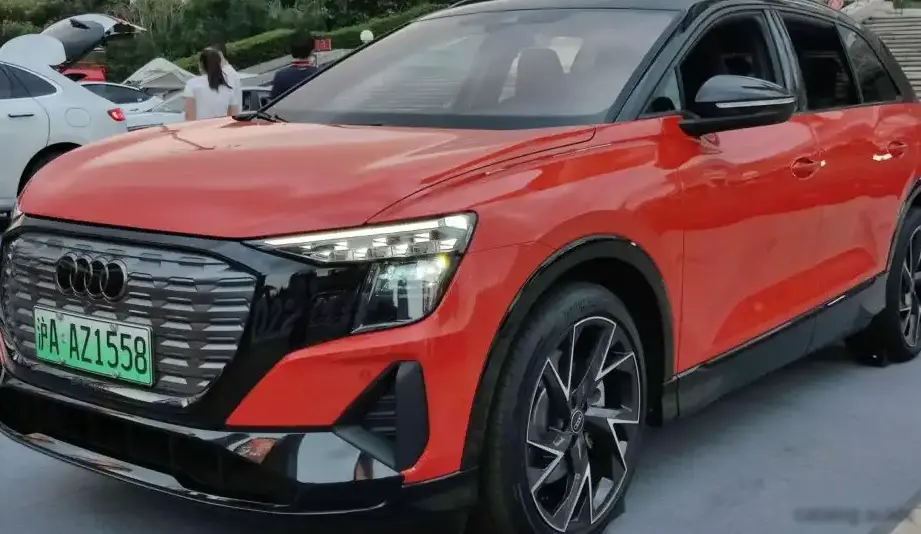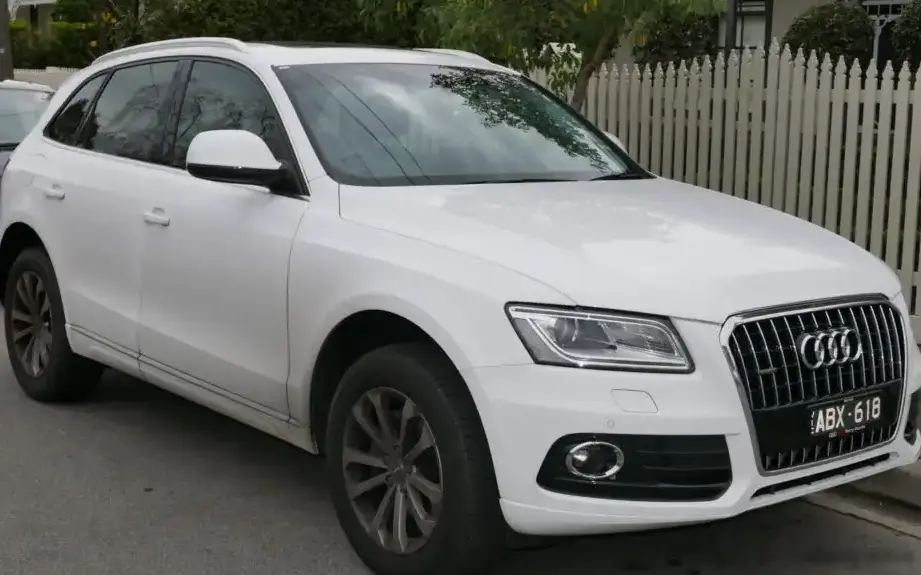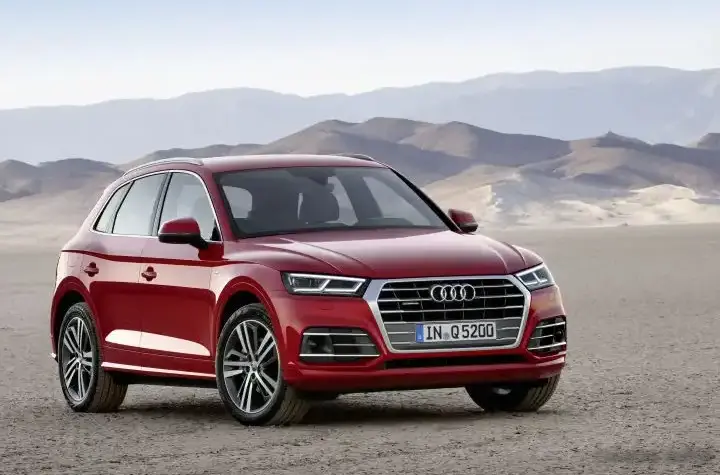
The Audi Q5 II (FY) 55 TFSI e, produced from May 2019 to 2020, represents Audi’s entry into the plug-in hybrid SUV market within the second generation Q5 lineup. Positioned as a premium offering, it combined a 2.0-liter turbocharged gasoline engine with an electric motor, delivering a combined system output of 367 horsepower. This variant was designed to appeal to buyers seeking a balance of performance, efficiency, and all-weather capability, leveraging Audi’s renowned quattro all-wheel drive system. It sat at the higher end of the Q5 range, offering a more potent powertrain than the base 40 TFSI models, but typically positioned below the performance-oriented SQ5.
Technical Specifications
| Brand | Audi |
| Model | Q5 |
| Generation | Q5 II (FY) |
| Type (Engine) | 55 TFSI e (367 Hp) Plug-in Hybrid quattro S tronic |
| Start of production | May, 2019 |
| End of production | 2020 |
| Powertrain Architecture | PHEV (Plug-in Hybrid Electric Vehicle) |
| Body type | SUV |
| Seats | 5 |
| Doors | 5 |
| Combined fuel consumption (WLTP) | 2.1-2.6 l/100 km (112 – 90.5 US mpg, 134.5 – 108.6 UK mpg, 47.6 – 38.5 km/l) |
| CO2 emissions (WLTP) | 49-58 g/km |
| Fuel consumption (economy) – combined | 2.1-2.4 l/100 km (112 – 98 US mpg, 134.5 – 117.7 UK mpg, 47.6 – 41.7 km/l) |
| CO2 emissions | 46-53 g/km |
| Fuel Type | Petrol / electricity |
| Acceleration 0 – 100 km/h | 5.3 sec |
| Acceleration 0 – 62 mph | 5.3 sec |
| Acceleration 0 – 60 mph | 5 sec (Calculated) |
| Maximum speed | 239 km/h (148.51 mph) – Electronically limited |
| Emission standard | Euro 6d-Temp |
| Weight-to-power ratio | 5.6 kg/Hp, 179.9 Hp/tonne |
| Weight-to-torque ratio | 4.1 kg/Nm, 245.1 Nm/tonne |
| Gross battery capacity | 14.1 kWh |
| Battery voltage | 381 V |
| Battery technology | Lithium-ion (Li-Ion) |
| Battery location | Under the trunk |
| Recuperation output | 80 kW |
| All-electric range (WLTP) | 40 km (24.85 mi) |
| Average Energy consumption | 17.5-19.1 kWh/100 km (28.16 – 30.74 kWh/100 mi, 120 – 110 MPGe, 5.7 – 5.2 km/kWh, 3.6 – 3.3 mi/kWh) |
| Max speed (electric) | 135 km/h (83.89 mph) |
| Electric motor power | 143 Hp |
| Electric motor Torque | 350 Nm (258.15 lb.-ft.) |
| Electric motor location | Between the combustion engine and the transmission |
| Electric motor type | Synchronous |
| System power | 367 Hp |
| System torque | 500 Nm @ 1250 rpm (368.78 lb.-ft. @ 1250 rpm) |
| Power | 252 Hp |
| Torque | 370 Nm (272.9 lb.-ft.) |
| Engine layout | Front, Longitudinal |
| Engine Model/Code | DLGA |
| Engine displacement | 1984 cm3 (121.07 cu. in.) |
| Number of cylinders | 4 |
| Engine configuration | Inline |
| Cylinder Bore | 82.5 mm (3.25 in.) |
| Piston Stroke | 92.8 mm (3.65 in.) |
| Compression ratio | 9.6:1 |
| Number of valves per cylinder | 4 |
| Fuel injection system | Direct injection |
| Engine aspiration | Turbocharger, Intercooler |
| Valvetrain | DOHC |
| Engine oil capacity | 5.2 l (5.49 US qt | 4.58 UK qt) |
| Coolant | 18 l (19.02 US qt | 15.84 UK qt) |
| Kerb Weight | 2040 kg (4497.43 lbs.) |
| Max. weight | 2620 kg (5776.11 lbs.) |
| Max load | 580 kg (1278.68 lbs.) |
| Trunk (boot) space – minimum | 395 l (13.95 cu. ft.) |
| Fuel tank capacity | 54 l (14.27 US gal | 11.88 UK gal) |
| Max. roof load | 75 kg (165.35 lbs.) |
| Permitted trailer load with brakes (8%) | 1750 kg (3858.09 lbs.) |
| Permitted trailer load with brakes (12%) | 1750 kg (3858.09 lbs.) |
| Permitted trailer load without brakes | 750 kg (1653.47 lbs.) |
| Permitted towbar download | 100 kg (220.46 lbs.) |
| Length | 4663 mm (183.58 in.) |
| Width | 1893 mm (74.53 in.) |
| Width including mirrors | 2140 mm (84.25 in.) |
| Height | 1659 mm (65.31 in.) |
| Wheelbase | 2819 mm (110.98 in.) |
| Front track | 1616 mm (63.62 in.) |
| Rear (Back) track | 1609 mm (63.35 in.) |
| Front overhang | 899 mm (35.39 in.) |
| Rear overhang | 945 mm (37.2 in.) |
| Minimum turning circle (turning diameter) | 12 m (39.37 ft.) |
| Front suspension | Independent multi-link suspension |
| Rear suspension | Independent multi-link suspension |
| Front brakes | Ventilated discs |
| Rear brakes | Ventilated discs |
| Number of gears and type of gearbox | 7 gears, automatic transmission S tronic |
Powertrain & Engine Architecture
The 55 TFSI e’s powertrain centers around Audi’s 2.0-liter turbocharged four-cylinder engine, designated as the DLGA engine code. This engine produces 252 horsepower and 272.9 lb-ft of torque. It utilizes direct fuel injection and a single twin-scroll turbocharger to enhance efficiency and responsiveness. The engine is paired with a 143 horsepower electric motor integrated between the engine and the seven-speed S tronic dual-clutch transmission. This configuration allows for both electric-only driving and a combined output of 367 horsepower and 368.78 lb-ft of torque. The 14.1 kWh lithium-ion battery pack, located under the trunk floor, provides an all-electric range of approximately 24.85 miles (40 km) based on WLTP testing. The S tronic transmission provides quick and smooth gear changes, optimizing power delivery in both electric and hybrid modes.
Driving Characteristics
The Q5 55 TFSI e offers a distinct driving experience compared to its gasoline-only counterparts. In electric mode, the vehicle provides near-silent acceleration and instant torque, making it ideal for urban driving. Switching to hybrid mode seamlessly blends the power of the gasoline engine and electric motor, delivering strong acceleration – 0-60 mph in around 5 seconds. The S tronic transmission’s quick shifts contribute to a responsive feel. While the battery pack adds weight, the quattro all-wheel drive system maintains excellent handling and stability. Compared to the Q5 40 TFSI, the 55 TFSI e offers significantly more power and torque, resulting in a more engaging driving experience. However, the added weight can slightly impact agility compared to lighter Q5 models.
Equipment & Trim Levels
The 55 TFSI e typically came well-equipped, reflecting its premium positioning. Standard features included Audi’s virtual cockpit digital instrument cluster, a touchscreen infotainment system with navigation, leather upholstery, three-zone automatic climate control, and a suite of driver-assistance systems such as lane departure warning and automatic emergency braking. Optional extras included adaptive cruise control, a panoramic sunroof, and premium sound systems. Trim levels were often differentiated by cosmetic enhancements, such as wheel designs and interior trim materials. The focus was on providing a luxurious and technologically advanced cabin experience.
Chassis & Braking
The Q5 55 TFSI e utilizes an independent multi-link suspension setup at both the front and rear axles, providing a comfortable ride and precise handling. Ventilated disc brakes are standard on all four wheels, offering strong stopping power. The quattro all-wheel drive system intelligently distributes torque between the front and rear axles, enhancing traction in various driving conditions. Due to the added weight of the battery pack, the suspension was often tuned to provide a slightly firmer ride compared to the standard Q5 models, ensuring stability and control.
Market Reception & Comparison
The Audi Q5 55 TFSI e was generally well-received by automotive critics, who praised its blend of performance, efficiency, and luxury. Its all-electric range was considered competitive for its time, and the seamless transition between electric and hybrid modes was lauded. Compared to other plug-in hybrid SUVs, the Q5 55 TFSI e stood out for its refined driving experience and high-quality interior. Fuel economy was a significant advantage, particularly for drivers who frequently commute in urban areas. However, some critics noted the reduced cargo space due to the battery pack and the relatively high price compared to gasoline-only Q5 models.
Legacy
The Q5 55 TFSI e represented a significant step forward for Audi in the realm of plug-in hybrid technology. While early models have shown generally good reliability, potential long-term concerns revolve around the battery pack’s lifespan and the complexity of the hybrid system. On the used car market, these models hold their value relatively well, appealing to buyers seeking a fuel-efficient and technologically advanced SUV. The powertrain’s combination of performance and efficiency continues to be relevant, and the Q5 55 TFSI e paved the way for Audi’s broader adoption of plug-in hybrid technology across its model range.