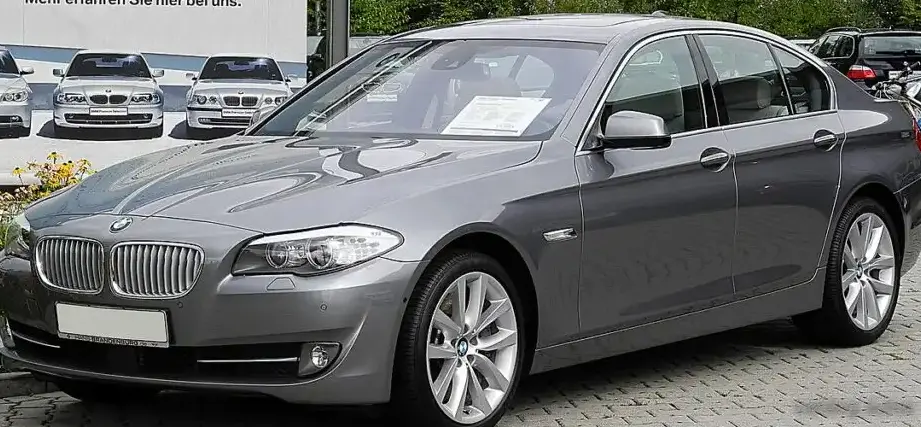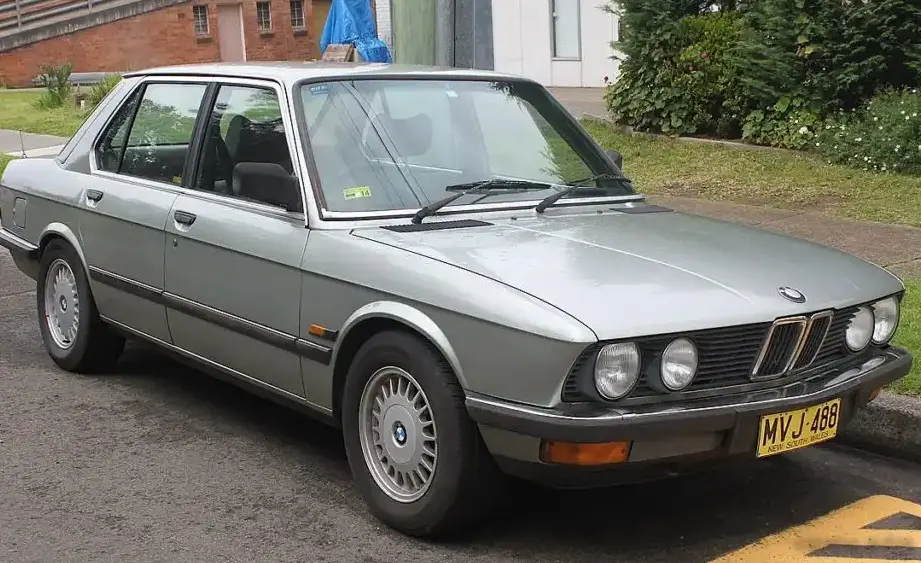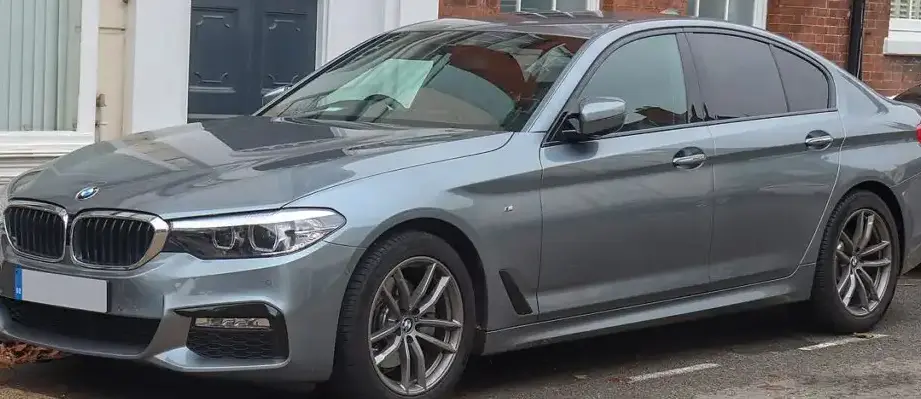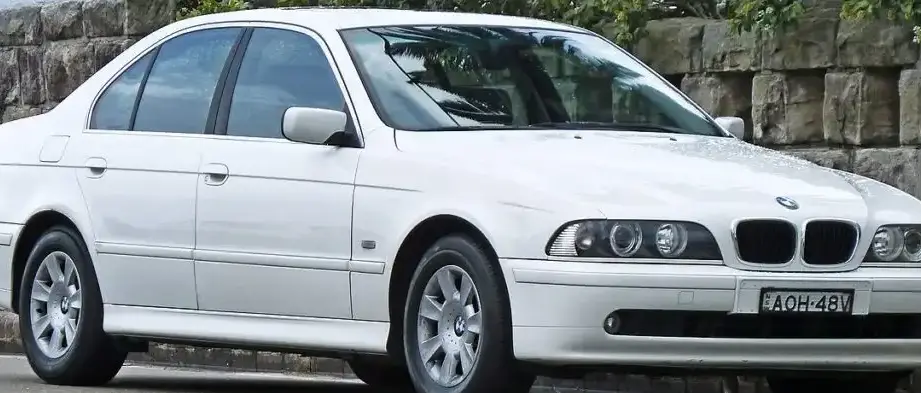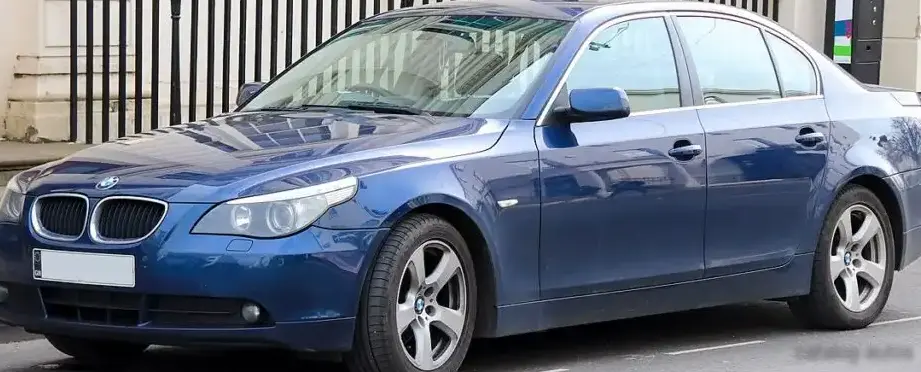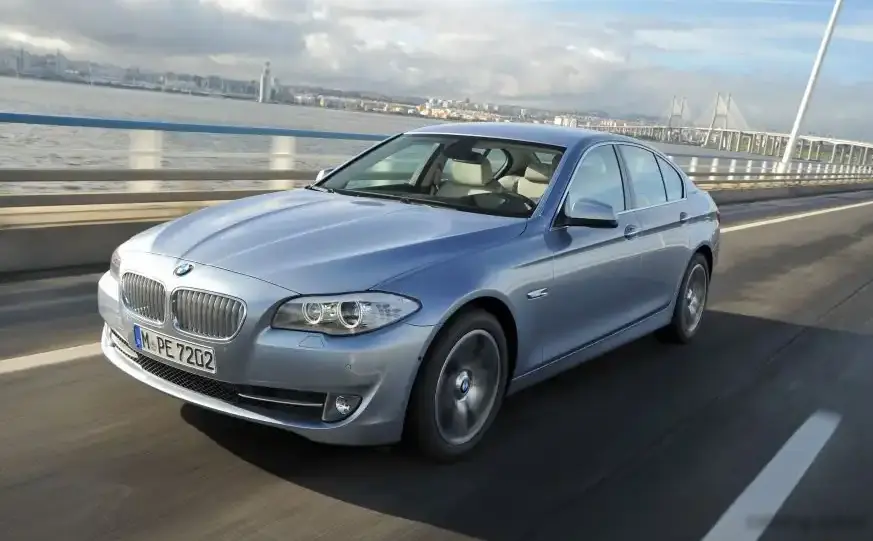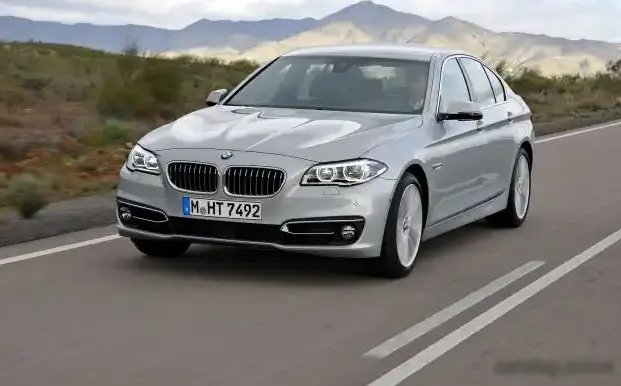
The BMW 5 Series Sedan (F10 LCI), specifically the 518d variant with 143 horsepower, was produced from 2013 to 2014. This model represents the facelifted version of the sixth-generation 5 Series (F10), introduced in 2010. The 518d occupied the entry-level position in the 5 Series diesel lineup, offering a balance of efficiency and BMW’s signature driving experience. It was primarily aimed at the European market, where diesel engines held a significant market share, and represented a more accessible price point within the 5 Series range. This variant was positioned below the more powerful 520d and 525d models, offering a more economical option for buyers prioritizing fuel efficiency over outright performance.
Technical Specifications
| Brand | BMW |
| Model | 5 Series |
| Generation | 5 Series Sedan (F10 LCI, Facelift 2013) |
| Type (Engine) | 518d (143 Hp) |
| Start of production | 2013 |
| End of production | 2014 |
| Powertrain Architecture | Internal Combustion engine |
| Body type | Sedan |
| Seats | 5 |
| Doors | 4 |
| Fuel consumption (urban) | 5.4-5.8 l/100 km (43.6 – 40.6 US mpg, 52.3 – 48.7 UK mpg, 18.5 – 17.2 km/l) |
| Fuel consumption (extra urban) | 4.0-4.4 l/100 km (58.8 – 53.5 US mpg, 70.6 – 64.2 UK mpg, 25 – 22.7 km/l) |
| Fuel consumption (combined) | 4.5-4.9 l/100 km (52.3 – 48 US mpg, 62.8 – 57.6 UK mpg, 22.2 – 20.4 km/l) |
| CO2 emissions | 119-129 g/km |
| Fuel Type | Diesel |
| Acceleration 0 – 100 km/h | 9.7 sec |
| Acceleration 0 – 62 mph | 9.7 sec |
| Acceleration 0 – 60 mph | 9.2 sec |
| Maximum speed | 214 km/h (132.97 mph) |
| Emission standard | Euro 6 |
| Weight-to-power ratio | 11.3 kg/Hp, 88.5 Hp/tonne |
| Weight-to-torque ratio | 4.5 kg/Nm, 222.9 Nm/tonne |
| Power | 143 Hp @ 4000 rpm |
| Power per litre | 71.7 Hp/l |
| Torque | 360 Nm @ 1750-2500 rpm (265.52 lb.-ft. @ 1750-2500 rpm) |
| Engine layout | Front, Longitudinal |
| Engine Model/Code | N47D20C |
| Engine displacement | 1995 cm3 (121.74 cu. in.) |
| Number of cylinders | 4 |
| Engine configuration | Inline |
| Cylinder Bore | 84 mm (3.31 in.) |
| Piston Stroke | 90 mm (3.54 in.) |
| Compression ratio | 16.5:1 |
| Number of valves per cylinder | 4 |
| Fuel injection system | Diesel Commonrail |
| Engine aspiration | Twin-power turbo, Intercooler |
| Engine oil capacity | 5.2 l (5.49 US qt | 4.58 UK qt) |
| Coolant | 7.2 l (7.61 US qt | 6.34 UK qt) |
| Kerb Weight | 1615 kg (3560.47 lbs.) |
| Max. weight | 2225 kg (4905.29 lbs.) |
| Max load | 610 kg (1344.82 lbs.) |
| Trunk (boot) space – minimum | 520 l (18.36 cu. ft.) |
| Fuel tank capacity | 70 l (18.49 US gal | 15.4 UK gal) |
| Max. roof load | 100 kg (220.46 lbs.) |
| Permitted trailer load with brakes (12%) | 1800 kg (3968.32 lbs.) |
| Permitted trailer load without brakes | 750 kg (1653.47 lbs.) |
| Permitted towbar download | 90 kg (198.42 lbs.) |
| Length | 4907 mm (193.19 in.) |
| Width | 1860 mm (73.23 in.) |
| Height | 1464 mm (57.64 in.) |
| Wheelbase | 2968 mm (116.85 in.) |
| Front track | 1600 mm (62.99 in.) |
| Rear (Back) track | 1627 mm (64.06 in.) |
| Ride height (ground clearance) | 141 mm (5.55 in.) |
| Drag coefficient (Cd) | 0.26 |
| Minimum turning circle (turning diameter) | 12.0 m (39.37 ft.) |
| Drivetrain Architecture | The Internal combustion engine (ICE) drives the rear wheels of the vehicle. |
| Drive wheel | Rear wheel drive |
| Number of gears and type of gearbox | 6 gears, manual transmission |
| Front suspension | Double wishbone |
| Rear suspension | Independent multi-link suspension |
| Front brakes | Ventilated discs |
| Rear brakes | Ventilated discs |
| Assisting systems | ABS (Anti-lock braking system) |
| Steering type | Steering rack and pinion |
| Power steering | Electric Steering |
| Tires size | 225/55 R17; 245/45 R18; 275/40 R18; 245/40 R19; 275/35 R19; 245/35 R20; 275/30 R20 |
| Wheel rims size | 8J x 17; 8J x 18; 9J x 18; 8.5J x 19; 9J x 19; 8.5J x 20; 9J x 20 |
Powertrain & Engine Architecture
The 518d utilized BMW’s N47D20C engine, a 2.0-liter inline-four cylinder diesel engine. This engine was a cornerstone of BMW’s EfficientDynamics strategy, focusing on fuel economy and reduced emissions. The N47 featured a common rail direct injection system, delivering fuel at extremely high pressures for optimized combustion. A single turbocharger with variable geometry turbine (VGT) technology provided boost, enhancing both low-end torque and overall power output. The engine also incorporated an intercooler to further cool the intake air. The 518d was exclusively offered with a six-speed manual transmission, contributing to its fuel efficiency and driver engagement. The engine’s longitudinal mounting and rear-wheel-drive configuration were typical of BMW’s core engineering philosophy.
Driving Characteristics
The 518d, with its 143 horsepower and 360 Nm (265 lb-ft) of torque, offered a comfortable and refined driving experience. While not a performance-oriented model, the engine provided sufficient power for everyday driving and highway cruising. Acceleration from 0 to 60 mph took approximately 9.2 seconds, and top speed was limited to 133 mph. The six-speed manual transmission allowed for precise gear selection, and the engine’s torque curve ensured responsive acceleration in most situations. Compared to the more powerful 520d and 525d models, the 518d felt less urgent in its acceleration, but its lighter weight and efficient engine contributed to better fuel economy. The rear-wheel-drive setup provided balanced handling and a characteristic BMW driving feel.
Equipment & Trim Levels
The 518d typically came standard with a comprehensive list of features, including automatic climate control, power windows, power mirrors, a multi-function steering wheel, and a basic audio system. Upholstery was typically cloth, although leather options were available. Optional extras included a navigation system, upgraded audio systems, parking sensors, heated seats, and a sunroof. Trim levels varied depending on the market, but generally offered packages that bundled together popular options. The interior design was typical of the F10 5 Series, characterized by a driver-focused layout and high-quality materials.
Chassis & Braking
The 518d utilized a double wishbone front suspension and an independent multi-link rear suspension, providing a comfortable ride and precise handling. Ventilated disc brakes were fitted on all four wheels, offering ample stopping power. The car was equipped with ABS (Anti-lock Braking System) and electronic stability control as standard safety features. The suspension was tuned to prioritize comfort, but still provided a reasonably sporty driving experience. The 518d’s weight of approximately 3560 lbs was relatively low for a vehicle of its size, contributing to its agility and fuel efficiency.
Market Reception & Comparison
The 518d was generally well-received by automotive critics, who praised its fuel efficiency, comfortable ride, and refined driving experience. However, some critics noted that the engine lacked the outright performance of its more powerful siblings. Compared to the 520d, the 518d offered a lower price point but sacrificed some performance. The 518d’s fuel economy was a key selling point, making it an attractive option for drivers who prioritized efficiency over speed. Its reliability was generally good, although some owners reported issues with the turbocharger and fuel injectors.
Legacy
The BMW 518d (F10 LCI) remains a popular choice in the used car market, particularly in Europe. Its combination of fuel efficiency, comfort, and BMW’s renowned driving dynamics makes it a compelling option for buyers seeking a practical and enjoyable sedan. The N47 engine, while generally reliable, is known to have potential issues with the timing chain and fuel injectors, so prospective buyers should be aware of these potential maintenance concerns. Despite these potential issues, the 518d continues to be regarded as a well-rounded and capable vehicle that represents a good value proposition in the used car market.