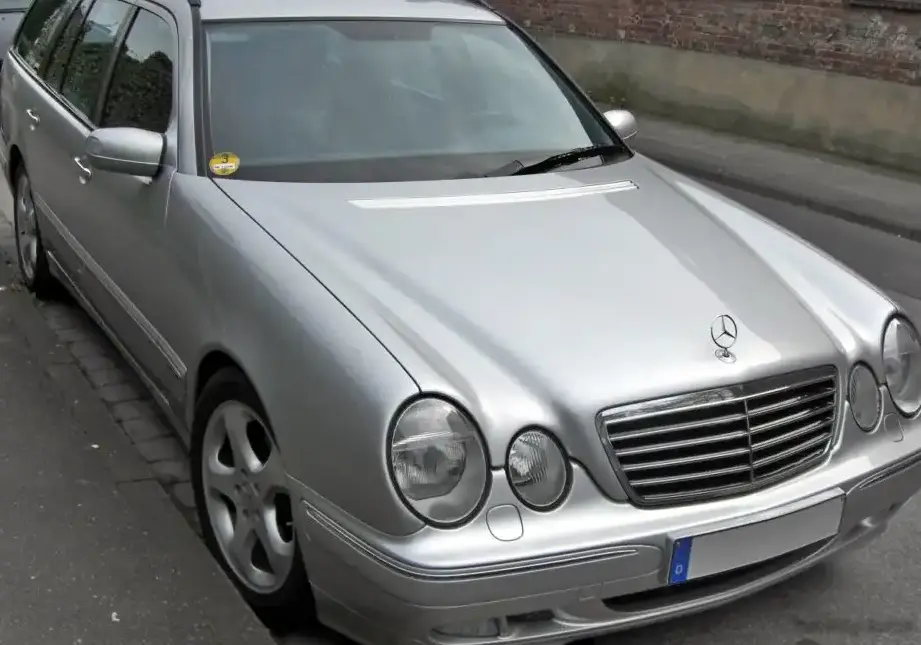
The Mercedes-Benz E-Class T-modell (S210) facelift, specifically the E 220 CDI variant introduced in July 1999 and produced through December 2002, represented a compelling blend of practicality, efficiency, and luxury within the mid-size executive wagon segment. Positioned as a diesel-powered option within the S210 range, it catered to buyers prioritizing fuel economy and long-distance comfort. This model benefited from the 1999 facelift, which included revised styling, improved interior appointments, and updated engine technology. The E 220 CDI occupied a middle ground in the lineup, offering a step up in performance and refinement from the base models while remaining more accessible than the higher-powered E 320 CDI.
Technical Specifications
| Brand | Mercedes-Benz |
| Model | E-Class |
| Generation | E-Class T-modell (S210, facelift 1999) |
| Type (Engine) | E 220 CDI (143 Hp) |
| Start of production | July, 1999 |
| End of production | December, 2002 |
| Powertrain Architecture | Internal Combustion engine |
| Body type | Station wagon (estate) |
| Seats | 5 |
| Doors | 5 |
| Fuel consumption (urban) | 9.1 l/100 km (25.8 US mpg, 31 UK mpg, 11 km/l) |
| Fuel consumption (extra urban) | 5.5 l/100 km (42.8 US mpg, 51.4 UK mpg, 18.2 km/l) |
| Fuel consumption (combined) | 6.8 l/100 km (34.6 US mpg, 41.5 UK mpg, 14.7 km/l) |
| Fuel Type | Diesel |
| Acceleration 0 – 100 km/h | 10.9 sec |
| Acceleration 0 – 62 mph | 10.9 sec |
| Acceleration 0 – 60 mph | 10.4 sec |
| Maximum speed | 205 km/h (127.38 mph) |
| Weight-to-power ratio | 11.8 kg/Hp, 84.6 Hp/tonne |
| Weight-to-torque ratio | 5.4 kg/Nm, 186.4 Nm/tonne |
| Power | 143 Hp @ 4200 rpm |
| Power per litre | 66.6 Hp/l |
| Torque | 315 Nm @ 1800 rpm (232.33 lb.-ft. @ 1800 rpm) |
| Engine layout | Front, Longitudinal |
| Engine Model/Code | OM 611 DE 22 LA / 611.961 |
| Engine displacement | 2148 cm3 (131.08 cu. in.) |
| Number of cylinders | 4 |
| Engine configuration | Inline |
| Cylinder Bore | 88 mm (3.46 in.) |
| Piston Stroke | 88.3 mm (3.48 in.) |
| Compression ratio | 18:1 |
| Number of valves per cylinder | 4 |
| Fuel injection system | Diesel Commonrail |
| Engine aspiration | Turbocharger, Intercooler |
| Valvetrain | DOHC |
| Engine oil capacity | 6 l (6.34 US qt | 5.28 UK qt) |
| Coolant | 9.5 l (10.04 US qt | 8.36 UK qt) |
| Kerb Weight | 1690 kg (3725.81 lbs.) |
| Max. weight | 2270 kg (5004.49 lbs.) |
| Max load | 580 kg (1278.68 lbs.) |
| Trunk (boot) space – minimum | 600 l (21.19 cu. ft.) |
| Trunk (boot) space – maximum | 1975 l (69.75 cu. ft.) |
| Fuel tank capacity | 70 l (18.49 US gal | 15.4 UK gal) |
| Length | 4839 mm (190.51 in.) |
| Width | 1799 mm (70.83 in.) |
| Height | 1505 mm (59.25 in.) |
| Wheelbase | 2833 mm (111.54 in.) |
| Front track | 1534 mm (60.39 in.) |
| Rear (Back) track | 1538 mm (60.55 in.) |
| Drag coefficient (Cd) | 0.31 |
| Drivetrain Architecture | The Internal combustion engine (ICE) drives the rear wheels of the vehicle. |
| Drive wheel | Rear wheel drive |
| Number of gears and type of gearbox | 6 gears, manual transmission |
| Front suspension | Double wishbone |
| Rear suspension | Hydro-pneumatic element, Independent multi-link suspension |
| Front brakes | Ventilated discs |
| Rear brakes | Disc |
| Assisting systems | ABS (Anti-lock braking system) |
| Steering type | Steering rack and pinion |
| Power steering | Hydraulic Steering |
| Tires size | 205/65 R15 |
| Wheel rims size | 7J x 15 |
Powertrain & Engine Architecture
The E 220 CDI was powered by the OM 611 DE 22 LA engine, a 2.2-liter inline-four cylinder diesel. This engine was a key component of Mercedes-Benz’s efforts to improve fuel efficiency and reduce emissions in its passenger car lineup. The ‘DE’ designation indicated a direct-injection diesel engine, while ‘LA’ signified a specific iteration with updated emissions controls. The engine utilized a second-generation common rail direct injection system, delivering fuel at extremely high pressures for optimized combustion. This system, coupled with a turbocharger and intercooler, allowed the engine to produce 143 horsepower at 4200 rpm and a substantial 315 Nm (232 lb-ft) of torque at just 1800 rpm. The engine featured a double overhead camshaft (DOHC) valvetrain with four valves per cylinder, contributing to its relatively smooth operation for a diesel engine of its era. The 6-speed manual transmission was standard, providing a wide range of gear ratios to maximize fuel economy and performance.
Driving Characteristics
The E 220 CDI T-modell offered a comfortable and refined driving experience, prioritizing fuel efficiency and relaxed cruising over outright performance. While not a sports wagon, the engine’s ample torque provided sufficient power for everyday driving and overtaking maneuvers. The 6-speed manual transmission allowed drivers to keep the engine in its optimal power band, enhancing responsiveness. Compared to the more powerful E 320 CDI, the E 220 CDI felt less urgent in acceleration, but its lighter weight and lower rolling resistance contributed to better fuel economy. The long-travel suspension, typical of Mercedes-Benz vehicles, absorbed bumps and imperfections in the road effectively, providing a smooth and comfortable ride. The rear-wheel drive configuration offered balanced handling, although it wasn’t particularly sporty.
Equipment & Trim Levels
The E 220 CDI T-modell came reasonably well-equipped as standard. Typical features included automatic climate control, power windows and mirrors, a multi-function steering wheel, and a basic audio system. Upholstery was generally cloth, although leather was available as an option. Optional extras included a sunroof, upgraded audio systems, navigation, heated seats, and parking sensors. The interior design was typical of Mercedes-Benz at the time – functional, well-built, and focused on comfort. The wagon’s defining feature was, of course, its spacious cargo area, offering a generous 600 liters of space with the rear seats up and up to 1975 liters with them folded down.
Chassis & Braking
The S210 E-Class T-modell featured a robust chassis with a double wishbone front suspension and an independent multi-link rear suspension, often incorporating a hydro-pneumatic leveling system to maintain ride height regardless of load. This setup provided a good balance of comfort and handling. Braking duties were handled by ventilated discs at the front and solid discs at the rear, assisted by an Anti-lock Braking System (ABS). The steering was a hydraulic power-assisted rack and pinion system, offering precise and responsive control. The standard tire size was 205/65 R15, mounted on 7J x 15 inch alloy wheels.
Market Reception & Comparison
The E 220 CDI T-modell was generally well-received by automotive critics, who praised its fuel efficiency, comfortable ride, and spacious interior. It was seen as a practical and sensible choice for families and individuals who needed a versatile vehicle for both everyday commuting and long-distance travel. Compared to the E 320 CDI, the E 220 CDI offered a more affordable entry point into the E-Class wagon range, albeit with a noticeable reduction in performance. Its fuel economy was significantly better than that of the petrol-powered E-Class variants, making it an attractive option for high-mileage drivers.
Legacy
The OM 611 engine, in general, proved to be a durable and reliable powerplant, and the E 220 CDI variant is no exception. While high mileage examples may require maintenance on components like the turbocharger and fuel injectors, the engine itself is known for its longevity. Today, the E 220 CDI T-modell represents a relatively affordable entry point into the world of Mercedes-Benz wagons. Its combination of practicality, comfort, and fuel efficiency continues to appeal to buyers seeking a well-built and versatile vehicle. However, potential buyers should be aware of the age-related issues common to vehicles of this era, such as corrosion and wear on suspension components.