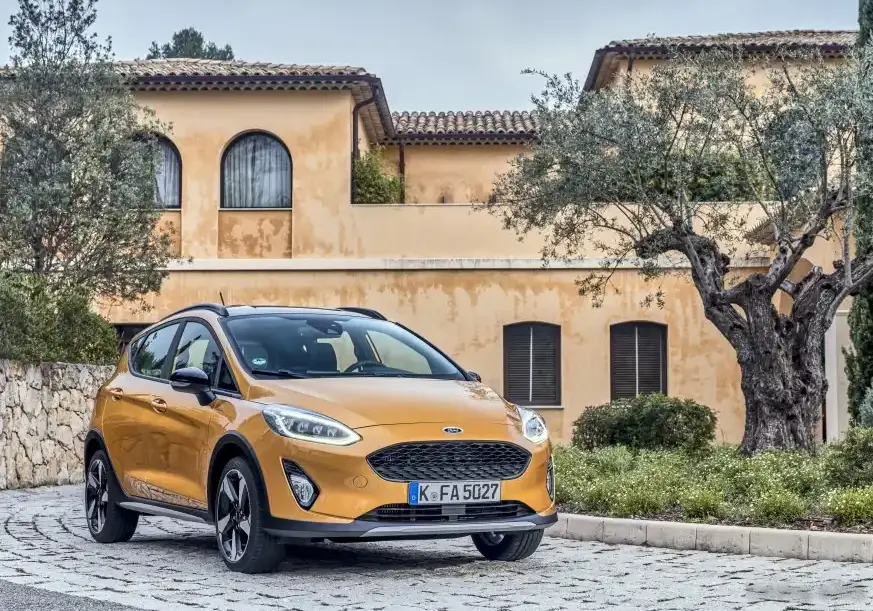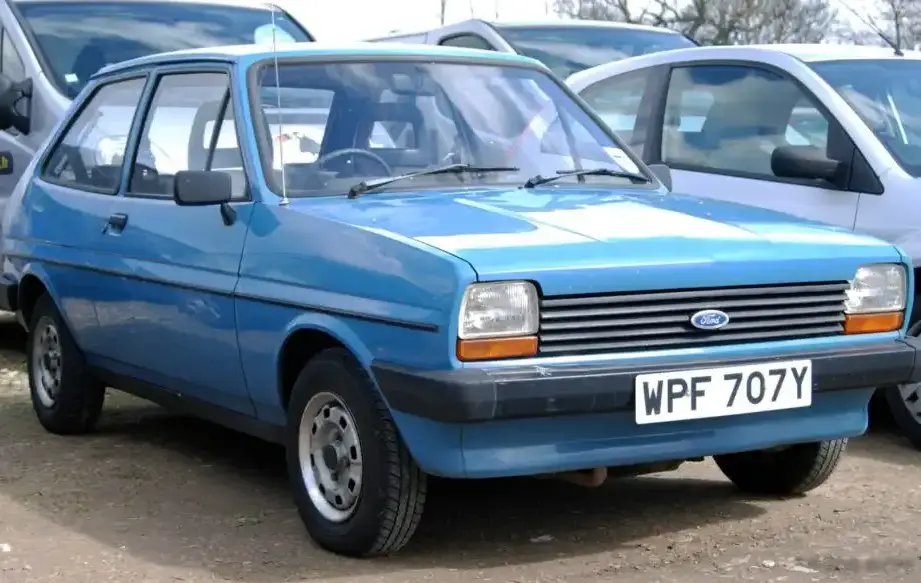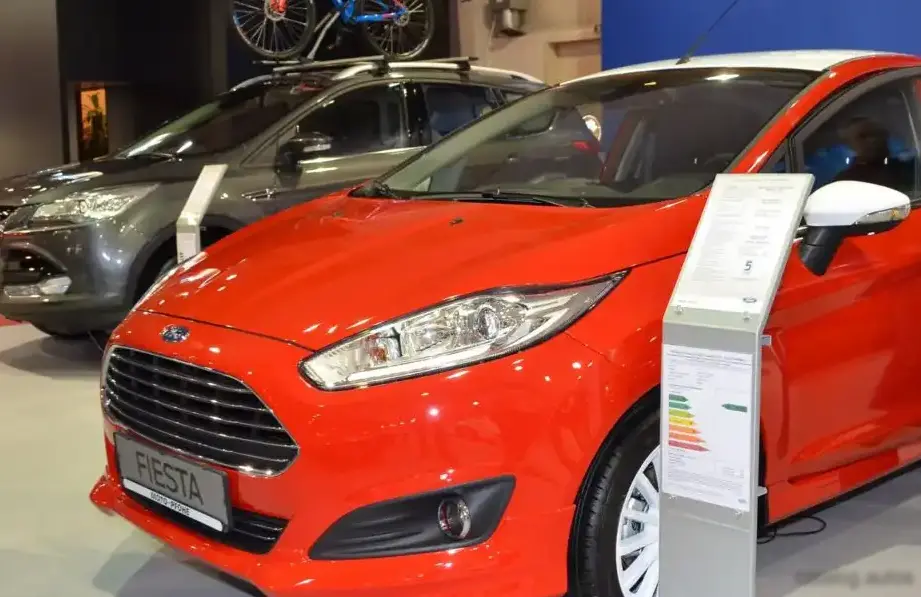
The Ford Fiesta VII, specifically the facelifted model introduced in 2013, represented a significant evolution of Ford’s popular subcompact car. The 5-door hatchback configuration with the 1.6 Ti-VCT engine producing 105 horsepower, paired with the PowerShift dual-clutch automatic transmission, was a key variant within the Mk7 lineup. Production of this specific combination was primarily focused on the 2013 model year, aiming to offer a balance of fuel efficiency, practicality, and modern convenience to European and select global markets. This model occupied a mid-range position in the Fiesta VII range, offering more performance than the base 1.25L engine but remaining more accessible than the higher-performance ST models.
Technical Specifications
| Brand | Ford |
| Model | Fiesta |
| Generation | Fiesta VII (Mk7, facelift 2013) 5 door |
| Type (Engine) | 1.6 Ti-VCT (105 Hp) PowerShift |
| Start of production | January, 2013 |
| End of production | 2013 |
| Powertrain Architecture | Internal Combustion engine |
| Body type | Hatchback |
| Seats | 5 |
| Doors | 5 |
| Fuel consumption (urban) | 8.4 l/100 km (28 US mpg, 33.6 UK mpg, 11.9 km/l) |
| Fuel consumption (extra urban) | 4.5 l/100 km (52.3 US mpg, 62.8 UK mpg, 22.2 km/l) |
| Fuel consumption (combined) | 5.9 l/100 km (39.9 US mpg, 47.9 UK mpg, 16.9 km/l) |
| CO2 emissions | 138 g/km |
| Fuel Type | Petrol (Gasoline) |
| Acceleration 0 – 100 km/h | 10.5 sec |
| Acceleration 0 – 62 mph | 10.5 sec |
| Acceleration 0 – 60 mph | 10 sec |
| Maximum speed | 184 km/h (114.33 mph) |
| Emission standard | Euro 5 |
| Power | 105 Hp @ 6300 rpm |
| Power per litre | 65.8 Hp/l |
| Torque | 150 Nm @ 4200-4500 rpm (110.63 lb.-ft. @ 4200-4500 rpm) |
| Engine layout | Front, Transverse |
| Engine Model/Code | IQJA, IQJC, IQJE |
| Engine displacement | 1596 cm3 (97.39 cu. in.) |
| Number of cylinders | 4 |
| Engine configuration | Inline |
| Cylinder Bore | 79 mm (3.11 in.) |
| Piston Stroke | 81.4 mm (3.2 in.) |
| Compression ratio | 11:1 |
| Number of valves per cylinder | 4 |
| Fuel injection system | Multi-port manifold injection |
| Engine aspiration | Naturally aspirated engine |
| Engine oil capacity | 4.05 l (4.28 US qt, 3.56 UK qt) |
| Coolant | 5.5 l (5.81 US qt, 4.84 UK qt) |
| Trunk (boot) space – minimum | 281 l (9.92 cu. ft.) |
| Trunk (boot) space – maximum | 965 l (34.08 cu. ft.) |
| Fuel tank capacity | 42 l (11.1 US gal, 9.24 UK gal) |
| Length | 3969 mm (156.26 in.) |
| Width with mirrors folded | 1722 mm (67.8 in.) |
| Width including mirrors | 1973 mm (77.68 in.) |
| Height | 1495 mm (58.86 in.) |
| Drivetrain Architecture | The Internal combustion engine (ICE) drives the front wheels of the vehicle. |
| Drive wheel | Front wheel drive |
| Number of gears and type of gearbox | 6 gears, automatic transmission PowerShift |
| Front suspension | Independent, type McPherson with coil spring and anti-roll bar |
| Rear suspension | Coil spring, Torsion |
| Front brakes | Ventilated discs |
| Rear brakes | Drum |
| Assisting systems | ABS (Anti-lock braking system) |
| Steering type | Steering rack and pinion |
| Power steering | Electric Steering |
| Tires size | 195/55 R15; 195/45 R16 |
| Wheel rims size | 6 J x 15; 6.5 J x 16 |
Powertrain & Engine Architecture
The heart of this Fiesta variant is the 1.6-liter Ti-VCT inline-four cylinder engine, identified by engine codes IQJA, IQJC, or IQJE depending on specific calibration and market. “Ti-VCT” stands for Twin Independent Variable Camshaft Timing, a technology that optimizes valve timing for improved performance and fuel efficiency across the engine’s operating range. The engine utilizes multi-port fuel injection, delivering fuel directly into the intake ports. The 105 horsepower output is achieved at 6,300 rpm, while peak torque of 150 Nm (110.63 lb-ft) is available between 4,200 and 4,500 rpm. This engine is naturally aspirated, meaning it doesn’t rely on turbocharging or supercharging for increased power.
The PowerShift transmission is a six-speed dual-clutch transmission (DCT). Unlike a traditional automatic, PowerShift uses two separate clutches – one for odd-numbered gears and one for even-numbered gears – allowing for quicker, smoother shifts and improved fuel economy. It operates in both fully automatic and semi-automatic modes, with the driver able to manually select gears via the shift lever or steering wheel-mounted paddles (depending on trim level). The transmission’s gear ratios are tuned to provide a balance between acceleration and fuel efficiency, with a relatively tall final drive ratio to aid in highway cruising.
Driving Characteristics
The 1.6 Ti-VCT with PowerShift offered a noticeable step up in performance compared to the base 1.25L Fiesta. While not a sports car, the 105 hp engine provided adequate power for everyday driving, including merging onto highways and overtaking slower traffic. The PowerShift transmission contributed to a more engaging driving experience than a traditional automatic, with quick and precise shifts. However, some drivers reported occasional jerkiness at low speeds, a common characteristic of early dual-clutch transmissions. Compared to the manual transmission versions of the 1.6 Ti-VCT, the PowerShift offered greater convenience, but slightly reduced fuel economy and a less direct connection to the engine. The 0-60 mph time of around 10 seconds was respectable for the class.
Equipment & Trim Levels
The 1.6 Ti-VCT PowerShift was typically offered in mid-range trim levels, such as Zetec or Titanium. Standard equipment generally included air conditioning, power windows, power door locks, a CD/MP3 stereo system, and alloy wheels. Higher trim levels added features like automatic headlights, rain-sensing wipers, a trip computer, and upgraded interior upholstery. Optional extras included a navigation system, parking sensors, and a panoramic sunroof. Interior materials were generally of good quality for the segment, with a focus on durability and practicality.
Chassis & Braking
The Fiesta VII utilized a McPherson strut front suspension and a torsion beam rear suspension. This setup provided a good balance between ride comfort and handling. The front brakes were ventilated discs, offering good stopping power, while the rear brakes were drums, a cost-saving measure common in this class of vehicle. Anti-lock Braking System (ABS) was standard. The steering was electric power-assisted, providing light and precise steering feel. Stabilizer bars were fitted to both the front and rear axles to reduce body roll during cornering.
Market Reception & Comparison
The 1.6 Ti-VCT PowerShift Fiesta was generally well-received by automotive critics. It was praised for its fuel efficiency, comfortable ride, and engaging driving experience. However, the PowerShift transmission received some criticism for its occasional jerkiness and reliability concerns. Compared to the 1.25L Fiesta, the 1.6 Ti-VCT offered significantly more performance, but at a higher price point. Compared to the diesel-powered Fiesta models (such as the 1.6 TDCi), the 1.6 Ti-VCT offered a smoother and quieter driving experience, but lower fuel economy.
Legacy
The 1.6 Ti-VCT PowerShift Fiesta remains a relatively common sight on used car lots today. While the PowerShift transmission has a reputation for potential issues (particularly clutch wear and mechatronic unit failures), many examples have proven to be reliable with proper maintenance. Regular transmission fluid changes are crucial for longevity. The 1.6 Ti-VCT engine itself is generally considered to be a durable and reliable unit. The Fiesta VII, in general, established itself as a popular and well-regarded subcompact car, and this 1.6L automatic variant offered a compelling combination of features and performance for its time.