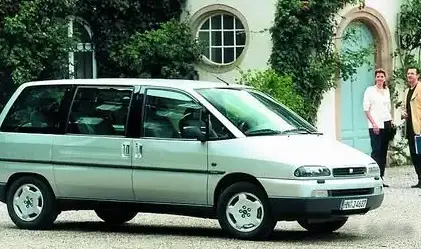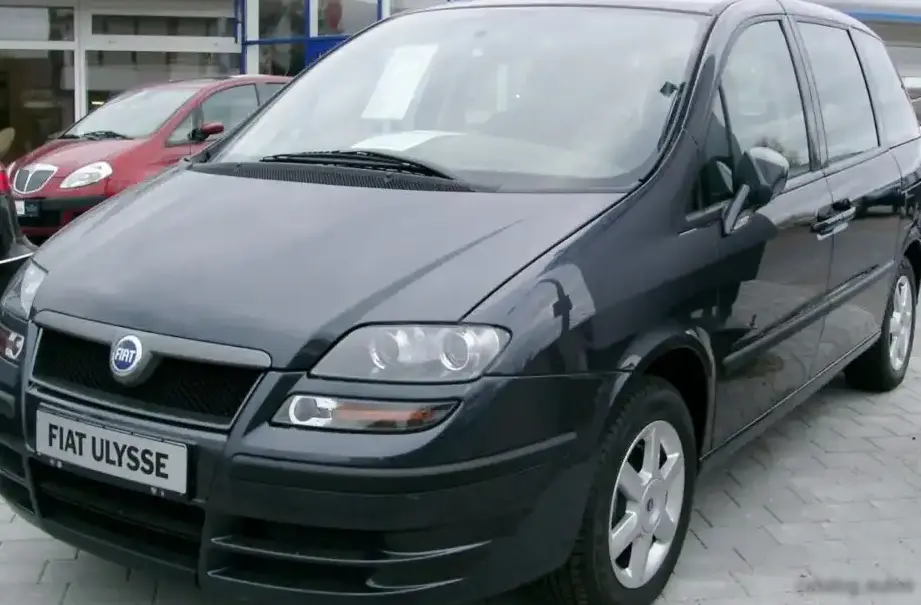
The Fiat Ulysse II, specifically the 3.0 V6 24V variant produced between 2002 and 2005, represents a premium offering within the second generation (179) of the Ulysse line. Positioned as a flagship model, it catered to buyers seeking a spacious, comfortable, and relatively powerful minivan. The Ulysse, a collaborative effort between Fiat and PSA Peugeot Citroën (resulting in the Peugeot 806 and Citroën Espace), aimed to compete with established MPVs in the European market. This V6 model distinguished itself from the more common four-cylinder options with its increased performance and refined driving experience, though at the cost of higher fuel consumption. It was primarily sold in Europe, where the demand for multi-purpose vehicles was strong.
Technical Specifications
| Brand | Fiat |
| Model | Ulysse |
| Generation | Ulysse II (179) |
| Type (Engine) | 3.0 V6 24V (204 Hp) |
| Start of production | 2002 |
| End of production | 2005 |
| Powertrain Architecture | Internal Combustion engine |
| Body type | Minivan, MPV |
| Seats | 5 |
| Doors | 5 |
| Fuel consumption (urban) | 15.8 l/100 km (14.9 US mpg, 17.9 UK mpg, 6.3 km/l) |
| Fuel consumption (extra urban) | 9 l/100 km (26.1 US mpg, 31.4 UK mpg, 11.1 km/l) |
| Fuel consumption (combined) | 11.5 l/100 km (20.5 US mpg, 24.6 UK mpg, 8.7 km/l) |
| Fuel Type | Petrol (Gasoline) |
| Acceleration 0 – 100 km/h | 10.2 sec |
| Acceleration 0 – 62 mph | 10.2 sec |
| Acceleration 0 – 60 mph | 9.7 sec |
| Maximum speed | 205 km/h (127.38 mph) |
| Weight-to-power ratio | 9 kg/Hp, 111.1 Hp/tonne |
| Weight-to-torque ratio | 6.4 kg/Nm, 155.1 Nm/tonne |
| Power | 204 Hp @ 6000 rpm |
| Power per litre | 69.2 Hp/l |
| Torque | 285 Nm @ 3750 rpm (210.21 lb.-ft. @ 3750 rpm) |
| Engine layout | Front, Transverse |
| Engine Model/Code | XFW |
| Engine displacement | 2946 cm3 (179.78 cu. in.) |
| Number of cylinders | 6 |
| Engine configuration | V-engine |
| Cylinder Bore | 87 mm (3.43 in.) |
| Piston Stroke | 82.6 mm (3.25 in.) |
| Compression ratio | 10.9:1 |
| Number of valves per cylinder | 4 |
| Fuel injection system | Multi-port manifold injection |
| Engine aspiration | Naturally aspirated engine |
| Valvetrain | DOHC |
| Engine oil capacity | 4.75 l (5.02 US qt, 4.18 UK qt) |
| Coolant capacity | 11 l (11.62 US qt, 9.68 UK qt) |
| Kerb Weight | 1837 kg (4049.89 lbs.) |
| Trunk (boot) space – minimum | 324 l (11.44 cu. ft.) |
| Trunk (boot) space – maximum | 2948 l (104.11 cu. ft.) |
| Fuel tank capacity | 80 l (21.13 US gal, 17.6 UK gal) |
| Length | 4730 mm (186.22 in.) |
| Width | 1850 mm (72.83 in.) |
| Height | 1750 mm (68.9 in.) |
| Wheelbase | 2825 mm (111.22 in.) |
| Front track | 1570 mm (61.81 in.) |
| Rear track | 1600 mm (62.99 in.) |
| Drivetrain Architecture | Front wheel drive |
| Number of gears | 4 |
| Gearbox type | Automatic transmission |
| Front suspension | Spring Strut |
| Rear suspension | Coil spring |
| Front brakes | Ventilated discs |
| Rear brakes | Disc |
| Assisting systems | ABS (Anti-lock braking system) |
| Steering type | Steering rack and pinion |
| Power steering | Hydraulic Steering |
| Tires size | 205/65 R15 |
| Wheel rims size | 6.5J x 15 |
Powertrain & Engine Architecture
The heart of the Ulysse II 3.0 V6 24V is the XFW engine, a 2.9-liter naturally aspirated V6. This engine, derived from a PSA design, features a 60-degree V-angle and utilizes a dual overhead camshaft (DOHC) valvetrain with four valves per cylinder. The 24-valve configuration contributes to its relatively high power output for its displacement. Fuel delivery is managed by a multi-port fuel injection system, providing precise fuel metering for optimal combustion. The engine’s 10.9:1 compression ratio further enhances efficiency and performance. Paired with this engine is a four-speed automatic transmission, designed to provide smooth and convenient gear changes. While not the most modern transmission by today’s standards, it was considered adequate for the vehicle’s intended use and power output. The transmission’s gear ratios were tuned for a balance between acceleration and fuel economy, prioritizing comfortable cruising over outright performance.
Driving Characteristics
The 3.0 V6 Automatic Ulysse offers a noticeably more refined driving experience compared to the base four-cylinder models. The V6 engine delivers a smooth and linear power delivery, with 285 Nm (210 lb-ft) of torque available at 3750 rpm. This provides ample power for overtaking and carrying a full load of passengers and luggage. However, the four-speed automatic transmission limits the engine’s potential, and acceleration, while adequate, isn’t particularly brisk – 0-60 mph takes around 9.7 seconds. The automatic transmission, while convenient, can feel somewhat dated, lacking the responsiveness of more modern gearboxes. The Ulysse’s focus is on comfort and practicality, and the driving experience reflects this. The suspension is tuned for a soft ride, absorbing bumps and imperfections in the road effectively. Steering is light and easy, making maneuvering in tight spaces relatively effortless.
Equipment & Trim Levels
The 3.0 V6 variant of the Ulysse II typically came with a higher level of standard equipment than the lower-trim models. Features commonly included air conditioning, power windows, central locking, and an upgraded audio system. Interior upholstery was generally cloth or a combination of cloth and velour, with higher-spec models offering optional leather seats. Dashboard configuration was functional and straightforward, prioritizing ease of use. Optional extras available for this trim included a sunroof, rear parking sensors, and upgraded alloy wheels. The overall interior ambiance was designed to be comfortable and family-friendly, with ample space for passengers and cargo.
Chassis & Braking
The Ulysse II utilizes a front-wheel-drive layout, contributing to its relatively compact size and efficient packaging. The front suspension employs a MacPherson strut design, while the rear suspension features a coil spring setup. This configuration provides a comfortable ride and predictable handling. Braking duties are handled by ventilated discs at the front and solid discs at the rear. An Anti-lock Braking System (ABS) is standard, enhancing safety and control during emergency braking situations. The Ulysse’s chassis is designed to prioritize comfort and stability over sporty handling, reflecting its role as a family-oriented MPV.
Market Reception & Comparison
The Fiat Ulysse II 3.0 V6 Automatic was generally well-received by critics, who praised its spacious interior, comfortable ride, and refined engine. However, its relatively high fuel consumption and the dated four-speed automatic transmission were points of criticism. Compared to the lower-trim four-cylinder models, the V6 offered a significant performance upgrade but came at a higher price point and with increased running costs. Against competitors like the Renault Espace and Volkswagen Sharan, the Ulysse V6 offered a competitive package, particularly in terms of interior space and comfort. However, some rivals offered more advanced features and a more engaging driving experience.
Legacy
The Fiat Ulysse II 3.0 V6 24V, while not a high-volume seller, remains a sought-after variant among enthusiasts seeking a comfortable and well-equipped MPV. The XFW V6 engine, when properly maintained, is known for its reliability. However, like any older vehicle, it requires regular servicing and attention to potential issues such as oil leaks and cooling system components. In the used car market, these Ulysse models tend to hold their value reasonably well, particularly those in good condition with a documented service history. The Ulysse II 3.0 V6 represents a unique blend of Italian styling, French engineering, and practical functionality, making it a distinctive and appealing choice for those seeking a spacious and comfortable family vehicle.