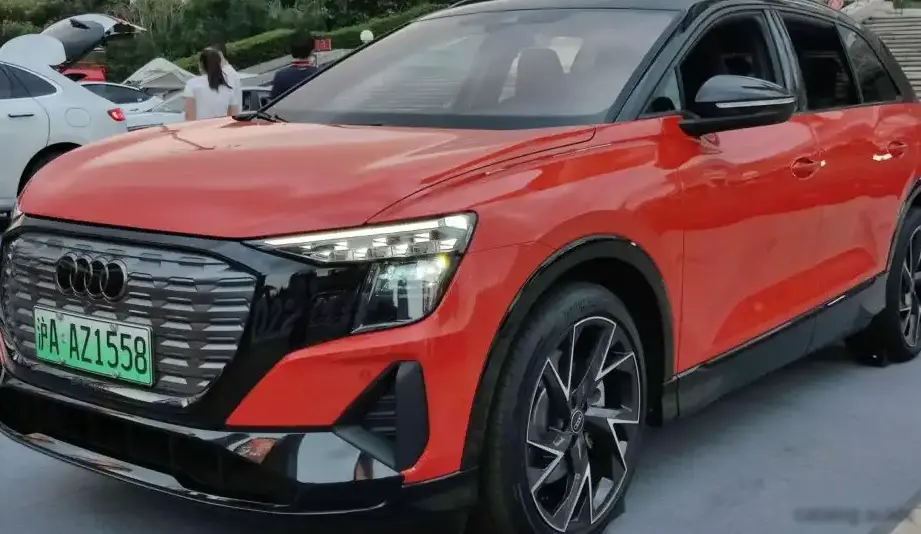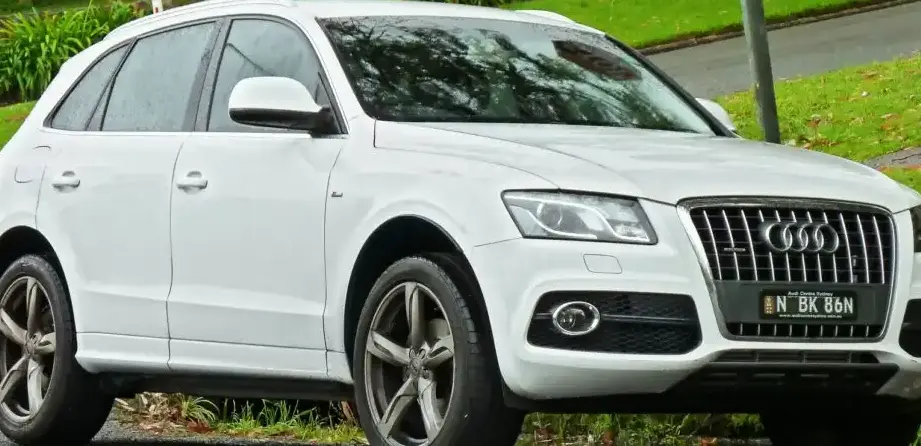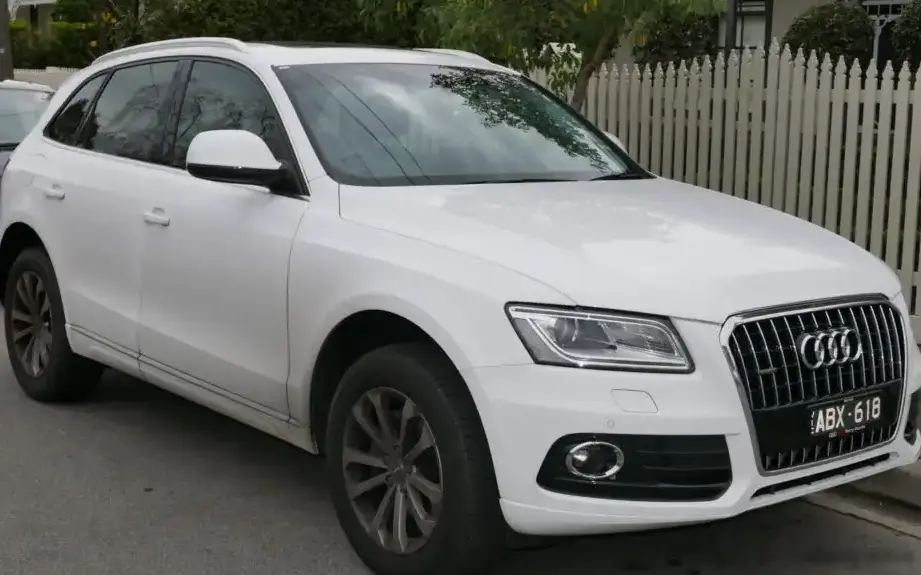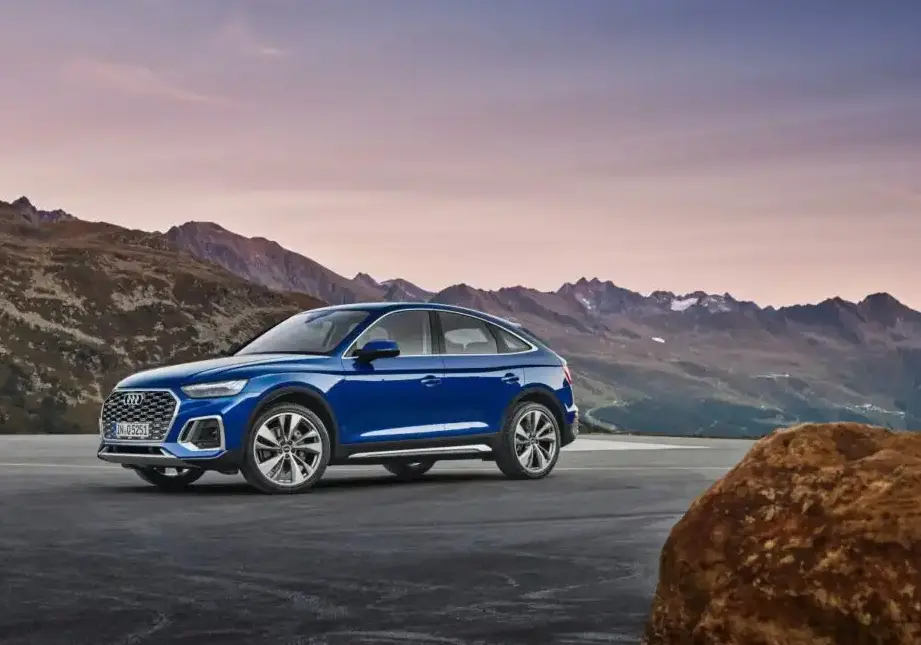
The Audi Q5 II Sportback 55 TFSI e, produced from February 2021 to November 2024, represents a significant step in Audi’s plug-in hybrid (PHEV) technology within the Q5 Sportback range (FY facelift). This variant combines a 2.0-liter turbocharged four-cylinder gasoline engine with an electric motor, delivering a combined system output of 367 horsepower. Positioned as a premium offering, it aimed to provide a balance of performance, efficiency, and all-weather capability through Audi’s quattro all-wheel-drive system. The Q5 Sportback itself is a coupe-style SUV, offering a more streamlined silhouette compared to the standard Q5, and the 55 TFSI e trim was a key component of Audi’s strategy to offer electrified options across its model lineup in the European and North American markets.
Technical Specifications
| Brand | Audi |
| Model | Q5 |
| Generation | Q5 II Sportback (FY, facelift 2020) |
| Type (Engine) | 55 TFSI e (367 Hp) Plug-in Hybrid quattro S tronic |
| Start of production | February, 2021 |
| End of production | November, 2024 |
| Powertrain Architecture | PHEV (Plug-in Hybrid Electric Vehicle) |
| Body type | SUV |
| Seats | 5 |
| Doors | 5 |
| Combined fuel consumption (WLTP) | 1.5-1.8 l/100 km (156.8 – 130.7 US mpg, 188.3 – 156.9 UK mpg, 66.7 – 55.6 km/l) |
| CO2 emissions (WLTP) | 36-43 g/km |
| Fuel consumption (economy) – combined (NEDC) | 1.8-2 l/100 km (130.7 – 117.6 US mpg, 156.9 – 141.2 UK mpg, 55.6 – 50 km/l) |
| CO2 emissions (NEDC) | 42-45 g/km |
| Fuel Type | Petrol / electricity |
| Acceleration 0 – 100 km/h | 5.3 sec |
| Acceleration 0 – 62 mph | 5.3 sec |
| Acceleration 0 – 60 mph | 5 sec (Calculated) |
| Maximum speed | 239 km/h (148.51 mph), Electronically limited |
| Emission standard | Euro 6d-ISC-FCM |
| Weight-to-power ratio | 5.7 kg/Hp, 176.9 Hp/tonne |
| Weight-to-torque ratio | 4.2 kg/Nm, 241 Nm/tonne |
| Gross battery capacity | 17.9 kWh |
| Net (usable) battery capacity | 14.4 kWh |
| Battery voltage | 381 V |
| Battery technology | Lithium-ion (Li-Ion) |
| Battery location | Under the trunk |
| Recuperation output | 80 kW |
| All-electric range (WLTP) | 56-61 km (34.8 – 37.9 mi) |
| Average Energy consumption (NEDC) | 19.3-19.6 kWh/100 km (31.06 – 31.54 kWh/100 mi, 108 – 107 MPGe, 5.2 – 5.1 km/kWh, 3.2 – 3.2 mi/kWh) |
| Max speed (electric) | 135 km/h (83.89 mph) |
| Electric motor power | 143 Hp |
| Electric motor Torque | 350 Nm (258.15 lb.-ft.) |
| Electric motor location | Between the combustion engine and the transmission |
| System power | 367 Hp |
| System torque | 500 Nm (368.78 lb.-ft.) |
| Power | 265 Hp @ 5250-6500 rpm |
| Torque | 370 Nm @ 1600-4500 rpm (272.9 lb.-ft. @ 1600-4500 rpm) |
| Engine layout | Front, Longitudinal |
| Engine Model/Code | DRYA |
| Engine displacement | 1984 cm3 (121.07 cu. in.) |
| Number of cylinders | 4 |
| Engine configuration | Inline |
| Cylinder Bore | 82.5 mm (3.25 in.) |
| Piston Stroke | 92.8 mm (3.65 in.) |
| Compression ratio | 9.6:1 |
| Number of valves per cylinder | 4 |
| Fuel injection system | Direct injection |
| Engine aspiration | Turbocharger, Intercooler |
| Valvetrain | DOHC |
| Engine oil capacity | 5.2 l (5.49 US qt | 4.58 UK qt) |
| Coolant | 17.7 l (18.7 US qt | 15.57 UK qt) |
| Kerb Weight | 2075 kg (4574.59 lbs.) |
| Max. weight | 2660 kg (5864.3 lbs.) |
| Max load | 585 kg (1289.7 lbs.) |
| Trunk (boot) space – minimum | 455 l (16.07 cu. ft.) |
| Trunk (boot) space – maximum | 1365 l (48.2 cu. ft.) |
| Fuel tank capacity | 54 l (14.27 US gal | 11.88 UK gal) |
| Max. roof load | 75 kg (165.35 lbs.) |
| Permitted trailer load with brakes (8%) | 2000 kg (4409.25 lbs.) |
| Permitted trailer load with brakes (12%) | 2000 kg (4409.25 lbs.) |
| Permitted trailer load without brakes | 750 kg (1653.47 lbs.) |
| Permitted towbar download | 100 kg (220.46 lbs.) |
| Length | 4689 mm (184.61 in.) |
| Width | 1893 mm (74.53 in.) |
| Width including mirrors | 2140 mm (84.25 in.) |
| Height | 1658 mm (65.28 in.) |
| Wheelbase | 2819 mm (110.98 in.) |
| Front track | 1616 mm (63.62 in.) |
| Rear (Back) track | 1609 mm (63.35 in.) |
| Front overhang | 910 mm (35.83 in.) |
| Rear overhang | 960 mm (37.8 in.) |
| Drag coefficient (Cd) | 0.31 |
| Minimum turning circle (turning diameter) | 11.8 m (38.71 ft.) |
| Approach angle | 19.9° |
| Departure angle | 21.1° |
| Drivetrain Architecture | The Internal combustion engine (ICE) and the electric motor permanently drive the front wheels of the vehicle, capable of running in full electric or mixed mode, and if necessary through the electrically or mechanically controlled clutch, the rear wheels are driven. |
| Drive wheel | All wheel drive (4×4) |
| Number of gears and type of gearbox | 7 gears, automatic transmission S tronic |
| Front suspension | Independent multi-link suspension, Transverse stabilizer |
| Rear suspension | Independent multi-link suspension, Transverse stabilizer |
| Front brakes | Ventilated discs |
| Rear brakes | Ventilated discs |
INTRODUCTION
The Audi Q5 II Sportback 55 TFSI e, launched in 2021 as part of the FY facelift, is a plug-in hybrid variant of the popular Q5 Sportback. Built on the MLB Evo platform (specifically the 1HX0/A3 variant for the Q5), it combines a 2.0-liter turbocharged four-cylinder engine with an electric motor and a 17.9 kWh battery pack. This configuration allows for a significant amount of all-electric range (56-61 km / 34.8-37.9 miles WLTP) and a combined system output of 367 horsepower. The Sportback body style, with its sloping roofline, differentiates it from the standard Q5, offering a more dynamic appearance. This model was aimed at consumers seeking a premium SUV with reduced emissions and the flexibility of both electric and gasoline power.
Powertrain & Engine Architecture
At the heart of the 55 TFSI e lies the DRYA engine, a 2.0-liter inline-four cylinder gasoline engine utilizing direct injection and a turbocharger. This engine produces 265 horsepower and 370 Nm (272.9 lb-ft) of torque. The engine is paired with a 143 horsepower electric motor integrated between the engine and the seven-speed S tronic dual-clutch transmission. The electric motor draws power from a 17.9 kWh lithium-ion battery pack located under the trunk floor. The combined system output is 367 horsepower and 500 Nm (368.78 lb-ft) of torque. The S tronic transmission provides quick and smooth gear changes, optimizing both performance and efficiency. The engine management system seamlessly blends power from the gasoline engine and electric motor, offering various driving modes including EV, Hybrid, and Sport.
Driving Characteristics
The Q5 Sportback 55 TFSI e delivers a refined and responsive driving experience. In all-electric mode, the vehicle offers near-silent operation and brisk acceleration, suitable for daily commutes. When the gasoline engine engages, the transition is almost imperceptible. The combined power output of 367 hp allows for a 0-60 mph time of around 5 seconds, making it a relatively quick SUV. The seven-speed S tronic transmission is well-tuned, providing smooth and quick shifts. Compared to the standard Q5 variants with lower horsepower engines, the 55 TFSI e offers significantly more power and acceleration. While the battery pack adds weight, the quattro all-wheel-drive system ensures excellent traction and stability in various driving conditions. The gear ratios are optimized for both electric and hybrid driving, providing strong torque at low speeds and efficient cruising at highway speeds.
Equipment & Trim Levels
The 55 TFSI e trim typically came well-equipped with standard features such as Audi’s virtual cockpit, a touchscreen infotainment system with navigation, leather upholstery, heated front seats, and a panoramic sunroof. Standard safety features included Audi pre sense basic, lane departure warning, and automatic emergency braking. Optional extras included adaptive cruise control, a Bang & Olufsen sound system, and matrix LED headlights. Interior trim options varied, allowing buyers to personalize the cabin with different wood or aluminum accents. The Sportback model also featured a sportier exterior styling package compared to the standard Q5.
Chassis & Braking
The Q5 Sportback 55 TFSI e utilizes an independent multi-link suspension system at both the front and rear axles, providing a comfortable and controlled ride. A transverse stabilizer bar is fitted to both axles to reduce body roll during cornering. The braking system consists of ventilated discs on all four wheels, providing ample stopping power. The vehicle is equipped with ABS (Anti-lock braking system) and electronic stability control. Due to the added weight of the battery pack, the suspension was slightly tuned to provide additional support and maintain handling balance.
Market Reception & Comparison
The Audi Q5 Sportback 55 TFSI e was generally well-received by automotive critics. It was praised for its blend of performance, efficiency, and practicality. The all-electric range was considered competitive within its segment. Compared to other Q5 variants, such as the 2.0 TFSI with 248 hp, the 55 TFSI e offered significantly more power and the added benefit of electric driving. Fuel economy was a major selling point, with the combined fuel consumption figures being considerably lower than those of the gasoline-only models. However, the higher price tag and the added weight of the battery pack were noted as potential drawbacks. Compared to diesel-powered Q5 models, the 55 TFSI e offered a cleaner alternative with comparable performance.
Legacy
The Audi Q5 Sportback 55 TFSI e represents an important step in Audi’s transition towards electrification. The powertrain, while superseded by newer iterations, proved to be relatively reliable in early reports. The combination of a turbocharged engine and an electric motor provided a compelling balance of performance and efficiency. On the used car market, these models hold their value relatively well, particularly those with lower mileage and well-maintained service records. The 55 TFSI e paved the way for future plug-in hybrid models from Audi, demonstrating the brand’s commitment to sustainable mobility.