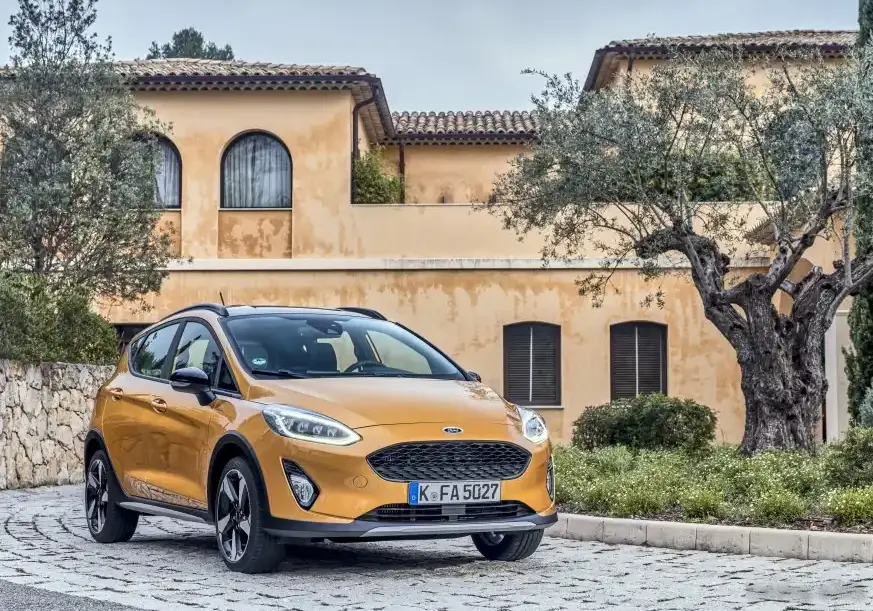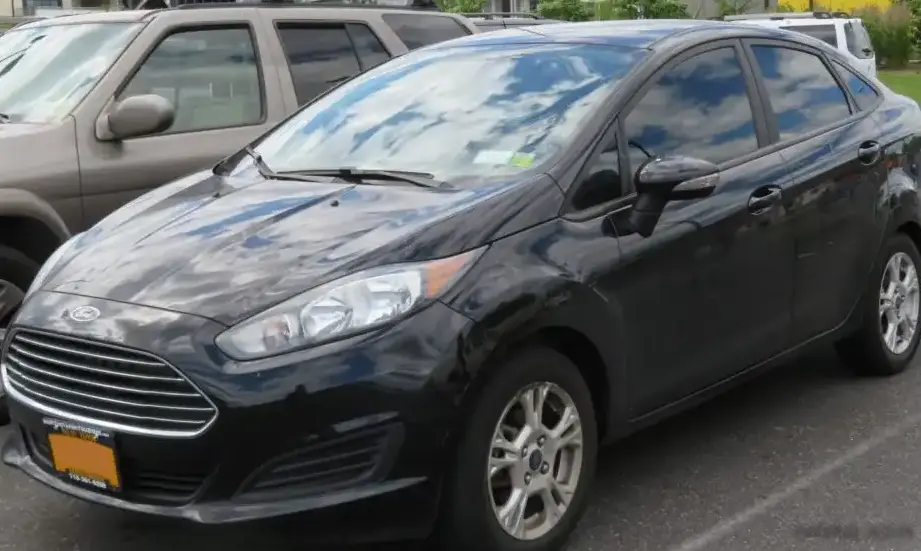
The Ford Fiesta VII Sedan (Mk7) 1.6, producing 120 horsepower and equipped with the PowerShift dual-clutch transmission, was a variant offered between 2015 and 2017. Positioned as a mid-range offering within the Mk7 Fiesta sedan lineup, it aimed to provide a balance between fuel efficiency and performance for buyers seeking an automatic transmission. This model represented Ford’s attempt to cater to a broader audience in markets where sedan body styles were preferred, particularly outside of Europe where the hatchback was dominant. The Mk7 Fiesta, built on the B2E platform, was a significant update to the Fiesta line, incorporating revised styling, improved interior quality, and updated technology.
Technical Specifications
| Brand | Ford |
| Model | Fiesta |
| Generation | Fiesta VII Sedan (Mk7) |
| Type (Engine) | 1.6 (120 Hp) PowerShift |
| Start of production | 2015 |
| End of production | 2017 |
| Powertrain Architecture | Internal Combustion engine |
| Body type | Sedan |
| Seats | 5 |
| Doors | 4 |
| Fuel consumption (urban) | 8.4 l/100 km (28 US mpg, 33.6 UK mpg, 11.9 km/l) |
| Fuel consumption (extra urban) | 4.5 l/100 km (52.3 US mpg, 62.8 UK mpg, 22.2 km/l) |
| Fuel consumption (combined) | 5.9 l/100 km (39.9 US mpg, 47.9 UK mpg, 16.9 km/l) |
| CO2 emissions | 138 g/km |
| Fuel Type | Petrol (Gasoline) |
| Acceleration 0 – 100 km/h | 10.7 sec |
| Acceleration 0 – 62 mph | 10.7 sec |
| Acceleration 0 – 60 mph | 10.2 sec |
| Maximum speed | 188 km/h (116.82 mph) |
| Weight-to-power ratio | 9.4 kg/Hp, 106.7 Hp/tonne |
| Weight-to-torque ratio | 7.4 kg/Nm, 135.1 Nm/tonne |
| Power | 120 Hp @ 6350 rpm |
| Power per litre | 75.2 Hp/l |
| Torque | 152 Nm @ 5000 rpm (112.11 lb.-ft. @ 5000 rpm) |
| Engine layout | Front, Transverse |
| Engine displacement | 1596 cm3 (97.39 cu. in.) |
| Number of cylinders | 4 |
| Engine configuration | Inline |
| Cylinder Bore | 79 mm (3.11 in.) |
| Piston Stroke | 81.4 mm (3.2 in.) |
| Compression ratio | 11:1 |
| Number of valves per cylinder | 4 |
| Fuel injection system | Multi-port manifold injection |
| Engine aspiration | Naturally aspirated engine |
| Engine oil capacity | 4.1 l (4.33 US qt | 3.61 UK qt) |
| Coolant | 5.8 l (6.13 US qt | 5.1 UK qt) |
| Kerb Weight | 1125 kg (2480.2 lbs.) |
| Trunk (boot) space – minimum | 455 l (16.07 cu. ft.) |
| Fuel tank capacity | 45 l (11.89 US gal | 9.9 UK gal) |
| Length | 4320 mm (170.08 in.) |
| Width | 1722 mm (67.8 in.) |
| Height | 1489 mm (58.62 in.) |
| Wheelbase | 2489 mm (97.99 in.) |
| Front track | 1473 mm (57.99 in.) |
| Rear (Back) track | 1461 mm (57.52 in.) |
| Minimum turning circle | 10.1 m (33.14 ft.) |
| Drivetrain Architecture | The Internal combustion engine (ICE) drives the front wheels of the vehicle. |
| Drive wheel | Front wheel drive |
| Number of gears and type of gearbox | 6 gears, automatic transmission PowerShift |
| Front suspension | Independent type McPherson |
| Rear suspension | Semi-independent, coil spring |
| Front brakes | Ventilated discs |
| Rear brakes | Drum |
| Assisting systems | ABS (Anti-lock braking system) |
| Steering type | Steering rack and pinion |
| Power steering | Electric Steering |
| Tires size | 195/55 R15 |
| Wheel rims size | 15 |
Powertrain & Engine Architecture
The 1.6-liter inline-four engine, internally designated as Sigma, was a mainstay of Ford’s small engine lineup. This particular iteration produced 120 horsepower and 152 Nm (112 lb-ft) of torque. It utilized a multi-port fuel injection system and a single overhead camshaft (SOHC) valvetrain with four valves per cylinder. The engine’s design prioritized fuel efficiency and smooth operation over outright performance. The PowerShift transmission, a six-speed dual-clutch transmission (DCT), was a key feature of this variant. Unlike a traditional automatic, the PowerShift offered quicker shifts and improved fuel economy by utilizing two separate clutches for odd and even gears. However, early versions of the PowerShift were known to experience reliability issues, particularly with clutch wear and mechatronic unit failures.
Driving Characteristics
The 1.6-liter engine paired with the PowerShift transmission delivered adequate, but not exhilarating, performance. Acceleration from 0-60 mph took around 10.2 seconds, and the top speed was 116.82 mph. The PowerShift transmission generally provided smooth shifts in normal driving conditions, but could sometimes exhibit hesitation or jerkiness at lower speeds. Compared to the more powerful 1.0 EcoBoost or 1.6 Ti-VCT variants, the 1.6 PowerShift felt less responsive. The gear ratios were tuned for fuel economy, meaning the engine often needed to be revved to access its full power. The automatic transmission made it a more accessible option for drivers unfamiliar or uninterested in manual transmissions.
Equipment & Trim Levels
The 1.6 PowerShift Fiesta Sedan typically came with a reasonable level of standard equipment. This included air conditioning, power windows, power door locks, a basic audio system with USB connectivity, and ABS brakes. Higher trim levels added features such as alloy wheels, a more advanced audio system, cruise control, and fog lights. Interior upholstery was typically cloth, with options for upgraded materials. The dashboard layout was functional and straightforward, with a focus on ease of use. Optional extras included a sunroof, parking sensors, and a navigation system.
Chassis & Braking
The Fiesta Mk7 sedan utilized a McPherson strut front suspension and a semi-independent coil spring rear suspension. This setup provided a comfortable ride quality, although it wasn’t particularly sporty. The front brakes were ventilated discs, while the rear brakes were drums. This configuration was typical for vehicles in this weight class and price range. The electric power steering provided light and easy steering, making it well-suited for city driving. Stabilizer bars were included on both axles to reduce body roll during cornering.
Market Reception & Comparison
The 1.6-liter PowerShift Fiesta Sedan received mixed reviews. Critics praised its fuel economy and comfortable ride, but noted its lack of performance compared to other engines in the lineup. The PowerShift transmission was a point of contention, with some reviewers experiencing issues with its smoothness and reliability. Compared to the manual transmission versions of the 1.6-liter engine, the PowerShift offered convenience but sacrificed some responsiveness. The 1.0 EcoBoost engine, while smaller, provided similar performance with better fuel economy and was often considered a more desirable option. The 1.6 PowerShift aimed to appeal to buyers prioritizing ease of use and fuel efficiency over sporty driving dynamics.
Legacy
The 1.6-liter PowerShift Fiesta Sedan, while not the most popular variant, remains a relatively common sight on the used car market. The Sigma engine itself is generally considered reliable, but the PowerShift transmission remains a potential source of problems. Prospective buyers should be aware of the potential for clutch wear and mechatronic unit failures and factor in the cost of potential repairs. Despite the transmission concerns, the Fiesta Mk7 sedan remains a practical and affordable option for those seeking a compact sedan with reasonable fuel economy and a comfortable ride. Its lasting appeal lies in its blend of practicality and affordability, making it a viable choice for budget-conscious buyers.