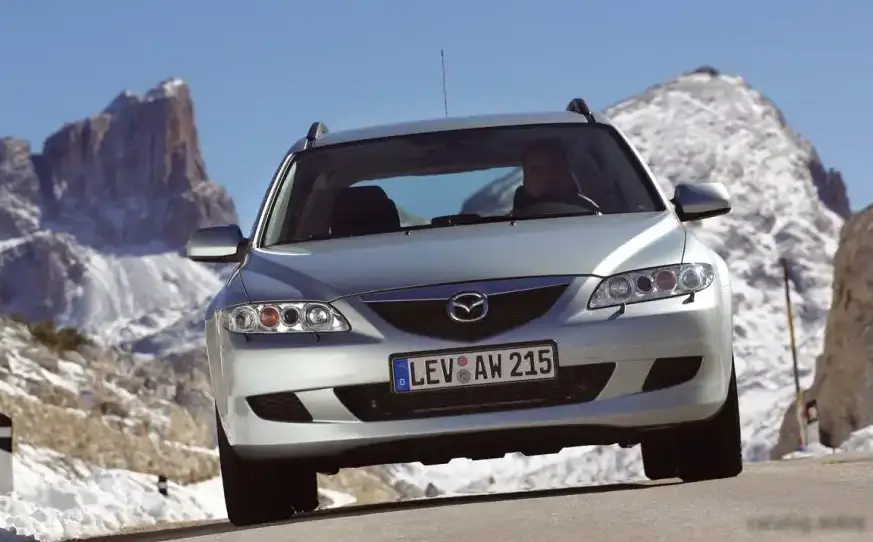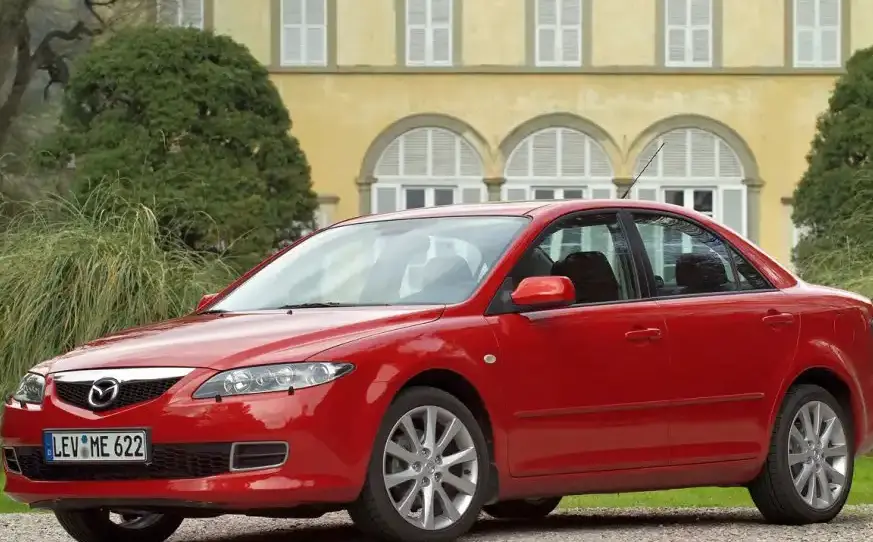
The Mazda 6 (GG/GY/GG1 series) facelift of 2005 represented a significant refresh of Mazda’s mid-size sedan, aiming to elevate its appeal in a competitive segment. Introduced as a more refined and feature-rich offering, the facelift brought updated styling, improved interior materials, and a range of updated engine options. The 2.0 CD variant, producing 143 horsepower, was a key component of the European lineup, offering a balance of fuel efficiency and reasonable performance. Production of this specific configuration ran from 2005 to 2008, positioning it as a popular choice for drivers seeking a comfortable and economical family sedan.
Technical Specifications
| Brand | Mazda |
| Model | 6 |
| Generation | 6 I Sedan (Typ GG/GY/GG1 facelift 2005) |
| Type (Engine) | 2.0 CD (143 Hp) |
| Start of production | 2005 |
| End of production | 2008 |
| Powertrain Architecture | Internal Combustion engine |
| Body type | Sedan |
| Seats | 5 |
| Doors | 4 |
| Fuel consumption (urban) | 7.5 l/100 km (31.4 US mpg) |
| Fuel consumption (extra urban) | 5.1 l/100 km (46.1 US mpg) |
| Fuel consumption (combined) | 6 l/100 km (39.2 US mpg) |
| CO2 emissions | 165 g/km |
| Fuel Type | Diesel |
| Acceleration 0 – 100 km/h | 9.5 sec |
| Acceleration 0 – 62 mph | 9.5 sec |
| Acceleration 0 – 60 mph | 9 sec |
| Maximum speed | 205 km/h (127.38 mph) |
| Emission standard | Euro 4 |
| Weight-to-power ratio | 10.1 kg/Hp |
| Weight-to-torque ratio | 4 kg/Nm |
| Power | 143 Hp @ 3500 rpm |
| Torque | 360 Nm @ 2000 rpm (265.52 lb.-ft. @ 2000 rpm) |
| Engine layout | Front, Transverse |
| Engine Model/Code | RF7J |
| Engine displacement | 1998 cm3 (121.93 cu. in.) |
| Number of cylinders | 4 |
| Engine configuration | Inline |
| Cylinder Bore | 86 mm (3.39 in.) |
| Piston Stroke | 86 mm (3.39 in.) |
| Compression ratio | 16.7:1 |
| Number of valves per cylinder | 4 |
| Fuel injection system | Diesel Commonrail |
| Engine aspiration | Turbocharger, Intercooler |
| Valvetrain | SOHC |
| Engine oil capacity | 4.7 l (4.97 US qt | 4.14 UK qt) |
| Coolant | 9 l (9.51 US qt | 7.92 UK qt) |
| Kerb Weight | 1440 kg (3174.66 lbs.) |
| Max. weight | 1990 kg (4387.2 lbs.) |
| Max load | 550 kg (1212.54 lbs.) |
| Trunk (boot) space – minimum | 501 l (17.69 cu. ft.) |
| Fuel tank capacity | 64 l (16.91 US gal | 14.08 UK gal) |
| Permitted trailer load with brakes (12%) | 1600 kg (3527.4 lbs.) |
| Permitted trailer load without brakes | 550 kg (1212.54 lbs.) |
| Length | 4690 mm (184.65 in.) |
| Width | 1780 mm (70.08 in.) |
| Height | 1435 mm (56.5 in.) |
| Wheelbase | 2675 mm (105.31 in.) |
| Front track | 1550 mm (61.02 in.) |
| Rear (Back) track | 1550 mm (61.02 in.) |
| Ride height (ground clearance) | 130 mm (5.12 in.) |
| Drag coefficient (Cd) | 0.30 |
| Minimum turning circle (turning diameter) | 10.8 m (35.43 ft.) |
| Drivetrain Architecture | Front wheel drive |
| Drive wheel | Front wheel drive |
| Number of gears and type of gearbox | 6 gears, manual transmission |
| Front brakes | Ventilated discs |
| Rear brakes | Disc |
| Assisting systems | ABS (Anti-lock braking system) |
| Steering type | Steering rack and pinion |
| Tires size | 205/55 R16 H |
| Wheel rims size | 16 |
INTRODUCTION
The 2005 Mazda 6 2.0 CD represented a key offering in Mazda’s European lineup. Built on the GG/GY platform, this facelifted model aimed to provide a more sophisticated and refined experience compared to its predecessor. The 2.0 CD engine, a diesel powerplant, was specifically targeted at drivers prioritizing fuel economy and reasonable performance for everyday driving. This variant occupied a mid-range position within the 6 lineup, slotting below the more powerful 2.3-liter petrol and higher-output diesel options, but above the base 1.8-liter petrol engine. It was designed to appeal to families and commuters seeking a practical and comfortable sedan.
Powertrain & Engine Architecture
The heart of the 2.0 CD variant is the RF7J engine, a 1998cc inline-four cylinder diesel engine. This engine utilizes a common rail direct injection system, delivering fuel directly into the combustion chamber at extremely high pressure. This technology, coupled with a turbocharger and intercooler, allows for increased power and torque while maintaining relatively good fuel efficiency. The engine features a single overhead camshaft (SOHC) valvetrain, operating four valves per cylinder. The high compression ratio of 16.7:1 is typical for diesel engines, contributing to their efficiency. The engine’s design prioritized low-end torque, making it well-suited for everyday driving conditions. The 6-speed manual transmission was the standard gearbox for this variant, offering precise shifts and contributing to the car’s overall efficiency.
Driving Characteristics
The 2.0 CD variant of the Mazda 6 offered a comfortable and composed driving experience. While not a performance-oriented model, the 143 horsepower and 360 Nm (265 lb-ft) of torque provided adequate power for most driving situations. Acceleration from 0-100 km/h (0-62 mph) took approximately 9.5 seconds, and the car could reach a top speed of 205 km/h (127 mph). The turbocharger provided a noticeable boost in power at lower engine speeds, making overtaking maneuvers relatively effortless. The 6-speed manual transmission allowed drivers to keep the engine in its optimal power band. Compared to the higher-output petrol versions, the 2.0 CD offered significantly better fuel economy, but lacked the same level of outright acceleration. The suspension was tuned for comfort, providing a smooth ride over most road surfaces.
Equipment & Trim Levels
The 2.0 CD variant of the Mazda 6 typically came equipped with a respectable level of standard features. These included air conditioning, power windows, power mirrors, a CD player, and ABS brakes. Higher trim levels offered additional features such as alloy wheels, a sunroof, leather upholstery, and a more advanced audio system. Interior upholstery was typically cloth, although leather was available as an option. The dashboard layout was functional and well-designed, with easy-to-read gauges and intuitive controls. Optional extras included a navigation system, parking sensors, and automatic climate control.
Chassis & Braking
The Mazda 6 featured a front-wheel-drive layout with independent suspension at the front and a multi-link suspension at the rear. This suspension setup provided a good balance of ride comfort and handling. The front brakes were ventilated discs, while the rear brakes were solid discs. ABS (Anti-lock Braking System) was standard, enhancing braking performance and safety. The chassis was designed to provide good rigidity, contributing to the car’s overall stability. The steering was a rack and pinion system, offering precise and responsive handling.
Market Reception & Comparison
The Mazda 6 2.0 CD was generally well-received by automotive critics. It was praised for its comfortable ride, spacious interior, and fuel-efficient engine. However, some critics noted that the engine could be somewhat noisy compared to petrol alternatives. Compared to the 2.3-liter petrol version, the 2.0 CD offered significantly better fuel economy, but lacked the same level of performance. The 2.0 CD was also more affordable than the higher-output diesel variants, making it an attractive option for budget-conscious buyers. Its fuel economy figures of around 6 l/100 km (39.2 US mpg) were competitive within its class.
Legacy
The RF7J engine, while generally reliable, is known to require regular maintenance, particularly regarding the diesel particulate filter (DPF). Proper servicing and the use of high-quality diesel fuel are crucial for ensuring long-term reliability. Today, the 2005-2008 Mazda 6 2.0 CD can be found on the used car market at relatively affordable prices. It remains a practical and economical choice for those seeking a comfortable and reliable family sedan. However, potential buyers should be aware of the potential maintenance costs associated with diesel engines, particularly the DPF. The model’s reputation for build quality and comfortable ride continues to make it a popular choice among used car buyers.