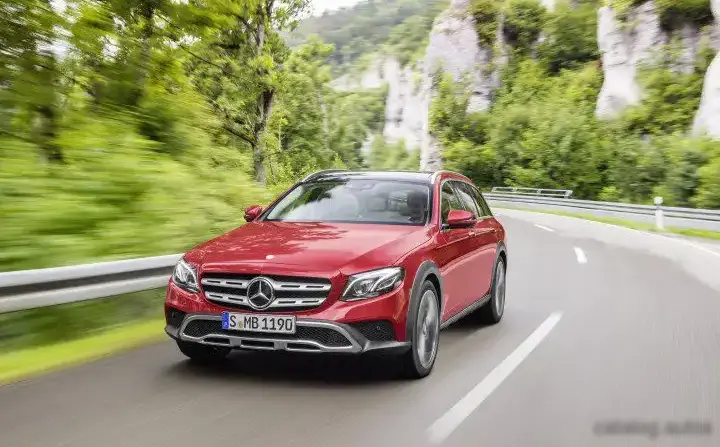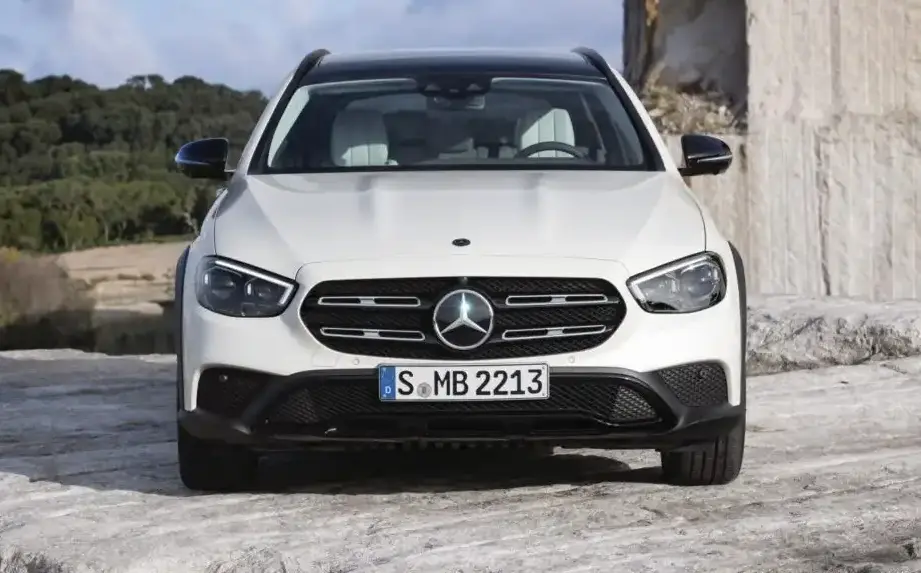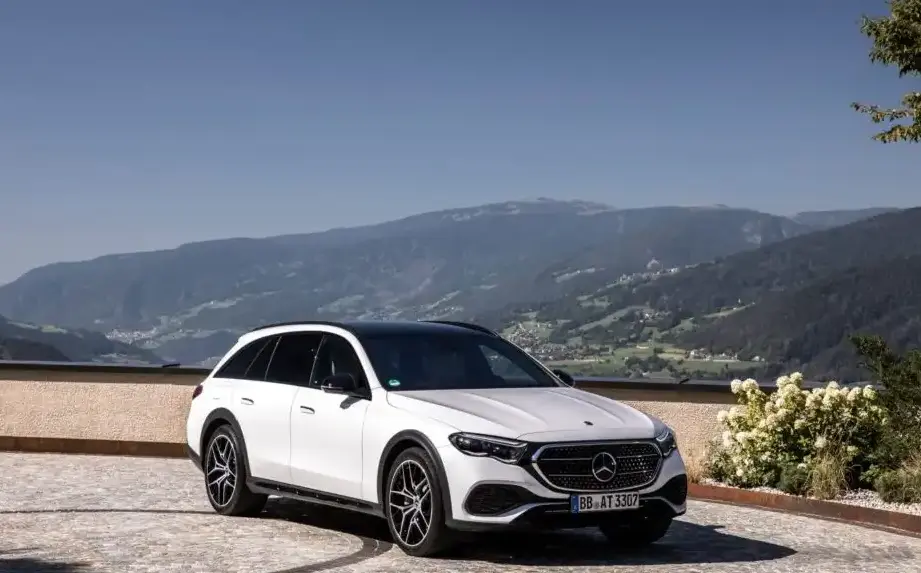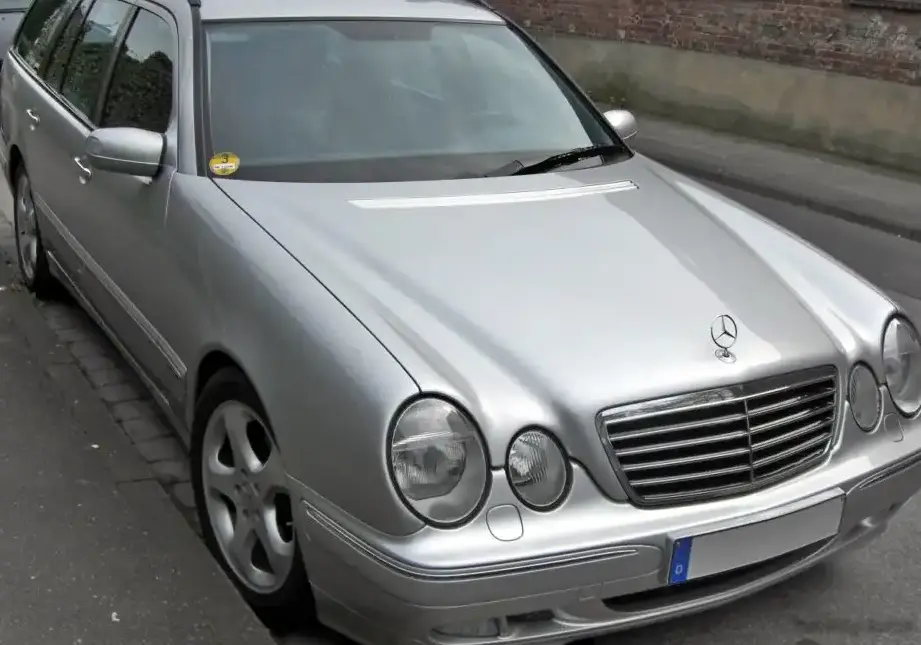
The Mercedes-Benz E-Class T-modell (S210) facelift, specifically the E 430 V8 4MATIC Automatic variant, represented the pinnacle of performance and luxury within the S210 wagon range. Produced from 1999 to 2000, this model combined the practicality of a station wagon with the power of a naturally aspirated V8 engine and the security of all-wheel drive. It occupied the top-tier position in the S210 lineup, appealing to buyers seeking a high-performance, family-oriented vehicle. The S210 series, introduced in 1996, was a significant update to the W210 E-Class, addressing many criticisms leveled at the initial model and establishing a reputation for refinement and build quality.
Technical Specifications
| Brand | Mercedes-Benz |
| Model | E-Class |
| Generation | E-Class T-modell (S210, facelift 1999) |
| Type (Engine) | E 430 V8 (279 Hp) 4MATIC Automatic |
| Start of production | 1999 |
| End of production | 2000 |
| Powertrain Architecture | Internal Combustion engine |
| Body type | Station wagon (estate) |
| Seats | 5 |
| Doors | 5 |
| Fuel consumption (urban) | 19 l/100 km (12.4 US mpg, 14.9 UK mpg, 5.3 km/l) |
| Fuel consumption (extra urban) | 9.4 l/100 km (25 US mpg, 30.1 UK mpg, 10.6 km/l) |
| Fuel consumption (combined) | 12.9 l/100 km (18.2 US mpg, 21.9 UK mpg, 7.8 km/l) |
| Fuel Type | Petrol (Gasoline) |
| Acceleration 0 – 100 km/h | 7.2 sec |
| Acceleration 0 – 62 mph | 7.2 sec |
| Acceleration 0 – 60 mph | 6.8 sec |
| Maximum speed | 243 km/h (150.99 mph) |
| Weight-to-power ratio | 6.7 kg/Hp, 150 Hp/tonne |
| Weight-to-torque ratio | 4.7 kg/Nm, 215.1 Nm/tonne |
| Power | 279 Hp @ 5750 rpm |
| Power per litre | 65.4 Hp/l |
| Torque | 400 Nm @ 3000 rpm (295.02 lb.-ft. @ 3000 rpm) |
| Engine layout | Front, Longitudinal |
| Engine Model/Code | M 113 E 43 / 113.940 |
| Engine displacement | 4266 cm3 (260.33 cu. in.) |
| Number of cylinders | 8 |
| Engine configuration | V-engine |
| Cylinder Bore | 89.9 mm (3.54 in.) |
| Piston Stroke | 84 mm (3.31 in.) |
| Compression ratio | 10:1 |
| Number of valves per cylinder | 3 |
| Fuel injection system | Multi-port manifold injection |
| Engine aspiration | Naturally aspirated engine |
| Valvetrain | SOHC |
| Engine oil capacity | 8 l (8.45 US qt | 7.04 UK qt) |
| Coolant | 11 l (11.62 US qt | 9.68 UK qt) |
| Kerb Weight | 1860 kg (4100.6 lbs.) |
| Max. weight | 2410 kg (5313.14 lbs.) |
| Max load | 550 kg (1212.54 lbs.) |
| Trunk (boot) space – minimum | 600 l (21.19 cu. ft.) |
| Trunk (boot) space – maximum | 1975 l (69.75 cu. ft.) |
| Fuel tank capacity | 70 l (18.49 US gal | 15.4 UK gal) |
| Length | 4839 mm (190.51 in.) |
| Width | 1799 mm (70.83 in.) |
| Height | 1509 mm (59.41 in.) |
| Wheelbase | 2833 mm (111.54 in.) |
| Front track | 1536 mm (60.47 in.) |
| Rear (Back) track | 1546 mm (60.87 in.) |
| Drag coefficient (Cd) | 0.32 |
| Drivetrain Architecture | The Internal combustion engine (ICE) drives permanently the four wheels of the vehicle. |
| Drive wheel | All wheel drive (4×4) |
| Number of gears and type of gearbox | 5 gears, automatic transmission |
| Front suspension | Double wishbone |
| Rear suspension | Hydro-pneumatic element, Independent multi-link suspension |
| Front brakes | Ventilated discs |
| Rear brakes | Disc |
| Assisting systems | ABS (Anti-lock braking system) |
| Steering type | Steering rack and pinion |
| Power steering | Hydraulic Steering |
| Tires size | 235/45 R17 |
| Wheel rims size | 7.5J x 17 |
Powertrain & Engine Architecture
The heart of the E 430 T-modell was the M113 E 43 engine, a 4.3-liter naturally aspirated V8. This engine, part of Mercedes-Benz’s modular V8 engine family, featured all-aluminum construction, a three-valve per cylinder (two intake, one exhaust) SOHC valvetrain, and a multi-port fuel injection system. The engine code 113.940 specifically identifies this variant. The M113 was known for its smooth power delivery and robust construction. The five-speed automatic transmission (722.6) was standard, offering smooth shifts and a relatively conservative gear ratio spread optimized for both performance and fuel efficiency. The 4MATIC all-wheel-drive system utilized a single-transfer case distributing power to all four wheels, enhancing traction in various conditions.
Driving Characteristics
The E 430 T-modell offered a distinctly different driving experience compared to its four-cylinder or six-cylinder siblings. The V8 engine provided ample torque throughout the rev range, resulting in effortless acceleration. While not a sports car, the E 430 could sprint from 0 to 60 mph in around 6.8 seconds. The automatic transmission, while smooth, wasn’t particularly quick-shifting by modern standards. The 4MATIC system provided enhanced stability and grip, particularly in inclement weather, making it a capable all-season vehicle. Compared to the more fuel-efficient E 320, the E 430 demanded a premium at the pump, with combined fuel economy around 18.2 US mpg.
Equipment & Trim Levels
The E 430 T-modell came generously equipped as standard. Interior features typically included leather upholstery, wood trim, power-adjustable front seats with memory function, automatic climate control, and a premium sound system. Optional extras included a sunroof, navigation system, upgraded audio, and rear seat entertainment. The facelifted S210 models also benefited from revised interior trim and updated switchgear compared to the pre-facelift versions. Exterior features included alloy wheels, fog lights, and a roof rack.
Chassis & Braking
The S210 chassis featured a double wishbone front suspension and an independent multi-link rear suspension, providing a comfortable and controlled ride. The E 430 models typically received slightly stiffer springs and dampers to manage the increased weight of the V8 engine. Braking duties were handled by ventilated discs at the front and solid discs at the rear, coupled with an ABS anti-lock braking system. The E 430 benefitted from larger brake components compared to lower-spec models.
Market Reception & Comparison
The E 430 T-modell was well-received by automotive critics, who praised its powerful engine, luxurious interior, and practical wagon body style. However, its high price tag and relatively poor fuel economy were noted drawbacks. Compared to the E 320 wagon, the E 430 offered significantly more performance but at a substantial cost increase. The E 430 also competed with other luxury wagons, such as the BMW 5 Series Touring and the Audi A6 Avant.
Legacy
The M113 V8 engine proved to be remarkably durable, and well-maintained E 430 models continue to provide reliable service today. However, age-related issues, such as suspension component wear and electrical gremlins, are common. The E 430 T-modell has become a sought-after classic among Mercedes-Benz enthusiasts, appreciated for its blend of performance, luxury, and practicality. Parts availability remains generally good, although some specific trim pieces may be difficult to source. The combination of a powerful V8, all-wheel drive, and a spacious wagon body makes the E 430 T-modell a unique and desirable vehicle in the used car market.