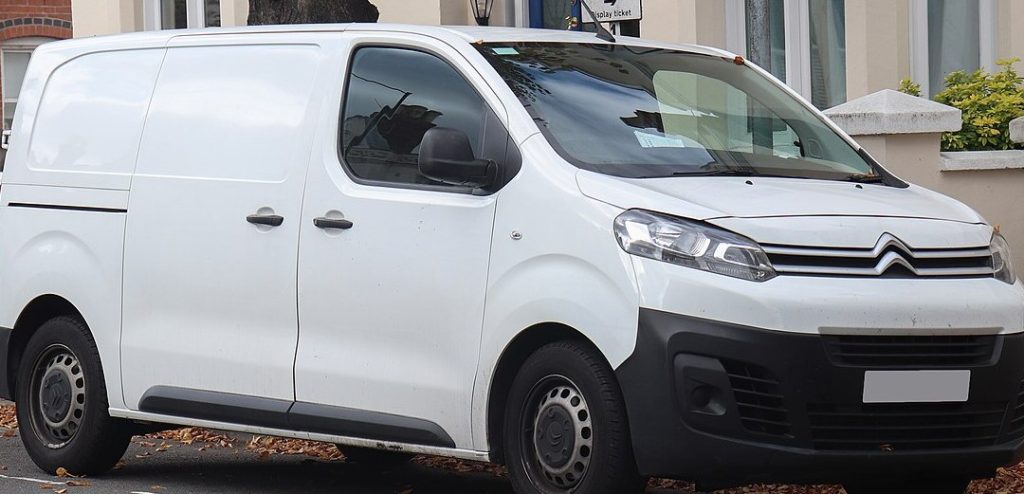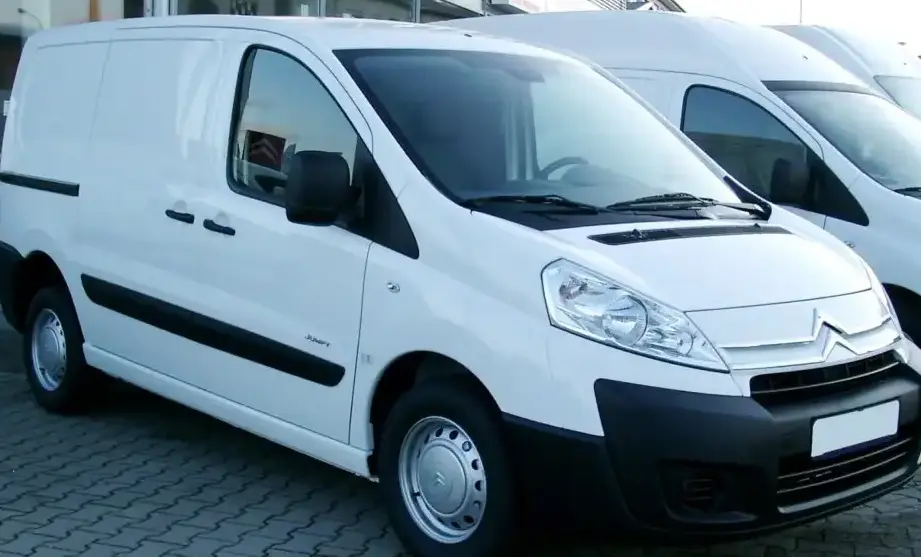
The Citroen Jumpy II 2.0 HDi (163 hp) L1H1 DPF is a commercial vehicle produced by the French manufacturer Citroen between 2010 and 2011. Part of the second generation of the Jumpy line (known as the Dispatch in the UK), this variant occupied a mid-range position within the broader lineup, offering a balance between performance, fuel economy, and cargo capacity. The “L1H1” designation refers to the vehicle’s body length and roof height – a shorter wheelbase and standard roof configuration – making it suitable for urban delivery and service applications. It was primarily sold in European markets as a light commercial van, competing with vehicles like the Ford Transit Connect, Volkswagen Caddy, and Renault Kangoo.
Technical Specifications
| Brand | Citroen |
| Model | Jumpy |
| Generation | Jumpy II |
| Type | 2.0 HDi (163 Hp) L1H1 DPF |
| Start of production | 2010 |
| End of production | 2011 |
| Powertrain Architecture | Internal Combustion engine |
| Body type | Minivan |
| Seats | 3 |
| Doors | 4 |
| Fuel consumption (urban) | 8.0 l/100 km (29.4 US mpg, 35.3 UK mpg, 12.5 km/l) |
| Fuel consumption (extra urban) | 6.1 l/100 km (38.6 US mpg, 46.3 UK mpg, 16.4 km/l) |
| Fuel consumption (combined) | 6.8 l/100 km (34.6 US mpg, 41.5 UK mpg, 14.7 km/l) |
| CO2 emissions | 179 g/km |
| Fuel Type | Diesel |
| Maximum speed | 170 km/h (105.63 mph) |
| Emission standard | Euro 5 |
| Weight-to-power ratio | 10.6 kg/Hp, 94.2 Hp/tonne |
| Weight-to-torque ratio | 5.1 kg/Nm, 196.4 Nm/tonne |
| Power | 163 Hp @ 3750 rpm |
| Power per litre | 81.6 Hp/l |
| Torque | 340 Nm @ 2000 rpm (250.77 lb.-ft. @ 2000 rpm) |
| Engine layout | Front, Transverse |
| Engine Model/Code | RHH DW10CTED4 |
| Engine displacement | 1997 cm3 (121.86 cu. in.) |
| Number of cylinders | 4 |
| Engine configuration | Inline |
| Cylinder Bore | 85 mm (3.35 in.) |
| Piston Stroke | 88 mm (3.46 in.) |
| Number of valves per cylinder | 4 |
| Fuel injection system | Diesel Commonrail |
| Engine aspiration | Turbocharger, Intercooler |
| Engine oil capacity | 5.5 l (5.81 US qt | 4.84 UK qt) |
| Kerb Weight | 1731 kg (3816.2 lbs.) |
| Max. weight | 2943 kg (6488.2 lbs.) |
| Max load | 1212 kg (2672 lbs.) |
| Trunk (boot) space – maximum | 5000 l (176.57 cu. ft.) |
| Fuel tank capacity | 80 l (21.13 US gal | 17.6 UK gal) |
| Max. roof load | 170 kg (374.79 lbs.) |
| Permitted trailer load with brakes (12%) | 2000 kg (4409.25 lbs.) |
| Permitted trailer load without brakes | 750 kg (1653.47 lbs.) |
| Permitted towbar download | 80 kg (176.37 lbs.) |
| Length | 4805 mm (189.17 in.) |
| Width | 1895 mm (74.61 in.) |
| Width with mirrors folded | 1986 mm (78.19 in.) |
| Width including mirrors | 2194 mm (86.38 in.) |
| Height | 1880 mm (74.02 in.) |
| Wheelbase | 3000 mm (118.11 in.) |
| Front track | 1562 mm (61.5 in.) |
| Rear (Back) track | 1596 mm (62.83 in.) |
| Front overhang | 975 mm (38.39 in.) |
| Rear overhang | 830 mm (32.68 in.) |
| Drivetrain Architecture | The Internal combustion engine (ICE) drives the front wheels of the vehicle. |
| Drive wheel | Front wheel drive |
| Number of gears and type of gearbox | 6 gears, manual transmission |
| Front suspension | Independent, type McPherson with coil spring and anti-roll bar |
| Rear suspension | Semi-dependent beam with stabilizer lateral stability |
| Front brakes | Ventilated discs, 304×28 mm |
| Rear brakes | Disc, 290×14 mm |
| Assisting systems | ABS (Anti-lock braking system) |
| Steering type | Steering rack and pinion |
| Tires size | 215/60 R16 |
| Wheel rims size | 16 |
Powertrain & Engine Architecture
The Jumpy II 2.0 HDi utilizes the DW10CTED4 engine, a four-cylinder diesel engine common in PSA Group (Peugeot, Citroen) vehicles of the era. This engine is a turbocharged common rail direct injection diesel, producing 163 horsepower at 3750 rpm and 340 Nm (250.77 lb-ft) of torque at 2000 rpm. The turbocharger and intercooler work together to increase air density, improving combustion efficiency and power output. The common rail injection system allows for precise fuel delivery, optimizing both performance and emissions. The engine features four valves per cylinder and a robust internal construction designed for durability. This particular variant was paired with a six-speed manual transmission, providing a good balance between fuel economy and drivability. The engine’s layout is front transverse, contributing to a compact engine bay and maximizing interior space.
Driving Characteristics
The 2.0 HDi 163 hp engine in the Jumpy II L1H1 offered a noticeable step up in performance compared to lower-powered versions. While not a sports van, it provided sufficient power for fully loaded operation and highway cruising. The six-speed manual transmission allowed drivers to keep the engine in its optimal torque band, resulting in responsive acceleration. The gear ratios were well-suited for both city driving and longer journeys. Compared to the base engine options, this variant offered a more relaxed driving experience, particularly when carrying a heavy load. However, it didn’t match the outright performance of larger-engined vans in the segment. The front-wheel-drive configuration provided predictable handling, but traction could be limited on slippery surfaces when heavily loaded.
Equipment & Trim Levels
The Jumpy II 2.0 HDi L1H1 DPF, being a commercial vehicle, typically featured a utilitarian interior. Standard equipment included a driver’s airbag, ABS brakes, power steering, and a basic audio system. The cabin was designed for practicality and durability, with hard-wearing plastics and easy-to-clean surfaces. The “L1H1” configuration provided a generous cargo area, suitable for a variety of commercial applications. Optional extras included air conditioning, a passenger airbag, rear parking sensors, and upgraded audio systems. Higher trim levels offered features like cruise control and a trip computer. The seating configuration typically accommodated the driver and two passengers.
Chassis & Braking
The Jumpy II utilized a McPherson strut front suspension with a coil spring and anti-roll bar, providing a comfortable ride and stable handling. The rear suspension employed a semi-dependent beam with a stabilizer bar, offering a good balance between load-carrying capacity and ride quality. The braking system consisted of ventilated discs on the front wheels (304x28mm) and solid discs on the rear wheels (290x14mm). ABS (Anti-lock Braking System) was standard, enhancing braking performance and safety. The steering was rack and pinion, providing precise and responsive control. The vehicle rode on 215/60 R16 tires mounted on 16-inch steel wheels.
Market Reception & Comparison
The Citroen Jumpy II 2.0 HDi (163 hp) L1H1 DPF was generally well-received by critics as a practical and efficient commercial vehicle. It offered a good compromise between performance, fuel economy, and load capacity. Compared to lower-powered Jumpy variants, the 163 hp engine provided a noticeable improvement in drivability, particularly when fully loaded. Fuel economy was competitive within its class, averaging around 34.6 US mpg on the combined cycle. Reliability was generally good, although some owners reported issues with the diesel particulate filter (DPF) system, a common concern with modern diesel engines. Compared to rivals like the Ford Transit Connect and Volkswagen Caddy, the Jumpy offered a spacious interior and a comfortable ride.
Legacy
The Citroen Jumpy II 2.0 HDi (163 hp) L1H1 DPF remains a relatively common sight on European roads today. The DW10CTED4 engine is known for its durability, and with proper maintenance, it can provide many years of reliable service. The vehicle’s simple construction and readily available parts make it relatively easy and affordable to repair. On the used car market, these vans are typically priced competitively, making them an attractive option for small businesses and tradespeople. While newer vans offer more advanced technology and features, the Jumpy II continues to represent a practical and cost-effective solution for light commercial transport.