Technical Specifications
| Brand | Ford |
| Model | Fiesta |
| Generation | Fiesta VIII (Mk8) 3 door |
| Type (Engine) | 1.1 (70 Hp) |
| Start of production | July, 2017 |
| End of production | October, 2019 |
| Powertrain Architecture | Internal Combustion engine |
| Body type | Hatchback |
| Seats | 5 |
| Doors | 3 |
| Fuel consumption (urban) | 6.1 l/100 km (38.6 US mpg, 46.3 UK mpg, 16.4 km/l) |
| Fuel consumption (extra urban) | 3.9 l/100 km (60.3 US mpg, 72.4 UK mpg, 25.6 km/l) |
| Fuel consumption (combined) | 4.7 l/100 km (50 US mpg, 60.1 UK mpg, 21.3 km/l) |
| CO2 emissions | 107 g/km |
| Fuel Type | Petrol (Gasoline) |
| Acceleration 0 – 100 km/h | 14.9 sec |
| Acceleration 0 – 62 mph | 14.9 sec |
| Acceleration 0 – 60 mph | 14.2 sec |
| Maximum speed | 160 km/h (99.42 mph) |
| Emission standard | Euro 6 |
| Weight-to-power ratio | 14.8 kg/Hp, 67.8 Hp/tonne |
| Weight-to-torque ratio | 9.4 kg/Nm, 106.5 Nm/tonne |
| Power | 70 Hp @ 5000-6500 rpm |
| Power per litre | 64.6 Hp/l |
| Torque | 110 Nm @ 3500 rpm (81.13 lb.-ft. @ 3500 rpm) |
| Engine layout | Front, Transverse |
| Engine Model/Code | XPJA, XPJB, XPJC, XPJD |
| Engine displacement | 1084 cm3 (66.15 cu. in.) |
| Number of cylinders | 3 |
| Engine configuration | Inline |
| Cylinder Bore | 73 mm (2.87 in.) |
| Piston Stroke | 86.3 mm (3.4 in.) |
| Compression ratio | 12:1 |
| Number of valves per cylinder | 4 |
| Fuel injection system | Direct injection |
| Engine aspiration | Naturally aspirated engine |
| Valvetrain | DOHC, Ti-VCT |
| Engine oil capacity | 4.1 l (4.33 US qt | 3.61 UK qt) |
| Coolant | 5.5 l (5.81 US qt | 4.84 UK qt) |
| Kerb Weight | 1033-1108 kg (2277.38 – 2442.72 lbs.) |
| Max. weight | 1600-1615 kg (3527.4 – 3560.47 lbs.) |
| Max load | 507-567 kg (1117.74 – 1250.02 lbs.) |
| Trunk (boot) space – minimum | 292 l (10.31 cu. ft.) |
| Trunk (boot) space – maximum | 1093 l (38.6 cu. ft.) |
| Fuel tank capacity | 42 l (11.1 US gal | 9.24 UK gal) |
| Max. roof load | 50 kg (110.23 lbs.) |
| Permitted trailer load with brakes (12%) | 750 kg (1653.47 lbs.) |
| Permitted trailer load without brakes | 550 kg (1212.54 lbs.) |
| Permitted towbar download | 65 kg (143.3 lbs.) |
| Length | 4040-4065 mm (159.06 – 160.04 in.) |
| Width | 1735 mm (68.31 in.) |
| Width with mirrors folded | 1783 mm (70.2 in.) |
| Width including mirrors | 1941 mm (76.42 in.) |
| Height | 1466-1476 mm (57.72 – 58.11 in.) |
| Wheelbase | 2493 mm (98.15 in.) |
| Drag coefficient (Cd) | 0.32 |
| Drivetrain Architecture | The Internal combustion engine (ICE) drives the front wheels of the vehicle. |
| Drive wheel | Front wheel drive |
| Number of gears and type of gearbox | 5 gears, manual transmission |
| Front suspension | Independent, type McPherson with coil spring and anti-roll bar |
| Rear suspension | Semi-independent, coil spring, Elastic beam |
| Front brakes | Ventilated discs |
| Rear brakes | Drum |
| Assisting systems | ABS (Anti-lock braking system) |
| Steering type | Steering rack and pinion |
| Power steering | Electric Steering |
| Tires size | 195/60 R15; 195/55 R16; 205/45 R17; 205/40 R18 |
| Wheel rims size | 6J x 15; 6.5J x 16; 7J x 17; 7J x 18 |
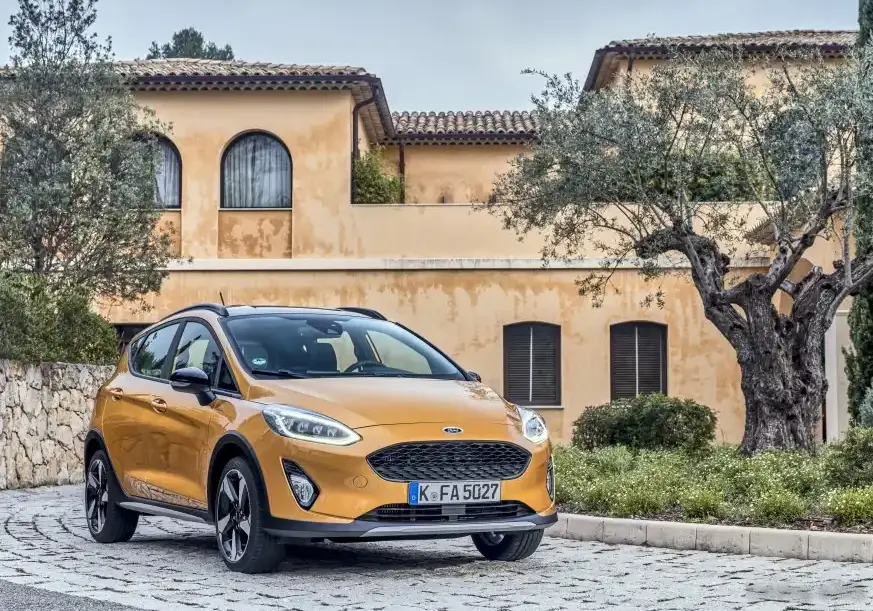
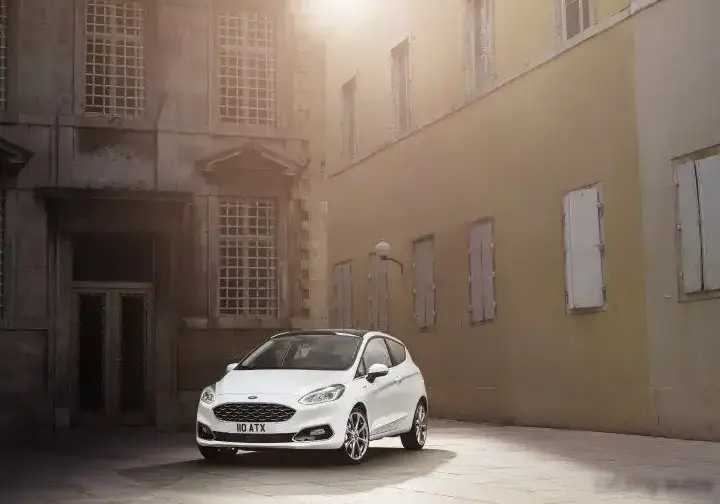
The Ford Fiesta Mk8, launched in July 2017, marked a significant step forward for Ford’s popular supermini. The three-door 1.1-liter (70 horsepower) variant served as the entry point to the Mk8 range, specifically targeting buyers who prioritized affordability and fuel efficiency. Production of this particular configuration ran from July 2017 through October 2019. Within the broader Mk8 Fiesta lineup – which included the more sophisticated 1.0 EcoBoost engines and higher trim levels – the 1.1 offered a more basic, yet practical, option for everyday urban driving. It was a crucial model for markets where a lower initial purchase price was a primary consideration.
Powertrain & Engine Architecture
At the core of this Fiesta variant lies the 1.1-liter Duratec three-cylinder engine, identified by engine codes XPJA, XPJB, XPJC, and XPJD. This engine is naturally aspirated, employing direct fuel injection and a double overhead camshaft (DOHC) valvetrain equipped with Twin Independent Variable Camshaft Timing (Ti-VCT). The Ti-VCT system dynamically adjusts valve timing to optimize engine performance and fuel economy throughout its operating range. The engine generates 70 horsepower at 5000-6500 rpm and 110 Nm (81.13 lb-ft) of torque at 3500 rpm. Its compact size and lightweight construction contribute to the Fiesta’s overall efficiency. Power is delivered to the front wheels through a five-speed manual transmission, a choice made to maintain simplicity and cost-effectiveness, aligning with the entry-level positioning of this trim.
Driving Characteristics
The 1.1-liter Fiesta delivers a predictable, though not particularly sporty, driving experience. Acceleration from 0-60 mph takes around 14.2 seconds, with a top speed limited to 99.42 mph. The engine’s modest power output requires frequent gear changes to maintain momentum, especially when overtaking or tackling inclines. The five-speed manual transmission features relatively short gear ratios, designed to keep the engine operating within its optimal power band. Compared to the 1.0 EcoBoost variants, the 1.1 feels noticeably less responsive, but it offers a smoother, more linear power delivery. The lighter engine weight contributes to nimble handling, making it well-suited for navigating urban environments.
Equipment & Trim Levels
The 1.1-liter Fiesta typically came equipped with essential features. Standard equipment generally included power-assisted steering, ABS brakes, front airbags, and a basic audio system with Bluetooth connectivity. Interior upholstery was typically cloth, and the dashboard featured a simple, functional layout. Optional extras included air conditioning, alloy wheels, and upgraded audio systems. Trim levels varied depending on the market, but the 1.1 generally represented the base model, with fewer cosmetic enhancements compared to higher-specification versions.
Chassis & Braking
The Fiesta Mk8 utilizes a McPherson strut front suspension and a semi-independent elastic beam rear suspension. This configuration strikes a balance between ride comfort and handling. The front brakes are ventilated discs, while the rear brakes are drums. This setup was selected to minimize cost and weight. A stabilizer bar is incorporated into the front suspension to reduce body roll during cornering. The steering is electrically assisted, providing light and precise control.
Market Reception & Comparison
The 1.1-liter Fiesta was generally well-received as an affordable and economical city car. Critics praised its fuel efficiency and nimble handling, but acknowledged its lack of outright performance. Compared to the 1.0 EcoBoost models, the 1.1 offered lower running costs but sacrificed performance and refinement. The 1.0 EcoBoost, while more expensive, provided a significantly more engaging driving experience. The 1.1’s simplicity also suggested potentially lower maintenance costs, making it an appealing option for budget-conscious buyers.
Legacy
The 1.1-liter Fiesta Mk8 has proven to be a relatively reliable powertrain. The Duratec engine is known for its durability, and the straightforward mechanical design minimizes the potential for major issues. In the used car market, these models remain popular due to their affordability and fuel efficiency. However, prospective buyers should be aware of the engine’s limited power output and the basic level of equipment. Overall, the 1.1-liter Fiesta Mk8 represents a practical and economical choice for those seeking a dependable and affordable supermini.