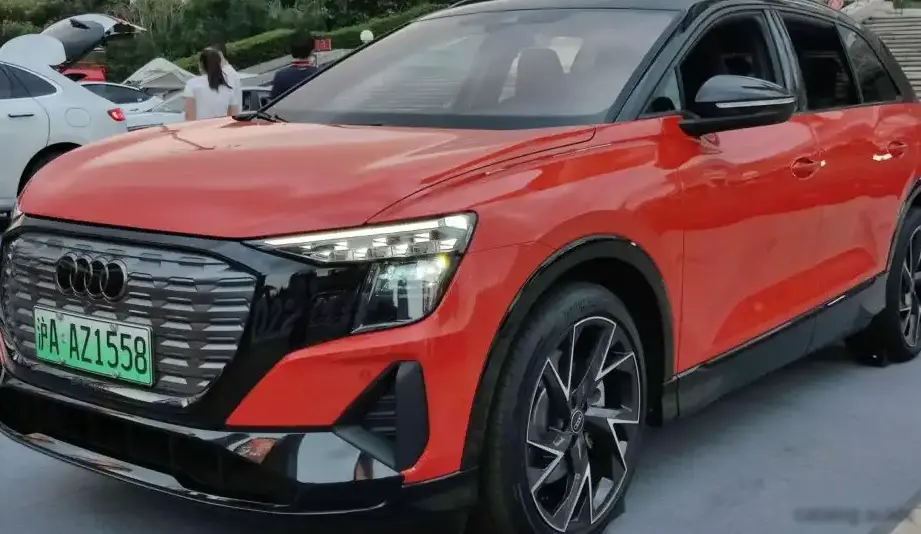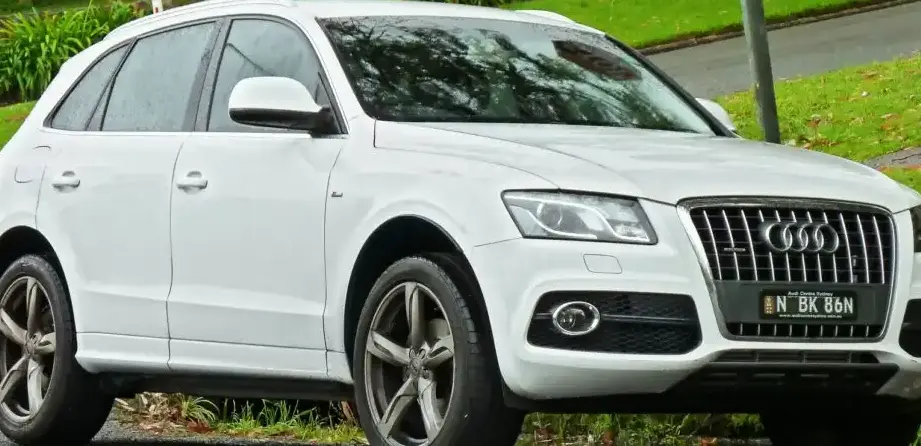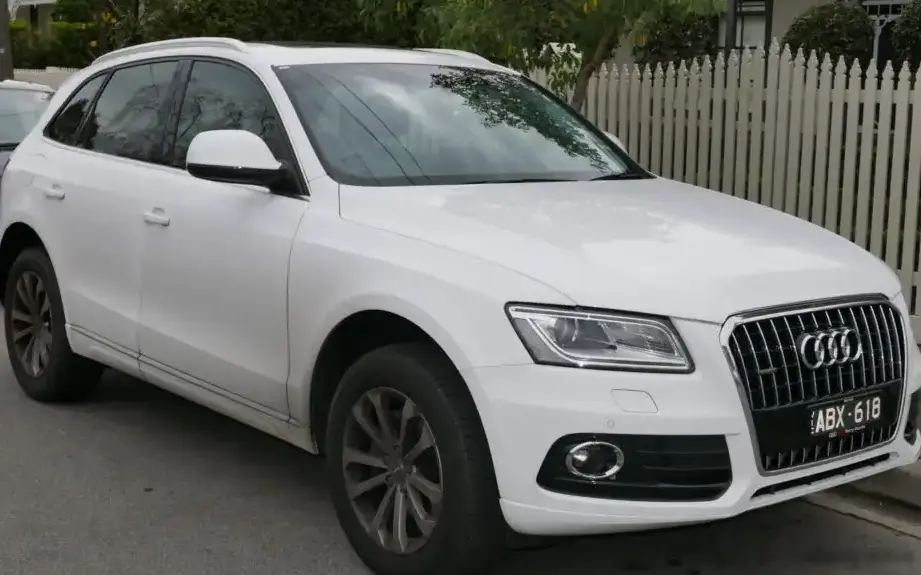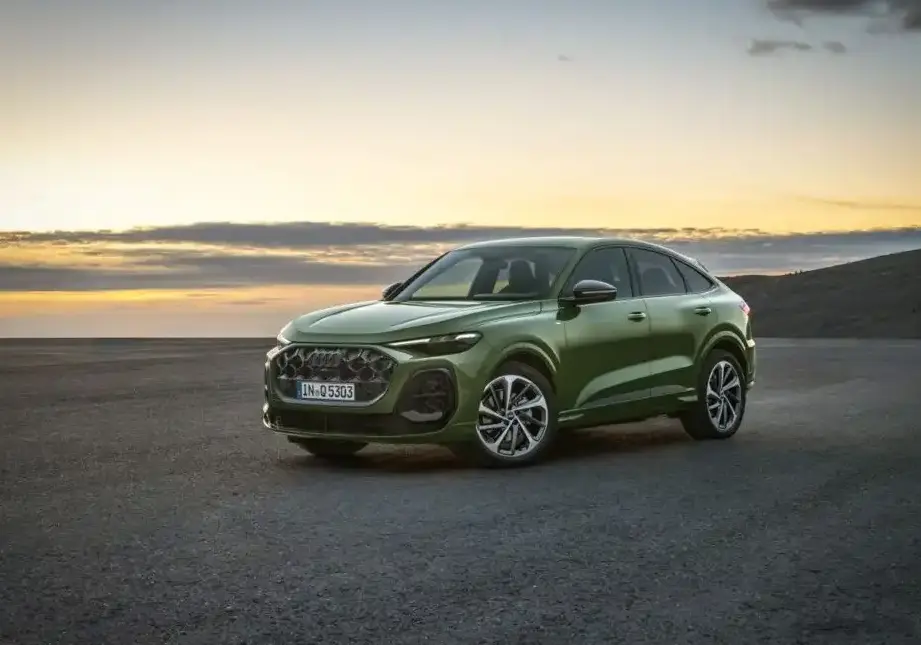
The Audi Q5 III Sportback (GU) 2.0 TFSI quattro S tronic represents a significant iteration in Audi’s popular luxury compact SUV lineup. Introduced in April 2025, this variant combines a potent turbocharged four-cylinder engine with Audi’s renowned quattro all-wheel-drive system and a quick-shifting S tronic dual-clutch transmission. Positioned as a mid-range offering within the Q5 Sportback family, it aims to deliver a balance of performance, efficiency, and practicality for the American consumer. The “GU” designation refers to a comprehensive mid-cycle update, bringing styling refinements and updated technology to the already successful Q5 platform.
Technical Specifications
| Brand | Audi |
| Model | Q5 |
| Generation | Q5 III Sportback (GU) |
| Type (Engine) | 2.0 TFSI (268 Hp) quattro S tronic |
| Start of production | April, 2025 |
| Powertrain Architecture | Internal Combustion engine |
| Body type | SUV |
| Seats | 5 |
| Doors | 5 |
| Fuel consumption (economy) – urban (EPA) | 10.7 l/100 km (22 US mpg, 26.4 UK mpg, 9.3 km/l) |
| Fuel consumption (economy) – extra urban (EPA) | 7.8 l/100 km (30.2 US mpg, 36.2 UK mpg, 12.8 km/l) |
| Fuel consumption (economy) – combined (EPA) | 9.4 l/100 km (25 US mpg, 30.1 UK mpg, 10.6 km/l) |
| Fuel Type | Petrol (Gasoline) |
| Acceleration 0 – 100 km/h | 6.2 sec |
| Acceleration 0 – 62 mph | 6.2 sec |
| Acceleration 0 – 60 mph | 5.8 sec |
| Maximum speed | 210 km/h (130.49 mph), Electronically limited |
| Emission standard | SULEV |
| Weight-to-power ratio | 7.3 kg/Hp, 137.1 Hp/tonne |
| Weight-to-torque ratio | 4.9 kg/Nm, 204.6 Nm/tonne |
| Power | 268 Hp |
| Power per litre | 135.1 Hp/l |
| Torque | 400 Nm (295.02 lb.-ft.) |
| Engine layout | Front, Longitudinal |
| Engine displacement | 1984 cm3 (121.07 cu. in.) |
| Number of cylinders | 4 |
| Engine configuration | Inline |
| Cylinder Bore | 82.5 mm (3.25 in.) |
| Piston Stroke | 92.8 mm (3.65 in.) |
| Compression ratio | 10.5:1 |
| Number of valves per cylinder | 4 |
| Fuel injection system | Direct injection |
| Engine aspiration | Turbocharger, Intercooler |
| Valvetrain | DOHC |
| Engine systems | Start & Stop System |
| Kerb Weight | 1955 kg (4310.04 lbs.) |
| Trunk (boot) space – minimum | 719 l (25.39 cu. ft.) |
| Trunk (boot) space – maximum | 1504 l (53.11 cu. ft.) |
| Fuel tank capacity | 65 l (17.17 US gal | 14.3 UK gal) |
| Permitted trailer load with brakes (12%) | 1996 kg (4400.43 lbs.) |
| Length | 4717 mm (185.71 in.) |
| Width | 1900 mm (74.8 in.) |
| Width including mirrors | 2154 mm (84.8 in.) |
| Height | 1664 mm (65.51 in.) |
| Wheelbase | 2817 mm (110.91 in.) |
| Drag coefficient (Cd) | 0.35 |
| Minimum turning circle (turning diameter) | 11.8 m (38.71 ft.) |
| Drivetrain Architecture | The Internal combustion engine (ICE) drives the front wheels permanently, and the rear wheels are driven through an electrically or mechanically operated clutch if necessary. |
| Drive wheel | All wheel drive (4×4) |
| Number of gears and type of gearbox | 7 gears, automatic transmission S tronic |
| Front suspension | Coil spring, Independent multi-link suspension, Transverse stabilizer, Air Suspension – Optional |
| Rear suspension | Independent multi-link spring suspension with stabilizer, Air Suspension – Optional |
| Front brakes | Ventilated discs, 338 mm |
| Rear brakes | Ventilated discs, 330 mm |
| Assisting systems | ABS (Anti-lock braking system) |
| Steering type | Steering rack and pinion |
| Power steering | Electric Steering |
| Tires size | 235/55 R19; 255/45 R20 |
| Wheel rims size | 8J x 19; 8J x 20 |
Powertrain & Engine Architecture
At the heart of the Q5 III Sportback 2.0 TFSI lies the EA888 1.984-liter inline-four cylinder engine. This engine, often referred to by its internal codes (such as DZG or similar depending on specific market calibration), is a staple in the Volkswagen Group’s powertrain lineup. It utilizes direct fuel injection, a single turbocharger with an intercooler, and a dual overhead camshaft (DOHC) valvetrain with four valves per cylinder. The turbocharger provides a significant boost in power and torque, contributing to the engine’s responsive nature. The S tronic seven-speed dual-clutch transmission is a key component, offering incredibly fast and smooth gear changes. This transmission allows for both fully automatic operation and manual control via steering wheel-mounted paddles. The quattro all-wheel-drive system employs a multi-plate clutch to distribute power between the front and rear axles as needed, enhancing traction and stability in various driving conditions.
Driving Characteristics
The 268 horsepower and 295 lb-ft of torque delivered by the 2.0 TFSI engine, coupled with the S tronic transmission and quattro all-wheel drive, result in a spirited driving experience. Acceleration from 0-60 mph takes approximately 5.8 seconds. The S tronic transmission’s quick shifts contribute to a feeling of immediacy, while the quattro system provides confident handling, particularly in inclement weather. Compared to lower-powered Q5 variants, such as those with the 2.0 TFSI producing around 200 hp, this version offers a noticeable performance upgrade. While not as overtly sporty as the SQ5 with its V6 engine, the 2.0 TFSI quattro S tronic provides ample power for everyday driving and highway passing. The gear ratios are tuned for a balance of acceleration and fuel efficiency, with higher gears optimized for comfortable cruising.
Equipment & Trim Levels
The Q5 III Sportback 2.0 TFSI quattro S tronic typically comes well-equipped as standard. Features generally include leather upholstery, a panoramic sunroof, a premium sound system, and a comprehensive suite of driver-assistance technologies such as adaptive cruise control, lane-keeping assist, and automatic emergency braking. The infotainment system features a large touchscreen display with Apple CarPlay and Android Auto compatibility. Optional extras often include upgraded leather packages, a head-up display, and a more powerful Bang & Olufsen sound system. The Sportback body style itself offers a more coupe-like profile compared to the standard Q5 SUV, with a sloping roofline that enhances its aesthetic appeal.
Chassis & Braking
The Q5 III Sportback utilizes a sophisticated suspension system designed to balance comfort and handling. The front suspension features a multi-link setup with coil springs, while the rear suspension also employs a multi-link design. Optional air suspension is available, providing adjustable ride height and further enhancing ride comfort. Braking duties are handled by ventilated discs on all four wheels, providing ample stopping power. The ABS (Anti-lock Braking System) and electronic stability control systems work in conjunction to maintain control during hard braking or challenging driving conditions. Stabilizer bars are fitted to both the front and rear axles to minimize body roll during cornering.
Market Reception & Comparison
The Audi Q5 has consistently been a popular choice in the luxury compact SUV segment, and the 2.0 TFSI quattro S tronic variant has been well-received by critics and consumers alike. It’s often praised for its refined interior, comfortable ride, and strong performance. Compared to competitors such as the BMW X3 and Mercedes-Benz GLC, the Q5 offers a compelling combination of features and value. Fuel economy is competitive for its class, with combined EPA ratings around 25 mpg. Reliability has generally been good, although some owners have reported minor issues with the infotainment system.
Legacy
The EA888 engine family, including the 2.0 TFSI variant found in the Q5 III Sportback, has proven to be a durable and reliable powertrain when properly maintained. The S tronic transmission is also known for its longevity. As the Q5 III Sportback ages, it is expected to maintain its appeal in the used car market due to its reputation for quality, performance, and luxury. Regular maintenance, including oil changes and timely servicing of the turbocharger and transmission, will be crucial to ensuring the long-term reliability of this vehicle.