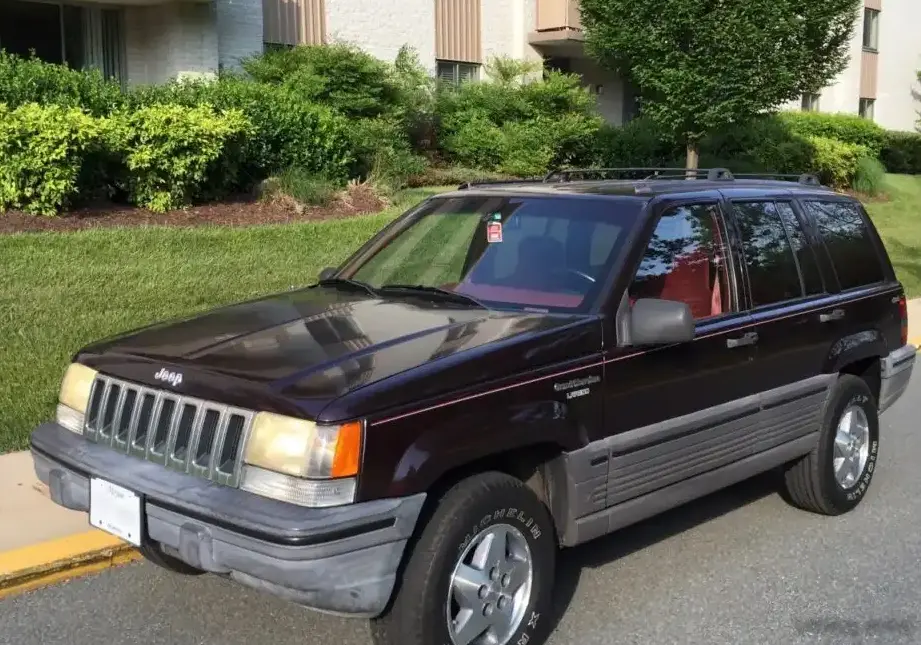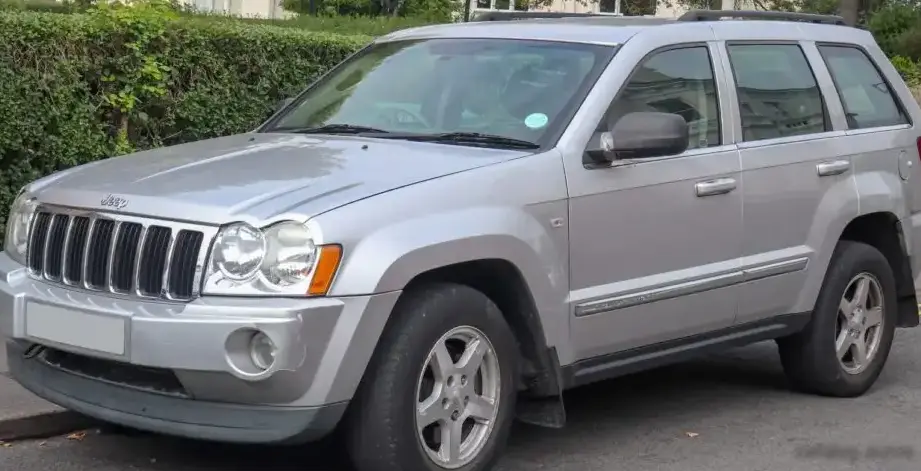
The Jeep Grand Cherokee III (WK) 3.7i V6 4×4 Automatic, produced from 2008 to 2010, represented the entry point into the redesigned WK generation of Jeep’s flagship SUV. Positioned below the more powerful 4.7L V8 and the later 5.7L HEMI models, the 3.7i offered a balance of capability and affordability for buyers seeking a mid-size SUV with Jeep’s renowned four-wheel-drive system. This variant was primarily sold in North America, catering to customers who prioritized fuel efficiency and a comfortable ride over outright performance. It was built on the WH platform, a significant upgrade from the previous generation, offering improved refinement and technology.
Technical Specifications
| Brand | Jeep |
| Model | Grand Cherokee |
| Generation | Grand Cherokee III (WK) |
| Type (Engine) | 3.7i V6 (201 Hp) 4×4 Automatic |
| Start of production | 2008 |
| End of production | 2010 |
| Powertrain Architecture | Internal Combustion engine |
| Body type | SUV |
| Seats | 5 |
| Doors | 5 |
| Fuel consumption (urban) | 17 l/100 km (13.8 US mpg, 16.6 UK mpg, 5.9 km/l) |
| Fuel consumption (extra urban) | 10.2 l/100 km (23.1 US mpg, 27.7 UK mpg, 9.8 km/l) |
| Fuel consumption (combined) | 12.7 l/100 km (18.5 US mpg, 22.2 UK mpg, 7.9 km/l) |
| Fuel Type | Petrol (Gasoline) |
| Power | 201 Hp @ 5100 rpm |
| Power per litre | 54.3 Hp/l |
| Torque | 315 Nm @ 3900 rpm (232.33 lb.-ft. @ 3900 rpm) |
| Engine layout | Front, Longitudinal |
| Engine Model/Code | EKG |
| Engine displacement | 3701 cm3 (225.85 cu. in.) |
| Number of cylinders | 6 |
| Engine configuration | V-engine |
| Cylinder Bore | 93 mm (3.66 in.) |
| Piston Stroke | 90.8 mm (3.57 in.) |
| Compression ratio | 9.6:1 |
| Number of valves per cylinder | 2 |
| Fuel injection system | Multi-port manifold injection |
| Engine aspiration | Naturally aspirated engine |
| Valvetrain | SOHC |
| Engine oil capacity | 4.7 l (4.97 US qt | 4.14 UK qt) |
| Coolant capacity | 11.8 l (12.47 US qt | 10.38 UK qt) |
| Fuel tank capacity | 80 l (21.13 US gal | 17.6 UK gal) |
| Length | 4750 mm (187.01 in.) |
| Width | 1870 mm (73.62 in.) |
| Height | 1740 mm (68.5 in.) |
| Wheelbase | 2781 mm (109.49 in.) |
| Front track | 1575 mm (62.01 in.) |
| Rear track | 1575 mm (62.01 in.) |
| Ride height (ground clearance) | 180 mm (7.09 in.) |
| Drag coefficient (Cd) | 0.41 |
| Minimum turning circle | 11.3 m (37.07 ft.) |
| Approach angle | 23.3° |
| Departure angle | 20° |
| Ramp-over angle | 20° |
| Drive wheel | All wheel drive (4×4) |
| Number of gears | 5 |
| Gearbox type | Automatic transmission |
| Front brakes | Ventilated discs |
| Rear brakes | Ventilated discs |
| Assisting systems | ABS (Anti-lock braking system) |
| Steering type | Steering rack and pinion |
| Power steering | Hydraulic Steering |
| Tires size | 245/65 R17 |
| Wheel rims size | 17 |
Powertrain & Engine Architecture
The heart of the Grand Cherokee 3.7i was the EKG 3.7-liter V6 engine. This engine, part of Chrysler’s Phoenix engine family, featured a 60-degree V-angle and a single overhead camshaft (SOHC) design per cylinder bank. It utilized a multi-port fuel injection system, delivering fuel directly into the intake ports. The engine produced 201 horsepower at 5,100 rpm and 232 lb-ft of torque at 3,900 rpm. The 3.7L engine was known for its relatively smooth operation, but lacked the robust low-end torque of the larger V8 options. It was paired exclusively with a five-speed automatic transmission (typically the 545RFE) designed to provide comfortable shifts and adequate performance for everyday driving. The transmission was calibrated for fuel efficiency and smooth operation, rather than aggressive acceleration.
Driving Characteristics
The 3.7i Grand Cherokee offered a noticeably different driving experience compared to its V8 siblings. Acceleration was adequate for most situations, but not particularly brisk. The automatic transmission, while smooth, could feel somewhat hesitant during quick overtaking maneuvers. The gear ratios were optimized for highway cruising and fuel economy, rather than maximizing performance. The 4×4 system, a key Jeep attribute, provided confident traction in various conditions, but the 3.7L engine’s power limitations meant that off-road performance was more limited than with the more powerful engines. The suspension was tuned for comfort, providing a relatively smooth ride on paved roads, but it wasn’t as sporty or controlled as some competitors.
Equipment & Trim Levels
The 3.7i Grand Cherokee typically came standard with features such as air conditioning, power windows and locks, a basic audio system, and cloth upholstery. Higher trim levels, such as the Limited, added features like leather upholstery, heated front seats, a premium audio system, and alloy wheels. Optional extras included a sunroof, navigation system, and rear-seat entertainment system. The interior design was functional and relatively straightforward, prioritizing usability over luxury. The base model offered a practical and well-equipped interior, while the higher trims provided a more refined and comfortable experience.
Chassis & Braking
The WK Grand Cherokee featured an independent front suspension with coil springs and a multi-link rear suspension. The 3.7i model typically used ventilated disc brakes on all four wheels, providing adequate stopping power for its weight class. Anti-lock brakes (ABS) were standard. The suspension was tuned to provide a comfortable ride, but the relatively soft setup could result in some body roll during cornering. Stabilizer bars were included to help reduce body roll, but they were typically smaller in diameter compared to those found on the V8 models.
Market Reception & Comparison
The 3.7i Grand Cherokee was generally well-received as an affordable and capable SUV. Critics praised its comfortable ride and standard features, but noted its lack of outright performance compared to the V8 models. Fuel economy was a key selling point, as the 3.7L V6 offered significantly better gas mileage than the larger engines. Compared to competitors like the Ford Explorer and Chevrolet Trailblazer, the Grand Cherokee 3.7i offered a more refined interior and a more capable four-wheel-drive system. However, it was often criticized for its relatively slow acceleration and somewhat dated interior design.
Legacy
The 3.7L V6 engine in the WK Grand Cherokee proved to be reasonably reliable, although some owners have reported issues with oil consumption and sensor failures. The five-speed automatic transmission is generally considered durable, but regular maintenance is essential to ensure its longevity. Today, the 3.7i Grand Cherokee represents an affordable entry point into Grand Cherokee ownership. While it may not offer the same performance or prestige as the V8 models, it remains a capable and comfortable SUV for everyday use. Its lower price point and relatively simple mechanicals make it an attractive option for budget-conscious buyers seeking a reliable and versatile vehicle.