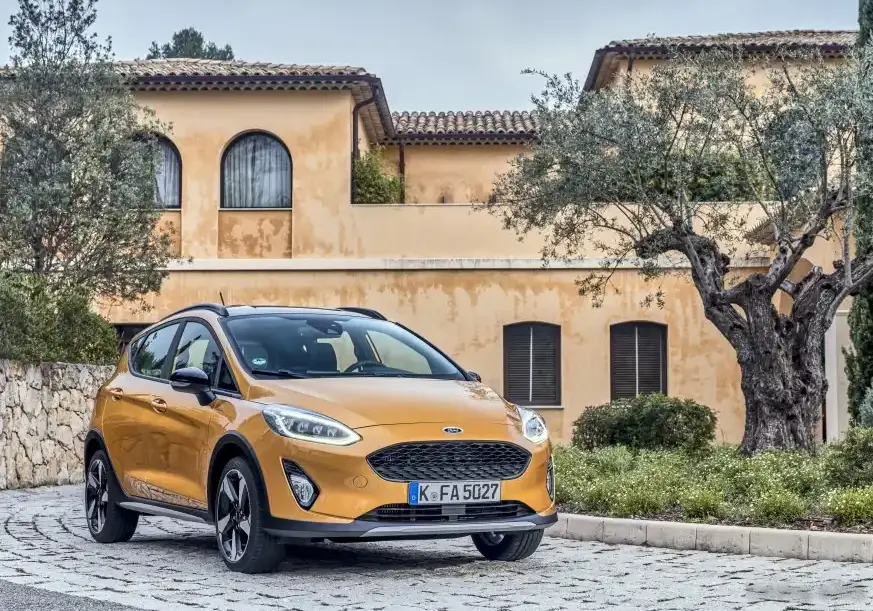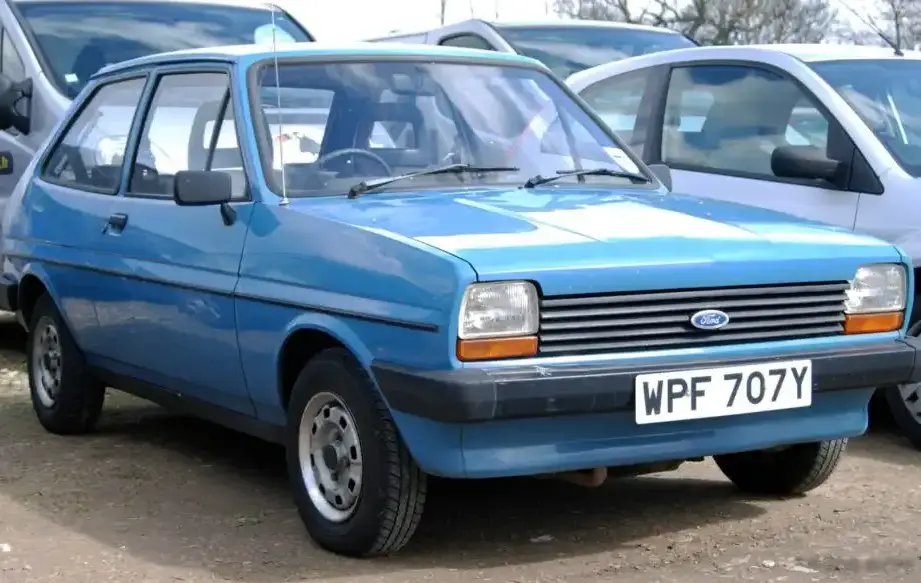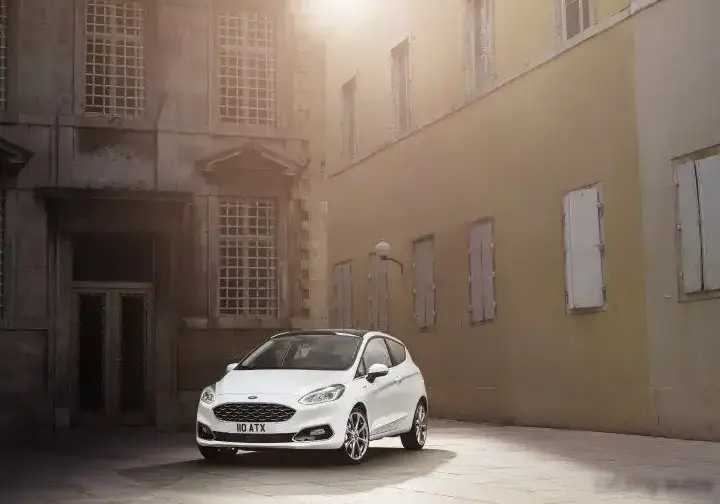
The Ford Fiesta Mk8, launched in 2017, represented a significant evolution for Ford’s long-running supermini. Within the Mk8 range, the 3-door 1.1-liter 70 horsepower Start-Stop variant occupied the entry-level position, aimed at buyers prioritizing affordability and fuel efficiency. Production of this specific configuration ran from July 2017 to October 2019. It was positioned as the most accessible version of the eighth-generation Fiesta, competing directly with other small-displacement city cars like the Volkswagen Polo, Opel Corsa, and Renault Clio. This model was primarily sold in Europe, where smaller, more economical vehicles are highly sought after.
Technical Specifications
| Brand | Ford |
| Model | Fiesta |
| Generation | Fiesta VIII (Mk8) 3 door |
| Type (Engine) | 1.1 (70 Hp) Start-Stop |
| Start of production | July, 2017 |
| End of production | October, 2019 |
| Powertrain Architecture | Internal Combustion engine |
| Body type | Hatchback |
| Seats | 5 |
| Doors | 3 |
| Fuel consumption (urban) | 5.6 l/100 km (42 US mpg, 50.4 UK mpg, 17.9 km/l) |
| Fuel consumption (extra urban) | 3.7 l/100 km (63.6 US mpg, 76.3 UK mpg, 27 km/l) |
| Fuel consumption (combined) | 4.4 l/100 km (53.5 US mpg, 64.2 UK mpg, 22.7 km/l) |
| CO2 emissions | 101 g/km |
| Fuel Type | Petrol (Gasoline) |
| Acceleration 0 – 100 km/h | 14.9 sec |
| Acceleration 0 – 62 mph | 14.9 sec |
| Acceleration 0 – 60 mph | 14.2 sec |
| Maximum speed | 160 km/h (99.42 mph) |
| Emission standard | Euro 6 |
| Weight-to-power ratio | 14.8 kg/Hp, 67.4 Hp/tonne |
| Weight-to-torque ratio | 9.4 kg/Nm, 106 Nm/tonne |
| Power | 70 Hp @ 5000-6500 rpm |
| Power per litre | 64.6 Hp/l |
| Torque | 110 Nm @ 3500 rpm (81.13 lb.-ft. @ 3500 rpm) |
| Engine layout | Front, Transverse |
| Engine Model/Code | XPJA, XPJB, XPJC, XPJD |
| Engine displacement | 1084 cm3 (66.15 cu. in.) |
| Number of cylinders | 3 |
| Engine configuration | Inline |
| Cylinder Bore | 73 mm (2.87 in.) |
| Piston Stroke | 86.3 mm (3.4 in.) |
| Compression ratio | 12:1 |
| Number of valves per cylinder | 4 |
| Fuel injection system | Direct injection |
| Engine aspiration | Naturally aspirated engine |
| Valvetrain | DOHC, Ti-VCT |
| Engine oil capacity | 4.1 l (4.33 US qt | 3.61 UK qt) |
| Coolant | 5.5 l (5.81 US qt | 4.84 UK qt) |
| Kerb Weight | 1038-1113 kg (2288.4 – 2453.74 lbs.) |
| Max. weight | 1605-1620 kg (3538.42 – 3571.49 lbs.) |
| Max load | 507-567 kg (1117.74 – 1250.02 lbs.) |
| Trunk (boot) space – minimum | 292 l (10.31 cu. ft.) |
| Trunk (boot) space – maximum | 1093 l (38.6 cu. ft.) |
| Fuel tank capacity | 42 l (11.1 US gal | 9.24 UK gal) |
| Max. roof load | 50 kg (110.23 lbs.) |
| Permitted trailer load with brakes (12%) | 750 kg (1653.47 lbs.) |
| Permitted trailer load without brakes | 555 kg (1223.57 lbs.) |
| Permitted towbar download | 65 kg (143.3 lbs.) |
| Length | 4040-4065 mm (159.06 – 160.04 in.) |
| Width | 1735 mm (68.31 in.) |
| Width with mirrors folded | 1783 mm (70.2 in.) |
| Width including mirrors | 1941 mm (76.42 in.) |
| Height | 1466-1476 mm (57.72 – 58.11 in.) |
| Wheelbase | 2493 mm (98.15 in.) |
| Drag coefficient (Cd) | 0.32 |
| Drivetrain Architecture | The Internal combustion engine (ICE) drives the front wheels of the vehicle. |
| Drive wheel | Front wheel drive |
| Number of gears and type of gearbox | 5 gears, manual transmission |
| Front suspension | Independent, type McPherson with coil spring and anti-roll bar |
| Rear suspension | Semi-independent, coil spring, Elastic beam |
| Front brakes | Ventilated discs |
| Rear brakes | Drum |
| Assisting systems | ABS (Anti-lock braking system) |
| Steering type | Steering rack and pinion |
| Power steering | Electric Steering |
| Tires size | 195/60 R15; 195/55 R16; 205/45 R17; 205/40 R18 |
| Wheel rims size | 6J x 15; 6.5J x 16; 7J x 17; 7J x 18 |
Powertrain & Engine Architecture
The heart of this Fiesta variant is the 1.1-liter Duratec three-cylinder gasoline engine, specifically utilizing engine codes XPJA, XPJB, XPJC, or XPJD depending on the specific market and production date. This engine is a naturally aspirated unit featuring direct fuel injection and a double overhead camshaft (DOHC) valvetrain with Twin Independent Variable Camshaft Timing (Ti-VCT). The Ti-VCT system optimizes valve timing for improved performance and fuel economy. The engine produces 70 horsepower at 5000-6500 rpm and 110 Nm (81.13 lb-ft) of torque at 3500 rpm. The engine’s compact size and lightweight construction contribute to the Fiesta’s overall efficiency. The engine is paired with a 5-speed manual transmission, delivering power to the front wheels. The Start-Stop system automatically shuts off the engine when the vehicle is stationary (e.g., at traffic lights) to further reduce fuel consumption and emissions.
Driving Characteristics
The 1.1-liter Fiesta offers a predictable, if not particularly exhilarating, driving experience. With 70 horsepower, acceleration is modest, taking approximately 14.9 seconds to reach 62 mph (100 km/h). The engine feels most comfortable in city driving, where its torque is sufficient for everyday maneuvers. The 5-speed manual transmission is well-matched to the engine’s characteristics, allowing drivers to keep the engine in its optimal power band. Compared to higher-output Fiesta variants like the 1.0 EcoBoost or 1.5-liter engines, this version feels noticeably slower, especially when fully loaded or tackling uphill climbs. However, the lighter engine weight contributes to nimble handling and a relatively comfortable ride.
Equipment & Trim Levels
The 1.1-liter Fiesta typically came equipped with basic, but essential, features. Standard equipment generally included air conditioning, power front windows, a basic audio system with Bluetooth connectivity, and ABS brakes. Safety features like Electronic Stability Control (ESC) were also standard. Interior upholstery was typically cloth, and the dashboard featured a simple, functional design. Optional extras included alloy wheels, upgraded audio systems, and parking sensors. Trim levels varied slightly by market, but this engine was generally offered in the base “Style” or “Active” trims.
Chassis & Braking
The Fiesta Mk8 utilizes a McPherson strut front suspension and a semi-independent Elastic Beam rear suspension. This setup provides a good balance between ride comfort and handling. The front brakes are ventilated discs, while the rear brakes are drums, a cost-saving measure typical of entry-level models. The steering is electric power-assisted, providing light and precise control. The relatively low weight of the 1.1-liter Fiesta contributes to its agility and responsiveness.
Market Reception & Comparison
The 1.1-liter Fiesta was generally well-received as an affordable and economical city car. Critics praised its fuel efficiency and nimble handling, but noted its lack of outright performance. Compared to the more powerful Fiesta variants, the 1.1-liter model offered significantly lower running costs but sacrificed acceleration and overall driving enjoyment. The 1.0 EcoBoost engine, while more expensive, provided a noticeable performance upgrade with comparable fuel economy. The 1.1-liter version appealed to buyers prioritizing budget-friendliness and practicality over sporty driving dynamics.
Legacy
The 1.1-liter Fiesta Mk8 remains a popular choice in the used car market, particularly for first-time drivers or those seeking a reliable and economical runabout. The Duratec engine is known for its durability and relatively low maintenance costs. While not as technologically advanced as some of its rivals, the Fiesta Mk8 1.1 offers a solid and dependable driving experience. Common issues are generally limited to wear-and-tear items, and the engine itself is considered quite robust. Its continued availability and affordability make it a viable option for buyers on a tight budget.