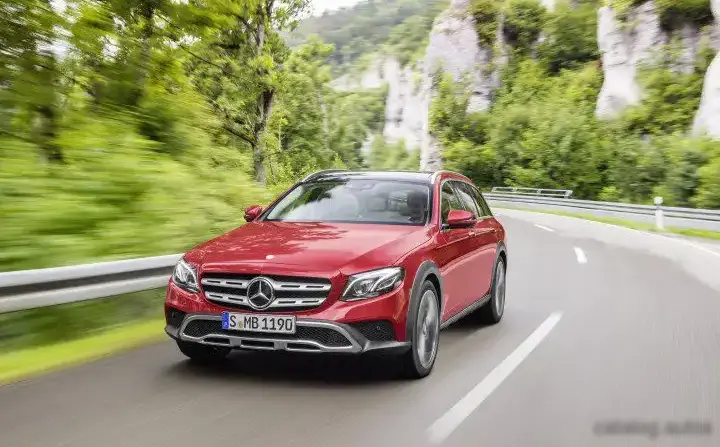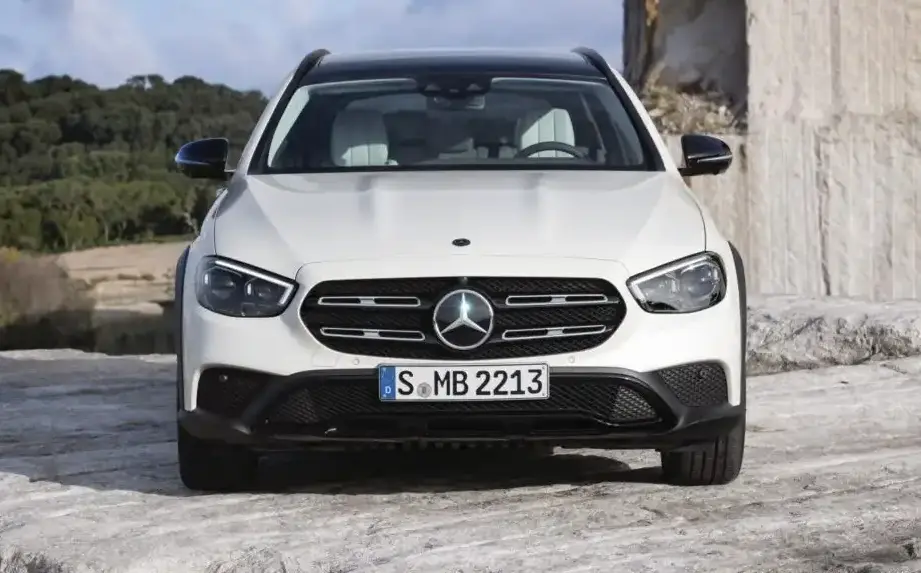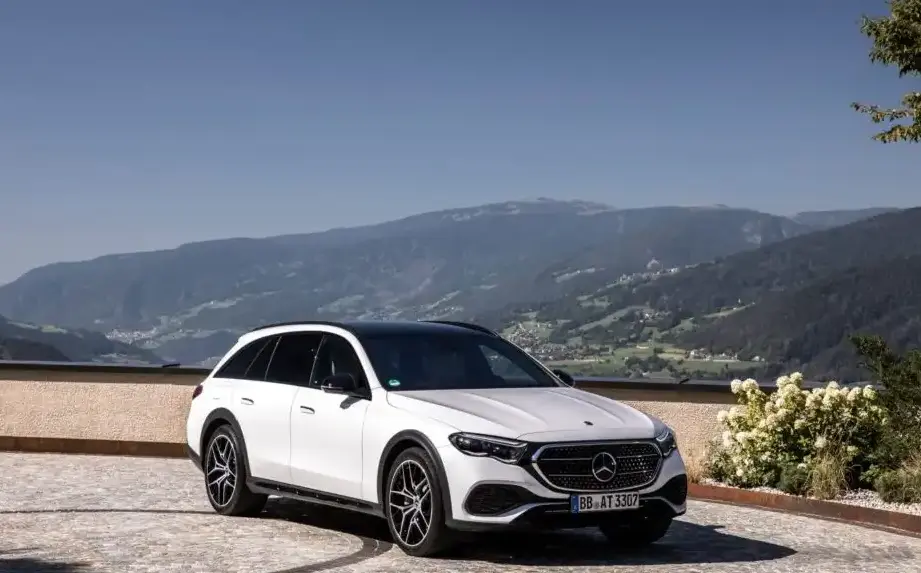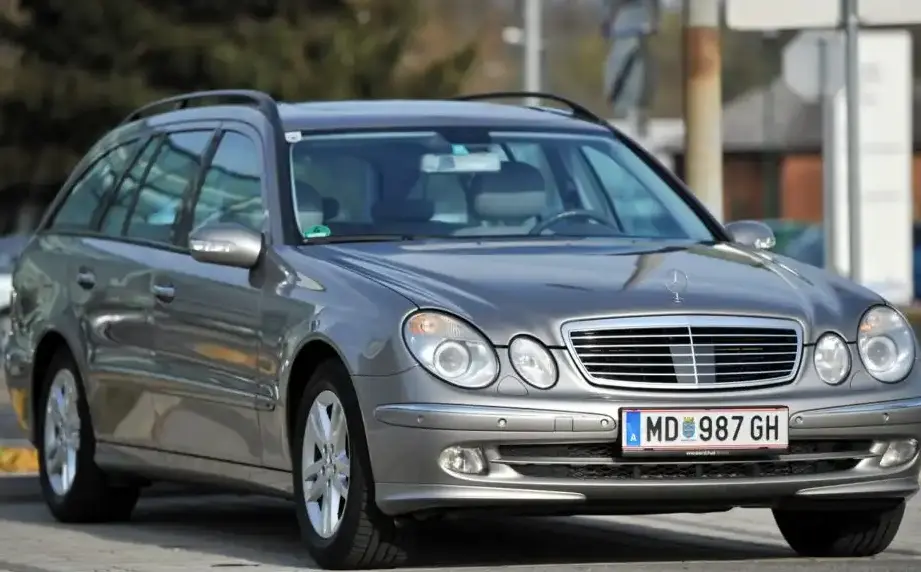
The Mercedes-Benz E-Class T-modell (S211) E 240, produced between 2003 and 2006, represents a compelling blend of practicality and luxury within the mid-size executive wagon segment. Positioned as a mid-range offering in the S211 series, which spanned from 2003 to 2009, the E 240 aimed to provide a balance between performance, fuel efficiency, and affordability compared to its more powerful siblings like the E 320 or the performance-oriented E 55 AMG. It served as a popular choice for families and individuals seeking a versatile vehicle with the renowned Mercedes-Benz build quality and refinement, primarily marketed towards European buyers where the wagon body style held significant appeal.
Technical Specifications
| Brand | Mercedes-Benz |
| Model | E-Class |
| Generation | E-Class T-modell (S211) |
| Type (Engine) | E 240 (177 Hp) |
| Start of production | 2003 |
| End of production | 2006 |
| Powertrain Architecture | Internal Combustion engine |
| Body type | Station wagon (estate) |
| Seats | 5 |
| Doors | 5 |
| Fuel consumption (urban) | 16.5 l/100 km (14.3 US mpg, 17.1 UK mpg, 6.1 km/l) |
| Fuel consumption (extra urban) | 8.3 l/100 km (28.3 US mpg, 34 UK mpg, 12 km/l) |
| Fuel consumption (combined) | 11.4 l/100 km (20.6 US mpg, 24.8 UK mpg, 8.8 km/l) |
| Fuel Type | Petrol (Gasoline) |
| Acceleration 0 – 100 km/h | 9.4 sec |
| Acceleration 0 – 62 mph | 9.4 sec |
| Acceleration 0 – 60 mph | 8.9 sec |
| Maximum speed | 223 km/h (138.57 mph) |
| Weight-to-power ratio | 9.7 kg/Hp, 102.9 Hp/tonne |
| Weight-to-torque ratio | 7.2 kg/Nm, 139.5 Nm/tonne |
| Power | 177 Hp @ 5700 rpm |
| Power per litre | 68.2 Hp/l |
| Torque | 240 Nm @ 4500 rpm (177.01 lb.-ft. @ 4500 rpm) |
| Engine layout | Front, Longitudinal |
| Engine Model/Code | M 112.913 |
| Engine displacement | 2597 cm3 (158.48 cu. in.) |
| Number of cylinders | 6 |
| Engine configuration | V-engine |
| Cylinder Bore | 89.9 mm (3.54 in.) |
| Piston Stroke | 68.2 mm (2.69 in.) |
| Compression ratio | 10.5:1 |
| Number of valves per cylinder | 3 |
| Fuel injection system | Multi-port manifold injection |
| Engine aspiration | Naturally aspirated engine |
| Valvetrain | OHC |
| Engine oil capacity | 8 l (8.45 US qt | 7.04 UK qt) |
| Coolant | 10 l (10.57 US qt | 8.8 UK qt) |
| Kerb Weight | 1720 kg (3791.95 lbs.) |
| Max. weight | 2295 kg (5059.61 lbs.) |
| Max load | 575 kg (1267.66 lbs.) |
| Trunk (boot) space – minimum | 690 l (24.37 cu. ft.) |
| Trunk (boot) space – maximum | 1950 l (68.86 cu. ft.) |
| Fuel tank capacity | 70 l (18.49 US gal | 15.4 UK gal) |
| Length | 4850 mm (190.94 in.) |
| Width | 1822 mm (71.73 in.) |
| Height | 1496 mm (58.9 in.) |
| Wheelbase | 2854 mm (112.36 in.) |
| Front track | 1559 mm (61.38 in.) |
| Rear (Back) track | 1552 mm (61.1 in.) |
| Drag coefficient (Cd) | 0.30 |
| Drivetrain Architecture | The Internal combustion engine (ICE) drives the rear wheels of the vehicle. |
| Drive wheel | Rear wheel drive |
| Number of gears and type of gearbox | 6 gears, manual transmission |
| Front suspension | Coil spring |
| Rear suspension | Coil spring |
| Front brakes | Ventilated discs |
| Rear brakes | Disc |
| Assisting systems | ABS (Anti-lock braking system) |
| Steering type | Steering rack and pinion |
| Power steering | Hydraulic Steering |
| Tires size | 225/55 R16 |
| Wheel rims size | 7.5J X 16 |
Powertrain & Engine Architecture
The E 240 T-modell was powered by the M112.913 V6 engine, a 2.6-liter naturally aspirated powerplant. This engine featured a 60-degree V-angle, three valves per cylinder (two intake, one exhaust), and a single overhead camshaft (SOHC) design. The M112 engine family was known for its smooth operation and relatively high specific output. Fuel delivery was handled by a multi-port fuel injection system, providing precise fuel metering for optimal combustion. The engine produced 177 horsepower at 5700 rpm and 240 Nm (177 lb-ft) of torque at 4500 rpm. The standard transmission was a 6-speed manual, although a 5-speed automatic transmission was also available, and was a popular choice for buyers prioritizing comfort and ease of use. The automatic transmission was designed to provide smooth shifts and contribute to the overall refined driving experience.
Driving Characteristics
The E 240 T-modell with the manual transmission offered a reasonably engaging driving experience. Acceleration from 0 to 60 mph took approximately 8.9 seconds, while 0-100 km/h was achieved in 9.4 seconds. While not a sports car, the engine provided adequate power for everyday driving and overtaking maneuvers. The automatic transmission, while sacrificing some responsiveness, offered a more relaxed driving experience, particularly in city traffic. Compared to the E 320, the E 240 felt less powerful, but it also offered better fuel economy. The E 240’s suspension provided a comfortable ride, absorbing bumps and imperfections in the road effectively. The rear-wheel-drive configuration contributed to balanced handling, although it wasn’t as agile as some of its front-wheel-drive competitors.
Equipment & Trim Levels
The E 240 T-modell came standard with a respectable array of features, including automatic climate control, power windows and locks, a multi-function steering wheel, and an audio system. Upholstery typically consisted of cloth or leatherette, with leather being an optional upgrade. Common optional extras included a sunroof, navigation system, premium sound system, and heated seats. Trim levels were relatively simple, with most variations stemming from the addition of optional packages. The overall interior design emphasized luxury and functionality, with a focus on providing a comfortable and refined environment for both driver and passengers.
Chassis & Braking
The S211 E-Class utilized a robust chassis with coil spring suspension at all four corners. The front suspension employed MacPherson struts, while the rear featured a multi-link setup. This configuration provided a good balance between ride comfort and handling. Braking duties were handled by ventilated discs at the front and solid discs at the rear, equipped with ABS (Anti-lock Braking System) as standard. The braking system provided adequate stopping power for the vehicle’s weight and performance capabilities. The steering was a rack-and-pinion system with hydraulic power assistance, offering precise and responsive steering feel.
Market Reception & Comparison
The E 240 T-modell was generally well-received by automotive critics. It was praised for its comfortable ride, spacious interior, and refined driving experience. However, some critics noted that the engine lacked the outright performance of its larger displacement siblings. Compared to the E 320, the E 240 offered better fuel economy (around 20.6 US mpg combined) and a lower purchase price, making it a more accessible option for a wider range of buyers. Reliability was generally good, although like all Mercedes-Benz vehicles of this era, preventative maintenance was crucial to avoid costly repairs.
Legacy
The M112 engine family, including the 2.6-liter variant found in the E 240, has proven to be relatively durable and reliable when properly maintained. Today, the E 240 T-modell can be found on the used car market at relatively affordable prices. While not as sought-after as some of the higher-performance E-Class variants, it remains a practical and comfortable choice for those seeking a well-built and versatile wagon. Common issues with used examples include wear and tear on suspension components, electrical glitches, and potential oil leaks. However, with diligent maintenance, the E 240 T-modell can provide many years of reliable service.