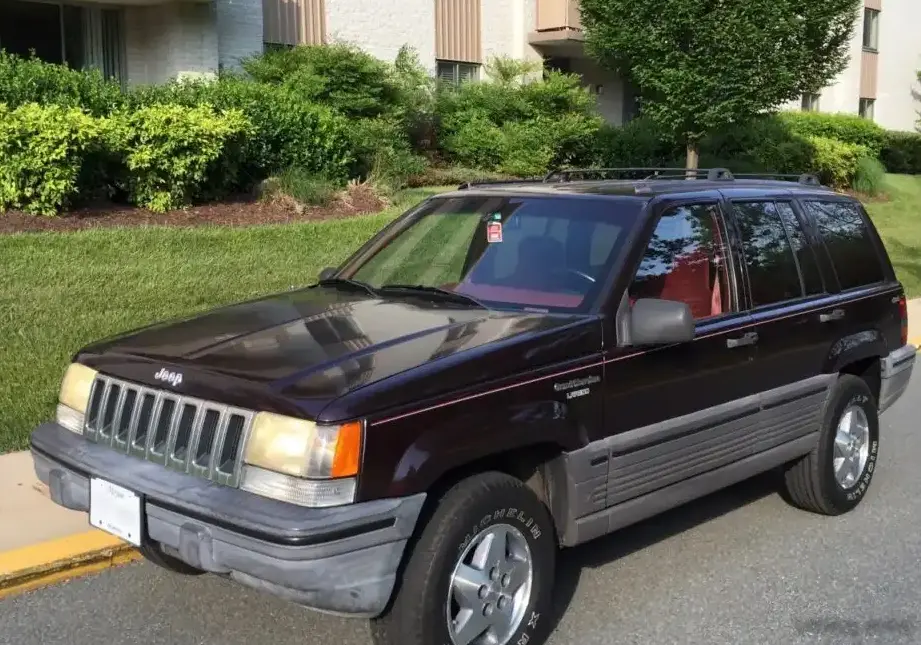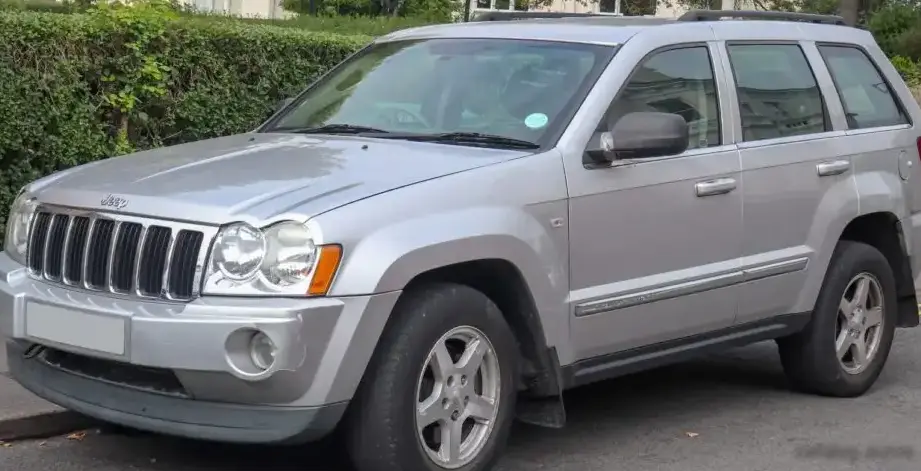
The Jeep Grand Cherokee III (WK) 4.7i V8 4×4 Automatic, produced from 2008 to 2010, represented a significant step forward for the iconic American SUV. Part of the WK generation (2005-2010), this variant occupied a middle-ground position in the lineup, offering a balance between performance, capability, and relative affordability compared to the higher-trim models like the 5.7L Hemi. It was primarily marketed towards American consumers seeking a comfortable, capable SUV with V8 power for towing and all-weather driving. The WK series marked a shift towards a more refined and luxurious Grand Cherokee, moving away from its more rugged, off-road focused predecessors.
Technical Specifications
| Brand | Jeep |
| Model | Grand Cherokee |
| Generation | Grand Cherokee III (WK) |
| Type (Engine) | 4.7i V8 (309 Hp) 4×4 Automatic |
| Start of production | 2008 |
| End of production | 2010 |
| Powertrain Architecture | Internal Combustion engine |
| Body type | SUV |
| Seats | 5 |
| Doors | 5 |
| Fuel consumption (urban) | 16.8 l/100 km (14 US mpg, 16.8 UK mpg, 6 km/l) |
| Fuel consumption (extra urban) | 12.4 l/100 km (19 US mpg, 22.8 UK mpg, 8.1 km/l) |
| Fuel consumption (combined) | 15.7 l/100 km (15 US mpg, 18 UK mpg, 6.4 km/l) |
| Fuel Type | Petrol (Gasoline) |
| Weight-to-power ratio | 6.8 kg/Hp, 146.8 Hp/tonne |
| Weight-to-torque ratio | 4.6 kg/Nm, 215.2 Nm/tonne |
| Power | 309 Hp @ 5650 rpm |
| Power per litre | 65.7 Hp/l |
| Torque | 453 Nm @ 3950 rpm (334.12 lb.-ft. @ 3950 rpm) |
| Engine layout | Front, Longitudinal |
| Engine Model/Code | EVE |
| Engine displacement | 4701 cm3 (286.87 cu. in.) |
| Number of cylinders | 8 |
| Engine configuration | V-engine |
| Cylinder Bore | 93 mm (3.66 in.) |
| Piston Stroke | 86.5 mm (3.41 in.) |
| Compression ratio | 9.8:1 |
| Number of valves per cylinder | 2 |
| Fuel injection system | Multi-port manifold injection |
| Engine aspiration | Naturally aspirated engine |
| Valvetrain | SOHC |
| Engine oil capacity | 5.7 l (6.02 US qt | 5.02 UK qt) |
| Coolant capacity | 11.8 l (12.47 US qt | 10.38 UK qt) |
| Kerb Weight | 2105 kg (4640.73 lbs.) |
| Max. weight | 2767 kg (6100.19 lbs.) |
| Max load | 662 kg (1459.46 lbs.) |
| Fuel tank capacity | 80 l (21.13 US gal | 17.6 UK gal) |
| Length | 4775 mm (187.99 in.) |
| Width | 1861 mm (73.27 in.) |
| Height | 1749 mm (68.86 in.) |
| Wheelbase | 2781 mm (109.49 in.) |
| Front track | 1575 mm (62.01 in.) |
| Rear track | 1575 mm (62.01 in.) |
| Ride height (ground clearance) | 210 mm (8.27 in.) |
| Drag coefficient (Cd) | 0.41 |
| Minimum turning circle | 11.3 m (37.07 ft.) |
| Approach angle | 32.3° |
| Departure angle | 27.5° |
| Ramp-over angle | 20.4° |
| Drive wheel | All wheel drive (4×4) |
| Number of gears | 5 |
| Gearbox type | Automatic transmission |
| Front brakes | Ventilated discs |
| Rear brakes | Ventilated discs |
| Assisting systems | ABS (Anti-lock braking system) |
| Steering type | Steering rack and pinion |
| Power steering | Hydraulic Steering |
| Tires size | 245/65 R17 |
| Wheel rims size | 17 |
Powertrain & Engine Architecture
The heart of this Grand Cherokee variant is the 4.7-liter V8 engine, internally designated as the EVE. This engine is a member of Chrysler’s third-generation small-block V8 family. It features a cast iron block with aluminum cylinder heads, a single overhead camshaft (SOHC) valvetrain operating two valves per cylinder, and multi-point fuel injection. The 4.7L V8 produced 309 horsepower at 5,650 rpm and 334 lb-ft of torque at 3,950 rpm. The engine’s design prioritized low-end torque for towing and everyday drivability. The 42RE four-speed automatic transmission was the standard pairing for this engine. While not the most modern transmission, it was known for its durability and suitability for the engine’s torque characteristics. The transmission featured electronic control for smoother shifting and adaptive shift patterns.
Driving Characteristics
The 4.7L V8 with the four-speed automatic provided adequate, though not exhilarating, performance. Acceleration from 0 to 60 mph was typically in the 7.5-8.5 second range. The automatic transmission’s gear ratios were geared towards providing strong low-end and mid-range acceleration, making it suitable for merging onto highways and towing. Compared to the 5.7L Hemi V8, the 4.7L offered less overall power and quicker acceleration. However, it provided better fuel economy. The 4.7L also felt more manageable for drivers less accustomed to high-horsepower vehicles. Compared to the diesel variants available in other markets, the 4.7L lacked the diesel’s superior fuel economy and low-end torque, but offered a smoother and quieter driving experience.
Equipment & Trim Levels
The 4.7i V8 4×4 Automatic trim typically included standard features such as air conditioning, power windows and locks, a CD player with an auxiliary input, and cloth upholstery. Higher trim levels, such as the Limited, added features like leather upholstery, heated front seats, a premium sound system, and automatic climate control. Optional extras included a navigation system, a sunroof, and rear-seat entertainment. The interior design was generally functional and comfortable, with a focus on providing a user-friendly experience.
Chassis & Braking
The WK Grand Cherokee utilized an independent front suspension with coil springs and a multi-link rear suspension. This setup provided a comfortable ride and good handling characteristics for an SUV of its size. The 4.7L variant typically came equipped with ventilated disc brakes on all four wheels, providing adequate stopping power. An Anti-lock Braking System (ABS) was standard. The suspension was tuned to balance ride comfort with handling stability, making it suitable for both on-road and light off-road use. The 4×4 system offered various modes, including 4-High and 4-Low, for enhanced traction in challenging conditions.
Market Reception & Comparison
The 4.7L V8 Grand Cherokee was generally well-received by critics as a capable and comfortable SUV. It was praised for its V8 power, comfortable ride, and spacious interior. However, some critics noted that the four-speed automatic transmission felt dated compared to the newer transmissions offered in competing vehicles. Fuel economy was also a common criticism, although it was better than the 5.7L Hemi. In terms of reliability, the 4.7L V8 was generally considered to be a reliable engine, although some owners reported issues with the cooling system and the automatic transmission.
Legacy
The 4.7L V8-powered Grand Cherokee remains a popular choice in the used car market today. Its relatively affordable price, combined with its V8 power and 4×4 capability, make it an attractive option for buyers seeking a capable and comfortable SUV. While the engine and transmission are not the most fuel-efficient or technologically advanced, they are known for their durability and relatively low maintenance costs. The WK generation Grand Cherokee, including the 4.7L variant, helped solidify the Grand Cherokee’s reputation as a premium and capable SUV, paving the way for the continued success of the model.