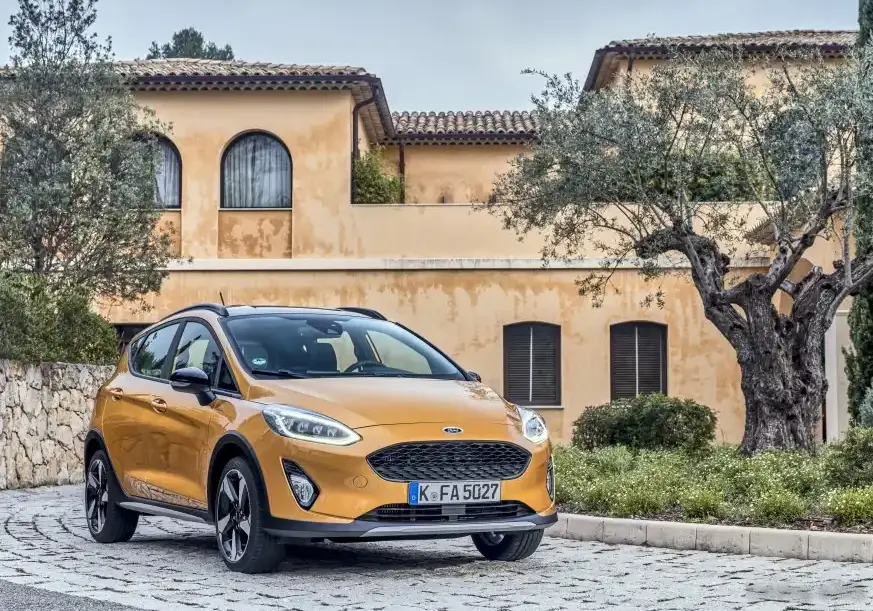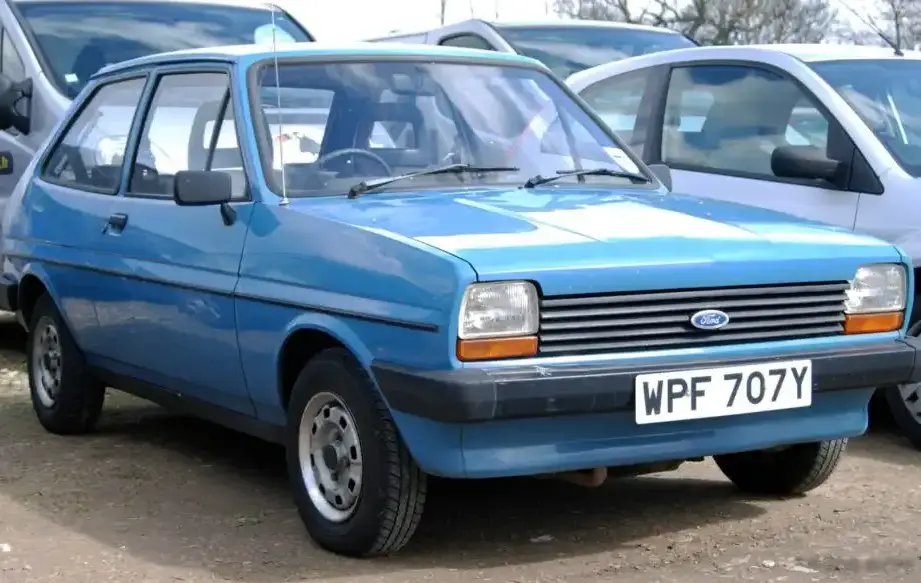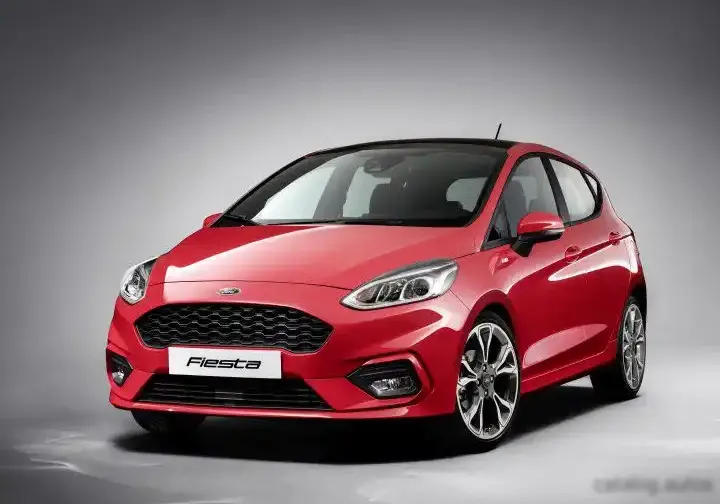
The Ford Fiesta Mk8, launched in 2017, represented a significant evolution for Ford’s long-running supermini. The 1.0 EcoBoost 125 hp Mild Hybrid variant, produced from May 2020 through 2021, occupied a key position in the Fiesta lineup, bridging the gap between the entry-level models and the more performance-oriented ST trim. This five-door hatchback aimed to deliver a balance of fuel efficiency, reasonable performance, and modern technology, appealing to a broad range of buyers in the European market, where the Fiesta was a consistently top-selling vehicle. It was part of the 1HX0/A3 platform generation, sharing components with other Ford models like the Focus.
Technical Specifications
| Brand | Ford |
| Model | Fiesta |
| Generation | Fiesta VIII (Mk8) 5 door |
| Type (Engine) | 1.0 EcoBoost (125 Hp) Mild Hybrid |
| Start of production | May, 2020 |
| End of production | 2021 |
| Powertrain Architecture | MHEV (Mild Hybrid Electric Vehicle) |
| Body type | Hatchback |
| Seats | 5 |
| Doors | 5 |
| Fuel consumption at Low speed (WLTP) | 6.1 l/100 km (38.6 US mpg) |
| Fuel consumption at Medium speed (WLTP) | 4.7 l/100 km (50 US mpg) |
| Fuel consumption at high speed (WLTP) | 4.3 l/100 km (54.7 US mpg) |
| Fuel consumption at very high speed (WLTP) | 5.5 l/100 km (42.8 US mpg) |
| Combined fuel consumption (WLTP) | 5 l/100 km (47 US mpg) |
| CO2 emissions (WLTP) | 114 g/km |
| Fuel consumption (economy) – urban (NEDC) | 4.8-5.2 l/100 km (49 – 45.2 US mpg) |
| Fuel consumption (economy) – extra urban (NEDC) | 3.6-3.9 l/100 km (65.3 – 60.3 US mpg) |
| Fuel consumption (economy) – combined (NEDC) | 4-4.4 l/100 km (58.8 – 53.5 US mpg) |
| CO2 emissions (NEDC) | 92-99 g/km |
| Fuel Type | Petrol (Gasoline) |
| Acceleration 0 – 100 km/h | 9.4 sec |
| Acceleration 0 – 62 mph | 9.4 sec |
| Acceleration 0 – 60 mph | 8.9 sec |
| Maximum speed | 203 km/h (126.14 mph) |
| Emission standard | Euro 6d-ISC-FCM |
| Weight-to-power ratio | 9.1 kg/Hp |
| Weight-to-torque ratio | 5.4 kg/Nm |
| Power | 125 Hp @ 6000 rpm |
| Torque | 210 Nm @ 1750 rpm (154.89 lb.-ft. @ 1750 rpm) |
| Engine layout | Front, Transverse |
| Engine Model/Code | B7JB |
| Engine displacement | 999 cm3 (60.96 cu. in.) |
| Number of cylinders | 3 |
| Engine configuration | Inline |
| Number of valves per cylinder | 4 |
| Fuel injection system | Direct injection |
| Engine aspiration | Turbocharger, Intercooler |
| Valvetrain | DOHC |
| Engine oil capacity | 4.6 l (4.86 US qt | 4.05 UK qt) |
| Coolant capacity | 5.8 l (6.13 US qt | 5.1 UK qt) |
| Kerb Weight | 1142 kg (2517.68 lbs.) |
| Max. weight | 1685 kg (3714.79 lbs.) |
| Max load | 543 kg (1197.11 lbs.) |
| Trunk (boot) space – minimum | 292 l (10.31 cu. ft.) |
| Trunk (boot) space – maximum | 1093 l (38.6 cu. ft.) |
| Fuel tank capacity | 42 l (11.1 US gal | 9.24 UK gal) |
| Permitted trailer load with brakes (8%) | 1000 kg (2204.62 lbs.) |
| Permitted trailer load with brakes (12%) | 1000 kg (2204.62 lbs.) |
| Permitted trailer load without brakes | 605 kg (1333.8 lbs.) |
| Permitted towbar download | 45 kg (99.21 lbs.) |
| Length | 4040 mm (159.06 in.) |
| Width | 1735 mm (68.31 in.) |
| Width including mirrors | 1941 mm (76.42 in.) |
| Height | 1476 mm (58.11 in.) |
| Wheelbase | 2493 mm (98.15 in.) |
| Front overhang | 839 mm (33.03 in.) |
| Rear overhang | 708 mm (27.87 in.) |
| Ride height (ground clearance) | 133 mm (5.24 in.) |
| Minimum turning circle | 9.8 m (32.15 ft.) |
| Drivetrain Architecture | Front wheel drive, MHEV |
| Number of gears and type of gearbox | 6 gears, manual transmission |
| Front suspension | Independent type McPherson, Transverse stabilizer |
| Rear suspension | Independent multi-link suspension, Transverse stabilizer |
| Assisting systems | ABS (Anti-lock braking system) |
| Steering type | Steering rack and pinion |
| Power steering | Electric Steering |
| Tires size | 195/60 R 15 |
| Wheel rims size | 6 J x 15 |
INTRODUCTION
The Ford Fiesta Mk8 1.0 EcoBoost 125 hp Mild Hybrid is a front-wheel-drive, five-door hatchback that was produced for a relatively short period, from May 2020 to 2021. It represents Ford’s move towards incorporating mild hybrid technology into its mainstream models to improve fuel economy and reduce emissions. Positioned as a mid-range offering within the Mk8 Fiesta lineup, it sat above the lower-powered EcoBoost variants and below the sporty ST models. The introduction of the mild hybrid system aimed to enhance the appeal of the Fiesta to environmentally conscious buyers without sacrificing the driving experience.
Powertrain & Engine Architecture
At the heart of this Fiesta variant lies the 1.0-liter EcoBoost three-cylinder engine, designated with the code B7JB. This engine is a highly sophisticated design featuring direct fuel injection, a single turbocharger with an intercooler, and a double overhead camshaft (DOHC) valvetrain. The mild hybrid system adds a 48-volt belt-driven integrated starter generator (BiSG) which assists the engine during acceleration and allows for extended periods of engine-off coasting, further improving fuel efficiency. The BiSG also enables a quicker and smoother start-stop function. The engine produces 125 horsepower at 6000 rpm and 210 Nm (154.89 lb-ft) of torque at 1750 rpm. This power is delivered through a six-speed manual transmission, which was the only transmission option available for this specific configuration. The engine’s compact size and lightweight construction contribute to the Fiesta’s overall agility.
Driving Characteristics
The 1.0 EcoBoost 125 hp Mild Hybrid Fiesta offers a surprisingly lively driving experience. While not as overtly sporty as the ST models, the engine provides ample power for everyday driving and even some spirited acceleration. The mild hybrid system provides a noticeable boost during initial acceleration, filling in any potential turbo lag. The six-speed manual transmission is well-matched to the engine’s characteristics, offering precise shifts and a good spread of ratios. Compared to the lower-powered 1.0 EcoBoost variants, this version feels significantly more responsive, particularly when overtaking or climbing hills. However, it doesn’t possess the outright punch of the ST. The fuel economy benefits of the mild hybrid system are most pronounced in urban driving conditions, where the extended engine-off coasting can make a substantial difference.
Equipment & Trim Levels
The 1.0 EcoBoost 125 hp Mild Hybrid Fiesta typically came equipped with a reasonable level of standard features. These included air conditioning, a touchscreen infotainment system with Apple CarPlay and Android Auto compatibility, Bluetooth connectivity, and a suite of safety features such as lane-keeping assist and automatic emergency braking. Higher trim levels, such as Titanium and Vignale, added features like alloy wheels, a larger touchscreen display, a rear-view camera, and upgraded interior trim materials. Optional extras included a panoramic sunroof, heated seats, and a premium sound system. Interior upholstery was typically cloth, with higher trims offering partial leather options.
Chassis & Braking
The Fiesta Mk8 utilizes a McPherson strut front suspension and an independent multi-link rear suspension, providing a good balance of ride comfort and handling precision. The 1.0 EcoBoost 125 hp variant typically featured a transverse stabilizer bar on both the front and rear axles to reduce body roll during cornering. Braking duties are handled by disc brakes on the front wheels and drum brakes on the rear wheels. The braking system is assisted by ABS (Anti-lock Braking System) and Electronic Stability Control (ESC). The suspension setup is tuned to provide a comfortable ride without sacrificing agility, making it well-suited for both city driving and longer journeys.
Market Reception & Comparison
The 1.0 EcoBoost 125 hp Mild Hybrid Fiesta was generally well-received by automotive critics. It was praised for its fuel efficiency, responsive engine, and comfortable ride. Compared to the lower-powered EcoBoost variants, it offered a noticeable performance upgrade without significantly impacting fuel economy. Against the 1.5-liter EcoBoost models, it offered a similar level of performance with improved fuel efficiency, making it a compelling alternative. However, some critics noted that the mild hybrid system’s benefits were most noticeable in specific driving conditions and that the overall driving experience wasn’t dramatically different from the non-hybrid versions. Reliability reports have been generally positive, with the EcoBoost engine proving to be relatively robust.
Legacy
The Ford Fiesta Mk8 1.0 EcoBoost 125 hp Mild Hybrid represents an important step in Ford’s electrification strategy. While it wasn’t a full hybrid or electric vehicle, it demonstrated the potential of mild hybrid technology to improve fuel efficiency and reduce emissions in mainstream models. On the used car market, these Fiestas are generally sought after for their fuel economy and relatively low running costs. The EcoBoost engine, while occasionally subject to timing belt concerns (depending on production year), has proven to be generally reliable. The Fiesta Mk8, in general, remains a popular choice for buyers looking for a well-rounded and affordable supermini.