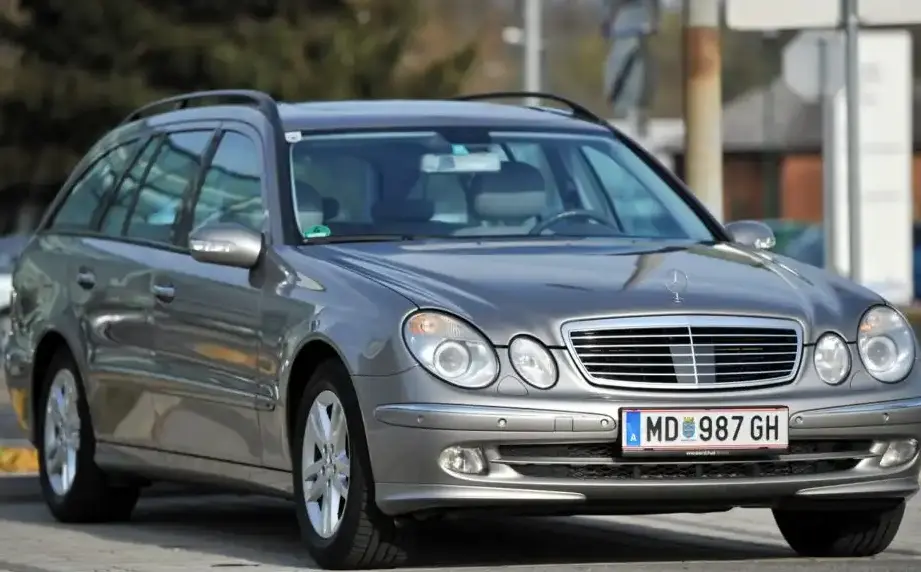
The Mercedes-Benz E-Class T-modell (S211) E 320 CDI, produced from 2003 to 2005, represented a compelling blend of luxury, practicality, and diesel efficiency within the E-Class range. Positioned as a mid-to-upper trim level within the S211 generation (2003-2009), this variant catered to buyers seeking a spacious, comfortable wagon with strong performance and respectable fuel economy. It occupied a space between the more economical E 270 CDI and the higher-performance E 500, offering a balance that appealed to families and those requiring substantial cargo capacity without sacrificing refinement. The S211 platform itself was a significant evolution for Mercedes-Benz, offering increased interior space and improved handling compared to its predecessor.
Technical Specifications
| Brand | Mercedes-Benz |
| Model | E-Class |
| Generation | E-Class T-modell (S211) |
| Type (Engine) | E 320 CDI (204 Hp) 5G-TRONIC |
| Start of production | 2003 |
| End of production | 2005 |
| Powertrain Architecture | Internal Combustion engine |
| Body type | Station wagon (estate) |
| Seats | 5 |
| Doors | 5 |
| Fuel consumption (urban) | 10.1 l/100 km (23.3 US mpg, 28 UK mpg, 9.9 km/l) |
| Fuel consumption (extra urban) | 5.7 l/100 km (41.3 US mpg, 49.6 UK mpg, 17.5 km/l) |
| Fuel consumption (combined) | 7.3 l/100 km (32.2 US mpg, 38.7 UK mpg, 13.7 km/l) |
| Fuel Type | Diesel |
| Acceleration 0 – 100 km/h | 8.2 sec |
| Acceleration 0 – 62 mph | 8.2 sec |
| Acceleration 0 – 60 mph | 7.8 sec |
| Maximum speed | 234 km/h (145.4 mph) |
| Weight-to-power ratio | 9.2 kg/Hp, 108.2 Hp/tonne |
| Weight-to-torque ratio | 3.8 kg/Nm, 265.3 Nm/tonne |
| Power | 204 Hp @ 4200 rpm |
| Power per litre | 63.3 Hp/l |
| Torque | 500 Nm @ 1800 rpm (368.78 lb.-ft. @ 1800 rpm) |
| Engine layout | Front, Longitudinal |
| Engine Model/Code | OM 648.961 |
| Engine displacement | 3222 cm3 (196.62 cu. in.) |
| Number of cylinders | 6 |
| Engine configuration | Inline |
| Cylinder Bore | 88 mm (3.46 in.) |
| Piston Stroke | 88.3 mm (3.48 in.) |
| Compression ratio | 18:1 |
| Number of valves per cylinder | 4 |
| Fuel injection system | Diesel Commonrail |
| Engine aspiration | Turbocharger, Intercooler |
| Engine oil capacity | 7.5 l (7.93 US qt | 6.6 UK qt) |
| Coolant | 12 l (12.68 US qt | 10.56 UK qt) |
| Kerb Weight | 1885 kg (4155.71 lbs.) |
| Max. weight | 2460 kg (5423.37 lbs.) |
| Max load | 575 kg (1267.66 lbs.) |
| Trunk (boot) space – minimum | 690 l (24.37 cu. ft.) |
| Trunk (boot) space – maximum | 1950 l (68.86 cu. ft.) |
| Fuel tank capacity | 70 l (18.49 US gal | 15.4 UK gal) |
| Length | 4850 mm (190.94 in.) |
| Width | 1822 mm (71.73 in.) |
| Height | 1495 mm (58.86 in.) |
| Wheelbase | 2854 mm (112.36 in.) |
| Front track | 1559 mm (61.38 in.) |
| Rear (Back) track | 1552 mm (61.1 in.) |
| Drag coefficient (Cd) | 0.30 |
| Drivetrain Architecture | The Internal combustion engine (ICE) drives the rear wheels of the vehicle. |
| Drive wheel | Rear wheel drive |
| Number of gears and type of gearbox | 5 gears, automatic transmission |
| Front suspension | Coil spring |
| Rear suspension | Coil spring |
| Front brakes | Ventilated discs |
| Rear brakes | Disc |
| Assisting systems | ABS (Anti-lock braking system) |
| Steering type | Steering rack and pinion |
| Power steering | Hydraulic Steering |
| Tires size | 225/55 R16 |
| Wheel rims size | 7.5J X 16 |
Powertrain & Engine Architecture
The heart of the E 320 CDI T-modell was the OM 648.961, a 3.2-liter inline-six cylinder diesel engine. This engine was a cornerstone of Mercedes-Benz’s diesel offerings in the early 2000s, known for its robust construction and relatively smooth operation for a diesel. It featured a common rail direct injection system, delivering fuel at extremely high pressures for optimized combustion and reduced emissions. A variable geometry turbocharger with an intercooler further enhanced performance, providing strong low-end torque and a broad powerband. The engine produced 204 horsepower at 4200 rpm and a substantial 500 Nm (368 lb-ft) of torque at just 1800 rpm. This torque output was particularly well-suited to the wagon’s role as a comfortable and capable hauler. The engine was paired with Mercedes-Benz’s 5G-TRONIC automatic transmission, a five-speed unit known for its smooth shifts and adaptive learning capabilities. This transmission was designed to work seamlessly with the engine’s torque characteristics, providing effortless cruising and responsive acceleration.
Driving Characteristics
The E 320 CDI T-modell offered a refined and comfortable driving experience. The abundance of low-end torque from the diesel engine meant that strong acceleration was readily available without needing to rev the engine high. The 5G-TRONIC transmission contributed to this smoothness, providing seamless gear changes. While not a sports car, the E 320 CDI offered adequate performance for most driving situations, with a 0-60 mph time of around 7.8 seconds. Compared to the E 270 CDI, the E 320 CDI provided a noticeable increase in power and responsiveness. However, it lacked the outright performance of the E 500, which featured a larger gasoline engine. The wagon’s suspension provided a comfortable ride, absorbing bumps and imperfections in the road effectively. The rear-wheel-drive configuration offered balanced handling, although it wasn’t as agile as some of its competitors with all-wheel drive.
Equipment & Trim Levels
The E 320 CDI T-modell came well-equipped as standard, reflecting Mercedes-Benz’s commitment to luxury and comfort. Standard features typically included leather upholstery, automatic climate control, power-adjustable front seats, a premium audio system, and a sunroof. Safety features were also comprehensive, including ABS, traction control, and multiple airbags. Optional extras included navigation system, upgraded audio systems, parking sensors, and heated seats. Interior trim options allowed buyers to personalize the vehicle to their tastes, with a range of wood and aluminum finishes available. The overall interior ambiance was one of understated elegance and high-quality materials.
Chassis & Braking
The S211 E-Class wagon utilized a robust chassis with coil spring suspension at all four corners. The front suspension featured independent control arms, while the rear suspension employed a multi-link setup. This configuration provided a good balance between ride comfort and handling. Braking duties were handled by ventilated discs at the front and solid discs at the rear, coupled with an ABS system. The braking system provided ample stopping power for the vehicle’s weight and performance. The steering was a hydraulic power-assisted rack and pinion system, offering precise and responsive control.
Market Reception & Comparison
The E 320 CDI T-modell was generally well-received by automotive critics. It was praised for its comfortable ride, spacious interior, and strong diesel engine. Fuel economy was also a significant selling point, with the E 320 CDI achieving around 32 mpg on the highway. Compared to the E 270 CDI, the E 320 CDI offered a worthwhile performance upgrade for a relatively modest price increase. However, some critics noted that the diesel engine was somewhat noisy compared to gasoline engines. Reliability was generally good, although diesel engines can be more susceptible to issues with the fuel injection system and turbocharger over time.
Legacy
The OM 648 engine family, including the OM 648.961 found in the E 320 CDI, has proven to be relatively durable, although preventative maintenance is crucial. Today, well-maintained examples of the E 320 CDI T-modell are sought after by enthusiasts who appreciate their blend of luxury, practicality, and fuel efficiency. The 5G-TRONIC transmission, while generally reliable, can require servicing as it ages. The S211 E-Class wagon remains a popular choice for those seeking a spacious and comfortable vehicle with a distinctive European character. Its enduring appeal lies in its ability to provide a refined and capable driving experience, even by modern standards.