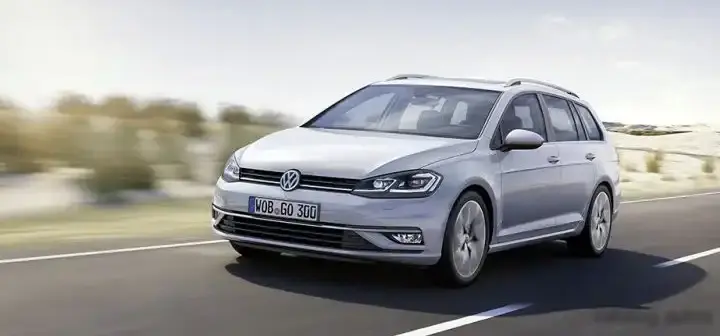
The Volkswagen Golf VII Variant 1.0 TSI (116 hp) represents a significant entry point into the seventh generation of Volkswagen’s iconic Golf estate (wagon) range, specifically within the facelifted models produced from 2017 onwards. Introduced in 2018 and continuing through 2019, this variant aimed to provide a balance of fuel efficiency, practicality, and affordability within the broader Golf lineup. It’s positioned as an accessible option for families and individuals seeking a versatile vehicle without the higher costs associated with more powerful engines or premium trim levels. The Golf VII Variant, built on the Volkswagen Group’s MQB platform (A7 iteration), offered increased cargo space compared to the hatchback while retaining the Golf’s renowned driving dynamics.
Technical Specifications
| Brand | Volkswagen |
| Model | Golf |
| Generation | Golf VII Variant (facelift 2017) |
| Type (Engine) | 1.0 TSI (116 Hp) |
| Start of production | 2018 |
| End of production | 2019 |
| Powertrain Architecture | Internal Combustion engine |
| Body type | Station wagon (estate) |
| Seats | 5 |
| Doors | 5 |
| Fuel consumption (urban) | 5.6-5.9 l/100 km (42 – 39.9 US mpg, 50.4 – 47.9 UK mpg, 17.9 – 16.9 km/l) |
| Fuel consumption (extra urban) | 4.5-4.7 l/100 km (52.3 – 50 US mpg, 62.8 – 60.1 UK mpg, 22.2 – 21.3 km/l) |
| Fuel consumption (combined) | 4.9-5.1 l/100 km (48 – 46.1 US mpg, 57.6 – 55.4 UK mpg, 20.4 – 19.6 km/l) |
| CO2 emissions | 111-116 g/km |
| Fuel Type | Petrol (Gasoline) |
| Acceleration 0 – 100 km/h | 10.2 sec |
| Acceleration 0 – 62 mph | 10.2 sec |
| Acceleration 0 – 60 mph | 9.7 sec |
| Maximum speed | 200 km/h (124.27 mph) |
| Emission standard | Euro 6d-TEMP |
| Weight-to-power ratio | 11.3 kg/Hp, 88.5 Hp/tonne |
| Weight-to-torque ratio | 6.6 kg/Nm, 152.7 Nm/tonne |
| Power | 116 Hp |
| Power per litre | 116.1 Hp/l |
| Torque | 200 Nm @ 2000-3500 rpm (147.51 lb.-ft. @ 2000-3500 rpm) |
| Engine layout | Front, Transverse |
| Engine Model/Code | DKRA, DKRF |
| Engine displacement | 999 cm3 (60.96 cu. in.) |
| Number of cylinders | 3 |
| Engine configuration | Inline |
| Number of valves per cylinder | 4 |
| Fuel injection system | Direct injection |
| Engine aspiration | Turbocharger, Intercooler |
| Engine oil capacity | 4 l (4.23 US qt | 3.52 UK qt) |
| Kerb Weight | 1310 kg (2888.06 lbs.) |
| Max. weight | 1860 kg (4100.6 lbs.) |
| Max load | 550 kg (1212.54 lbs.) |
| Trunk (boot) space – minimum | 605 l (21.37 cu. ft.) |
| Trunk (boot) space – maximum | 1620 l (57.21 cu. ft.) |
| Fuel tank capacity | 50 l (13.21 US gal | 11 UK gal) |
| Max. roof load | 75 kg (165.35 lbs.) |
| Permitted trailer load with brakes (8%) | 1500 kg (3306.93 lbs.) |
| Permitted trailer load with brakes (12%) | 1300 kg (2866.01 lbs.) |
| Permitted trailer load without brakes | 650 kg (1433 lbs.) |
| Permitted towbar download | 80 kg (176.37 lbs.) |
| Length | 4567 mm (179.8 in.) |
| Width | 1799 mm (70.83 in.) |
| Width including mirrors | 2027 mm (79.8 in.) |
| Height | 1515 mm (59.65 in.) |
| Wheelbase | 2620 mm (103.15 in.) |
| Front track | 1533-1549 mm (60.35 – 60.98 in.) |
| Rear (Back) track | 1504-1520 mm (59.21 – 59.84 in.) |
| Ride height (ground clearance) | 140 mm (5.51 in.) |
| Minimum turning circle (turning diameter) | 10.9 m (35.76 ft.) |
| Drive wheel | Front wheel drive |
| Number of gears and type of gearbox | 6 gears, manual transmission |
| Assisting systems | ABS (Anti-lock braking system) |
| Steering type | Steering rack and pinion |
| Power steering | Electric Steering |
| Tires size | 205/55 R16 |
| Wheel rims size | 6.5J x 16 |
INTRODUCTION
The Volkswagen Golf VII Variant 1.0 TSI (116 hp) arrived as part of the facelift for the seventh-generation Golf, introduced in 2017. This variant specifically targeted buyers looking for a practical and economical estate car. The Golf VII, internally designated the A7 platform, represented a significant evolution of the Golf lineage, offering improved technology, safety features, and fuel efficiency. The Variant (estate) body style provided a substantial increase in cargo capacity compared to the standard hatchback, making it a popular choice for families and those requiring more space. The 1.0 TSI engine was a relatively new addition to the Golf range, representing Volkswagen’s push towards smaller, turbocharged engines.
Powertrain & Engine Architecture
At the heart of the Golf VII Variant 1.0 TSI lies the EA211 series 1.0-liter turbocharged three-cylinder engine, specifically the DKRA or DKRF engine code depending on the exact specification. This engine utilizes direct fuel injection and a single scroll turbocharger with an intercooler to deliver a balance of power and efficiency. The engine’s aluminum block and cylinder head contribute to its relatively lightweight design. The 1.0 TSI engine produces 116 horsepower and 200 Nm (147.51 lb-ft) of torque between 2000 and 3500 rpm. The engine is paired with a six-speed manual transmission, which was the standard offering for this variant. This transmission is known for its smooth shifting and relatively short throw. The engine management system is crucial to the engine’s performance, carefully controlling fuel injection, ignition timing, and turbocharger boost to optimize power delivery and fuel economy.
Driving Characteristics
The 1.0 TSI engine, while not offering blistering performance, provides adequate power for everyday driving. Acceleration from 0-60 mph takes approximately 9.7 seconds, and the top speed is 124.27 mph. The engine feels responsive at lower RPMs thanks to the turbocharger, but power does taper off somewhat at higher speeds. The six-speed manual transmission allows drivers to keep the engine in its optimal power band. Compared to higher-output Golf variants like the 1.8 TSI or the diesel models, the 1.0 TSI feels less powerful, particularly when fully loaded or tackling steep inclines. However, its lighter weight and efficient engine contribute to a more nimble and engaging driving experience. The gear ratios are well-matched for both urban and highway driving, providing a comfortable and relaxed cruising experience.
Equipment & Trim Levels
The Golf VII Variant 1.0 TSI (116 hp) typically came equipped with a reasonable level of standard features. These included air conditioning, a touchscreen infotainment system with Bluetooth connectivity, alloy wheels, and a suite of safety features such as ABS, ESC (Electronic Stability Control), and multiple airbags. Interior upholstery was typically cloth, with options for upgraded materials available. Common optional extras included parking sensors, a rearview camera, adaptive cruise control, and a panoramic sunroof. Trim levels varied depending on the market, but generally followed a progressive structure, with higher trims adding more features and cosmetic enhancements. The base trim focused on providing essential features at an affordable price point, while higher trims offered increased comfort and convenience.
Chassis & Braking
The Golf VII Variant 1.0 TSI utilizes a MacPherson strut front suspension and a multi-link rear suspension. This setup provides a good balance of ride comfort and handling precision. The suspension is tuned to be relatively compliant, absorbing bumps and imperfections in the road surface effectively. Braking duties are handled by disc brakes on the front wheels and drum brakes on the rear wheels. ABS (Anti-lock Braking System) is standard, providing enhanced braking performance in emergency situations. The steering is electrically assisted, offering a light and precise feel. Stabilizer bars are fitted to both the front and rear axles to reduce body roll during cornering.
Market Reception & Comparison
The Golf VII Variant 1.0 TSI (116 hp) was generally well-received by automotive critics as a practical and economical estate car. It was praised for its fuel efficiency, comfortable ride, and spacious interior. However, some critics noted that the engine could feel underpowered at times, particularly when fully loaded. Compared to the 1.8 TSI variant, the 1.0 TSI offered significantly better fuel economy but lacked the same level of performance. The diesel variants provided even greater fuel efficiency but came with a higher purchase price and potential concerns about emissions regulations. The 1.0 TSI positioned itself as a sweet spot for buyers prioritizing affordability and fuel economy over outright performance.
Legacy
The 1.0 TSI engine has proven to be a relatively reliable powertrain, although some owners have reported issues with the timing chain. Regular maintenance, including oil changes and timing chain inspections, is crucial to ensuring long-term reliability. In the used car market, the Golf VII Variant 1.0 TSI (116 hp) represents a good value proposition, offering a practical and economical estate car at an affordable price. Its fuel efficiency and relatively low running costs make it an attractive option for budget-conscious buyers. The Golf VII Variant continues to be a popular choice in the used car market, known for its build quality, reliability, and versatility.