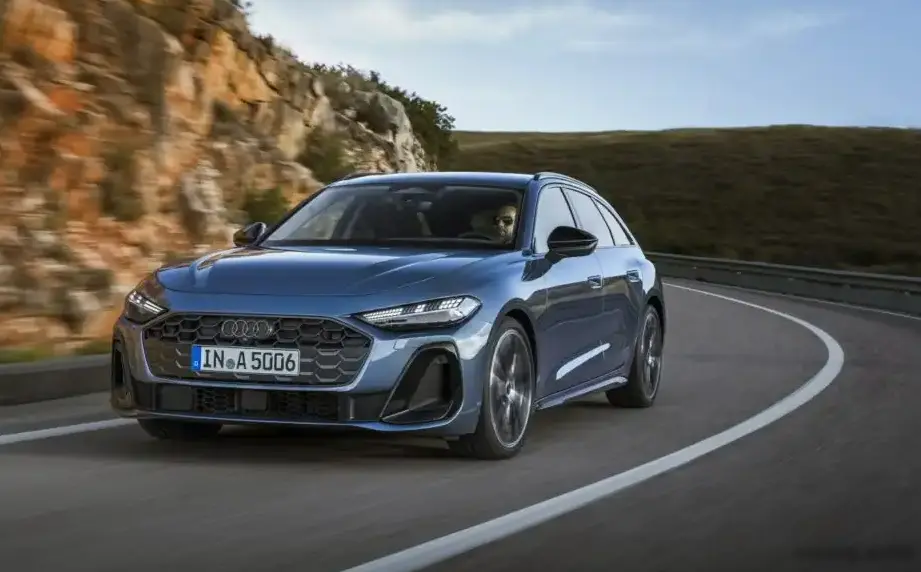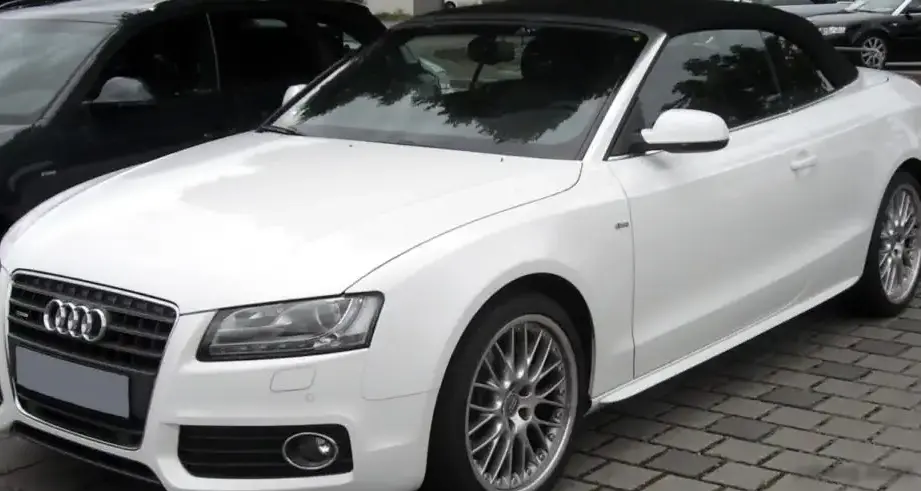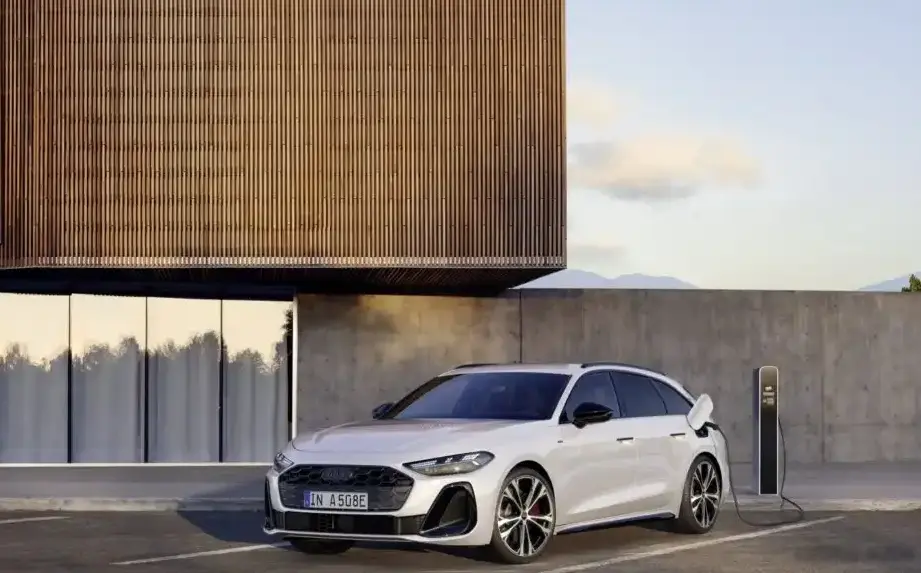
The Audi A5 Avant (B10) 2.0 TFSI e-hybrid quattro ultra S tronic represents a significant step in Audi’s commitment to plug-in hybrid technology, launched in March 2025. Positioned as a premium offering within the A5 Avant (B10) range, this variant combines a 2.0-liter turbocharged four-cylinder engine with an electric motor and a sophisticated quattro all-wheel-drive system. It builds upon the foundation of the B10 A5 platform, which debuted in 2017, offering a blend of performance, efficiency, and practicality in a stylish station wagon (estate) body style. This model is primarily targeted towards European and increasingly North American markets where demand for efficient luxury vehicles is growing.
Technical Specifications
| Brand | Audi |
| Model | A5 |
| Generation | A5 Avant (B10) |
| Type (Engine) | 2.0 TFSI (367 Hp) e-hybrid quattro ultra S tronic |
| Start of production | March, 2025 |
| Powertrain Architecture | PHEV (Plug-in Hybrid Electric Vehicle) |
| Body type | Station wagon (estate) |
| Seats | 5 |
| Doors | 5 |
| Combined fuel consumption (WLTP) | 2.2-7.4 l/100 km (106.9 – 31.8 US mpg, 128.4 – 38.2 UK mpg, 45.5 – 13.5 km/l) |
| CO2 emissions (WLTP) | 50-61 g/km |
| Fuel Type | Petrol / electricity |
| Acceleration 0 – 100 km/h | 5.1 sec |
| Acceleration 0 – 62 mph | 5.1 sec |
| Acceleration 0 – 60 mph | 4.8 sec |
| Maximum speed | 250 km/h (155.34 mph) |
| Emission standard | Euro 6e |
| Weight-to-power ratio | 5.7 kg/Hp, 173.9 Hp/tonne |
| Weight-to-torque ratio | 4.2 kg/Nm, 237 Nm/tonne |
| Gross battery capacity | 25.9 kWh |
| Net (usable) battery capacity | 20.7 kWh |
| Battery voltage | 400 V |
| Battery technology | Lithium-ion (Li-Ion) |
| Battery location | Under the trunk |
| Recuperation output | 88 kW |
| All-electric range (WLTP) | 104 km (64.62 mi) |
| Average Energy consumption (WLTP) | 15.3-15.9 kWh/100 km (24.62 – 25.59 kWh/100 mi, 137 – 132 MPGe, 6.5 – 6.3 km/kWh, 4.1 – 3.9 mi/kWh) |
| Max speed (electric) | 140 km/h (86.99 mph) |
| Electric motor power | 143 Hp |
| Electric motor Torque | 350 Nm (258.15 lb.-ft.) |
| Electric motor location | Between the combustion engine and the transmission |
| Electric motor type | Synchronous |
| System power | 367 Hp |
| System torque | 500 Nm (368.78 lb.-ft.) |
| Power | 252 Hp @ 5000-6500 rpm (127 Hp/l) |
| Torque | 380 Nm @ 1600-4500 rpm (280.27 lb.-ft. @ 1600-4500 rpm) |
| Engine layout | Front, Longitudinal |
| Engine displacement | 1984 cm3 (121.07 cu. in.) |
| Number of cylinders | 4 |
| Engine configuration | Inline |
| Cylinder Bore | 82.5 mm (3.25 in.) |
| Piston Stroke | 92.8 mm (3.65 in.) |
| Compression ratio | 12.5:1 |
| Number of valves per cylinder | 4 |
| Fuel injection system | Direct injection |
| Engine aspiration | Turbocharger, Intercooler |
| Valvetrain | DOHC |
| Engine oil capacity | 6 l (6.34 US qt | 5.28 UK qt) |
| Coolant | 13 l (13.74 US qt | 11.44 UK qt) |
| Kerb Weight | 2110 kg (4651.75 lbs.) |
| Max. weight | 2665 kg (5875.32 lbs.) |
| Max load | 555 kg (1223.57 lbs.) |
| Trunk (boot) space – minimum | 361 l (12.75 cu. ft.) |
| Trunk (boot) space – maximum | 1306 l (46.12 cu. ft.) |
| Fuel tank capacity | 46 l (12.15 US gal | 10.12 UK gal) |
| Max. roof load | 90 kg (198.42 lbs.) |
| Permitted trailer load with brakes (8%) | 1900 kg (4188.78 lbs.) |
| Permitted trailer load with brakes (12%) | 1700 kg (3747.86 lbs.) |
| Permitted trailer load without brakes | 750 kg (1653.47 lbs.) |
| Permitted towbar download | 80 kg (176.37 lbs.) |
| Length | 4829 mm (190.12 in.) |
| Width | 1860 mm (73.23 in.) |
| Width including mirrors | 2099 mm (82.64 in.) |
| Height | 1458 mm (57.4 in.) |
| Wheelbase | 2892 mm (113.86 in.) |
| Front track | 1620 mm (63.78 in.) |
| Rear (Back) track | 1607 mm (63.27 in.) |
| Front overhang | 908 mm (35.75 in.) |
| Rear overhang | 1029 mm (40.51 in.) |
| Drag coefficient (Cd) | 0.30 |
| Minimum turning circle (turning diameter) | 12.2 m (40.03 ft.) |
| Approach angle | 14.9° |
| Departure angle | 18.6° |
| Drivetrain Architecture | The Internal combustion engine (ICE) and the electric motor permanently drive the front wheels of the vehicle, capable of running in full electric or mixed mode, and if necessary through the electrically or mechanically controlled clutch, the rear wheels are driven. |
| Drive wheel | All wheel drive (4×4) |
| Number of gears and type of gearbox | 7 gears, automatic transmission S tronic |
| Front suspension | Coil spring, Independent multi-link suspension, Transverse stabilizer |
| Rear suspension | Independent multi-link spring suspension with stabilizer |
| Front brakes | Ventilated discs, 360 mm |
| Rear brakes | Ventilated discs, 350 mm |
| Assisting systems | ABS (Anti-lock braking system) |
| Steering type | Steering rack and pinion |
| Power steering | Electric Steering |
| Tires size | 235/45 R18 |
| Wheel rims size | 8J x 18 |
INTRODUCTION
The Audi A5 Avant (B10) 2.0 TFSI e-hybrid quattro ultra S tronic is a plug-in hybrid variant of the popular A5 Avant, a five-door station wagon known for its sophisticated design and driving dynamics. Introduced in March 2025, this model combines a 2.0-liter turbocharged four-cylinder engine with an electric motor, offering a compelling blend of performance and fuel efficiency. It sits at the higher end of the A5 Avant lineup, appealing to buyers seeking a premium, technologically advanced vehicle with reduced emissions. The “ultra” designation signifies optimized efficiency features, while the “quattro” system provides all-wheel drive capability for enhanced traction and stability.
Powertrain & Engine Architecture
At the heart of the A5 Avant 2.0 TFSI e-hybrid is the EA888 2.0-liter inline-four cylinder engine. This engine, typically identified by engine codes such as DZG, utilizes direct fuel injection and a single turbocharger with an intercooler to produce 252 horsepower at 5000-6500 rpm and 380 Nm (280.27 lb-ft) of torque between 1600-4500 rpm. The engine features a 12.5:1 compression ratio and a dual overhead camshaft (DOHC) valvetrain. Integrated with this engine is a 143 hp electric motor, powered by a 25.9 kWh (gross) / 20.7 kWh (net) lithium-ion battery pack located under the trunk floor. The electric motor delivers 350 Nm (258.15 lb-ft) of torque. The combined system output is an impressive 367 hp and 500 Nm (368.78 lb-ft) of torque. Power is delivered to all four wheels via Audi’s renowned quattro all-wheel-drive system and a seven-speed S tronic dual-clutch automatic transmission. This transmission offers quick and smooth gear changes, contributing to both performance and efficiency.
Driving Characteristics
The A5 Avant 2.0 TFSI e-hybrid offers a refined and engaging driving experience. In electric-only mode, the vehicle provides silent and smooth acceleration, with a range of up to 104 km (64.62 miles) under WLTP testing. Switching to hybrid mode seamlessly blends the power of the engine and electric motor, delivering strong acceleration – 0-60 mph in approximately 4.8 seconds. The S tronic transmission provides rapid gear changes, and the quattro all-wheel-drive system ensures excellent traction in various conditions. Compared to the standard 2.0 TFSI A5 Avant, the e-hybrid variant offers a noticeable boost in overall power and torque, resulting in quicker acceleration. While the battery pack adds weight, the instant torque from the electric motor helps to offset this, providing a responsive feel. The gear ratios are optimized for both efficiency and performance, allowing for relaxed cruising on the highway and brisk acceleration when needed.
Equipment & Trim Levels
The A5 Avant 2.0 TFSI e-hybrid typically comes well-equipped as standard. Features include Audi’s virtual cockpit digital instrument cluster, a touchscreen infotainment system with navigation, leather upholstery, three-zone automatic climate control, and a suite of advanced driver-assistance systems such as adaptive cruise control, lane departure warning, and automatic emergency braking. Optional extras often include a Bang & Olufsen premium sound system, a panoramic sunroof, and matrix LED headlights. Interior trim levels vary, with options for different wood or aluminum inlays. The standard upholstery is typically leather, with options for premium leather packages.
Chassis & Braking
The A5 Avant 2.0 TFSI e-hybrid utilizes a sophisticated chassis setup designed to balance comfort and handling. The front suspension features a coil spring, independent multi-link design with a transverse stabilizer, while the rear suspension employs an independent multi-link spring suspension with a stabilizer. The vehicle is equipped with ventilated disc brakes on all four wheels – 360mm at the front and 350mm at the rear – providing ample stopping power. The electronic stability control (ESC) system is integrated with the quattro all-wheel-drive system to enhance stability and control. Due to the added weight of the battery pack, the suspension is often tuned to provide a slightly firmer ride compared to the standard A5 Avant.
Market Reception & Comparison
The Audi A5 Avant 2.0 TFSI e-hybrid has been generally well-received by automotive critics, praised for its blend of performance, efficiency, and practicality. Compared to other A5 Avant trims, the e-hybrid offers significantly improved fuel economy and reduced emissions, making it an attractive option for environmentally conscious buyers. However, the higher purchase price and the added weight of the battery pack are potential drawbacks. Compared to competitors such as the BMW 3 Series Touring plug-in hybrid and the Mercedes-Benz C-Class Estate plug-in hybrid, the A5 Avant e-hybrid offers a competitive combination of features, performance, and price.
Legacy
The Audi A5 Avant 2.0 TFSI e-hybrid represents a key step in Audi’s electrification strategy. The EA888 engine, coupled with the electric motor and quattro system, has proven to be a reliable and capable powertrain. While long-term reliability data is still emerging, early reports suggest that the hybrid system is generally robust. On the used car market, these models are expected to hold their value well, particularly as demand for plug-in hybrid vehicles continues to grow. The integration of the battery pack under the trunk floor, while minimizing impact on cargo space, may require careful maintenance and eventual replacement as the battery ages. Overall, the A5 Avant 2.0 TFSI e-hybrid is poised to become a desirable and technologically advanced vehicle in the used car market.