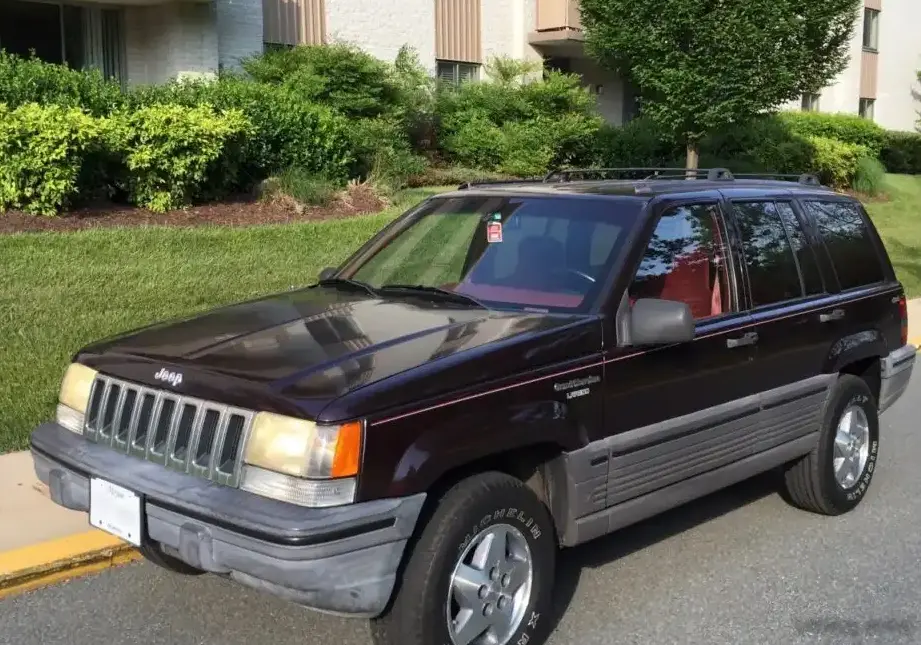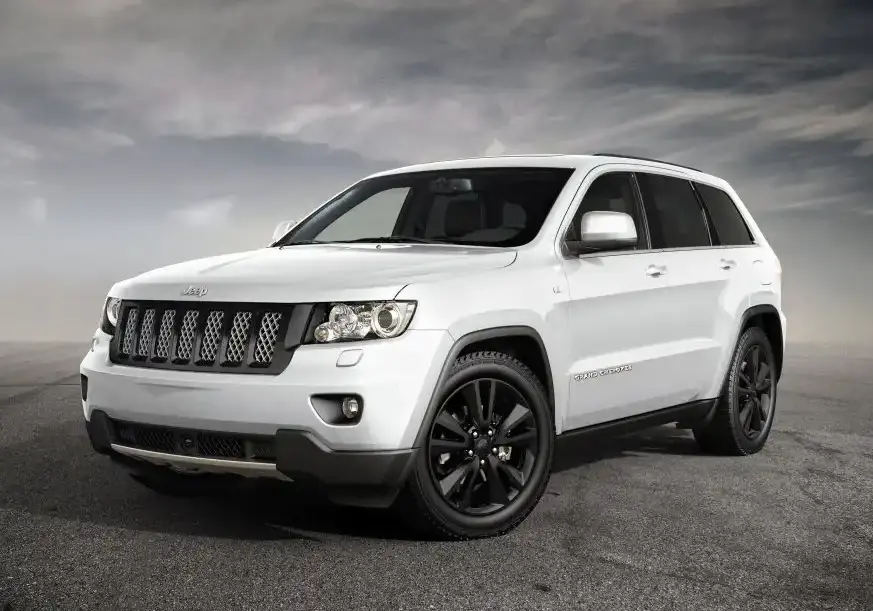
The Jeep Grand Cherokee WK2 3.0 CRD 4×4 Automatic, produced between 2011 and 2013, represents a significant entry point into the fourth generation of Jeep’s flagship SUV. Positioned within the WK2 series – which spanned from 2010 to 2021 – this variant offered a diesel-powered option for European and international markets, providing a blend of capability, comfort, and fuel efficiency. It served as a more economical alternative to the gasoline-powered V6 and V8 models available in North America, and a stepping stone to the more powerful diesel options within the range. The WK2 platform itself was a major leap forward for the Grand Cherokee, moving away from the shared Mercedes-Benz underpinnings of the previous generation (WJ/WK) to a wholly Jeep-engineered chassis.
Technical Specifications
| Brand | Jeep |
| Model | Grand Cherokee |
| Generation | Grand Cherokee IV (WK2) |
| Type (Engine) | 3.0 CRD (190 Hp) 4×4 Automatic |
| Start of production | 2011 year |
| End of production | 2013 year |
| Powertrain Architecture | Internal Combustion engine |
| Body type | SUV |
| Seats | 5 |
| Doors | 5 |
| Fuel consumption (economy) – urban | 10.3 l/100 km (22.8 US mpg, 27.4 UK mpg, 9.7 km/l) |
| Fuel consumption (economy) – extra urban | 7.2 l/100 km (32.7 US mpg, 39.2 UK mpg, 13.9 km/l) |
| Fuel consumption (economy) – combined | 8.3 l/100 km (28.3 US mpg, 34 UK mpg, 12 km/l) |
| CO2 emissions | 218 g/km |
| Fuel Type | Diesel |
| Acceleration 0 – 100 km/h | 10.2 sec |
| Acceleration 0 – 62 mph | 10.2 sec |
| Acceleration 0 – 60 mph | 9.7 sec |
| Maximum speed | 191 km/h (118.68 mph) |
| Emission standard | Euro 5 |
| Weight-to-power ratio | 12 kg/Hp, 83.6 Hp/tonne |
| Weight-to-torque ratio | 5.2 kg/Nm, 193.7 Nm/tonne |
| Power | 190 Hp @ 4000 rpm |
| Power per litre | 63.6 Hp/l |
| Torque | 440 Nm @ 1600 rpm (324.53 lb.-ft. @ 1600 rpm) |
| Engine layout | Front, Longitudinal |
| Engine Model/Code | EXN |
| Engine displacement | 2987 cm3 (182.28 cu. in.) |
| Number of cylinders | 6 |
| Engine configuration | V-engine |
| Cylinder Bore | 83 mm (3.27 in.) |
| Piston Stroke | 92 mm (3.62 in.) |
| Compression ratio | 18:1 |
| Number of valves per cylinder | 4 |
| Fuel injection system | Diesel Commonrail |
| Engine aspiration | Turbocharger, Intercooler |
| Valvetrain | DOHC |
| Engine oil capacity | 8.4 l (8.88 US qt | 7.39 UK qt) |
| Coolant | 13.2 l (13.95 US qt | 11.61 UK qt) |
| Kerb Weight | 2272 kg (5008.9 lbs.) |
| Max. weight | 2949 kg (6501.43 lbs.) |
| Max load | 677 kg (1492.53 lbs.) |
| Trunk (boot) space – minimum | 457 l (16.14 cu. ft.) |
| Trunk (boot) space – maximum | 1554 l (54.88 cu. ft.) |
| Fuel tank capacity | 93 l (24.57 US gal | 20.46 UK gal) |
| Permitted trailer load with brakes (12%) | 3500 kg (7716.18 lbs.) |
| Permitted trailer load without brakes | 750 kg (1653.47 lbs.) |
| Length | 4822 mm (189.84 in.) |
| Width | 1943 mm (76.5 in.) |
| Width including mirrors | 2154 mm (84.8 in.) |
| Height | 1781 mm (70.12 in.) |
| Wheelbase | 2915 mm (114.76 in.) |
| Front track | 1628 mm (64.09 in.) |
| Rear (Back) track | 1633 mm (64.29 in.) |
| Ride height (ground clearance) | 218 mm (8.58 in.) |
| Drag coefficient (Cd) | 0.37 |
| Minimum turning circle (turning diameter) | 11.6 m (38.06 ft.) |
| Approach angle | 26° |
| Departure angle | 24° |
| Ramp-over (brakeover) angle | 19° |
| Drive wheel | All wheel drive (4×4) |
| Number of gears and type of gearbox | 5 gears, automatic transmission |
| Front suspension | Double wishbone |
| Rear suspension | Independent multi-link suspension |
| Front brakes | Ventilated discs |
| Rear brakes | Ventilated discs |
| Assisting systems | ABS (Anti-lock braking system) |
| Steering type | Steering rack and pinion |
| Tires size | 265/60 R18 |
| Wheel rims size | 18 |
Powertrain & Engine Architecture
The heart of the WK2 3.0 CRD is the EXN engine, a 3.0-liter V6 diesel. This engine utilizes a common rail direct injection system, delivering fuel at extremely high pressure for optimized combustion. The EXN featured a single variable geometry turbocharger (VGT) and an intercooler to enhance power and efficiency. The engine’s DOHC (Double Overhead Camshaft) valvetrain, with four valves per cylinder, further contributed to its performance. The 3.0 CRD produced 190 horsepower at 4000 rpm and 440 Nm (324.53 lb-ft) of torque at 1600 rpm. Paired with this engine was a five-speed automatic transmission, designed to provide smooth shifting and efficient power delivery. This transmission was a crucial component in balancing the diesel engine’s torque characteristics with the Grand Cherokee’s substantial weight.
Driving Characteristics
The 3.0 CRD Automatic offered a comfortable and capable driving experience. While not as quick as the gasoline-powered V6 or V8 models, the diesel engine’s ample torque provided strong acceleration, particularly in the mid-range. The five-speed automatic transmission, while not as sophisticated as more modern eight or nine-speed units, was well-matched to the engine’s characteristics. Gear changes were generally smooth, although some drivers noted a slight hesitation during downshifts. The 4×4 system, a key feature of the Grand Cherokee, provided excellent traction in various conditions. The vehicle’s weight, however, was noticeable, especially during spirited driving or when fully loaded. Compared to manual transmission versions of the 3.0 CRD, the automatic offered greater convenience but slightly reduced fuel economy and a less engaging driving experience.
Equipment & Trim Levels
The 3.0 CRD Automatic trim level typically included standard features such as air conditioning, power windows and locks, a basic audio system, and alloy wheels. Higher trim levels, such as Limited or Overland, added features like leather upholstery, heated seats, a premium audio system, navigation, and advanced safety features. Optional extras included a sunroof, rear entertainment system, and various appearance packages. Interior upholstery was generally cloth on base models, with leather becoming standard on higher trims. The dashboard layout was functional and well-designed, with a focus on ease of use.
Chassis & Braking
The WK2 Grand Cherokee featured a robust chassis with a double wishbone front suspension and an independent multi-link rear suspension. This setup provided a comfortable ride and good handling characteristics. The 3.0 CRD models typically came equipped with ventilated disc brakes on all four wheels, providing ample stopping power. An Anti-lock Braking System (ABS) was standard. Stabilizer bars were fitted front and rear to reduce body roll during cornering. The suspension was tuned to balance on-road comfort with off-road capability.
Market Reception & Comparison
The 3.0 CRD Automatic was generally well-received in markets where diesel engines were popular, such as Europe and Australia. Critics praised its fuel efficiency and comfortable ride. However, some reviewers noted that the engine lacked the refinement of some of its competitors. Compared to the gasoline-powered V6, the 3.0 CRD offered significantly better fuel economy, making it an attractive option for drivers who covered long distances. Compared to the more powerful 3.0 CRD variants (often exceeding 200 hp), this 190 hp version offered a more affordable entry point into the Grand Cherokee range, albeit with slightly reduced performance. Reliability was generally good, although some owners reported issues with the diesel particulate filter (DPF).
Legacy
The Jeep Grand Cherokee WK2 3.0 CRD 4×4 Automatic has proven to be a relatively reliable vehicle in the used car market. The EXN engine, while not without its quirks, is generally durable when properly maintained. The five-speed automatic transmission has also proven to be fairly robust. However, potential buyers should be aware of the potential for DPF issues and ensure that the vehicle has been regularly serviced. Today, these Grand Cherokees represent a good value for those seeking a capable and comfortable SUV with decent fuel economy. The WK2 generation as a whole significantly improved the Grand Cherokee’s reputation for quality and refinement, solidifying its position as a leading SUV in its class.