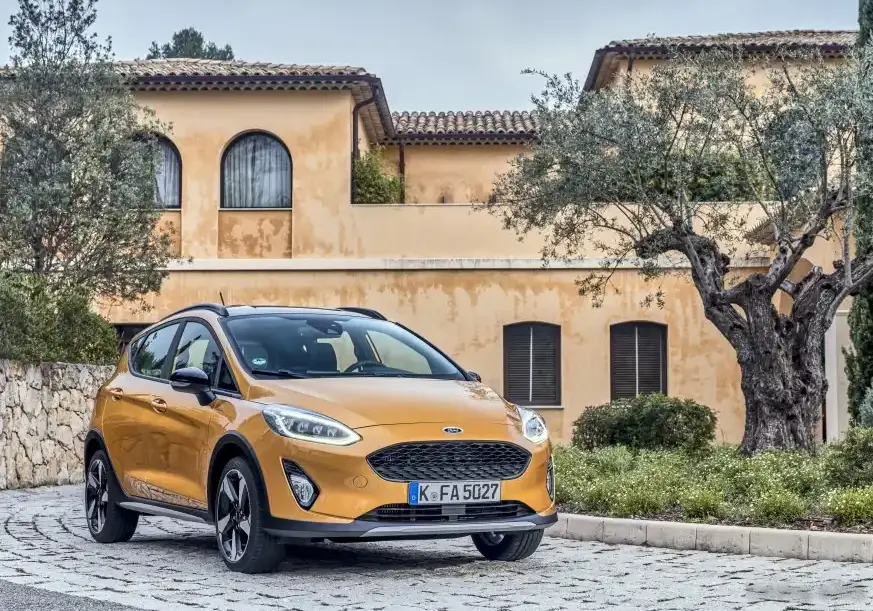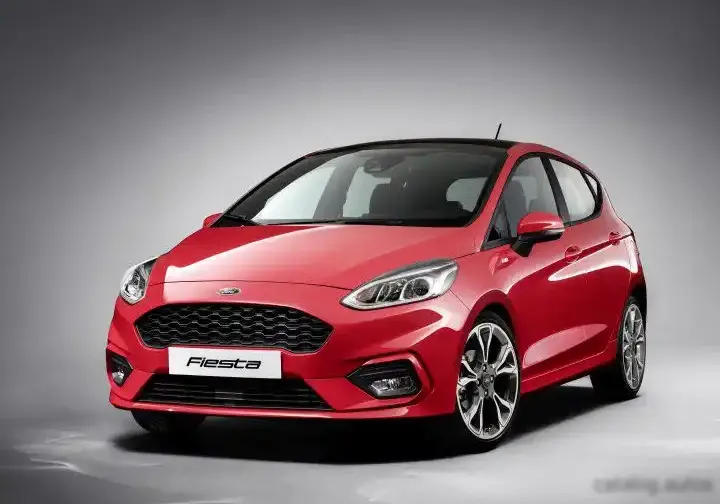
The Ford Fiesta Mk8, launched in late 2019, represented a significant evolution for Ford’s long-running supermini. The 1.1 Ti-VCT 75 horsepower variant, available with a five-speed manual transmission, served as the entry point into the Mk8 Fiesta range in many European markets. Production of this specific configuration ran from October 2019 through 2021. Positioned as a fuel-efficient and affordable option, it aimed to attract buyers prioritizing economy and practicality over outright performance. This model played a crucial role in maintaining the Fiesta’s position as one of Europe’s best-selling cars, offering a modern and well-equipped package at a competitive price point.
Technical Specifications
| Brand | Ford |
| Model | Fiesta |
| Generation | Fiesta VIII (Mk8) 5 door |
| Type (Engine) | 1.1 Ti-VCT (75 Hp) |
| Start of production | October, 2019 |
| End of production | 2021 |
| Powertrain Architecture | Internal Combustion engine |
| Body type | Hatchback |
| Seats | 5 |
| Doors | 5 |
| Fuel consumption at Low speed (WLTP) | 6.6 l/100 km (35.6 US mpg, 42.8 UK mpg, 15.2 km/l) |
| Fuel consumption at Medium speed (WLTP) | 5.1 l/100 km (46.1 US mpg, 55.4 UK mpg, 19.6 km/l) |
| Fuel consumption at high speed (WLTP) | 4.6 l/100 km (51.1 US mpg, 61.4 UK mpg, 21.7 km/l) |
| Fuel consumption at very high speed (WLTP) | 5.7 l/100 km (41.3 US mpg, 49.6 UK mpg, 17.5 km/l) |
| Combined fuel consumption (WLTP) | 5.4 l/100 km (43.6 US mpg, 52.3 UK mpg, 18.5 km/l) |
| CO2 emissions (WLTP) | 121 g/km |
| Fuel consumption (economy) – urban (NEDC) | 5.4-5.5 l/100 km (43.6 – 42.8 US mpg, 52.3 – 51.4 UK mpg, 18.5 – 18.2 km/l) |
| Fuel consumption (economy) – extra urban (NEDC) | 4-4.1 l/100 km (58.8 – 57.4 US mpg, 70.6 – 68.9 UK mpg, 25 – 24.4 km/l) |
| Fuel consumption (economy) – combined (NEDC) | 4.5-4.6 l/100 km (52.3 – 51.1 US mpg, 62.8 – 61.4 UK mpg, 22.2 – 21.7 km/l) |
| CO2 emissions (NEDC) | 102-106 g/km |
| Fuel Type | Petrol (Gasoline) |
| Acceleration 0 – 100 km/h | 14.5 sec |
| Acceleration 0 – 62 mph | 14.5 sec |
| Acceleration 0 – 60 mph | 13.8 sec |
| Maximum speed | 165 km/h (102.53 mph) |
| Emission standard | Euro 6d-ISC-FCM |
| Weight-to-power ratio | 14.5 kg/Hp, 68.9 Hp/tonne |
| Weight-to-torque ratio | 10.4 kg/Nm, 96.4 Nm/tonne |
| Power | 75 Hp @ 5500 rpm |
| Power per litre | 69.2 Hp/l |
| Torque | 105 Nm @ 3500 rpm (77.44 lb.-ft. @ 3500 rpm) |
| Engine layout | Front, Transverse |
| Engine Model/Code | FSJA, FSJB |
| Engine displacement | 1084 cm3 (66.15 cu. in.) |
| Number of cylinders | 3 |
| Engine configuration | Inline |
| Number of valves per cylinder | 4 |
| Fuel injection system | Multi-port manifold injection |
| Engine aspiration | Naturally aspirated engine |
| Valvetrain | DOHC |
| Engine oil capacity | 4.1 l (4.33 US qt, 3.61 UK qt) |
| Coolant | 5.5 l (5.81 US qt, 4.84 UK qt) |
| Kerb Weight | 1089 kg (2400.83 lbs.) |
| Max. weight | 1520 kg (3351.03 lbs.) |
| Max load | 431 kg (950.19 lbs.) |
| Trunk (boot) space – minimum | 292 l (10.31 cu. ft.) |
| Trunk (boot) space – maximum | 1093 l (38.6 cu. ft.) |
| Fuel tank capacity | 42 l (11.1 US gal, 9.24 UK gal) |
| Max. roof load | 50 kg (110.23 lbs.) |
| Length | 4040 mm (159.06 in.) |
| Width | 1735 mm (68.31 in.) |
| Width including mirrors | 1941 mm (76.42 in.) |
| Height | 1476 mm (58.11 in.) |
| Wheelbase | 2493 mm (98.15 in.) |
| Front overhang | 839 mm (33.03 in.) |
| Rear overhang | 708 mm (27.87 in.) |
| Ride height (ground clearance) | 133 mm (5.24 in.) |
| Minimum turning circle (turning diameter) | 9.8 m (32.15 ft.) |
| Drivetrain Architecture | The Internal combustion engine (ICE) drives the front wheels of the vehicle. |
| Drive wheel | Front wheel drive |
| Number of gears and type of gearbox | 5 gears, manual transmission |
| Front suspension | Independent type McPherson, Transverse stabilizer |
| Rear suspension | Independent multi-link suspension, Transverse stabilizer |
| Assisting systems | ABS (Anti-lock braking system) |
| Steering type | Steering rack and pinion |
| Power steering | Electric Steering |
| Tires size | 195/60 R 15 |
| Wheel rims size | 6 J x 15 |
INTRODUCTION
The Ford Fiesta Mk8, launched in 2019, represented a significant redesign of Ford’s popular supermini. Built on the B3 platform, shared with the Ford Focus Mk4, the Mk8 aimed to offer a more sophisticated driving experience and a more modern interior. The 1.1 Ti-VCT 75 horsepower variant, equipped with a five-speed manual transmission, was a key component of the lineup, particularly in European markets. It was designed to appeal to buyers seeking a cost-effective and fuel-efficient city car. This engine and transmission combination represented the base level offering, providing a balance between affordability and usability.
Powertrain & Engine Architecture
The heart of this Fiesta variant is the Ford 1.1 Ti-VCT three-cylinder engine, designated with engine codes FSJA or FSJB. This engine is a naturally aspirated unit featuring multi-point fuel injection and a double overhead camshaft (DOHC) valvetrain with four valves per cylinder. The Ti-VCT (Twin Independent Variable Camshaft Timing) technology optimizes valve timing for improved efficiency and responsiveness. The engine’s relatively small displacement and three-cylinder configuration contribute to its fuel efficiency, but also limit its overall power output. The five-speed manual transmission is a conventional unit, chosen for its simplicity and cost-effectiveness. It features a standard shift pattern and is known for its relatively light and precise action. The transmission’s gear ratios are tuned to maximize fuel economy and provide adequate acceleration for urban driving.
Driving Characteristics
The 1.1 Ti-VCT 75 hp Fiesta delivers a driving experience best described as adequate for city and suburban use. Acceleration is modest, taking around 14.5 seconds to reach 62 mph (100 km/h). The engine feels strained at higher speeds, and overtaking maneuvers require careful planning. However, the engine is surprisingly refined for a three-cylinder unit, with minimal vibration at idle. The five-speed manual transmission allows drivers to keep the engine in its optimal power band, but frequent gear changes are necessary to maintain momentum. Compared to higher-output Fiesta variants, such as the 1.0 EcoBoost, this version feels significantly less powerful. The EcoBoost engines offer turbocharging, resulting in substantially more torque and quicker acceleration. The 1.1 Ti-VCT prioritizes fuel economy over performance, making it a suitable choice for drivers who primarily commute in urban environments.
Equipment & Trim Levels
The 1.1 Ti-VCT Fiesta typically came equipped with a basic but functional level of standard features. These generally included air conditioning, power front windows, a basic audio system with Bluetooth connectivity, and ABS brakes. Safety features such as electronic stability control (ESC) and multiple airbags were also standard. Higher trim levels, such as Trend and Titanium, offered additional features like alloy wheels, a touchscreen infotainment system, cruise control, and parking sensors. Optional extras available for the 1.1 Ti-VCT included metallic paint, upgraded audio systems, and a winter pack with heated front seats and windshield wipers. The interior upholstery was typically cloth, with a simple and durable design.
Chassis & Braking
The Fiesta Mk8 utilizes a McPherson strut front suspension and an independent multi-link rear suspension. This setup provides a good balance between ride comfort and handling. The 1.1 Ti-VCT variant typically featured smaller wheels and tires (195/60 R15) compared to higher-spec models, which contributed to a slightly softer ride. Braking duties are handled by disc brakes on the front wheels and drum brakes on the rear wheels. ABS (Anti-lock Braking System) is standard, providing enhanced braking performance in emergency situations. The steering is electrically assisted, offering a light and precise feel. The chassis is relatively lightweight, which helps to offset the engine’s limited power output.
Market Reception & Comparison
The 1.1 Ti-VCT Fiesta received generally positive reviews for its fuel efficiency and affordability. Critics praised its nimble handling and comfortable ride, but noted its lack of outright performance. Compared to other trims in the Fiesta lineup, the 1.1 Ti-VCT offered the lowest price point, making it an attractive option for budget-conscious buyers. However, the 1.0 EcoBoost variants were often recommended for drivers who prioritized performance and refinement. In terms of fuel economy, the 1.1 Ti-VCT performed well, achieving combined fuel consumption figures of around 5.4 l/100 km (43.6 US mpg). Reliability has generally been good, with few reported issues specific to the 1.1 Ti-VCT engine and transmission.
Legacy
The 1.1 Ti-VCT Fiesta Mk8 remains a popular choice in the used car market, particularly for first-time buyers and those seeking a reliable and economical city car. The engine and transmission combination has proven to be durable and relatively maintenance-free. While not the most exciting Fiesta variant, it offers a practical and affordable transportation solution. Its fuel efficiency and low running costs continue to appeal to buyers looking for a cost-effective vehicle. As with any used car, it’s important to check the vehicle’s service history and ensure it has been properly maintained. The 1.1 Ti-VCT represents a sensible and pragmatic choice within the broader Fiesta Mk8 range, offering a blend of affordability, efficiency, and usability.