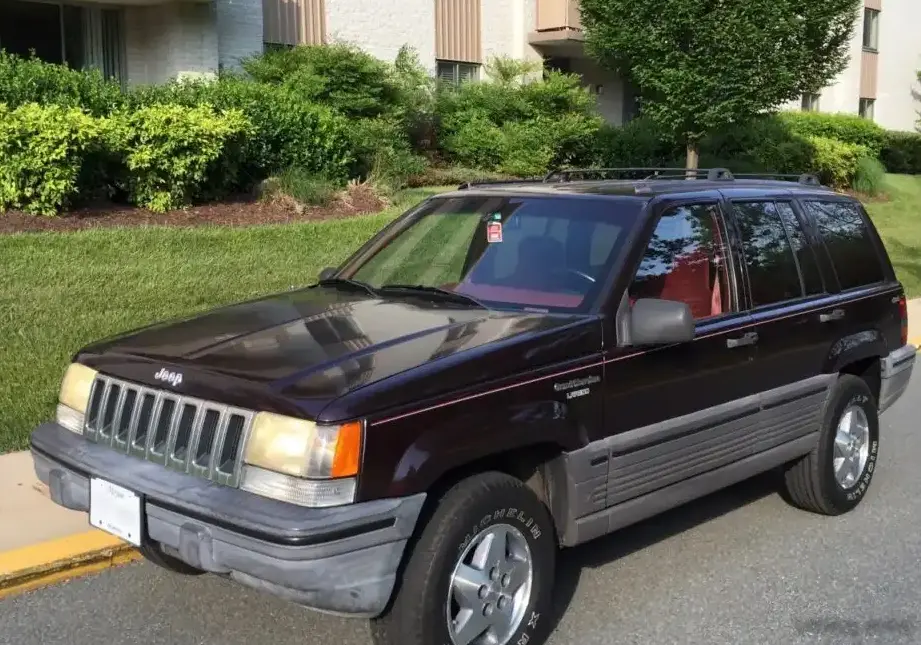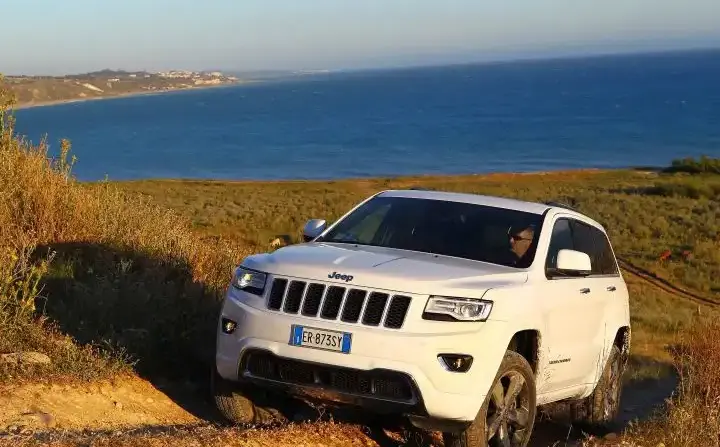
The Jeep Grand Cherokee IV (WK2), specifically the facelifted version produced from 2013 to 2017, represented a significant step forward for the iconic American SUV. This generation, built on the WH platform, aimed to blend luxury, capability, and on-road refinement. Within the WK2 lineup, the 3.6-liter V6 engine paired with an eight-speed automatic transmission and four-wheel drive system occupied a crucial middle ground, offering a balance between performance, fuel efficiency, and affordability. It served as the volume seller for the Grand Cherokee, appealing to a broader range of buyers than the more powerful V8 options or the diesel variants available in some markets.
Technical Specifications
| Brand | Jeep |
| Model | Grand Cherokee |
| Generation | Grand Cherokee IV (WK2, facelift 2013) |
| Type (Engine) | 3.6 V6 (286 Hp) 4×4 Automatic |
| Start of production | 2013 |
| End of production | 2017 |
| Powertrain Architecture | Internal Combustion engine |
| Body type | SUV |
| Seats | 5 |
| Doors | 5 |
| Fuel consumption (urban) | 14.3 l/100 km (16.4 US mpg, 19.8 UK mpg, 7 km/l) |
| Fuel consumption (extra urban) | 8.2 l/100 km (28.7 US mpg, 34.4 UK mpg, 12.2 km/l) |
| Fuel consumption (combined) | 10.4 l/100 km (22.6 US mpg, 27.2 UK mpg, 9.6 km/l) |
| CO2 emissions | 244 g/km |
| Fuel Type | Petrol (Gasoline) |
| Acceleration 0 – 100 km/h | 8.3 sec |
| Acceleration 0 – 62 mph | 8.3 sec |
| Acceleration 0 – 60 mph | 7.9 sec |
| Maximum speed | 206 km/h (128 mph) |
| Emission standard | Euro 6 |
| Weight-to-power ratio | 7.9 kg/Hp, 126.2 Hp/tonne |
| Weight-to-torque ratio | 6.5 kg/Nm, 153.1 Nm/tonne |
| Power | 286 Hp @ 6350 rpm |
| Power per litre | 79.4 Hp/l |
| Torque | 347 Nm @ 4300 rpm (255.93 lb.-ft. @ 4300 rpm) |
| Engine layout | Front, Longitudinal |
| Engine Model/Code | ERB |
| Engine displacement | 3604 cm3 (219.93 cu. in.) |
| Number of cylinders | 6 |
| Engine configuration | V-engine |
| Cylinder Bore | 96 mm (3.78 in.) |
| Piston Stroke | 83 mm (3.27 in.) |
| Compression ratio | 10.2:1 |
| Number of valves per cylinder | 4 |
| Fuel injection system | Multi-port manifold injection |
| Engine aspiration | Naturally aspirated engine |
| Valvetrain | DOHC |
| Engine oil capacity | 5.7 l (6.02 US qt | 5.02 UK qt) |
| Coolant | 9.9 l (10.46 US qt | 8.71 UK qt) |
| Kerb Weight | 2266-2354 kg (4995.67 – 5189.68 lbs.) |
| Max. weight | 2812 kg (6199.4 lbs.) |
| Max load | 458-546 kg (1009.72 – 1203.72 lbs.) |
| Trunk (boot) space – minimum | 457 l (16.14 cu. ft.) |
| Trunk (boot) space – maximum | 1554 l (54.88 cu. ft.) |
| Fuel tank capacity | 93 l (24.57 US gal | 20.46 UK gal) |
| Permitted trailer load with brakes (12%) | 1588 kg (3500.94 lbs.) |
| Length | 4828 mm (190.08 in.) |
| Width | 1943 mm (76.5 in.) |
| Height | 1802 mm (70.94 in.) |
| Wheelbase | 2915 mm (114.76 in.) |
| Front track | 1628 mm (64.09 in.) |
| Rear (Back) track | 1634 mm (64.33 in.) |
| Ride height (ground clearance) | 218 mm (8.58 in.) |
| Drag coefficient (Cd) | 0.37 |
| Minimum turning circle (turning diameter) | 11.3 m (37.07 ft.) |
| Approach angle | 26.3° |
| Departure angle | 26.5° |
| Ramp-over (brakeover) angle | 18.8° |
| Drive wheel | All wheel drive (4×4) |
| Number of gears and type of gearbox | 8 gears, automatic transmission |
| Front suspension | Double wishbone |
| Rear suspension | Independent multi-link suspension |
| Front brakes | Ventilated discs |
| Rear brakes | Ventilated discs |
| Assisting systems | ABS (Anti-lock braking system) |
| Steering type | Steering rack and pinion |
| Power steering | Electric Steering |
| Tires size | 265/60 R18; 265/50 R20 |
| Wheel rims size | 8J x 18; 8J x 20 |
INTRODUCTION
The 2013-2017 Jeep Grand Cherokee 3.6L V6 4×4 Automatic represents a pivotal point in the model’s evolution. Following the successful launch of the WK2 generation in 2011, the facelift brought subtle but important refinements to the exterior styling, interior materials, and technology. This particular configuration, utilizing the Pentastar 3.6-liter V6 engine and the ZF-sourced eight-speed automatic transmission, was designed to appeal to a broad customer base seeking a capable and comfortable SUV without the higher price tag of the V8 models. It was positioned as the mainstream offering, balancing performance with fuel economy and everyday usability.
Powertrain & Engine Architecture
At the heart of this Grand Cherokee variant lies the 3.6-liter Pentastar V6 engine, designated as the ERB code. This engine is a naturally aspirated, 60-degree V6 featuring a lightweight aluminum block and cylinder heads. It employs multi-port fuel injection and a double overhead camshaft (DOHC) valvetrain with four valves per cylinder. The Pentastar engine was lauded for its smooth operation and respectable power output. The eight-speed automatic transmission (845RE) is a crucial component, contributing to both improved fuel efficiency and responsive acceleration. This transmission features a wide gear ratio spread, allowing the engine to operate in its optimal power band more frequently. The 4×4 system utilizes Jeep’s Quadra-Trac I or Quadra-Trac II, depending on trim level, providing full-time four-wheel drive with various terrain settings.
Driving Characteristics
The 3.6L V6 Grand Cherokee delivers a comfortable and composed driving experience. While not as overtly powerful as the V8 models, the 286 horsepower and 255 lb-ft of torque provide adequate acceleration for most driving situations. The eight-speed transmission helps to mask any perceived lack of power, offering quick and smooth shifts. The wide gear ratios allow for relaxed highway cruising and responsive acceleration when needed. Compared to the manual transmission options (available in some markets), the automatic prioritizes convenience and ease of use. Against the 5.7L Hemi V8, the 3.6L offers significantly better fuel economy but sacrifices straight-line performance. The 3.0L EcoDiesel, while offering comparable torque, delivers a different driving character with a focus on low-end grunt.
Equipment & Trim Levels
The 3.6L V6 Grand Cherokee was available in various trim levels, including Laredo, Limited, and Overland. Standard equipment on the base Laredo model typically included features like air conditioning, a touchscreen infotainment system, and alloy wheels. Higher trim levels, such as the Limited and Overland, added features like leather upholstery, heated seats, a premium sound system, and advanced safety technologies. Optional extras included a panoramic sunroof, navigation system, and a rear-seat entertainment system. Interior upholstery ranged from cloth on the Laredo to leather on the higher trims, with varying color options available.
Chassis & Braking
The WK2 Grand Cherokee features a robust chassis with a fully independent suspension system. The front suspension utilizes a double wishbone design, while the rear employs an independent multi-link setup. This configuration provides a comfortable ride and good handling characteristics. Braking duties are handled by ventilated discs on all four wheels, providing ample stopping power. Anti-lock brakes (ABS) are standard, along with electronic stability control and traction control systems. The suspension tuning was generally softer on the lower trim levels, prioritizing ride comfort, while the Overland trim often featured a slightly firmer setup for improved handling.
Market Reception & Comparison
The 3.6L V6 Grand Cherokee was well-received by critics and consumers alike. It was praised for its comfortable ride, spacious interior, and capable four-wheel-drive system. Fuel economy was a strong point, particularly compared to the V8 models. However, some reviewers noted that the V6 engine could feel strained when towing heavy loads or driving in challenging terrain. Compared to competitors like the Ford Explorer and Chevrolet Traverse, the Grand Cherokee offered a more premium feel and a more refined driving experience. The diesel variant offered better fuel economy and torque, but at a higher initial cost.
Legacy
The 3.6L Pentastar V6 engine has proven to be a reliable and durable powertrain. While some early models experienced minor issues with oil consumption, these were generally addressed through software updates and revised valve cover gaskets. Today, the 2013-2017 Grand Cherokee 3.6L V6 4×4 Automatic remains a popular choice in the used car market, offering a compelling combination of capability, comfort, and value. Its robust construction and readily available parts ensure that it will continue to provide years of reliable service for its owners. The ZF eight-speed transmission is also known for its durability and smooth operation, contributing to the long-term reliability of this powertrain combination.